Catch Up GCSE English Literature After Absence
Catch up GCSE English Literature after absence with a realistic recovery plan for missed texts, quotations, essays and revision without burning out.
Missing several weeks of school can make English Literature feel as though the class has continued without leaving a map. A new character has appeared, three themes have been discussed, and everyone else seems to know which quotations matter. If you need to catch up GCSE English Literature after absence, begin by identifying exactly what was missed, collecting the essential materials and rebuilding one small section at a time. Do not try to reread the entire course in a weekend.
The goal is not to recreate every lesson. It is to recover the knowledge and exam skills that those lessons were meant to develop.
Your catch-up checklist
Start with these actions:
- Tell your English teacher that you want a clear recovery plan.
- Confirm your exam board, set texts and completed classwork.
- List the chapters, scenes, poems and assessments you missed.
- Collect lesson slides, handouts, model responses and homework.
- Separate missing knowledge from missing exam practice.
- Prioritise plot, characters, themes and key quotations.
- Complete one short piece of retrieval or writing each day.
- Ask your teacher to check an early response before you practise repeatedly.
- Keep enough time for your other subjects, including maths.
That last point matters. Falling behind in one subject can tempt you to abandon everything else. A better plan protects your existing routines while adding a temporary catch-up block.
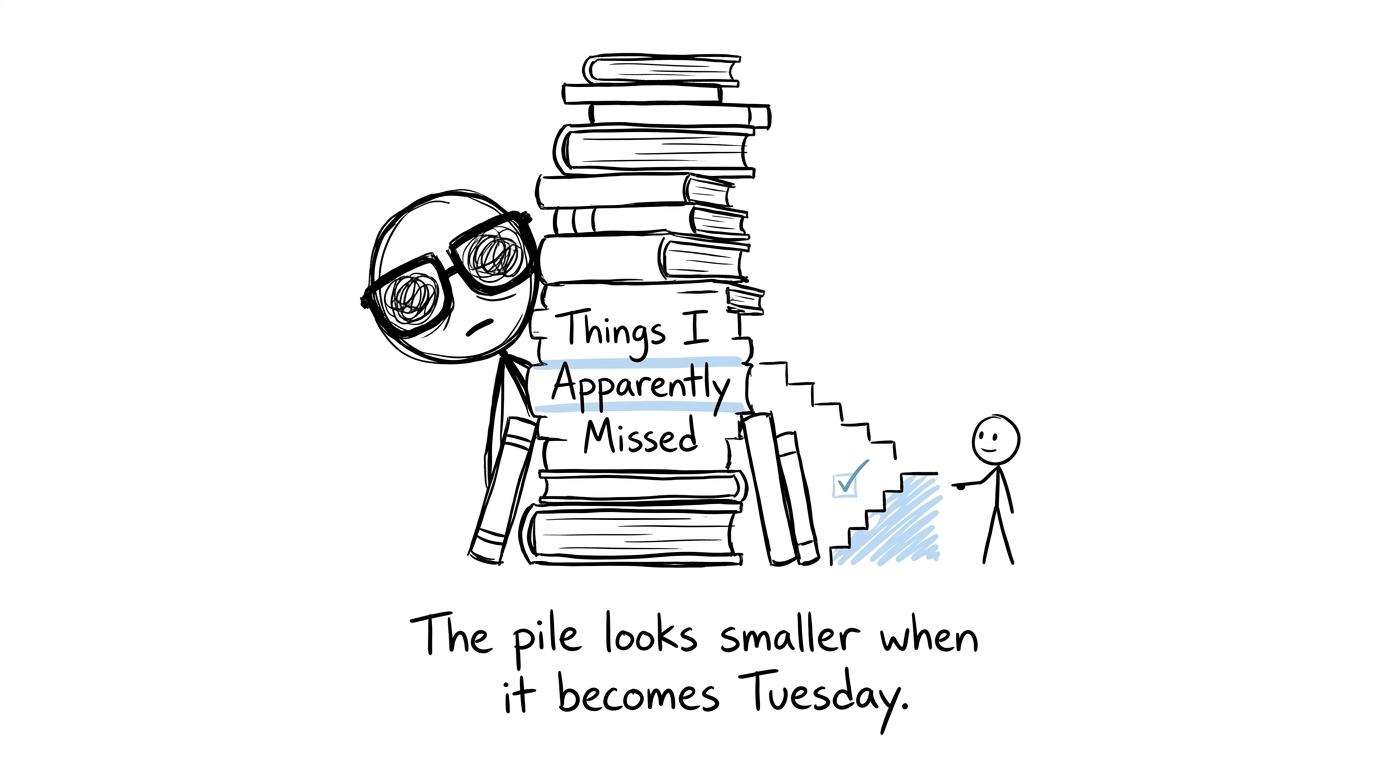 A student turns an intimidating pile of missed work into a manageable checklist
Find out what you actually missed
An absence feels larger when it remains vague. “We did Macbeth” is overwhelming. “I missed Act Three, a lesson on guilt and one timed paragraph” is manageable.
Ask your teacher or a reliable classmate for:
- the dates and lesson titles covered during your absence;
- pages, chapters, acts or poems studied;
- homework and assessments that still need completing;
- copies of annotations or presentation slides;
- the question formats used by your exam board;
- the next assessment date and its content.
Then create three categories:
| Category | What belongs there |
|---|---|
| Essential now | Content needed for the next lesson or assessment |
| Important later | Material required for the final GCSE examinations |
| Optional detail | Extra notes that improve understanding but are not urgent |
This prevents a common catch-up mistake: carefully copying every missed note while failing to learn the text itself.
The principle is similar to finding weaknesses in maths. MathsGenie's guide to finding your weakest GCSE topics explains why evidence is more useful than a general feeling of being behind. For English Literature, your evidence might be a blank quotation grid, an unfamiliar scene or a paragraph you cannot plan.
Confirm your exam board and specification
GCSE English Literature courses are not interchangeable. Edexcel, AQA, OCR and Eduqas use different set-text lists, paper structures and question styles. Your school may also choose different texts from another school using the same board.
Write down:
- your exam board;
- the exact title and author of every set text;
- the poetry anthology or cluster you study;
- which texts appear on each paper;
- the assessment objectives emphasised in each question;
- whether an extract is supplied;
- where spelling, punctuation and grammar are assessed, if applicable.
Use the current specification and sample or past assessment materials identified by your teacher. Do not assume that advice for another board applies to your paper. GCSE English Literature normally requires secure knowledge of texts alongside interpretation, evidence and analysis, but the precise marks and question arrangements depend on the specification.
Rebuild each missed text in layers
Trying to analyse language before you understand what happens is like revising the roof before rebuilding the stairs. Use four layers.
Recover the storyline first
Read the missed chapter, scene or poem. If illness still affects your concentration, divide longer sections into short sessions. After each section, close the text and record:
- what happened;
- who was involved;
- what changed;
- which theme became more important;
- one moment you need to clarify.
A summary can orient you, but it should not permanently replace reading the set text. The wording, structure and dramatic or narrative choices are what you eventually need to analyse.
Add character and theme connections
Ask how the missed material changes your understanding of the whole work. A scene may reveal a character's motive; a poem may present conflict differently from another anthology poem.
Keep notes selective. One page containing a clear chain of ideas is usually more useful than several pages copied without thought. Useful headings include:
- character development;
- central themes;
- relationships;
- turning points;
- relevant context;
- links to earlier and later moments.
Select quotations by purpose
Do not begin with a huge quotation bank. Choose a small group of short, flexible quotations linked to major characters and themes. For each one, note who says it, where it appears and what it could help you argue.
Learn quotations through retrieval rather than repeated reading. Cover the wording, reproduce it, check it and return to it later. Accurate references to the text matter, but an essay also needs an argument. Memorising a line without understanding its use creates recognition, not readiness.
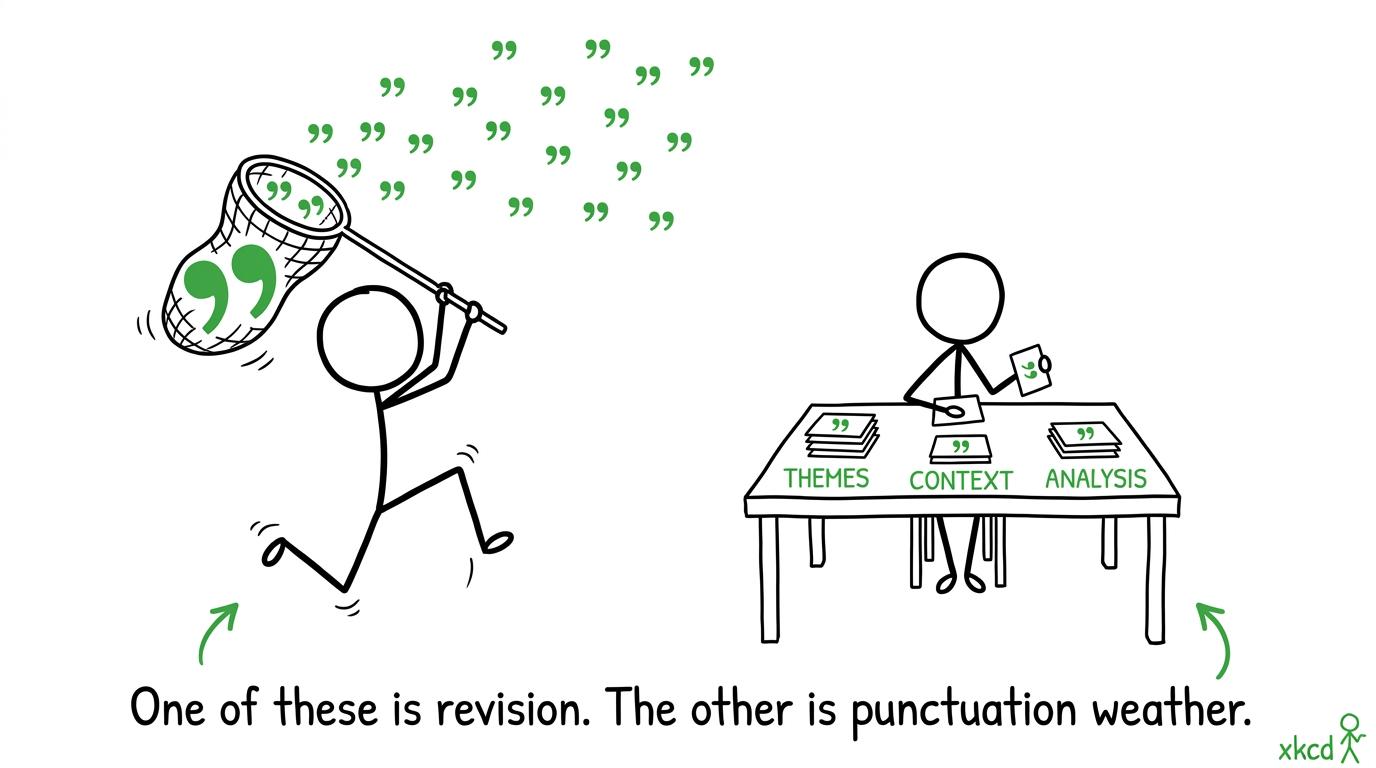 A student chooses organised quotation cards instead of chasing punctuation through the air
Restore the writing skill
Once the content is secure enough, practise turning it into analysis. Begin with plans and individual paragraphs before attempting complete timed essays.
A useful paragraph should normally:
- make a direct claim answering the question;
- use a relevant textual reference;
- analyse the writer's language, form or structure;
- explain how the evidence supports the interpretation;
- connect context only where it illuminates the text;
- return to the question.
Give your first paragraph to your teacher. One correction made early can prevent the same misunderstanding appearing in five later essays.
A realistic two-week recovery plan
This plan assumes that you have returned to lessons and can manage one focused English catch-up session on most weekdays. Adjust it with your teacher if your health or timetable requires a slower pace.
The first three days
Use sessions of roughly twenty to thirty minutes.
- Day one: confirm the exam board, missing lessons and deadlines.
- Day two: read the first missed section and create a concise plot or idea summary.
- Day three: finish the missed reading and identify important characters, themes or comparisons.
Stop when the planned task is complete. Catching up is helped by consistency, not by one exhausting evening.
The rest of the first week
- Build a small quotation and theme grid.
- Review missed teacher annotations.
- Complete one paragraph plan.
- Write one analytical paragraph.
- Ask for feedback or compare it with a teacher-approved model.
The second week
- Correct the first paragraph using feedback.
- Practise recalling quotations without notes.
- Plan a second question under a short time limit.
- Write either a timed section or a complete response, depending on readiness.
- End the week with a self-test covering plot, characters, themes and quotations.
If you missed more than one text, repeat the cycle rather than doubling each day. The most urgent text goes first; the others enter the plan in later weeks.
MathsGenie's GCSE revision guide for reluctant students describes a compact learn, practise, mark and fix loop. The same structure transfers well to English: recover one idea, answer one task, obtain feedback and correct one weakness.
Balance English catch-up with maths revision
The target audience for MathsGenie is preparing for maths exams, so your English recovery plan should not erase maths from the timetable. Maintain a small minimum routine: one focused topic session, several exam questions or a mini test on scheduled days.
Start from the GCSE Maths revision hub, where resources are organised by exam board and topic. If your maths has also become fragmented, follow a sensible order for learning GCSE Maths topics instead of jumping between unrelated worksheets.
Full papers are useful once you have time and stamina, but they should produce a correction plan. The guide to using GCSE past papers properly explains the paper, mark, fix and retest cycle.
A balanced week might contain short English catch-up sessions on four days, normal homework and two or three protected maths sessions. During recovery, a smaller plan completed reliably is better than an ambitious timetable repeatedly abandoned.
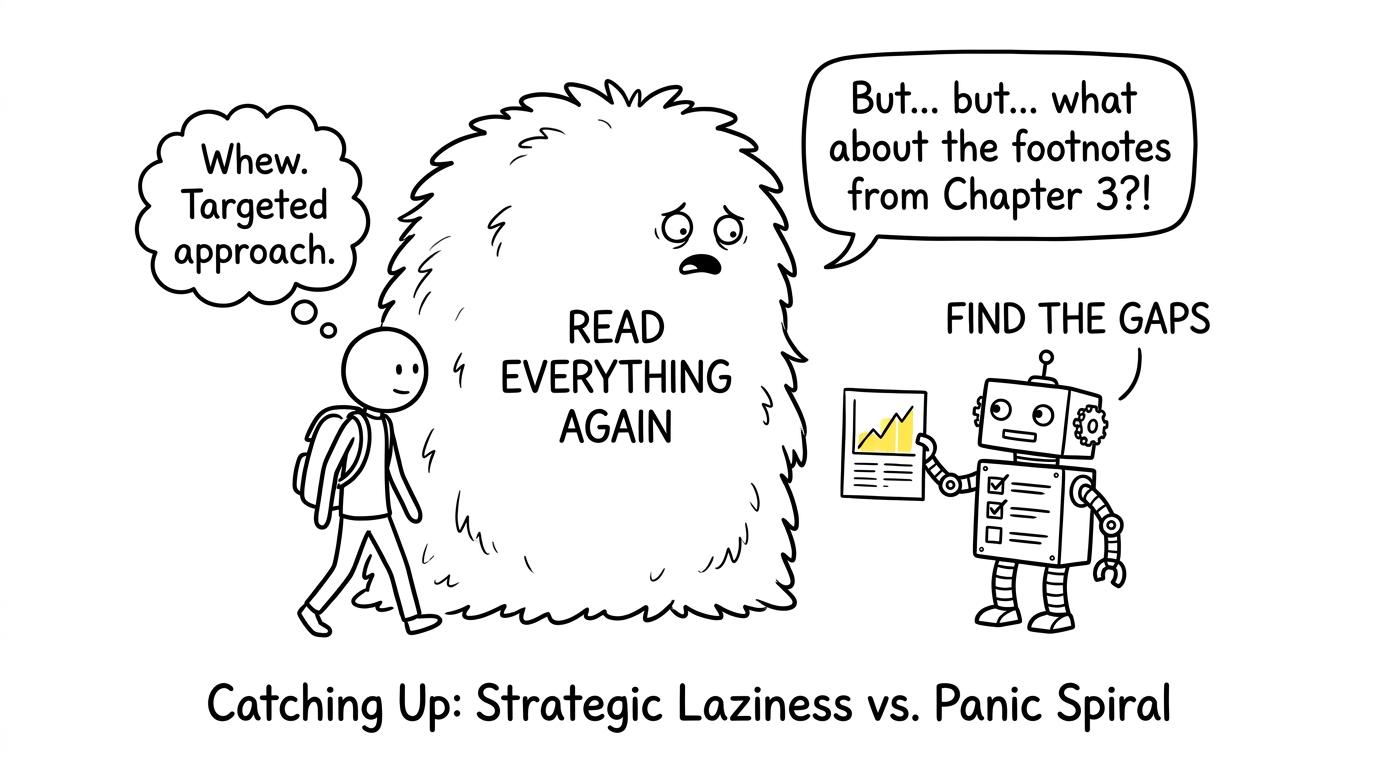 A student follows a small gap-finding robot rather than an enormous reread-everything monster
What to do if illness continues
Speak to your teacher, head of year, pastoral team or special educational needs and disabilities co-ordinator if your health continues to affect attendance, concentration or deadlines. Ask which work is essential and whether the recovery schedule can be adjusted.
If illness affects you at the time of an external examination, tell your school or exam centre immediately. Access arrangements and special consideration are formal processes handled through the centre. Special consideration is generally concerned with circumstances affecting an assessment, not simply teaching missed earlier in the course, so do not assume that absence from lessons automatically produces a mark adjustment. Your exams officer can explain the current rules and any evidence required.
Common mistakes when catching up
Recopying every missed page
Copying can look productive while demanding little retrieval or decision-making. Read the material, then create a shorter version from memory.
Revising quotations without the text
A quotation becomes useful when you know its speaker, moment, meaning and connection to the question. Keep each quotation attached to an argument.
Writing full essays too soon
If the plot or theme is unclear, a timed essay mainly rehearses confusion. Rebuild knowledge, plan, write a paragraph and then increase the scale.
Using resources for the wrong specification
A polished resource can still be irrelevant. Check the board, text, anthology and current paper before spending time on it.
Sacrificing sleep and every other subject
Recovery is not a punishment for being ill. Protect sleep, follow medical advice and maintain small routines in other subjects. MathsGenie exists to make the maths part easier, with free revision lessons, practice questions, mark schemes, video solutions, mini tests, past papers and predicted papers.
Move forward without recreating every missed lesson
To catch up successfully, turn an undefined absence into a sequence of visible tasks: identify the gap, read the missed material, connect it to themes, retrieve a selective set of quotations and practise the actual question style. Ask for feedback before errors settle into habits.
Then protect the rest of your GCSE preparation. Visit MathsGenie to keep maths moving through focused revision lessons and practice questions. As exams approach, use the site's past papers, predicted papers, mini tests, mark schemes and video solutions to convert each mistake into a clear next step. You do not have to recover everything at once. You only need to know what comes next, and do that well.