

Building a Revision Habit in September
Building a revision habit in September starts small. Follow a practical weekly routine for GCSE and A Level revision without burnout, guilt or cramming.

September creates a peculiar kind of pressure. The new books are still tidy, exams feel distant, and yet students and parents both sense that this year matters.
Imagine a GCSE student arriving home after the first full Monday of term. Their parent asks whether they have started revising. The student hears a request to work every evening until summer. The parent simply wants to prevent a last-minute panic.
Building a revision habit in September does not mean beginning an intense exam timetable. It means choosing a small, repeatable routine: revise at consistent times, retrieve something from memory, answer a few questions and return to the topic later. Two or three short sessions each week can establish the pattern before workloads increase.
This article focuses on the habit itself. For the wider structure, use the GCSE maths revision timetable guide as your revision-planning pillar. If your main question is about workload, the guide to how many hours you should revise each day explores that separately.
Your September revision checklist
A useful September routine should be simple enough to survive a busy school week. Start with this checklist:
- Choose two or three fixed revision slots each week.
- Keep the first sessions to around twenty minutes.
- Attach each session to an existing cue, such as arriving home, finishing dinner or getting back from an activity.
- Decide the topic before the session begins.
- Use retrieval and practice questions, not just rereading.
- Mark your work and record one topic to revisit.
- Keep one evening completely free.
- Review the routine at the end of each week.
The goal is not to complete the course in September. It is to make starting feel normal.
What a revision habit actually looks like
A timetable records an intention. A habit makes that intention easier to follow.
Our hypothetical student might decide to revise maths after dinner on Tuesday and Thursday. The cue is clear, the location is familiar and the task is small. On Tuesday, they revisit something taught recently. On Thursday, they return to an older topic that has become less secure.
Each session follows the same pattern:
- Recall: write down what you remember without notes.
- Check: compare your recall with a lesson, guide or worked solution.
- Practise: answer a small set of relevant questions.
- Mark: identify why any answers were wrong.
- Return: schedule the weak point for a later session.
This is more effective as a study technique than repeatedly reading a page because it requires the student to bring knowledge back to mind and apply it. Spacing the topic across separate sessions also creates repeated opportunities to remember it.
For maths, students can choose a topic from the GCSE maths revision resources, use the revision lesson, complete practice questions and check the mark scheme or video solution. MathsGenie also provides free GCSE and A Level maths revision so the same basic routine can continue as the course becomes more demanding.
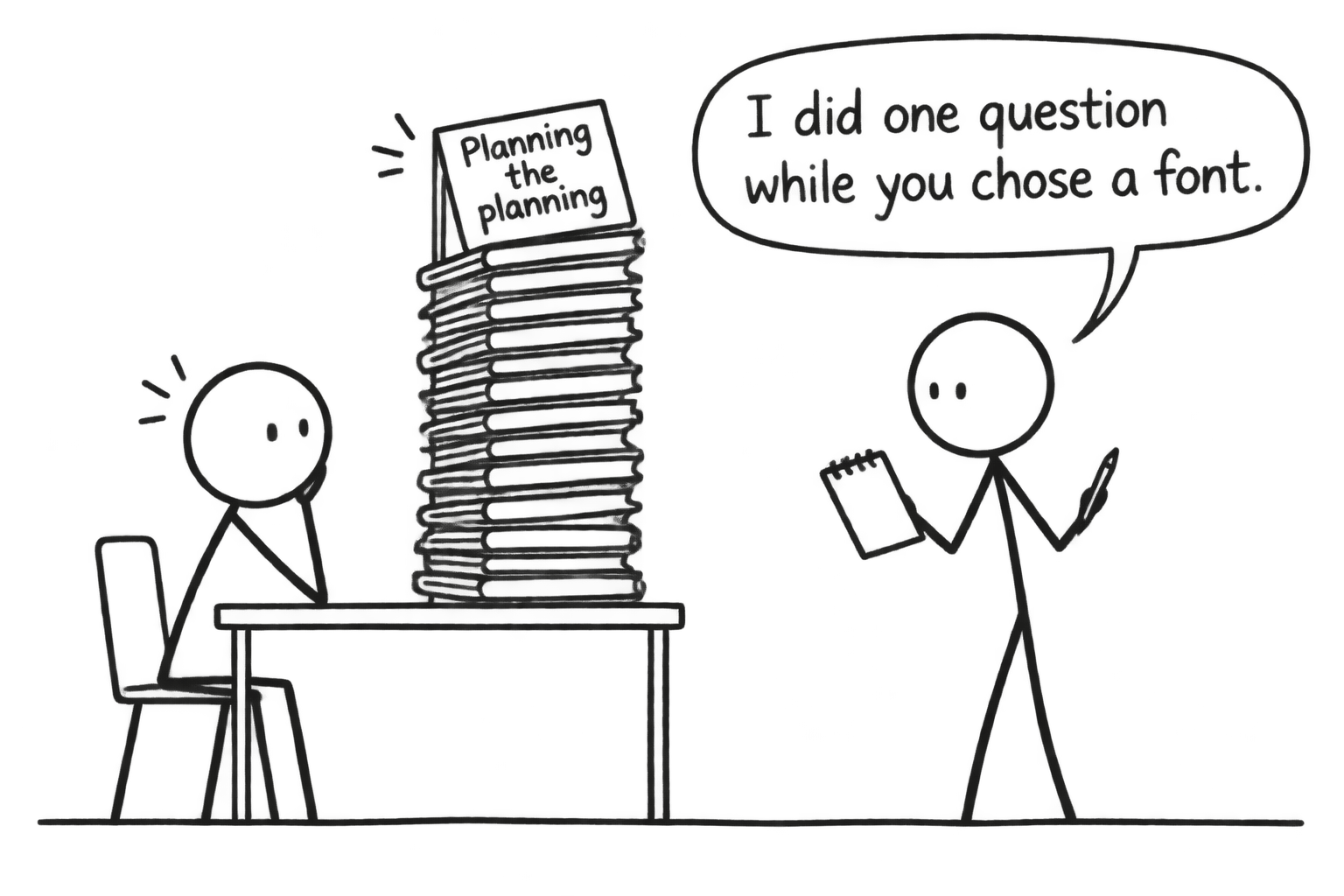 A student completes one question while another is still planning the perfect revision planner
A four-week September plan
Week one: make starting easy
Choose two short sessions and put them beside existing weekly commitments. Do not fill every available evening.
During each session, revise one recent topic. The work should feel purposeful but manageable. Finishing while you still have some concentration left is better than making the first session exhausting.
Week two: repeat before expanding
Keep the same days, times and location. Repetition matters more than adding hours.
Begin each session with a few minutes of retrieval. Close the book and write down a method, definition, formula or set of steps from memory. Then check it. This makes uncertainty visible before a question exposes it in an exam.
Week three: revisit an older weakness
Add an older topic to one session. A GCSE maths student might choose something from the previous year, while an A Level student might revisit an earlier skill that supports current work.
Do not choose a topic simply because it is comfortable. Use class feedback, mini tests or marked questions to identify something that genuinely needs attention.
Week four: adjust the system
Review what happened rather than what you intended to happen.
Ask:
- Which session was easiest to start?
- Which session was regularly interrupted?
- Was the planned task clear enough?
- Did the work include questions and marking?
- Is the routine sustainable alongside homework and rest?
Move an unreliable slot instead of declaring the whole plan a failure. The revision timetable you will actually stick to gives further guidance on making those adjustments.
Build these September sessions in the MathsGenie Revision Planner if you would rather turn your topics, confidence and available time into a day-by-day schedule than arrange everything by hand.
Keep homework and revision separate
Homework usually responds to a current deadline. Revision strengthens knowledge for a future assessment. They can overlap, but they are not automatically the same.
Completing ten questions set by a teacher may count as useful revision if you retrieve methods, mark the work and learn from mistakes. Copying unfinished class notes may be necessary homework, but it does not provide the same evidence that you can answer a question independently.
A balanced September week therefore contains schoolwork first and a small amount of deliberate revision around it. Students do not need a spring exam-season schedule at the beginning of the academic year.
Full past papers are not usually necessary for establishing this early habit. Topic questions, mini tests and short mixed sets are easier to fit into a regular routine. The guide to when you should start using past papers explains how exam-paper practice can develop later.
What to do when you miss a session
A habit is not ruined by one difficult evening. The more useful question is whether the system helps you restart.
If you miss a session, avoid doubling the next one. Return at the next planned time and complete the normal task. If the same slot fails repeatedly, change the timing, reduce the task or remove a competing distraction.
It also helps to set a minimum version. On a difficult day, that might mean recalling one method and answering one question. This should not become the permanent standard, but it preserves the act of beginning.
Consistency is better understood across weeks than across perfect daily streaks. A student who returns calmly after disruption is building a more resilient habit than one who follows an ambitious plan briefly and then abandons it.
How parents can support the routine
Parents can help most by supporting the environment rather than supervising every answer.
Agree the revision times together. Ask what the planned task is before the session, then allow the student to complete it independently. Afterwards, a neutral question such as “What needs revisiting?” is often more useful than asking for a score.
Praise following the routine, honest marking and correcting errors. Those behaviours are within the student's control. Grades and test results may take longer to respond.
Parents should also protect rest. A plan that occupies every evening is unlikely to survive school deadlines, illness, family commitments and ordinary tiredness. The MathsGenie guide to supporting GCSE maths revision without nagging offers a fuller approach.
Common mistakes in September revision
Starting with too many hours
Early enthusiasm can produce a timetable that belongs in the final weeks before an exam. Start below your maximum capacity. You can expand a stable routine later.
Planning subjects but not tasks
“Revise maths” leaves too many decisions for the moment when concentration is already low. Write a topic and an action, such as completing practice questions and marking them.
Only revising comfortable topics
Familiar work feels reassuring, but progress often comes from identifying specific gaps. Use mistakes, teacher feedback and mini tests to choose what returns to the plan.
Treating missed work as debt
Moving every missed task into tomorrow creates an impossible backlog. Reschedule important topics and release low-priority tasks.
Mistaking recognition for recall
A page can look familiar without being securely remembered. Close the notes, retrieve the method and test it with a question.
Build the routine while September is still manageable
Our hypothetical student did not need a dramatic transformation. They needed a small routine that could survive ordinary school weeks. By the end of September, revision had a time, a place and a clear first task.
You now have the same structure. The remaining gap is turning those good intentions into sessions you can follow while exams continue to move closer. Build your September schedule in the MathsGenie Revision Planner.















