Insulin and glucagon are antagonistic hormones involved in maintaining homeostatic blood glucose concentrations.
Insulin is a peptide hormone involved in blood glucose regulation. State the specific cells in the pancreas that produce and secrete insulin.
Table 19.1 shows some clinical notes recorded by a pediatrician about a young patient presenting with diabetes.
Table 19.1
| Clinical Observation |
|---|
| 11 years old |
| symptoms developed rapidly over a few weeks |
| patient is in the 15th percentile for body mass (underweight) |
| autoimmune destruction of pancreatic beta cells has occurred |
Which observation in Table 19.1 definitively indicates that the patient has Type 1 diabetes and not Type 2?
Describe how this patient's Type 1 diabetes should be managed or treated.
Explain how an abnormally high concentration of glucose in the blood plasma affects the water potential of the blood plasma.
Explain how nearby red blood cells (erythrocytes) are affected by this change in the water potential of the blood plasma.
When blood glucose levels are extremely high, the kidneys are unable to reabsorb all the filtered glucose, leading to its excretion in urine.
The diagram shows a kidney tubule (nephron).
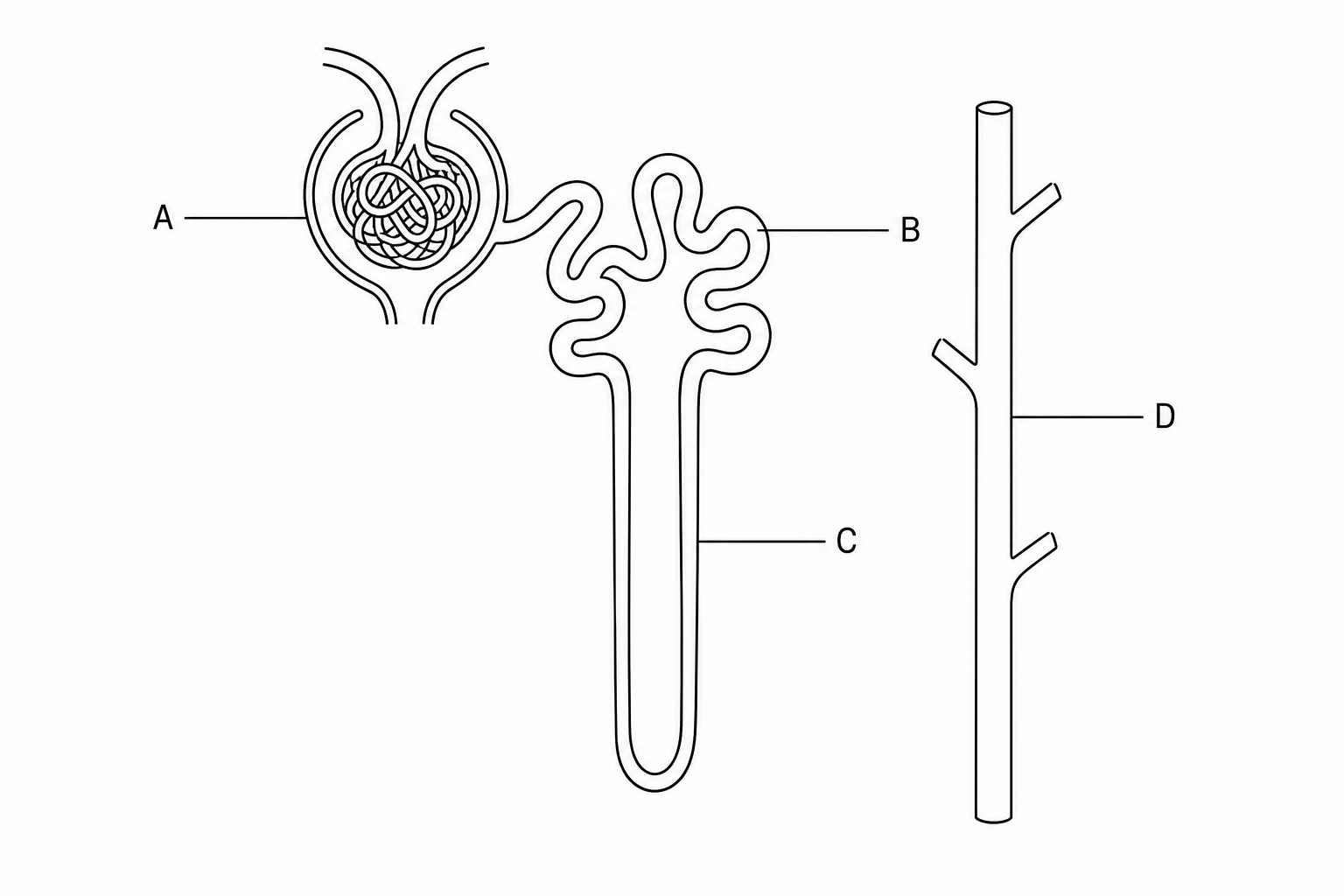
Table 19.2 shows some physiological changes or events that can occur in the nephron when blood glucose levels are extremely high. For each event, write A, B, C, or D to identify where in the nephron it occurs.
Table 19.2
| Event in kidney tubule | Part of nephron where event occurs |
|---|---|
| High pressure forces glucose and other small molecules out of the capillaries in a process called ultrafiltration. | |
| Active transport and co-transport carrier proteins in the membrane become saturated, leaving unabsorbed glucose in the filtrate. | |
| Urine containing glucose and excess water flows through this duct to be transported to the pelvis of the kidney. |