What to Eat Before a GCSE Further Maths Exam
What to eat before GCSE Further Maths exam day: choose steady-energy foods, hydrate sensibly, avoid caffeine shocks and stay calmly focused in the exam.
The final hour before a Further Maths paper can feel strangely important. You have revised matrices, functions and algebra, but suddenly breakfast seems capable of deciding your grade.
The useful answer to what to eat before GCSE Further Maths exam day is reassuringly ordinary: choose a familiar meal containing starchy carbohydrate, some protein and fruit or vegetables, then drink water sensibly. Porridge with yoghurt and fruit, eggs on wholegrain toast, or cereal with milk and a banana can all work. Avoid skipping the meal, experimenting with unfamiliar food or relying on a high-caffeine energy drink.
Food cannot replace revision. But it can help you arrive without distracting hunger, thirst or an unsettled stomach, leaving more attention for the mathematics in front of you.
Your quick pre-exam food checklist
Before leaving for your exam, aim to:
- eat a familiar breakfast or lunch rather than trying a supposed “brain food”;
- include a starchy carbohydrate such as oats, bread, cereal, rice or potatoes;
- add protein such as eggs, yoghurt, milk, beans, tofu or nut butter;
- include fruit or vegetables where practical;
- drink water regularly without forcing down a large amount at once;
- pack a small snack if there will be a long wait before the paper;
- avoid energy drinks and unusually large amounts of caffeine;
- follow your normal medical or dietary advice.
The goal is not to create a perfect meal. It is to make food one less thing your brain needs to worry about.
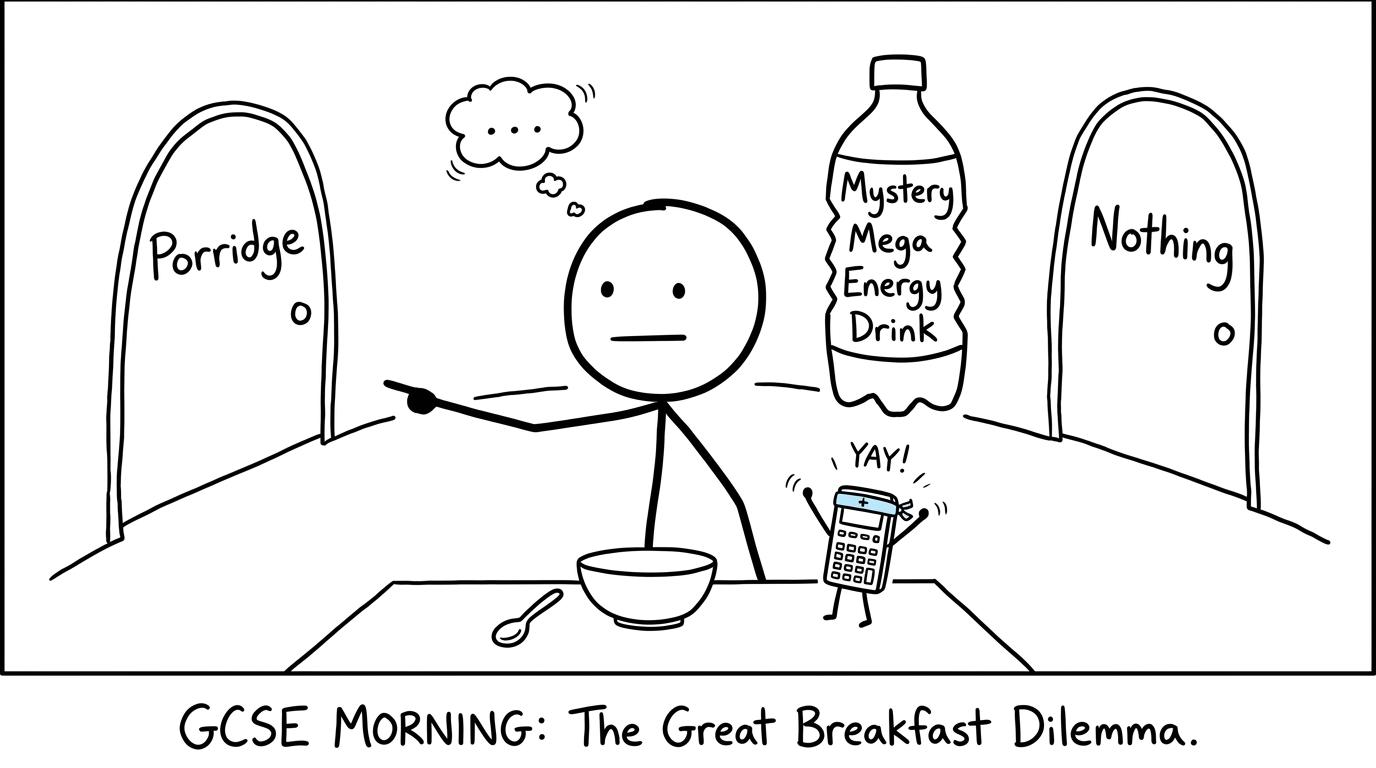 A student calmly chooses porridge instead of an energy drink before an exam
What actually supports focus and steady energy?
Further Maths places demands on working memory. You may need to hold several algebraic steps in mind, recognise a structure and decide which method applies. Feeling hungry, thirsty, jittery or uncomfortable does not erase your knowledge, but it can become an unnecessary competitor for your attention.
A sensible pre-exam meal therefore has three jobs: provide energy, prevent distracting hunger and feel comfortable to digest.
Starchy carbohydrates provide the meal’s foundation
The NHS Eatwell approach recommends basing meals around starchy foods, choosing wholegrain versions where possible. Before an exam, practical options include:
- porridge or overnight oats;
- wholegrain or seeded toast;
- a lower-sugar breakfast cereal;
- rice, pasta, potatoes or a wrap before an afternoon paper;
- oatcakes or wholegrain crackers as a snack.
Wholegrain choices usually contain more fibre and can help a meal feel satisfying. That does not mean white toast is “bad”, particularly if it is familiar and easier for you to eat when nervous. Exam morning is not a nutritional purity test.
Protein helps make the meal more satisfying
Pairing carbohydrate with protein can help you remain comfortably full through the paper. Suitable choices include:
- eggs;
- yoghurt or milk;
- cheese;
- beans or lentils;
- tofu;
- fish or chicken before an afternoon exam;
- nuts or nut butter, provided your school permits them and you have no allergy.
This combination matters more than finding one magical ingredient. Toast alone may leave some students hungry quickly; toast with egg, beans or nut butter is a more complete meal.
Fruit or vegetables add variety without complication
A banana with porridge, berries with yoghurt, mushrooms with eggs or vegetables in a lunchtime wrap can round out the meal. Choose something you already tolerate well. There is no need for an enormous smoothie containing every fruit in the kitchen.
Fruit juice and smoothies can contribute to fluid intake, but UK health guidance recommends limiting their combined amount to 150 ml150\text{ ml}150 ml per day because they contain free sugars. Water and milk are straightforward everyday choices.
Practical meals for morning and afternoon papers
There is no single best exam breakfast. Appetite, culture, dietary needs and the time of your paper all matter. A useful meal is one you can eat comfortably and have tested on an ordinary school morning.
Before a morning Further Maths exam
Possible combinations include:
- porridge made with milk or a fortified alternative, topped with banana;
- wholegrain toast with eggs and a piece of fruit;
- lower-sugar cereal with milk, yoghurt and berries;
- toast with nut butter and banana;
- baked beans on toast;
- yoghurt with oats and fruit.
If nerves make a large breakfast difficult, try a smaller familiar meal rather than nothing. Yoghurt with a banana, toast with a simple topping or a small bowl of cereal may feel more manageable.
Before an afternoon paper
Eat a normal breakfast, then choose a balanced lunch that is not unusually heavy. Options might include:
- a chicken, tofu, tuna or hummus wrap with salad;
- a rice bowl with vegetables and a familiar protein;
- a jacket potato with beans, tuna or cheese;
- a sandwich, fruit and yoghurt;
- pasta with a familiar, fairly simple sauce.
Leave yourself enough time to eat without rushing. An enormous fried or greasy meal immediately before sitting down may feel uncomfortable, especially when anxiety is already affecting your stomach.
If there is a long gap before the exam
Bring a simple snack that you know agrees with you. A banana, yoghurt, oatcakes, wholegrain crackers or fruit with a suitable protein can prevent hunger during a delayed start or a long journey.
Check your school’s allergy rules before bringing nuts. Food is normally kept outside the examination room unless your centre permits it or arrangements have been made for a medical reason.
Hydration helps, but more is not always better
UK guidance commonly suggests around 666 to 888 glasses of fluid across the day, although individual needs vary with factors such as weather and activity. The useful word is across. Drinking regularly is more comfortable than suddenly consuming several bottles before the exam.
Have water with your meal and take a clear bottle if your school allows it. Current JCQ instructions state that food and drink in the examination room are at the head of centre’s discretion. Bottles must be transparent with labels removed, while permitted food must be free from packaging and placed in a transparent container. Always follow your school’s instructions, particularly if you have a medical condition.
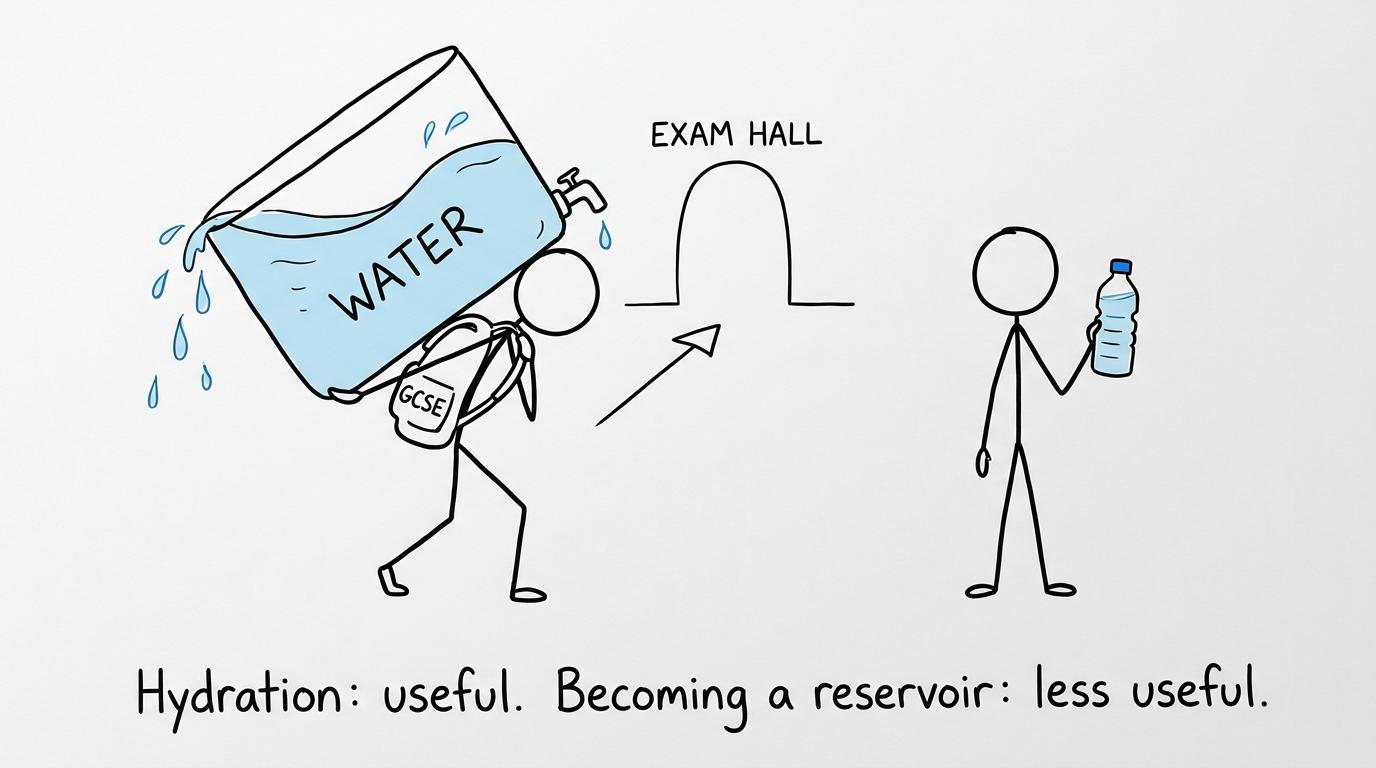 One student carries a sensible water bottle while another attempts to bring a reservoir
Do not overdrink in an attempt to become “extra hydrated”. Needing the toilet halfway through a demanding algebra question is unlikely to improve concentration. Sensible, regular hydration is enough.
Why energy drinks are a poor exam strategy
An energy drink can feel like insurance against tiredness. In reality, it adds variables on a morning when predictability is valuable.
High-caffeine drinks can contribute to feeling agitated, experiencing stomach discomfort and having disturbed sleep. UK labelling rules require drinks containing more than 150 mg150\text{ mg}150 mg of caffeine per litre, other than tea or coffee, to carry a high-caffeine warning stating that they are not recommended for children. The UK government has also consulted on restricting sales of high-caffeine energy drinks to under-161616s in England.
For an anxious student, caffeine may intensify sensations that already resemble exam nerves: shakiness, a racing heart or restlessness. Large sugary drinks may also provide short-lived energy without the staying power of a balanced meal.
Do not suddenly start drinking strong coffee because someone claims it improves performance. If you already have tea or coffee, avoid consuming much more than usual and protect the previous night’s sleep. Food cannot undo a night of last-minute cramming.
The calmer approach is to finish revision at a sensible time. MathsGenie’s GCSE Maths night-before plan can help you choose a short final task, pack your equipment and stop rather than continuing until exhaustion.
Practise your food routine with your paper routine
Students regularly practise mathematical techniques but improvise everything surrounding the exam. A better approach is to rehearse both.
On a weekend morning, eat the breakfast you intend to have, then sit an appropriate paper from the AQA GCSE Further Maths revision hub. Notice whether you become hungry, thirsty or uncomfortable. The purpose is not to measure tiny changes in marks. It is to remove uncertainty.
Use the same principle for your academic preparation:
- revise a method using a lesson;
- complete practice questions;
- sit a timed section;
- mark it honestly;
- correct the specific error;
- try the skill again later.
You can find board-organised resources through the wider GCSE Maths revision hub, then build exam stamina with GCSE past papers and mark schemes. MathsGenie’s past-paper tools also bring papers, timing and review together.
One rehearsal is worth more than ten theories about the perfect breakfast. You learn what keeps you comfortable in the same way you learn whether your algebra survives a clock: by testing it before the real event.
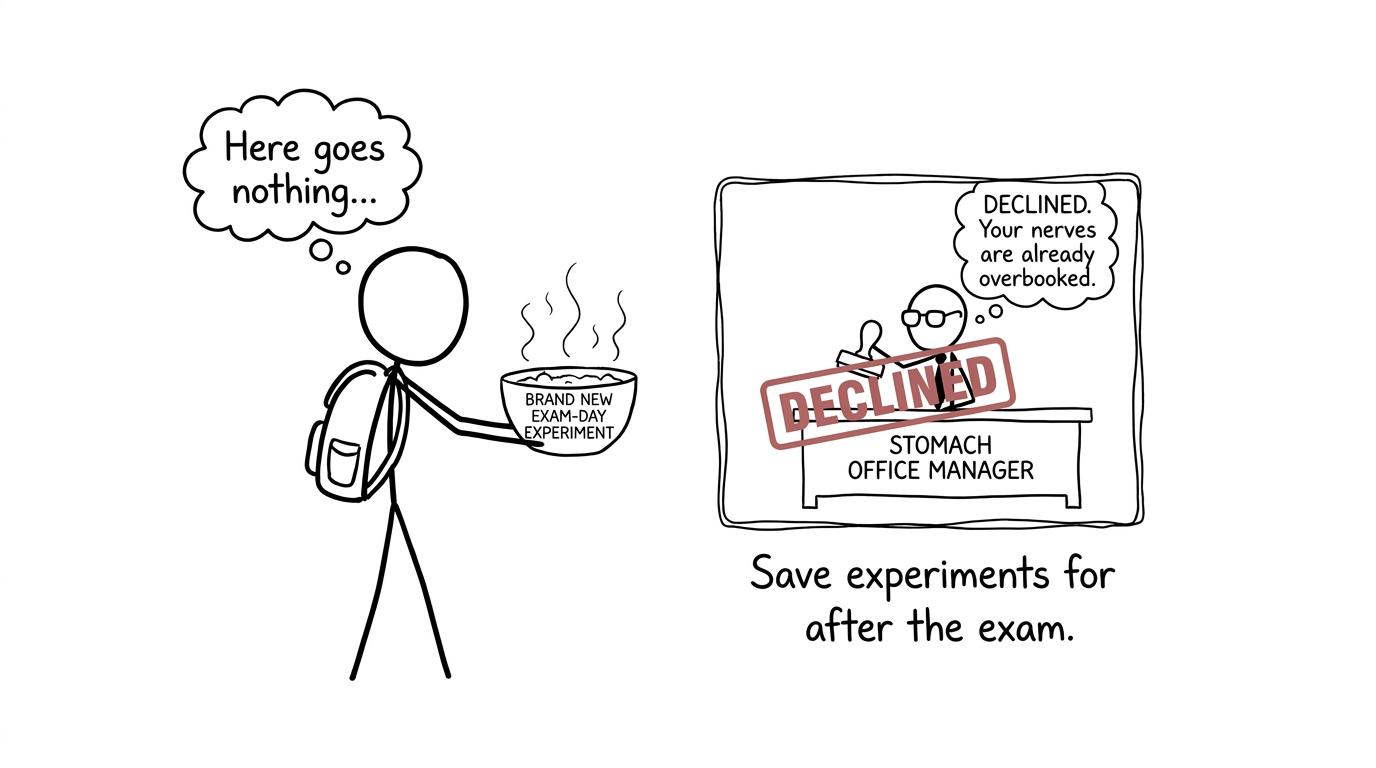 A student's stomach rejects a brand-new spicy exam-day experiment
Common mistakes before a Further Maths exam
Skipping food because you feel nervous
A full meal may feel difficult, but eating nothing can leave hunger competing for your attention. Choose a smaller, plain and familiar option if necessary. If anxiety regularly prevents you from eating or causes significant symptoms, speak to a parent, carer, school pastoral lead or healthcare professional.
Searching for a miracle “brain food”
No berry, supplement or breakfast will teach differentiation overnight. A varied diet supports general health, but exam performance still depends primarily on understanding, retrieval and practice.
Eating far more than usual
A huge meal can feel as distracting as hunger. Aim to feel comfortably satisfied, not completely full.
Trying something new
Exam morning is a poor time to discover how your stomach responds to an unfamiliar protein shake, supplement or spicy meal. Familiarity has practical value.
Using sugar or caffeine instead of sleep
Stimulants cannot recreate the benefits of proper rest. Use MathsGenie’s one-week GCSE revision plan or the built-in revision planner to spread practice earlier and protect the night before the paper.
Forgetting your individual needs
If you have diabetes, coeliac disease, a food allergy, an eating disorder, gastrointestinal difficulties or another medical condition, general online advice is not a substitute for your existing healthcare plan. Discuss examination arrangements with your school in advance.
Finish with preparation, not perfection
The best pre-exam meal is rarely dramatic. It is familiar food, eaten with enough time, alongside sensible hydration. Its success may be almost invisible: no hunger, no caffeine shock and no stomach demanding attention while you are trying to interpret a difficult function.
Then let preparation do the heavier work. Use MathsGenie’s free revision lessons and practice questions to strengthen weak topics, complete predicted GCSE papers under timed conditions, and review every attempt with mark schemes and video solutions. Add mini tests when you need a short diagnostic rather than another full paper.
Choose tomorrow’s breakfast tonight. Pack your clear water bottle. Then open one relevant Further Maths resource, complete a focused piece of practice and stop at the planned time. Calm exam mornings are not found at the bottom of an energy drink; they are built from a few sensible decisions made early.