

What to Eat Before GCSE Design and Technology Exam
What to eat before GCSE Design and Technology exam day: balanced meal ideas, hydration tips and practical ways to support steady focus and energy calmly.
The difficult thing about an exam morning is that everything suddenly feels important. Breakfast feels important. The journey feels important. Even choosing between toast and cereal can feel like a decision carrying several marks.
If you are wondering what to eat before GCSE Design and Technology exam day, the short answer is reassuringly ordinary: choose a familiar meal containing a starchy carbohydrate, some protein and, if practical, fruit or vegetables. Drink water regularly, avoid relying on energy drinks, and eat enough to prevent hunger without making yourself uncomfortably full.
There is no miracle food that recalls every material property or completes a calculation for you. The purpose of eating is simpler: to give your body dependable fuel while you concentrate, interpret technical information, evaluate designs and communicate clearly.
Your quick pre-exam food checklist
A useful exam-day plan looks like this:
- Eat a familiar breakfast or lunch rather than experimenting.
- Combine a starchy carbohydrate with a source of protein.
- Add fruit or vegetables where convenient.
- Drink regularly before arriving at school.
- Carry water if your school and examination rules permit it.
- Have a small, familiar snack available for before the exam if needed.
- Avoid using sweets, sugary drinks or high-caffeine energy drinks as your main fuel.
- Prepare food, equipment and travel plans the evening before.
This is not about producing a nutritionally perfect plate. It is about removing avoidable distractions: hunger, thirst, digestive discomfort and the anxious rush of having made no plan.
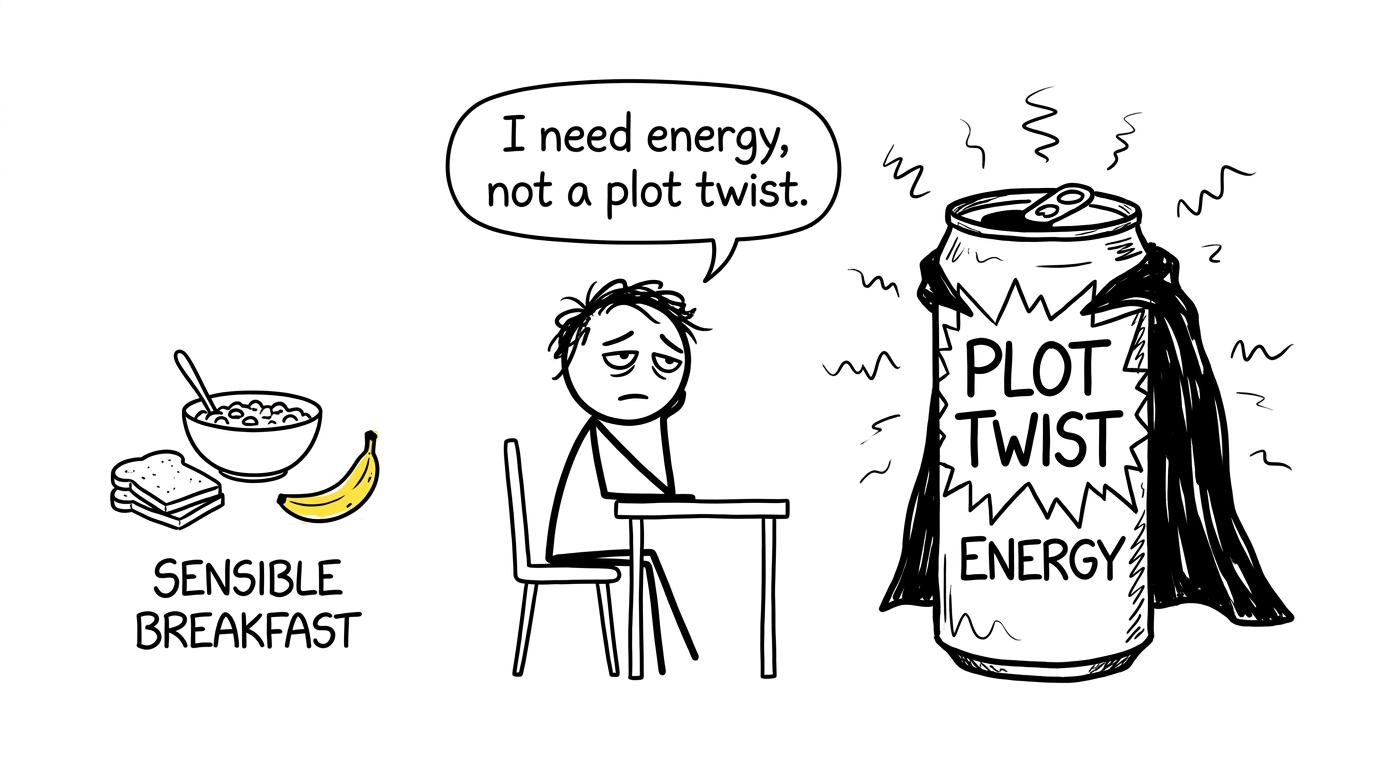 A student choosing dependable breakfast energy over an energy-drink plot twist
What actually supports focus and steady energy?
Your brain needs energy, but more sugar does not automatically mean more concentration. Once the body has enough glucose available, pouring in extra sugary food does not keep increasing brain power.
The calmer approach is a mixed meal. Starchy foods provide carbohydrate, while protein and fibre can help the meal feel more satisfying. That matters during a written Design and Technology paper because you may need to maintain attention across short-answer questions, calculations and longer evaluative responses.
For example, the current AQA GCSE Design and Technology written paper lasts 222 hours, and at least 15%15\%15% of its assessment is mathematical. Formats differ across Edexcel, AQA, OCR and Eduqas specifications, so check your own exam board and timetable. Whatever the exact structure, sustained attention is more useful than a brief feeling of being highly energised.
Begin with a starchy carbohydrate
Suitable choices include:
- porridge or a lower-sugar wholegrain cereal;
- wholemeal toast, a bagel or a wrap;
- potatoes, rice or pasta before an afternoon examination;
- fruit alongside another part of the meal.
Wholegrain and higher-fibre options are often described as providing steadier energy because they are generally digested more gradually than highly refined, sugary alternatives. However, exam morning is not the time to force down a food you dislike. Familiarity and comfort matter too.
Add a source of protein
Protein can make a meal more filling. Practical options include:
- eggs;
- yoghurt or milk;
- cheese;
- beans or lentils;
- tofu;
- chicken or fish;
- nut or seed butter, where allergies and school rules allow it.
You do not need all of these. One suitable addition is enough to turn plain toast or cereal into a more substantial meal.
Include fruit or vegetables without overcomplicating it
A banana, berries, an apple, tomatoes or vegetable sticks can contribute useful nutrients and fibre. Choose something easy to eat and already familiar to you.
A plate does not become ineffective because it lacks an impressive collection of ingredients. Porridge with milk and banana can work. So can eggs on toast with fruit, or yoghurt with oats and berries. For an afternoon paper, a sandwich or wrap with a protein filling, fruit and water is a practical lunch.
Breakfast ideas for a morning D&T exam
The best breakfast is one you can realistically prepare, tolerate and finish. Options include:
- porridge made with milk or a fortified alternative, topped with banana;
- wholemeal toast with eggs;
- lower-sugar cereal with milk and fruit;
- yoghurt with oats and berries;
- toast with nut or seed butter, if suitable for you;
- beans on toast;
- a small sandwich with a familiar filling if conventional breakfast food does not appeal.
If nerves reduce your appetite, a smaller meal is usually more manageable than attempting a large cooked breakfast. Yoghurt and fruit, toast, a banana with milk, or a small bowl of cereal may be easier. Eating something useful is generally preferable to pursuing an ideal breakfast and managing none of it.
Students with allergies, diabetes, coeliac disease, digestive conditions or other medical requirements should follow their established healthcare advice. An internet checklist should never replace an individual medical plan.
What to eat before an afternoon exam
An afternoon examination needs a slightly different rhythm. Eat your normal breakfast, then have a balanced lunch early enough that you are not rushing into the hall while still uncomfortably full.
Useful lunches include:
- a wholemeal sandwich or wrap with egg, chicken, tuna, cheese, hummus or tofu;
- rice, pasta or potatoes with vegetables and a familiar protein;
- soup with bread and yoghurt;
- beans on toast with fruit;
- leftovers from a balanced evening meal, provided they are stored and reheated safely.
Very large, rich or greasy meals may leave some students feeling sluggish or uncomfortable. The important word is some: people respond differently. Your safest guide is what has worked on an ordinary school day.
A small snack before the paper may help if lunch was early or you are genuinely hungry. Consider a banana, yoghurt, toast, oatcakes, fruit with cheese, or a lower-sugar cereal bar. Check school allergy policies before bringing nuts.
 A banana conducts a highly serious exam-bag security check
Hydration matters more than a last-minute boost
NHS guidance recommends drinking regularly through the day, with water a straightforward choice. The British Dietetic Association also notes that dehydration can contribute to headaches, tiredness and reduced concentration.
Do not try to correct a day of barely drinking by rapidly consuming a huge bottle immediately before the exam. That may simply make you uncomfortable or desperate for the toilet. Drink normally and regularly from breakfast onwards.
Your school can confirm whether water is allowed in the examination room and what type of bottle is required. Clear, label-free bottles are commonly requested, but you should follow your centre's instructions rather than assume.
Why energy drinks are a poor exam strategy
Energy drinks promise exactly what an anxious student thinks is missing: instant alertness. The problem is that alertness and calm concentration are not identical.
High-caffeine drinks can contribute to agitation, irritability, headaches, stomach discomfort and disturbed sleep. UK labelling rules require drinks containing more than 150 mg150\text{ mg}150 mg of caffeine per litre, apart from tea and coffee, to carry a high-caffeine warning stating that they are not recommended for children. The Food Standards Agency advises children and people sensitive to caffeine to consume it only in moderation.
A large caffeine dose is especially unhelpful if you do not normally consume caffeine. Exam day is not the moment to discover how your body reacts.
If you ordinarily drink tea or coffee, avoid suddenly increasing the quantity in search of extra marks. Likewise, withdrawing abruptly from a strong daily habit may cause discomfort for some people. If caffeine use concerns you, discuss it with a parent, carer or healthcare professional rather than improvising on the morning.
The evening before matters too
Breakfast cannot fully repair a night spent revising until the early hours. Eat a normal evening meal, hydrate through the day and stop revision early enough to protect your sleep routine.
Preparation also reduces morning pressure. Put out breakfast items, fill your bag and check the examination time. For the mathematical content that can appear in Design and Technology, avoid trying to learn everything overnight. Instead, use the GCSE Maths revision hub to refresh a small number of relevant skills, then stop.
D&T calculations can draw on areas such as ratio, percentages, dimensions, area and volume. MathsGenie's guide to the best order for learning GCSE maths topics can help you identify foundations, while the GCSE maths topics by exam board and tier guide provides a broader curriculum map.
If the exam is very close, the GCSE maths night-before plan offers a calmer alternative to unfocused cramming.
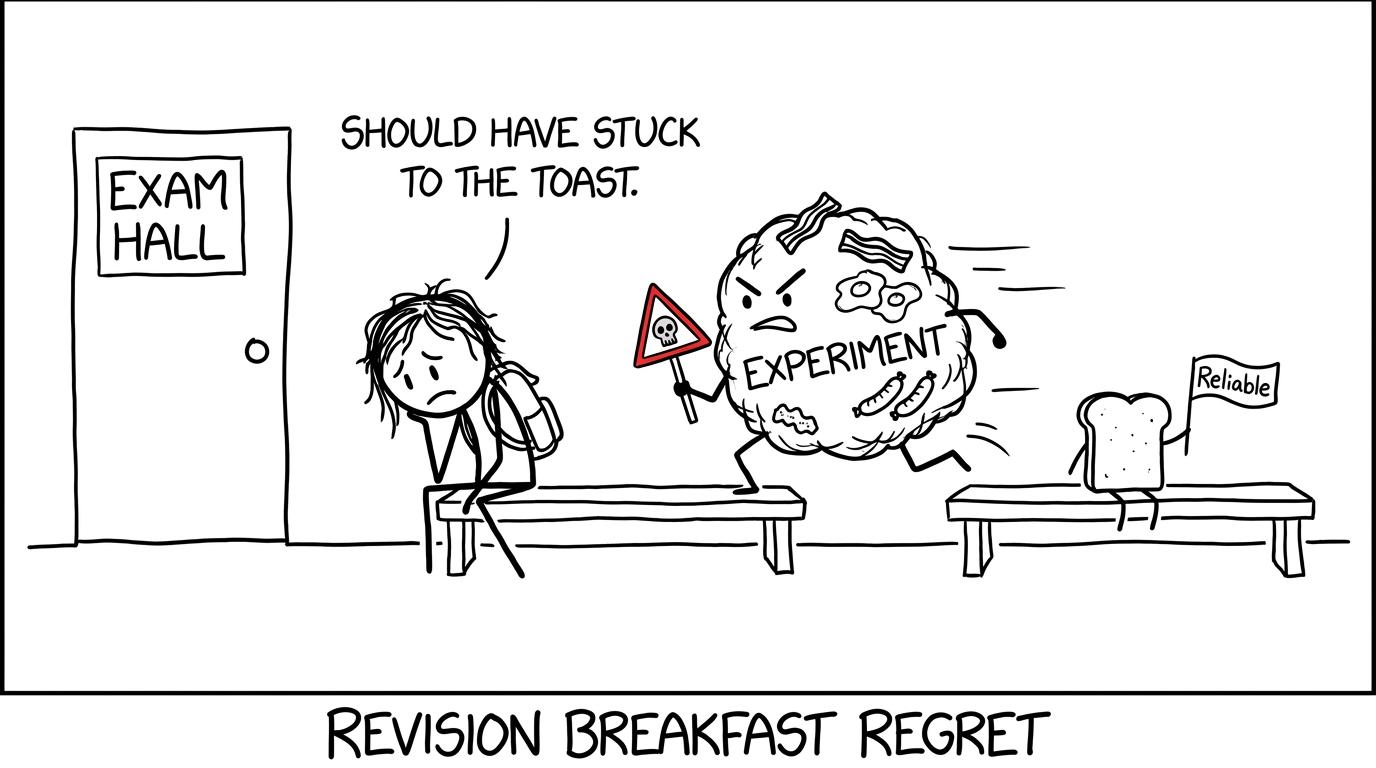 A familiar slice of toast watches an experimental breakfast cause unnecessary drama
Common mistakes before a GCSE Design and Technology exam
Skipping food because you feel nervous
Anxiety can reduce appetite, but an empty stomach may become another distraction. Try a smaller familiar option, eaten slowly, rather than insisting on a large meal.
Searching for a magical brain food
No single breakfast can replace knowledge, sleep or practice. Food supports the conditions for thinking; it does not insert information into memory.
Trying an unfamiliar meal
A new supplement, unusually spicy meal or enormous high-fibre breakfast may cause digestive discomfort. Reliable beats adventurous on exam day.
Depending on sugar for instant energy
Sweets and sugary drinks may feel like an emergency solution, but they are not a balanced meal. If you enjoy something sweet, have it alongside proper food rather than using it as your only fuel.
Drinking too much immediately before the paper
Hydration works best as a regular habit. A sudden large intake may leave you uncomfortable and distracted.
Revising through breakfast
Reading notes while eating can make both activities rushed. Sit down, eat, then use a brief and specific final check if it genuinely helps. MathsGenie's GCSE one-month revision plan explains why planned retrieval and exam practice are stronger than endless rereading.
Treating preparation as only a food problem
Focus also depends on sleep, familiarity with the paper, equipment and realistic practice. Use GCSE past-paper guidance to build exam stamina well before the day, and use the GCSE predicted topics guide without mistaking predictions for guarantees.
A calm plan for the morning
Wake with enough time to eat without rushing. Have a familiar balanced meal and drink water normally. Check your equipment, examination time and travel arrangements. If you become hungry later, use the small snack you planned rather than buying the most dramatic product available.
Then let breakfast fade into the background. That is its real job. Good preparation should make fewer demands on your attention, leaving you free to read each question carefully, select relevant technical knowledge, show calculation steps and evaluate designs with precision.
MathsGenie can support the part that food cannot do for you. Use the free revision lessons to revisit methods, practice questions and mini tests to secure them, and past papers, predicted papers, mark schemes and video solutions to develop exam technique. Start with the GCSE Maths revision resources, choose one useful next task, and make exam morning feel less like an emergency and more like the final step in a plan.











