

Tell a Teacher You're Struggling With GCSE English
Tell a teacher you're struggling with GCSE English Language early. Learn what to say, what support to request and how to protect maths revision time too.

There is a particular kind of worry that grows quietly. You understand less in each English lesson, unfinished practice piles up, and asking for help starts to feel harder precisely when it would be most useful.
If you are wondering whether to tell teacher struggling GCSE English Language, the short answer is yes. Tell your English teacher, form tutor or another trusted member of staff as early as you can. You do not need a dramatic explanation or proof that things are going badly. A simple, specific conversation gives your school time to identify the problem, offer targeted help and monitor whether that help works.
This matters for maths students too. English anxiety consumes revision time and attention. Dealing with it early can protect the calmer, consistent routine you need for both subjects.
Your immediate checklist
- Choose an English teacher, form tutor, head of year or trusted member of staff.
- Describe what you find difficult rather than saying only that you are “bad at English”.
- Take one marked response, mock paper or unfinished task if possible.
- Ask for one or two clear actions to complete next.
- Agree when you will review your progress.
- Mention any reading, writing, concentration or timing difficulty that affects other subjects too.
- Continue your maths revision with a manageable plan rather than allowing English to take over every evening.
The goal is not to turn one conversation into a complete solution. It is to replace private uncertainty with a useful next step.
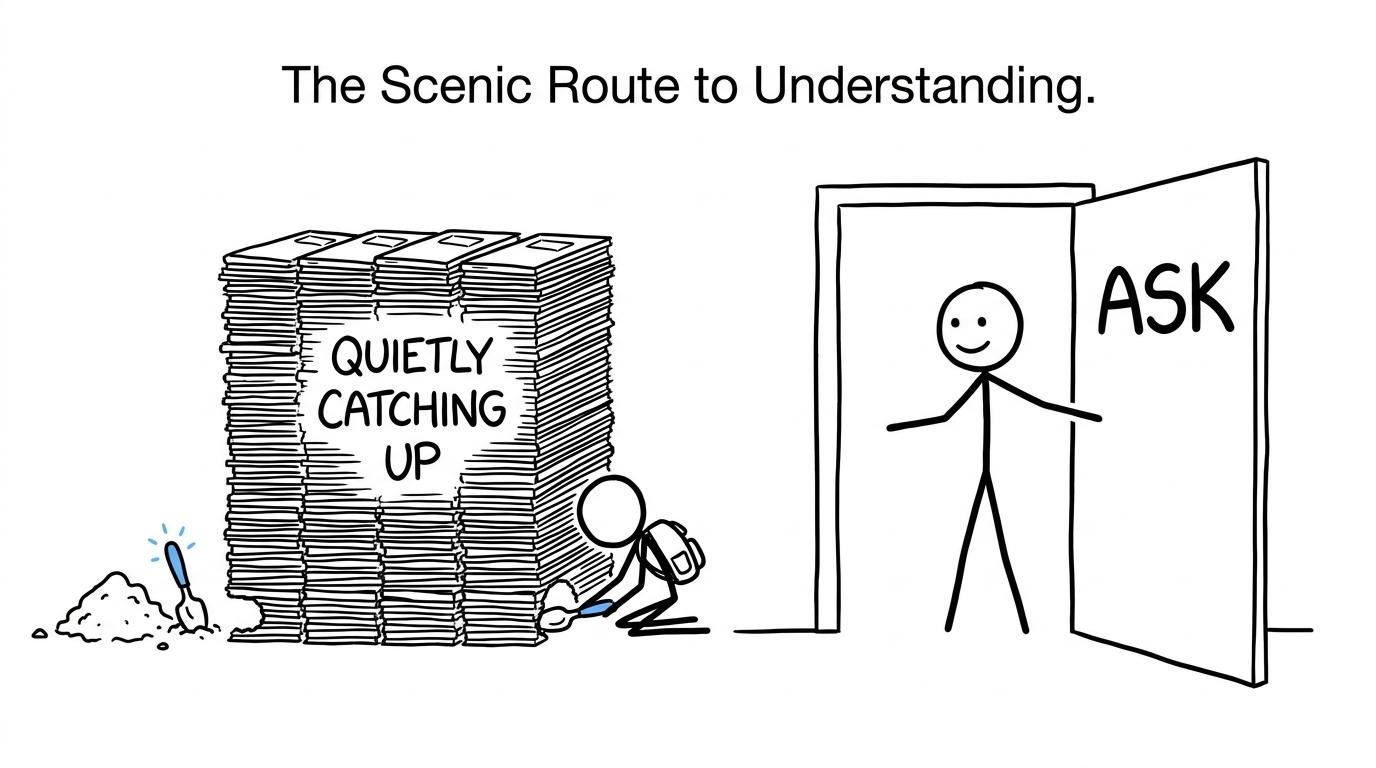 A student builds a fortress of books instead of using the open door marked ask
Why speaking early tends to work better
Struggling alone often feels responsible. You tell yourself that you will catch up at the weekend, watch a few videos or write another practice answer. But independent effort is only efficient when you know what needs fixing.
GCSE English Language is assessed through distinct skills. The assessment objectives cover retrieving and interpreting information, analysing language and structure, comparing viewpoints, evaluating texts, communicating effectively, and using accurate vocabulary, sentences, spelling and punctuation. These objectives are set by Ofqual across GCSE English Language specifications, although paper structures and question wording differ between AQA, Edexcel, OCR and Eduqas.
That distinction matters. “I struggle with English” is too broad to guide revision. A teacher may be able to identify that the real issue is selecting evidence, explaining effects, organising extended writing, interpreting a question or completing responses within the time.
Once the difficulty has a name, support can become more precise. Your teacher might direct you towards a particular question type, model the planning process, recommend a short intervention, provide feedback on one paragraph or help you build a realistic practice routine.
Early disclosure also creates time to see whether the support is helping. A strategy can be tried in lessons or mocks, reviewed and adjusted. Waiting until the final weeks removes much of that valuable feedback time.
What to say to your teacher
You do not need to sound confident. You only need to be clear enough to begin.
You could say:
“I am finding GCSE English Language difficult, especially analysing the extracts and finishing my answers. Could we look at my last assessment and decide what I should practise first?”
Or:
“I am spending a long time revising English, but I do not know whether I am working on the right things. Could you help me identify my main weakness?”
A useful message contains three elements:
- The difficulty: what feels confusing, slow or unreliable.
- The evidence: a mock result, teacher comment, unfinished answer or repeated problem.
- The request: help choosing the next skill, resource or support route.
If speaking after class feels uncomfortable, ask for a short meeting by email or through your school’s normal communication system. You can also approach your form tutor first. The important step is making the difficulty visible to someone who can help.
Be specific about what struggling means
Before the conversation, consider which descriptions fit your experience:
- You understand a text but cannot turn your ideas into an analytical answer.
- You find unfamiliar or older texts difficult to process.
- You cannot select concise, relevant evidence.
- Your teacher says that you identify techniques without explaining their effects.
- You run out of time before completing the writing section.
- You lose marks through spelling, punctuation or sentence control.
- You misunderstand command words or what a question is asking.
- Anxiety makes it difficult to start or organise extended responses.
- Reading, handwriting, processing or concentration difficulties affect English and other examinations.
Bring one representative piece of work rather than a bag full of everything you have ever completed. A marked mock can help your teacher distinguish a knowledge gap from an exam-technique or timing problem.
This is similar to diagnosing weak maths topics. The MathsGenie guide to finding your weakest GCSE topics recommends using evidence from marked work rather than relying on a general feeling. That principle travels well between subjects: locate the repeated loss, then practise the smallest skill capable of repairing it.
What support might follow
A teacher cannot promise a particular grade, and schools organise support differently. However, a conversation may lead to:
- feedback focused on one assessment objective;
- model answers or annotated extracts;
- a short sequence of targeted practice;
- extra explanation during or after a lesson;
- a revision clinic, intervention group or departmental resource;
- help planning timed responses;
- contact with a form tutor, head of year, pastoral team or SENCO where appropriate;
- a date for reviewing your work and deciding what comes next.
Ask for a small number of priorities. Five different resources can look like support while functioning as another pile of decisions. One question type, one practice task and one review date are often easier to act on.
Then use feedback actively. Complete the task, check the comments and return with a precise follow-up question. Support works best as a loop, not a one-off rescue.
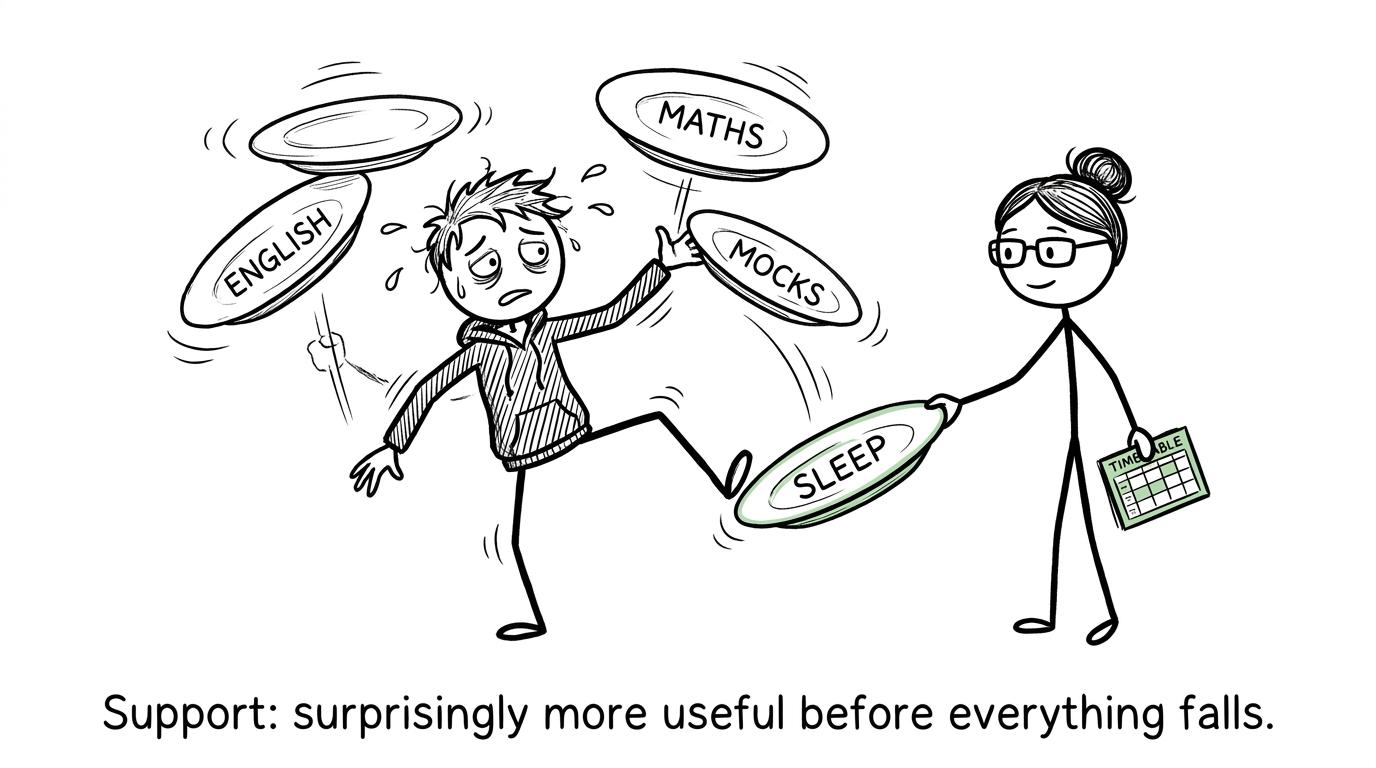 A teacher catches a revision plate before everything falls
Tell someone early if the difficulty may be wider
Sometimes the issue is not limited to English content. If you consistently struggle to process written questions, finish timed assessments, read accurately, write legibly or concentrate under exam conditions, explain that pattern rather than hiding it.
This does not mean you automatically qualify for access arrangements. Under current JCQ rules, arrangements are based on a student’s individual needs, appropriate evidence and their normal way of working. Schools and colleges are responsible for identifying needs and managing applications where required. Access arrangements must not change what the assessment is designed to test.
That is another reason not to wait. A teacher can pass relevant concerns to the school’s SENCO or examinations team, who can explain the proper process. They may need classroom feedback, assessment evidence or trials of support. Your subject teacher cannot simply award extra time after an informal request, but they can help the right staff understand what is happening.
If stress is affecting sleep, attendance or your ability to cope, tell a trusted adult and use your school’s pastoral support as well. Academic advice and wellbeing support solve different parts of the problem.
Protecting your GCSE maths revision
Students preparing for maths exams often face a difficult trade-off. A weak English mock creates urgency, so English expands to occupy every free evening. Maths then becomes tomorrow’s problem.
A better response is to make both plans more specific. Keep your English support task narrow, then preserve regular maths practice. The GCSE Maths revision hub brings together free revision lessons, exam questions, worksheets, practice papers and board-specific resources for Edexcel, AQA, OCR and Eduqas.
Your weekly routine might include:
- two short English sessions on the skill agreed with your teacher;
- two or three focused maths topic sessions;
- one mini test, timed section or mixed assessment;
- time to mark, correct and revisit mistakes.
If choosing maths topics feels overwhelming, use the recommended order for learning GCSE maths topics. When you are ready for exam practice, read when to start GCSE past papers rather than attempting full papers before they become useful.
The underlying idea is simple: English should receive the support it needs, but panic should not be allowed to rewrite your entire revision timetable.
Turn teacher feedback into a repeatable system
Advice disappears quickly when it remains verbal. After your conversation, write down:
- the specific skill you are improving;
- the task you will complete;
- when you will complete it;
- how you will check it;
- when your teacher will review progress.
Apply the same discipline to maths. Use active recall for GCSE maths revision for methods and facts, then move to practice questions. For Edexcel students, GCSE Maths past papers with mark schemes can reveal whether a topic survives under timed conditions.
Predicted papers can add fresh practice near the exams, but they are not forecasts or substitutes for learning the specification. The MathsGenie guide to predicted GCSE topics explains how to use them as focused rehearsal rather than a guarantee.
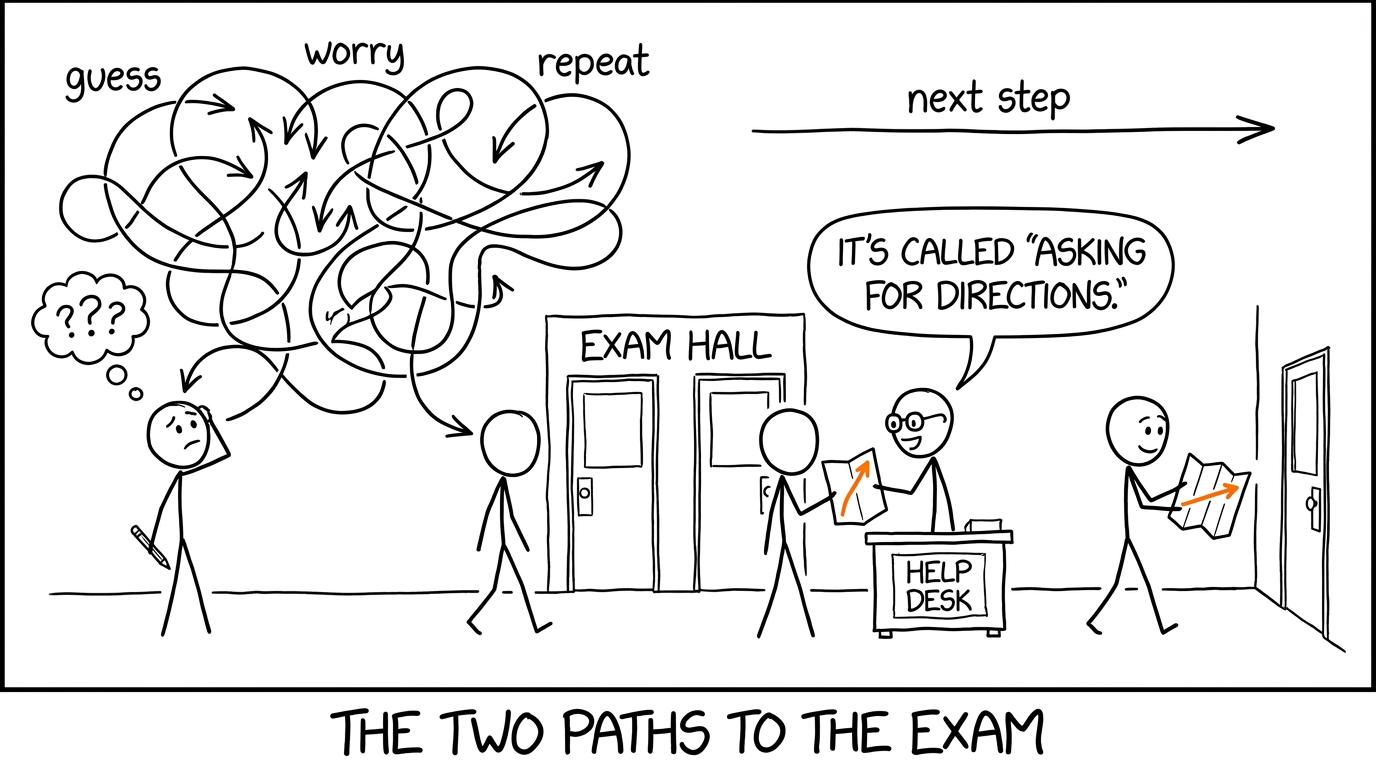 One student guesses through a maze while another asks for a map
Common mistakes when asking for help
Waiting for the next mock
A poor mock can provide evidence, but you do not need another disappointing result before speaking. Existing classwork and your description of repeated difficulties may already be enough to start a useful conversation.
Saying only “I do not get English”
This communicates distress but not direction. Add one example: comparison questions, planning, timing, analysis or technical accuracy.
Asking for every resource available
More material is not always more support. Ask what to practise first and how you will know whether it has improved.
Expecting an instant access arrangement
Your teacher can listen and refer concerns, but formal arrangements follow school and JCQ processes. Be honest, provide evidence when asked and speak early enough for the appropriate staff to investigate.
Abandoning maths until English is fixed
English improvement is rarely completed in one weekend. Maintain a smaller but regular maths routine. If an exam is very close, the GCSE maths night-before plan can help you avoid panic-driven revision.
Asking is an academic skill
Telling a teacher that you are struggling is not an admission that you cannot succeed. It is a decision to stop guessing.
Speak early, describe the difficulty precisely and leave the conversation with one manageable action. Then protect your wider timetable. For maths, MathsGenie provides the free structure: revision lessons to rebuild methods, practice questions and mini tests to test them, and past papers, predicted papers, mark schemes and video solutions to prepare for the exam.
Open the MathsGenie GCSE Maths revision hub, choose one weak topic and begin a focused session today. Quiet worry consumes time. A clear next step gives it back.










