

Tell Parents You're Struggling With GCSE Food
Tell parents you're struggling with GCSE Food and Nutrition using a calm script, clear evidence and a practical plan that avoids blame, panic and lectures.

Falling behind in GCSE Food Preparation and Nutrition can feel strangely difficult to explain. It is not only a written subject. There may be practical skills, food science, nutrition, planning, evaluation and non-exam assessment competing for your attention, alongside GCSE maths and everything else.
If you are trying to work out how to tell parents you are struggling with GCSE Food and Nutrition, the short answer is this: choose a calm moment, explain the specific problem, say what you have already done and ask for one or two practical forms of support. You do not need to arrive with a perfect recovery plan. You only need to begin an honest, useful conversation.
The aim is not to confess failure. It is to bring another person onto your side.
A quick conversation checklist
Before speaking to your parents or carers, try to have these five things ready:
- The problem: what exactly are you finding difficult?
- The evidence: which deadline, topic, practical skill or piece of feedback concerns you?
- The impact: how is it affecting your work, confidence or other GCSE revision?
- Your next step: what will you do at school?
- Your request: what specific help would you like at home?
Keep this list short. A conversation usually becomes a lecture when everyone is discussing a large, frightening idea such as “falling behind” but nobody knows what that means in practice.
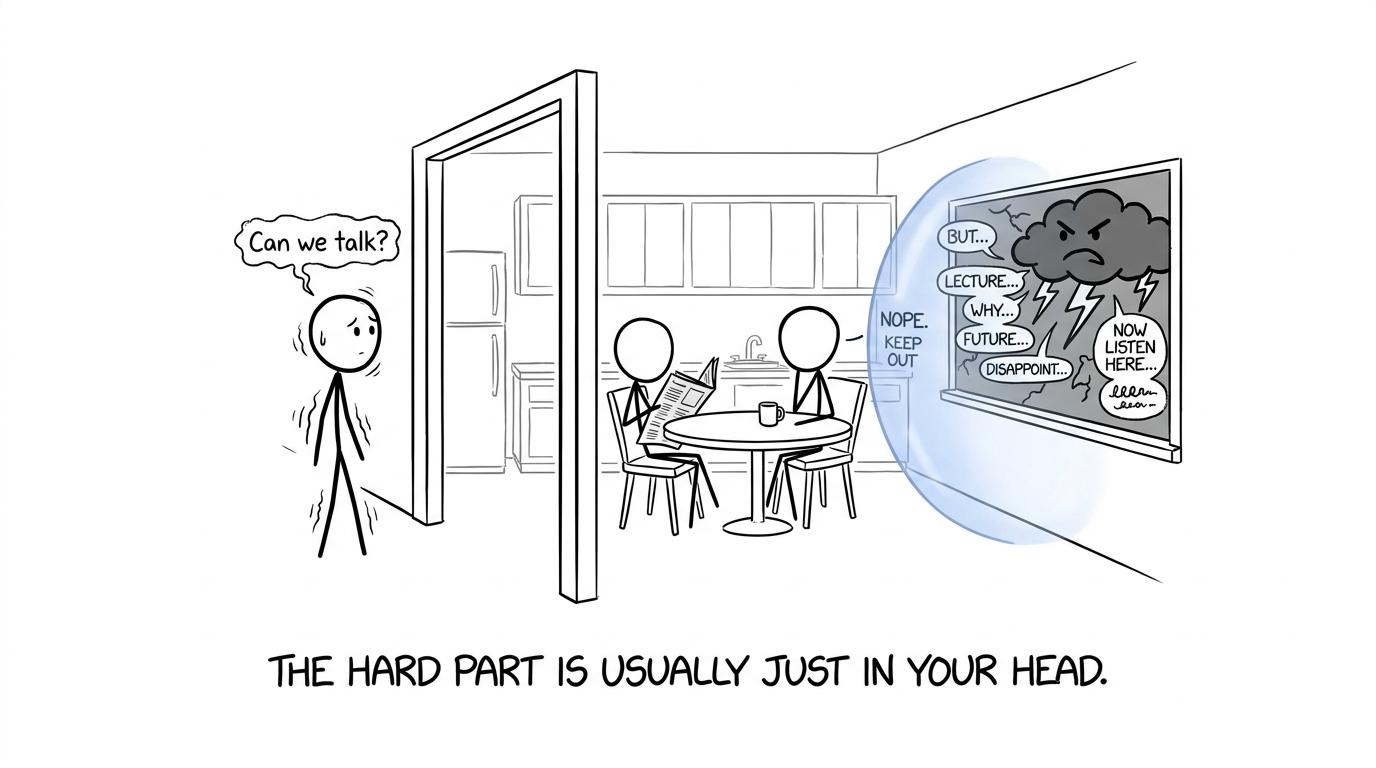 A nervous GCSE student preparing to begin a calm conversation with parents
Work out what struggling actually means
“I'm bad at Food” is a feeling, not a diagnosis. Your parents cannot respond well to it because it does not identify what needs to change.
GCSE Food Preparation and Nutrition commonly combines a written examination with non-exam assessment, although the precise structure and timings depend on your exam board and school. For example, current OCR and Eduqas specifications divide the qualification equally between the written examination and NEA. Their NEA includes a food investigation worth 15%15\%15% and a food preparation task worth 35%35\%35%. You should check your own specification and ask your teacher rather than assuming every board operates identically.
Your difficulty might involve:
- understanding nutrients, food science or food provenance;
- remembering technical vocabulary;
- analysing results from an investigation;
- planning practical work within a time limit;
- selecting and demonstrating suitable cooking skills;
- writing evaluations that use evidence;
- keeping up with an NEA deadline;
- applying ratios, percentages, units or graphs;
- balancing Food with maths and your other GCSE subjects.
Turn the general worry into one sentence. For example: “I understand the practical lessons, but I am behind on the written analysis,” or “I am struggling to plan dishes that meet the brief and show enough skill.”
That sentence gives the conversation somewhere to go.
Choose a moment that makes listening possible
Timing cannot guarantee a perfect response, but it can improve the odds.
Avoid beginning the conversation when somebody is rushing out, dealing with another problem or already annoyed. Ask for a short, defined amount of time instead:
“Could we talk for ten minutes after dinner? I need some help making a plan for Food Preparation and Nutrition.”
This opening does three useful things. It warns them that the conversation matters, gives it a boundary and makes clear that you want help rather than an argument.
If speaking face to face feels overwhelming, send a message first. You might say that you are worried about the subject and would like them to listen before offering solutions. Writing down your first two sentences can also stop nerves from pushing you towards “It doesn't matter” just when the conversation begins.
Use a script that is honest and specific
You do not need polished language. You need a clear sequence:
“I need to tell you something about GCSE Food Preparation and Nutrition. I have fallen behind with [specific area]. I think this happened because [brief explanation]. I have not ignored it, but what I am doing is not enough. I am going to speak to my teacher about [next step]. Could you help me with [specific request]?”
Keep explanations factual. There is a difference between explaining and making excuses. “I underestimated how long the analysis would take” identifies a planning problem. “There was no time” closes the discussion without showing what could change.
You can also state what you do not need:
“I know this matters. A long lecture will make me more anxious, so could we focus on what I can do this week?”
That is not disrespectful. It is a reasonable attempt to keep the discussion productive.
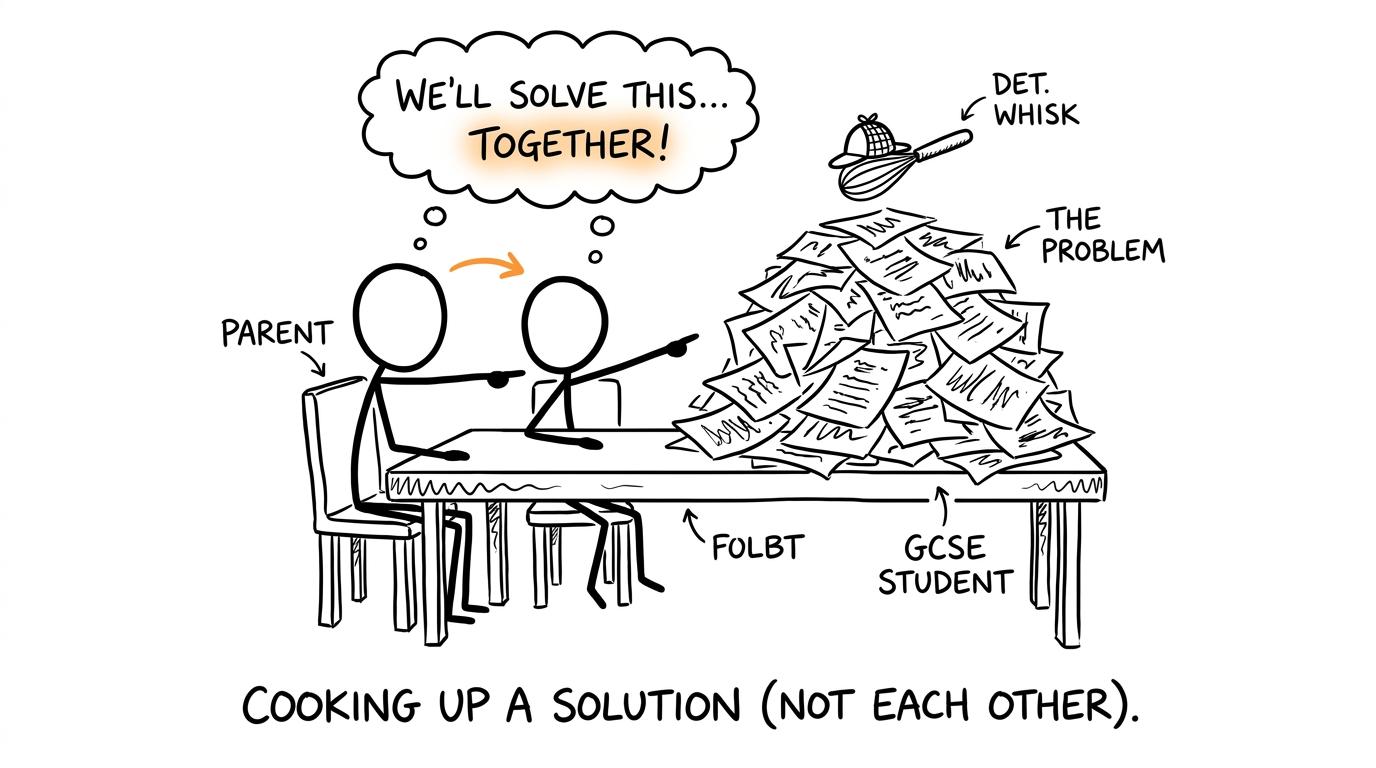 A student and parent working together against the problem
Make the problem something you face together
Parents sometimes react strongly because they hear “I am struggling” as “a serious problem has been hidden from me”. Their first response may come from worry rather than judgement. That does not make an unhelpful lecture pleasant, but recognising the worry can help you redirect it.
Try language that puts both of you on the same side:
- “I want to deal with this before it gets worse.”
- “Can we agree on the next two steps?”
- “Could you help me protect two quiet revision sessions this week?”
- “Can I explain the whole situation before we decide what to do?”
Ask for practical support rather than constant monitoring. Useful requests could include buying agreed ingredients, helping you find a quiet workspace, checking that you have packed equipment, listening while you explain a food-science process or helping you contact school.
Your parent should not write, rewrite or produce assessed NEA work for you. The work must remain your own, and your teacher is the right person to explain the permitted support. Help at home should create the conditions in which you can work, not replace your work.
Bring a small recovery plan
A plan makes the conversation less frightening, but it should be small enough to start. A huge colour-coded timetable can look impressive while avoiding the task that matters most.
Speak to your teacher first
Ask your teacher:
- Which part of my work needs attention most urgently?
- What deadline am I working towards?
- Which improvements are still possible within the assessment rules?
- Is there a model structure, checklist or revision resource I should use?
- Can you clarify my exam board's assessment requirements?
Do not guess what can be changed in NEA. Your teacher can explain the relevant controls and the kind of feedback permitted.
Separate catch-up from ordinary revision
Catch-up repairs unfinished or misunderstood work. Revision helps you retrieve and apply content you have already met. They need different sessions.
For example, your plan might contain:
- one session to organise teacher feedback and outstanding tasks;
- one session to revise a weak theory area;
- one practical planning session, if your teacher recommends it;
- one short review with your parent at the end of the week.
Use tasks you can observe, such as “complete the teacher's nutrition questions”, rather than vague goals such as “revise Food”.
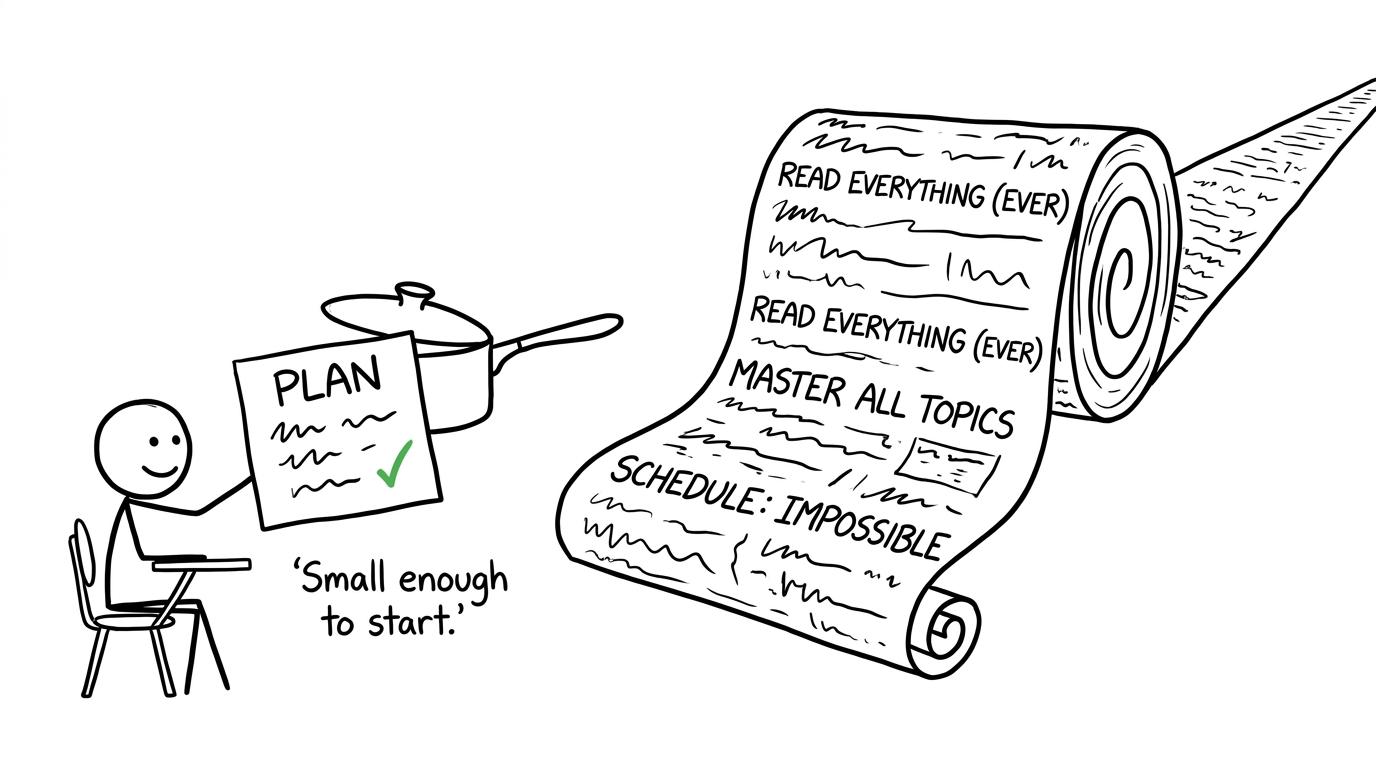 A student choosing a small workable plan instead of an enormous timetable
Connect Food revision with GCSE maths
If you are preparing for maths exams too, Food Preparation and Nutrition does not have to become an entirely separate revision world. Some skills overlap.
Recipe scaling uses ratio and direct proportion. Nutritional information may involve fractions, percentages and comparison. Practical planning can require time calculations, while investigations may involve tables, averages and graphs. Units also matter when interpreting quantities accurately.
If these calculations are part of the difficulty, revisit the underlying maths rather than memorising isolated answers. MathsGenie's conversions and units revision guide and OCR percentages resources provide focused practice. The GCSE Maths self-assessment sheet can help you identify whether ratio, percentages or another skill is the real gap.
Do not let Food catch-up consume every maths session. The MathsGenie staged revision scheme lets you diagnose a maths weakness, use the video lessons and then answer exam-style questions. That creates a clearer boundary: a defined Food task, a defined maths task and then a proper break.
What to do if the conversation becomes a lecture
If your parents interrupt, raise their voice or begin listing every previous mistake, do not try to answer ten accusations at once. Return to the purpose of the discussion:
“I understand that you're worried. I am worried too. Can we come back to what I should do tomorrow?”
You can ask for a pause if emotions are rising. Say when you will return to the conversation so that the pause does not sound like avoidance.
If talking at home does not feel safe or you expect a reaction that could put you at risk, speak first to a trusted adult. That might be your Food teacher, form tutor, head of year, school pastoral lead or another relative. You deserve support, and you do not have to handle a frightening conversation alone.
Common mistakes when telling parents you are struggling
Waiting until the deadline has passed
Shame often encourages delay. Unfortunately, fewer options may remain later. Speak up when you notice the pattern, even if you cannot yet explain everything.
Starting with only the worst-case outcome
Saying “I am going to fail” can cause panic before the facts are clear. Describe the actual gap and ask your teacher what it means for your progress.
Asking parents to solve the academic work
Parents can provide time, encouragement and practical support. Subject guidance and decisions about assessed work must come from your teacher.
Promising an unrealistic transformation
Do not promise to revise every evening or finish everything immediately. Choose a few actions you can complete and review.
Allowing Food to replace all other revision
One difficult subject can take over because it feels urgent. Keep maths moving with short, focused practice. When appropriate, use Edexcel GCSE Maths past papers, mark schemes and solutions to identify the topics actually costing you marks. MathsGenie's guide to starting GCSE past papers can help you build practice gradually rather than waiting for a panic-filled final week.
A difficult conversation can become a turning point
Telling your parents that you are behind may feel like making the problem real. Usually, the problem was already real. The conversation simply gives it witnesses, boundaries and a chance to improve.
Start with one accurate sentence. Bring one piece of evidence. Ask for one useful form of support. Then speak to your teacher and follow the smallest sensible plan.
For the maths beside your Food course, use MathsGenie as your free revision base. Begin with revision lessons and practice questions, check your understanding with mini tests, then move towards past papers and predicted papers. Mark your work carefully with mark schemes and use video solutions when a method is unclear. The goal is not to pretend you are never struggling. It is to notice sooner, ask for help clearly and take the next step while it can still make a difference.











