

GCSE Resits Explained: When and How to Retake
GCSE resits explained: learn when you can retake maths, how to register through a school, college or exam centre, then prepare with a clear revision plan.
A GCSE result can feel final when it first appears on the screen. It is not. GCSE resits explained simply means understanding three things: when the next suitable exam series takes place, who will enter you, and how you will prepare differently. If you are wondering how to resit GCSE exams, begin by speaking to your school or college. If they cannot enter you, you can register through an approved exam centre as a private candidate.
This guide focuses particularly on GCSE maths, while explaining the wider process for students retaking other subjects.
GCSE resit checklist
Before revising, settle the practical details:
- Confirm the subject, exam board and specification.
- For maths, check whether you will sit foundation or higher tier.
- Choose the November or summer exam window, where available.
- Ask your school, college or an approved exam centre to make the entry.
- Check the centre's deadline, fee and identification requirements.
- Discuss access arrangements as early as possible.
- Read your statement of entry carefully.
- Build revision around topic questions, timed papers and corrections.
The paperwork is not the interesting part. But uncertainty consumes attention, and attention is one of the most valuable resources in revision. Get the administrative decisions made early.
When can you resit a GCSE?
The November exam series
For GCSE qualifications regulated in England, mathematics and English Language are available in November to students who were aged at least 161616 on 313131 August of that year. This makes November a possible route if you narrowly missed the grade you needed and can prepare effectively in the autumn.
November is not automatically the best choice. A quick return to the exam hall may help when your knowledge is secure and you need focused repair. If there are substantial gaps, waiting for summer can provide more teaching and practice time.
Exact paper dates, entry deadlines and results dates change between series. Always use the timetable supplied by your centre and confirm arrangements before paying.
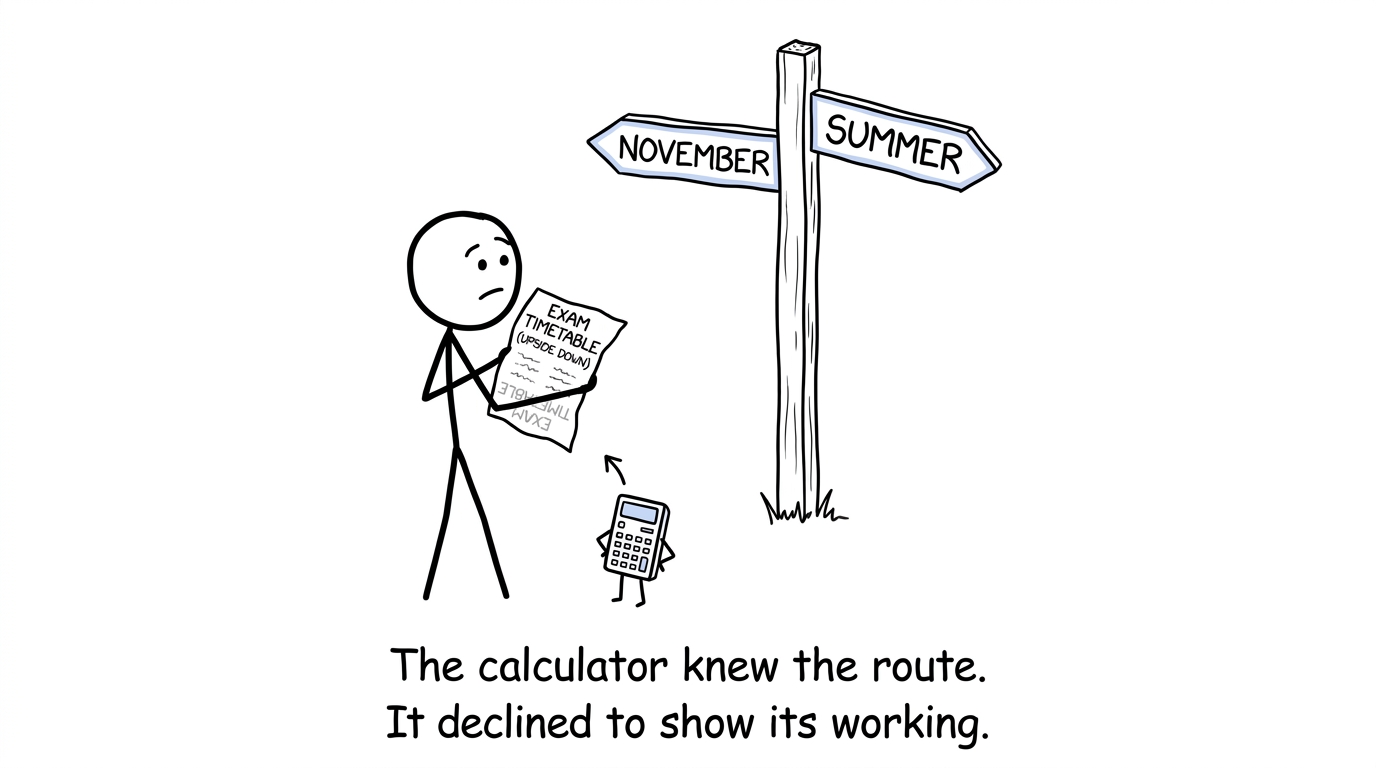 A student and calculator choosing between GCSE resit windows
The summer exam series
The main GCSE series runs during May and June. It includes maths, English and the broader range of GCSE subjects, making it the usual option for resitting science, history, geography or another subject unavailable in November.
Arrangements vary across England, Wales and Northern Ireland, so do not assume that one exam board's timetable applies to another. Edexcel, AQA, OCR and Eduqas publish specifications and timetables, but your centre should confirm the exact qualification and papers you are entering.
Do you have to resit GCSE maths?
In England, eligible students on post-161616 study programmes who have not achieved grade 444 or above in GCSE maths or English must normally continue studying the relevant subject under the government's condition of funding.
Importantly, this is a study requirement rather than an automatic requirement to enter every available exam series. Your college should decide on an appropriate qualification and entry point based on your prior grade, progress and readiness. The policy is not identical across every UK nation.
A resit may also be voluntary. You might already hold grade 444 but need a higher grade for a sixth-form course, apprenticeship or future application. Check the entry requirement with the organisation concerned before booking an exam.
How to resit GCSE exams through a centre
Ask your school or college first
If you remain enrolled, your school or college is usually the simplest starting point. Ask:
- Will you enter me for the resit?
- Which exam board and specification will I take?
- Which tier will I sit for GCSE maths?
- Is there a fee?
- What is your internal entry deadline?
- How will access arrangements be handled?
For maths, foundation tier normally offers grades 111 to 555, while higher tier offers grades 444 to 999, with a narrow grade 333 allowance. Tier choice should reflect the grade you need and the questions you are realistically ready to answer, not pride or pressure.
Register as a private candidate
If you have left school, are home educated or your former centre will not enter you, you can sit the qualification as a private candidate. Awarding organisations do not accept entries directly from individual candidates. An approved school, college or examination centre must make the entry and supervise the papers.
Contact centres early because not every centre accepts private candidates. Ask whether it offers your precise board, specification, subject and tier. Centres set their own administration deadlines and charges, which may be earlier or higher than the awarding organisation's standard arrangements.
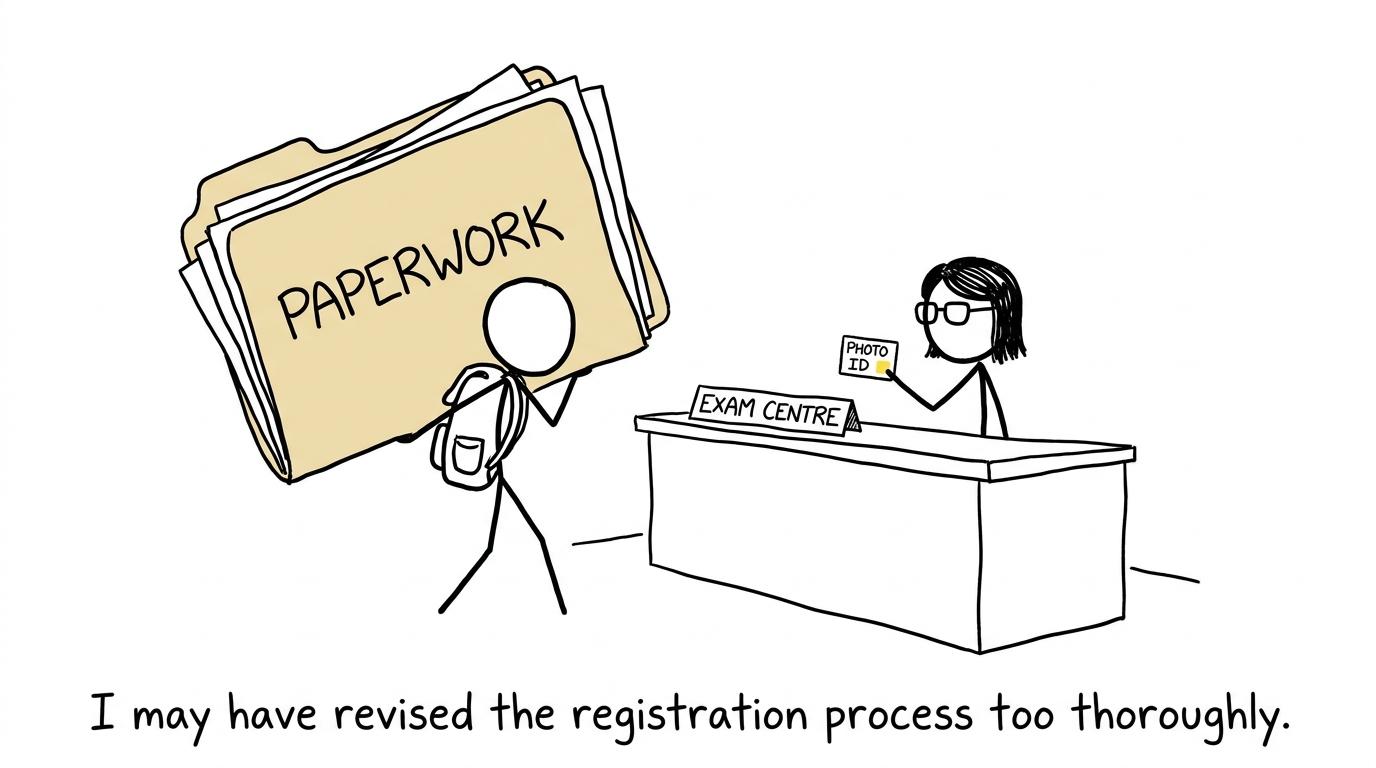 A private candidate arriving with considerably too much paperwork
The centre may request photo identification, personal details and information from your previous entry. Once registered, check your statement of entry for your name, subject, exam board, tier, dates and venue.
If you previously received extra time, a reader, modified papers or another access arrangement, tell the new centre immediately. Previous support does not mean a new centre can approve it at the last moment; evidence and formal processing may be required.
Subjects involving coursework, practical assessment, speaking tests or other non-exam assessment can be harder to arrange privately. Confirm that the centre can administer every required component before committing to a course.
How to prepare for a GCSE maths resit
A resit works best when it is not simply a repeat of the first revision plan. Begin with the free GCSE Maths revision hub, select the correct board and tier, and identify the topics costing you marks.
If you take AQA, the AQA GCSE Maths revision resources combine lessons, question banks and papers. For shorter timed practice, Edexcel GCSE Maths mini tests provide a manageable bridge towards full papers.
Use this revision cycle:
- Relearn one weak topic through a revision lesson.
- Complete practice questions without copying a method.
- Mark the work and record why each mark was lost.
- Retest the topic after a short gap.
- Complete a correctly matched past paper under timed conditions.
The guide to using GCSE past papers properly explains why marking and repairing errors matter as much as sitting the paper. If consistency is difficult, start with the 20-minute GCSE maths revision routine.
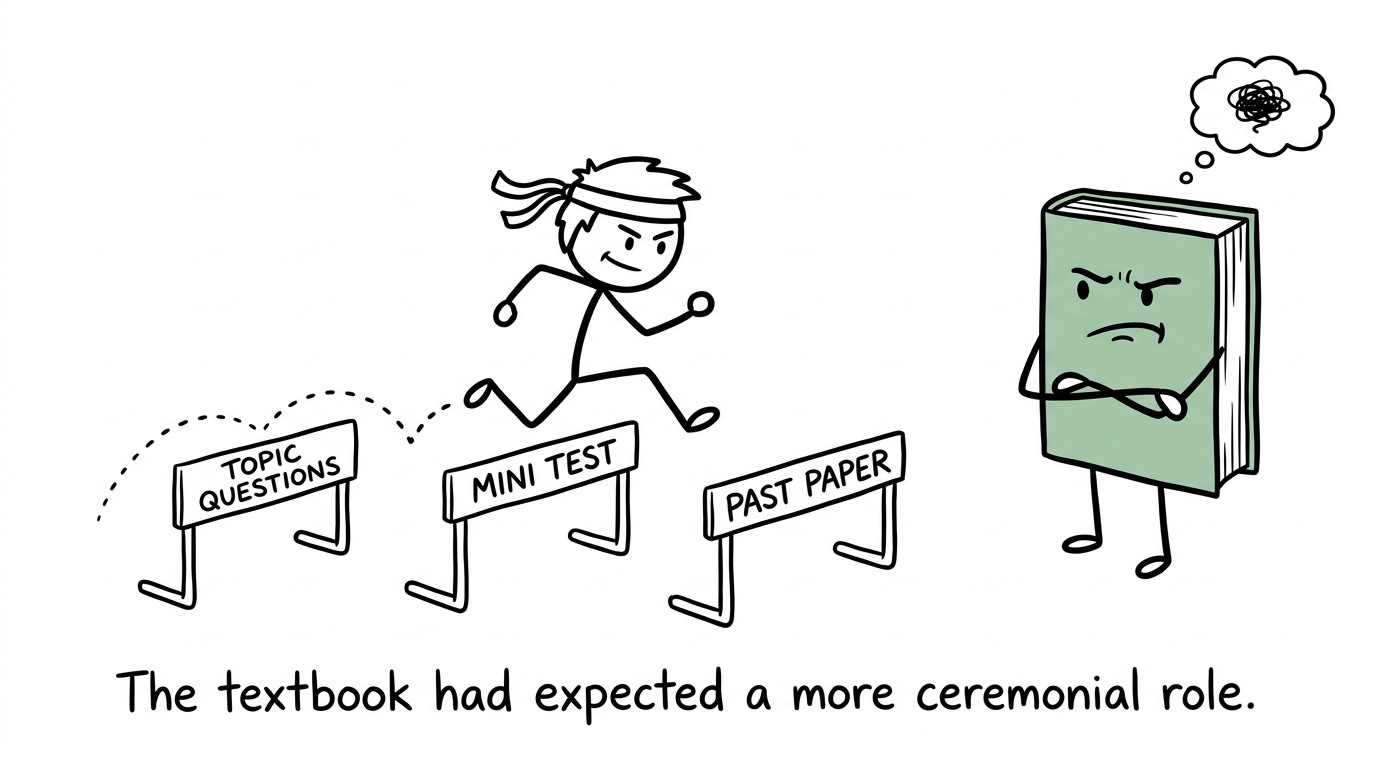 A student training with topic questions, mini tests and past papers
Common GCSE resit mistakes
Missing the centre's deadline. Internal deadlines can be earlier than published awarding-body dates. Contact centres months rather than days ahead.
Entering the wrong tier or specification. Check the board, qualification code and maths tier on your statement of entry.
Assuming November includes every subject. For qualifications regulated in England, the November opportunity is limited to GCSE mathematics and English Language. Other subjects normally wait for summer.
Leaving access arrangements until later. Raise them during your first conversation with the centre.
Repeating old revision habits. Reading notes can feel productive without showing what you can do independently. Use questions, mark schemes, mini tests and timed papers instead.
Using predicted papers too soon. Save GCSE predicted papers for a later rehearsal, once topic gaps have been addressed.
Make the resit a better attempt, not merely another attempt
A resit is not a judgement on your ability. It is another exam entry, with more information than you had before: you know the pressure, the paper structure and the areas that need attention.
First, confirm the window and registration. Then turn the result into a practical revision plan. Use MathsGenie's GCSE revision guides and resources for revision lessons, practice questions, mini tests, past papers, mark schemes, video solutions and predicted papers. Choose one weak topic today, practise it, mark it honestly, and make the next sitting count.











