Is GCSE Panjabi Foundation Tier Easier?
GCSE Panjabi Foundation Tier easier? Compare demand, grade limits, four papers and revision strategy so you can choose the tier that best fits your evidence.
There is a comforting story students sometimes tell themselves about tiered exams: Foundation is the easy paper and Higher is the hard one. The truth is more useful. If you are asking whether GCSE Panjabi Foundation Tier is easier, the short answer is yes, its tasks are targeted at a lower range of demand. But it is not simply a shortened Higher paper, and earning grades 444 or 555 is not meant to be easier on one tier than the other.
Foundation assesses the same four language skills and broad themes, but uses shorter tasks, more familiar language and less complex grammatical demands. In return, your maximum available grade is 555. The right question is therefore not, “Which tier sounds easier?” It is, “Which paper gives me the best opportunity to show what I can reliably do?”
The answer at a glance
For the current AQA GCSE Panjabi specification:
- Foundation Tier offers grades 111-555.
- Higher Tier offers grades 444-999, with a narrow grade 333 safety net for candidates who just miss grade 444.
- Listening, speaking, reading and writing each contribute 25%25\%25% of the qualification.
- All four assessments must be taken at the same tier and in the same exam series.
- Foundation tasks are less demanding in vocabulary, grammar, length and independence.
- The broad themes and four assessed skills remain the same.
- Grades 444 and 555 are intended to represent comparable standards on either tier.
Foundation is therefore genuinely less demanding at its lower and upper extremes, but it also creates a different route through the assessment. It protects students from grade 666-999 material while placing a firm ceiling on what they can achieve.
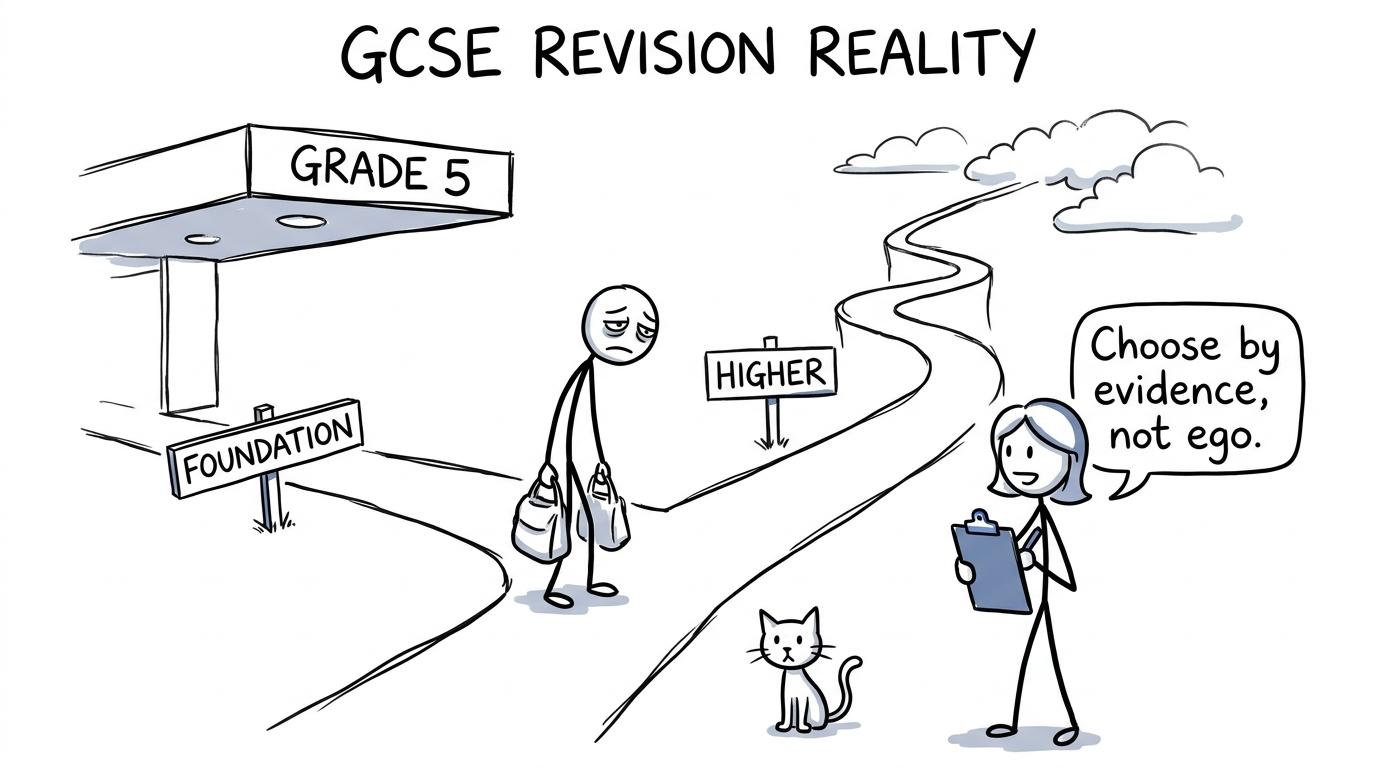 A student choosing between Foundation and Higher exam paths
What GCSE Panjabi Foundation Tier actually assesses
AQA GCSE Panjabi is a linear qualification, so the assessments are completed at the end of the course. The content is organised around three broad themes: identity and culture; local, national, international and global interests; and current and future study and employment.
Those themes apply across both tiers. Foundation does not let you avoid a whole area such as education, technology or the environment. What changes is the linguistic demand placed on you within those contexts.
| Assessment | Foundation format | Weighting |
|---|---|---|
| Listening | 353535 minutes, including reading time; 404040 raw marks | 25%25\%25% |
| Speaking | 777-999 minutes plus preparation; 606060 raw marks | 25%25\%25% |
| Reading | 454545 minutes; 606060 raw marks | 25%25\%25% |
| Writing | 111 hour; 505050 raw marks | 25%25\%25% |
The raw totals differ between components, but AQA scales them so that each skill contributes equally. This matters for revision. A confident speaker cannot afford to abandon reading, and strong writing cannot completely rescue weak listening.
Listening and reading
Foundation listening is shorter than Higher listening, while Foundation reading lasts 454545 minutes compared with 111 hour at Higher. Both tiers require students to identify messages, details and opinions, but Higher includes more extended, unfamiliar and complex material.
Reading also includes translation from Panjabi into English. The minimum passage length is 353535 words at Foundation and 505050 words at Higher. Foundation may feel more accessible because passages are generally shorter and more familiar, yet careful comprehension is still essential. A familiar topic does not guarantee that every detail is obvious.
Speaking
Both tiers assess a role-play, a photo card and a general conversation. Foundation speaking is shorter overall, with its general conversation lasting approximately 333-555 minutes rather than 555-777 minutes at Higher.
However, shorter does not mean effortless. Communication, pronunciation, accuracy, fluency and the ability to respond still matter. Students who understand Panjabi at home may have a useful foundation, but informal conversation is not identical to answering a structured examination task precisely.
Writing
Foundation writing includes four sentences responding to a photograph, a passage of approximately 404040 words, translation from English into Panjabi and a structured response of approximately 909090 words.
Higher replaces the shortest tasks with more extended work, including an open-ended response of approximately 150150150 words. That requires greater independence, broader vocabulary and more confident control of grammar. Foundation writing is consequently less demanding in length and complexity, but accuracy and complete coverage of the bullet points still determine marks.
Easier does not mean easy marks
A paper can contain more accessible language and still be difficult for the student sitting it. Difficulty is partly built into the assessment, but partly personal.
A student who speaks confidently but reads Gurmukhi slowly may find the reading paper demanding. Another may recognise plenty of vocabulary yet struggle to produce accurate written sentences. Foundation reduces the overall linguistic ceiling; it does not remove individual weaknesses.
This is similar to the tier decision in GCSE maths. Foundation maths avoids higher-only content, but success still depends on accurate arithmetic, reasoning and interpretation. MathsGenie’s guide to Foundation versus Higher GCSE Maths explains the same central principle: tier choice should reflect demonstrated performance, not status.
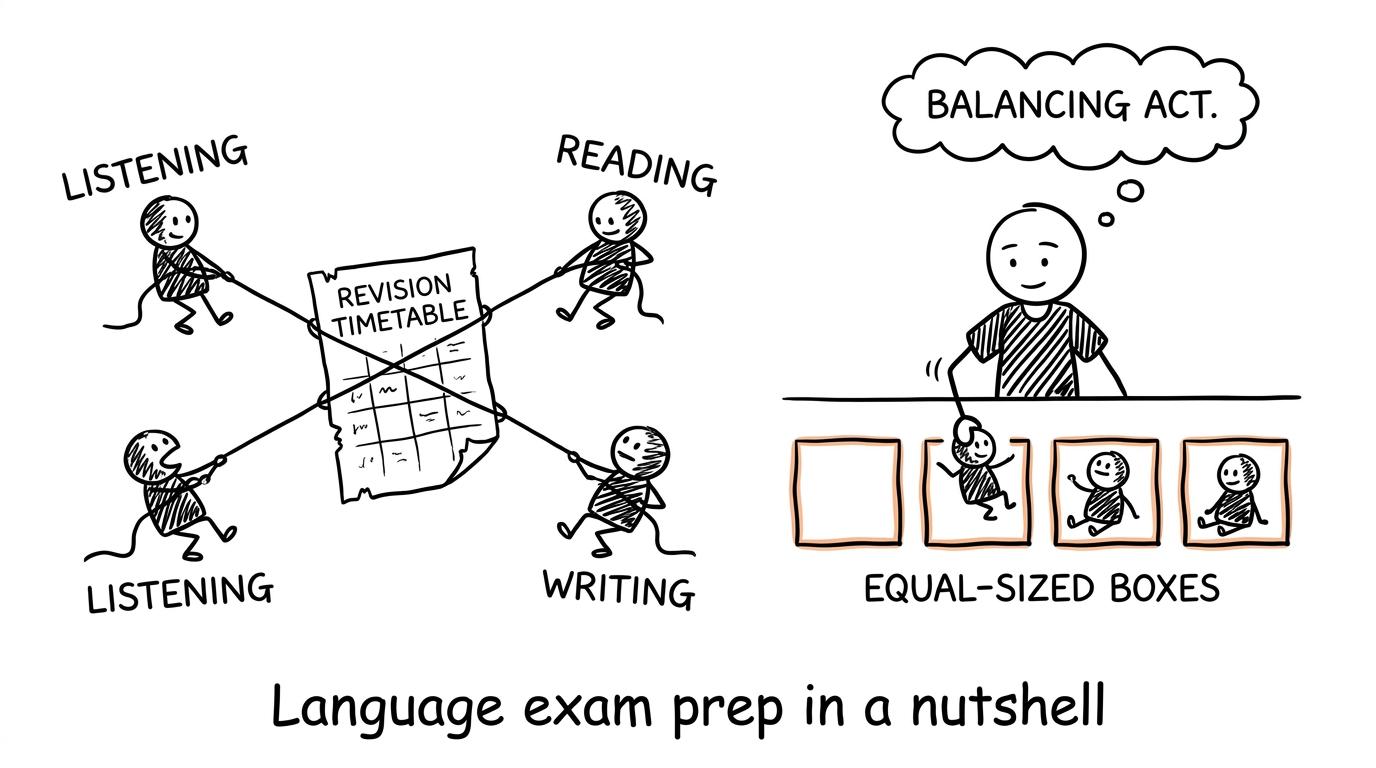 Four language skills competing for space in a revision plan
Why grades 444 and 555 change the comparison
Grades 444 and 555 overlap across the two tiers. Ofqual requires exam boards to make the standard of these grades comparable, so a grade 555 from Foundation has the same value as a grade 555 from Higher. Your certificate does not display the tier on which you earned it.
That makes Foundation a sensible route for many students working around grades 444 and 555. It offers questions targeted across grades 111-555 without requiring them to spend time confronting grade 777-999 demand.
But there is a trade-off. Foundation cannot award a grade above 555, regardless of how strong your performance becomes. Higher provides access to grades 666-999, although students performing below the narrow grade 333 safety net risk an unclassified result.
Do not treat a previous year’s boundary as a permanent target. Boundaries can change after papers have been sat and marked. You can inspect AQA GCSE Panjabi grade boundaries to understand historical outcomes, but your tier decision should rely on repeated paper performance, teacher judgement and the grade you need.
How to decide which tier fits you
The best evidence is not one unusually good homework task or one difficult mock. Look for a pattern.
Foundation may fit if
- your realistic target is within grades 111-555;
- you regularly find extended Higher listening or reading passages inaccessible;
- shorter, structured writing lets you communicate more accurately;
- your performance across all four skills is consistently around grades 444 or 555 or below;
- your teacher’s assessment supports Foundation entry.
Higher may fit if
- you need or are realistically targeting grade 666 or above;
- you can understand longer passages containing less familiar language;
- you can develop and justify opinions rather than relying mainly on memorised sentences;
- you can use a broader range of grammar with reasonable accuracy;
- several timed assessments support the decision.
Teachers and examination officers make entries, so discuss the evidence with them early. Changing tier late can mean changing the style and demand of all four assessments, not merely selecting a different paper on exam day.
A revision method that works across subjects
Good language revision and good maths revision share a quiet truth: recognising material is not the same as retrieving it under pressure.
Use a simple cycle:
- practise one clearly defined skill;
- complete an examination-style task without help;
- mark it against the official criteria or mark scheme;
- record the precise reason marks were lost;
- repeat that skill after a short gap;
- add timed papers once individual skills are stable.
Your Panjabi practice should cover all four components. Rotate listening, speaking, reading and writing rather than spending every session memorising vocabulary. For speaking, rehearse responding rather than only reading prepared scripts. For writing, check whether every bullet point has been addressed. For reading and listening, distinguish between missing vocabulary and misreading the question.
The same process strengthens your maths preparation. Use the GCSE Maths revision hub for free revision lessons and practice questions, then test yourself with AQA GCSE Maths past papers. The one-month GCSE revision plan can also help you balance Panjabi practice with your other subjects.
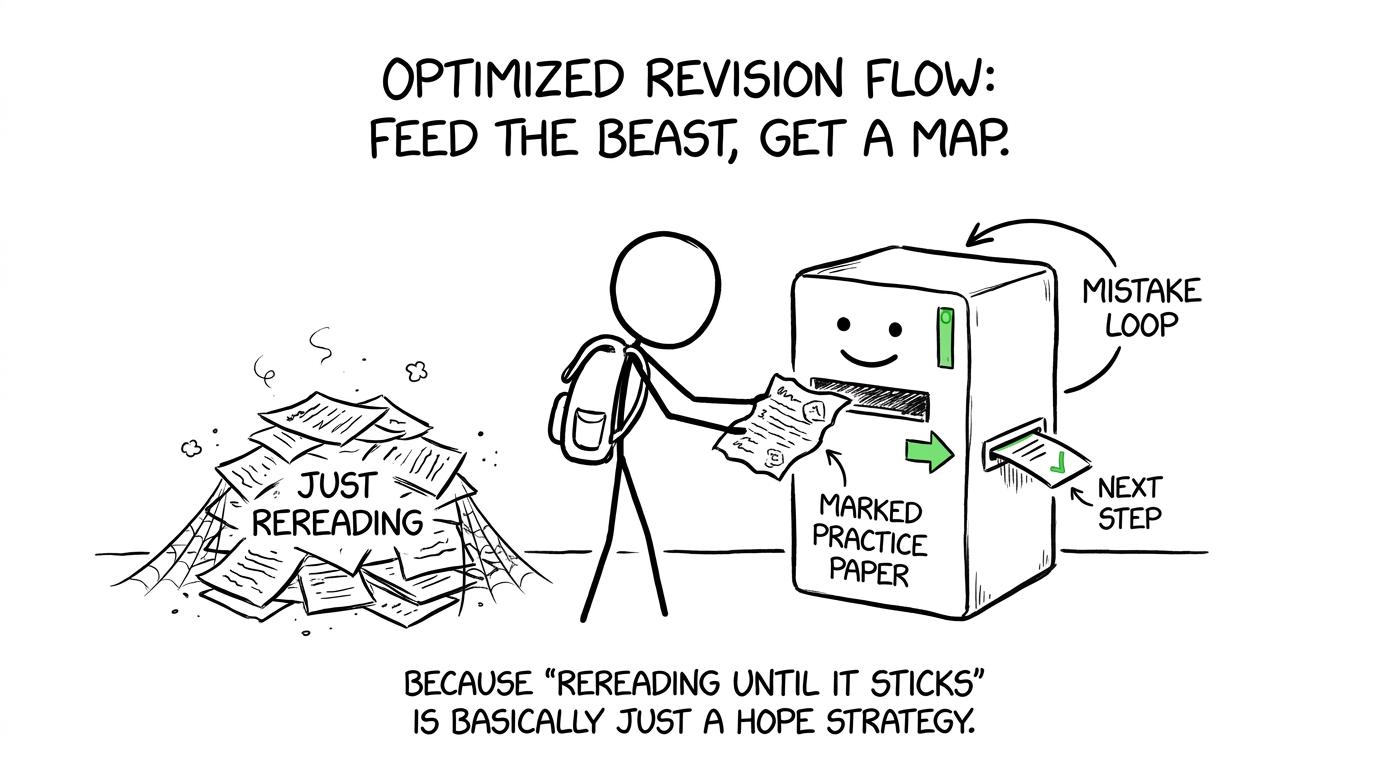 A revision machine turning mistakes into a clear next step
Common mistakes when comparing the tiers
Assuming Foundation guarantees grade 555
Foundation gives access to grade 555; it does not award it automatically. A grade 555 response still needs appropriate detail, accuracy and control across the qualification.
Choosing Higher because it sounds more impressive
The tier is not shown on the final certificate. A secure grade 555 is not diminished because it was achieved through Foundation.
Choosing Foundation after one bad result
One paper can expose a temporary gap, poor timing or an unfamiliar topic. Use several assessments before reaching a conclusion.
Revising only comfortable skills
Speaking may feel natural while writing feels slow, or vice versa. Because each component is worth 25%25\%25%, repeatedly practising your strongest skill creates the feeling of progress without addressing the greatest source of lost marks.
Treating home fluency as complete exam preparation
Conversational experience is valuable, but examinations also require careful reading, accurate writing, translation and responses shaped around specific tasks. Practise the exact format you will face.
Using predicted material as a substitute for the specification
No predicted paper can guarantee what will appear. In maths, GCSE predicted papers are most useful after topic revision, not instead of it. The same principle applies to Panjabi: cover the full specification, then use realistic tasks to test retrieval and timing.
The real meaning of “easier”
Foundation Tier is genuinely less demanding in the language complexity, task length and grade range it targets. Yet it is also different: it gives more structure, limits extended production and stops at grade 555, while still assessing the complete set of listening, speaking, reading and writing skills.
Choose it because the evidence says it is the best platform for your performance, not because Foundation sounds safe or Higher sounds impressive. A suitable tier lets you spend more of the exam demonstrating knowledge and less of it staring at material pitched far beyond your current level.
Then build your preparation around honest feedback. For maths, begin with MathsGenie’s free revision lessons and practice questions, move into mini tests, and learn how to use past papers at the right stage. Finish with mark schemes, video solutions and predicted papers so every lost mark produces a specific next action. The tier sets the playing field. Consistent, deliberate practice decides how well you play on it.