

GCSE Astronomy Tutoring Cost: A UK Guide
GCSE astronomy tutoring cost explained: realistic UK hourly rates, budget options and a checklist for deciding whether private tuition is worth it.
A telescope can bring a distant object into focus. A tutor is supposed to do something similar with a difficult subject. The uncomfortable part is that one comes with a visible price tag, while the value of the other may not become clear until weeks later.
For families researching GCSE astronomy tutoring cost, a realistic UK guide is around $£25 to $£60 per hour. Less experienced online tutors may charge below this range, while established teachers and specialist astronomy tutors can charge £60‘to‘£60` to `£60‘to‘£100` or more. Current UK listings checked in August 2026 vary considerably, so there is no single official average.
The important question is not simply, “How much is an hour?” It is, “What will change because of that hour?”
GCSE astronomy tutoring cost at a glance
Use this checklist before comparing tutors:
- Expect many suitable tutors to charge roughly
$£25to$£60per hour`. - Online tuition usually gives you a wider choice of astronomy specialists.
- Qualified teachers, experienced exam tutors and subject specialists often charge more.
- Check whether the advertised price includes platform fees, marking and resources.
- Ask whether the tutor knows Pearson Edexcel GCSE Astronomy specification
1AS0. - Begin with a trial lesson or a short block rather than committing for a full year.
- Set a measurable goal, such as improving calculations, observational analysis or extended responses.
- Use free revision resources between lessons so paid time is spent on feedback rather than routine practice.
| Type of tuition | Realistic hourly range |
|---|---|
| Student or newer online tutor | $£15 to $£30 |
| Experienced GCSE tutor | $£30 to $£50 |
| Qualified teacher or astronomy specialist | $£45 to $£70 |
| Highly experienced specialist | $£70 to $£100+ |
These are practical market ranges, not regulated prices. Some listings fall outside them, and a low headline rate may be attached to a trial lesson, overseas tuition or a tutor who teaches general astronomy rather than the Edexcel GCSE course.
Why astronomy tutoring prices vary so widely
Private tuition is not a standardised product. Two tutors may both describe themselves as astronomy tutors while offering very different knowledge, preparation and feedback.
GCSE Astronomy is a specialist qualification
The current Pearson Edexcel GCSE Astronomy qualification is assessed through two externally examined papers. Paper 1 covers Naked-eye Astronomy and Paper 2 covers Telescopic Astronomy. Each lasts 1 hour 45 minutes, carries 100 marks and contributes 50%50\%50% of the qualification.
Unlike GCSE Maths, Astronomy is not divided into foundation and higher tiers. Every candidate sits the same papers. That makes direct knowledge of the specification particularly valuable: a general science tutor may understand stars and planets but be less familiar with the required observations, data interpretation and exam wording.
The supply of tutors who have actually taught specification 1AS0 is also smaller than the supply of GCSE Maths or English tutors. Scarcity tends to lift prices, especially for tutors with classroom experience or a strong record of preparing private candidates.
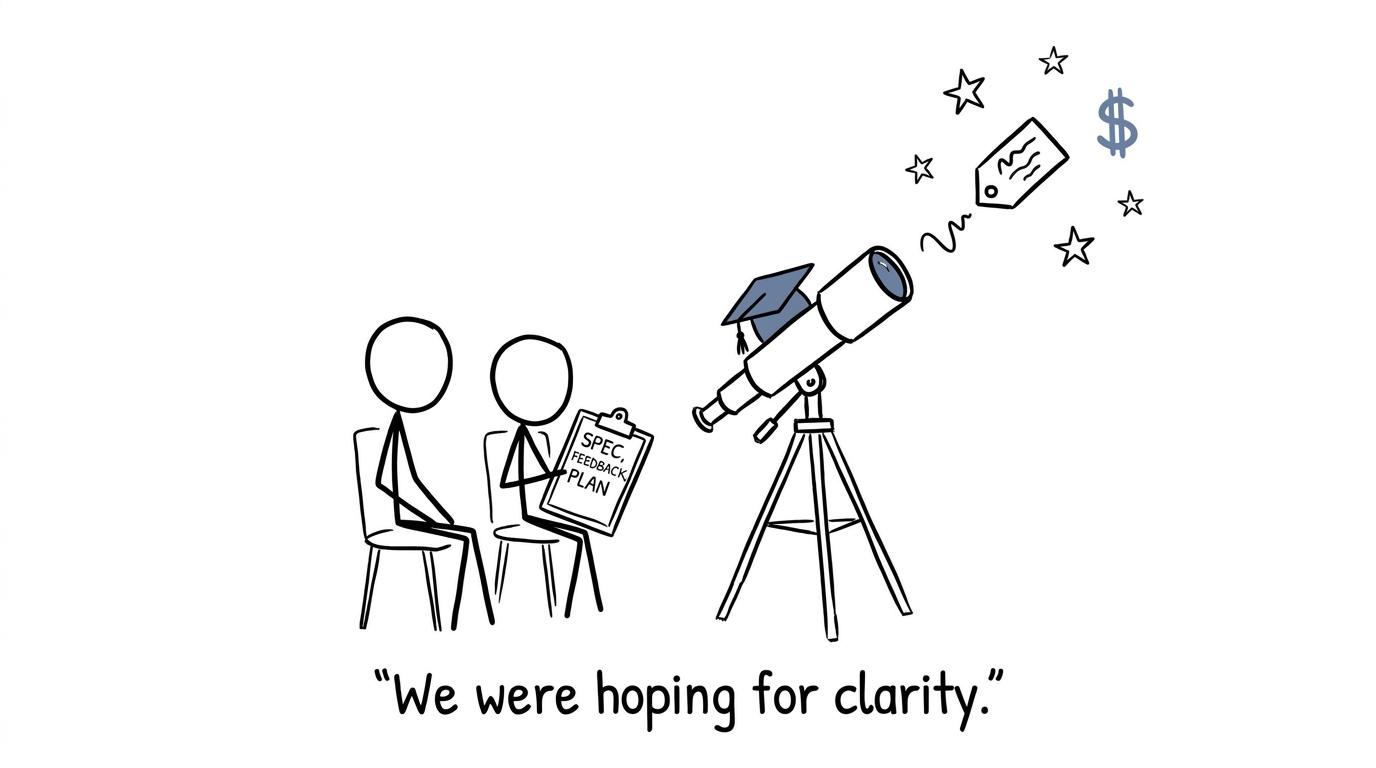 A student and parent ask a telescope tutor for clarity while checking its price
Experience and qualifications affect the rate
A university student with strong astronomy knowledge may offer affordable help with calculations and concepts. A qualified science teacher may charge more because they can diagnose misconceptions, teach extended-response technique and interpret mark schemes efficiently.
Higher cost does not automatically mean better teaching. Relevant experience matters more than an impressive but unrelated qualification. A researcher may know vastly more astronomy than the course requires yet have little experience explaining ideas at GCSE level.
Ask specifically whether the tutor has:
- taught or tutored Edexcel GCSE Astronomy;
- used the current specification and formulae sheet;
- marked exam-style answers;
- supported observational work;
- taught private candidates or home-educated students;
- planned lessons around identified weaknesses rather than a generic course.
Online and face-to-face lessons have different costs
Online tuition removes travel and allows families to search nationally. That can be especially useful for a niche subject. Face-to-face lessons may cost more where the tutor charges for travel, has limited local competition or works in an expensive area.
Do not assume online tuition must always be cheaper. Recent UK tutoring datasets disagree about the average difference between online and in-person rates. The sensible approach is to compare the final price for tutors who genuinely match the course, including booking fees and travel charges.
Lesson length and booking arrangements matter
A $£35 lesson lasting 45 minutes costs more per hour than the headline figure might suggest. Conversely, a tutor may offer a lower rate for a block of lessons but require payment in advance.
Before booking, confirm:
- the exact lesson length;
- cancellation and rescheduling rules;
- whether unused lessons expire;
- whether marking between sessions is included;
- platform or agency fees;
- whether the trial is free, reduced-price or fully charged.
What would regular tutoring cost overall?
Hourly rates become more meaningful when converted into a complete budget. If the hourly rate is rrr and you book NNN lessons, the basic tuition cost is:
Total cost=N×r\text{Total cost} = N \times rTotal cost=N×r| Tuition plan | Cost at $£30 per hour | Cost at $£45 per hour | Cost at $£60 per hour |
|---|---|---|---|
4 lessons | $£120 | $£180 | $£240 |
8 lessons | $£240 | $£360 | $£480 |
12 lessons | $£360 | $£540 | $£720 |
20 lessons | $£600 | $£900 | $£1,200 |
This is why the structure of the support matters. Twenty unfocused lessons can cost more and achieve less than six carefully planned sessions supported by independent revision.
A useful model is diagnostic rather than permanent: identify the weakest areas, book a limited number of lessons and review progress. If the problem is mainly mathematical fluency, free topic practice may reduce the number of paid sessions needed.
How maths revision can reduce the tutoring bill
At least 20%20\%20% of the marks in GCSE Astronomy written papers assess mathematical skills. Pearson’s current specification includes standard form, ratios, percentages, inverse-square relationships, significant figures, unit conversion, rearranging equations, graph interpretation, gradients and angular measurement. Calculators are permitted, and the required astronomical equations and data are supplied in the papers.
A tutor should therefore spend time on astronomical application, not repeatedly reteach every underlying maths skill from the beginning.
For large and small astronomical values, use MathsGenie’s Standard Form revision guide. Broader geometry, bearings and angle skills can be reviewed through the GCSE shape revision resources. The GCSE Maths topics by exam board and tier guide can help you locate other gaps.
This creates a better division of labour. Free resources build fluency. Paid lessons diagnose, explain and give personal feedback.
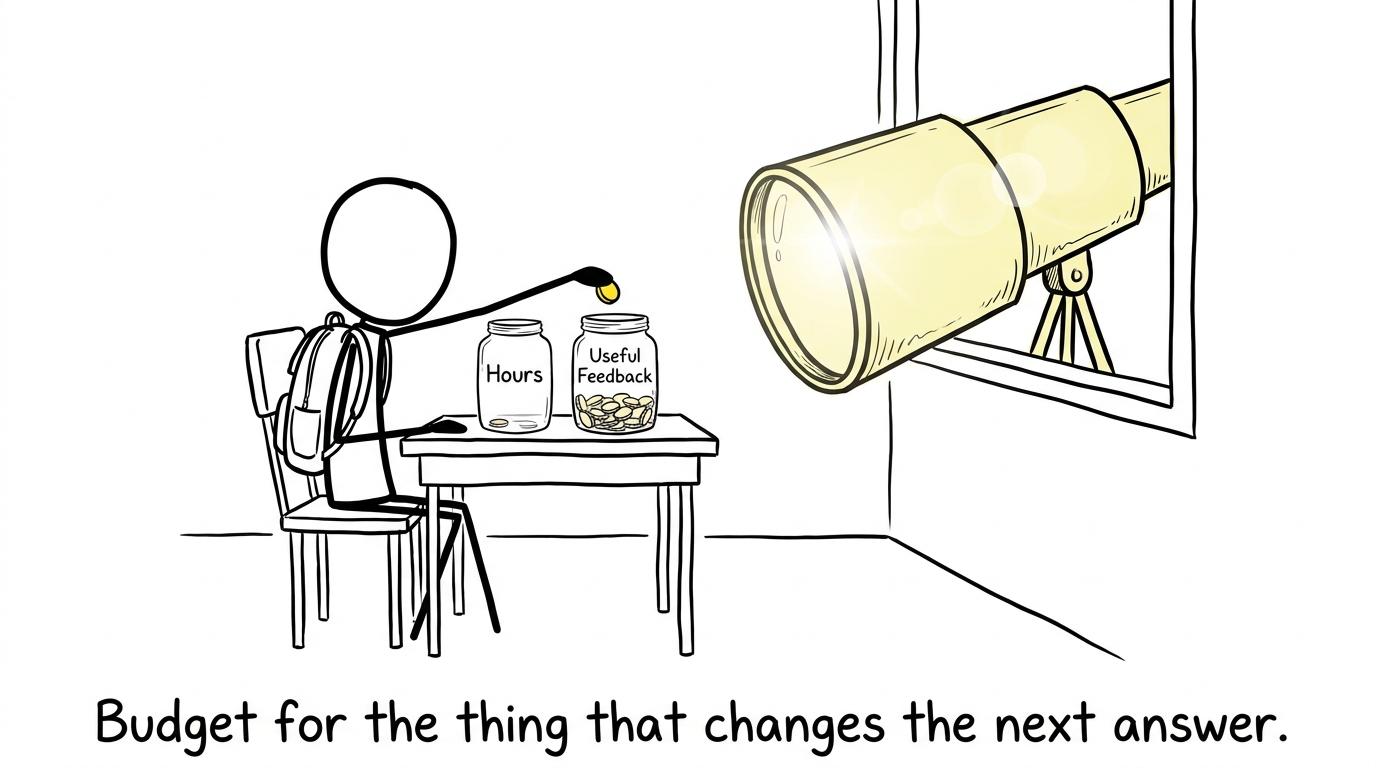 A student wisely puts revision coins into useful feedback rather than simply buying more hours
How to decide whether a tutor is worth the price
The cheapest tutor is not necessarily the best value, and neither is the most expensive. Value depends on progress per pound, not prestige per hour.
Ask for a clear diagnosis
A promising tutor should want to see recent answers, school feedback or a completed paper. After reviewing them, they should be able to distinguish between different problems:
- missing astronomical knowledge;
- weak mathematical fluency;
- difficulty applying knowledge to unfamiliar data;
- poor observational evaluation;
- incomplete extended responses;
- timing or exam technique.
“Needs more confidence” is not a sufficient diagnosis. Confidence usually follows improved knowledge and repeated success; it is rarely a complete teaching plan by itself.
Agree what success will look like
A lesson is easier to evaluate when it has a defined purpose. Suitable goals might include using the formulae sheet accurately, interpreting graphs, evaluating an observation or producing complete responses under timed conditions.
After several lessons, look for evidence. Can the student now answer similar questions independently? Are the same mistakes disappearing? Can the tutor explain what has improved and what comes next?
For a structured independent routine, adapt the cycle in MathsGenie’s one-month GCSE revision plan: diagnose, learn, practise, mark, repair and retest. Although the article focuses on maths, the cycle transfers well to Astronomy calculations and exam practice.
Judge the work between lessons
A tutor cannot replace independent practice. The best arrangement often uses each paid lesson to review completed work, correct misconceptions and set a precise next task.
A tutor who provides no useful practice may create dependence. One who assigns an overwhelming amount may ignore the student’s other GCSE subjects. The workload should be purposeful and manageable.
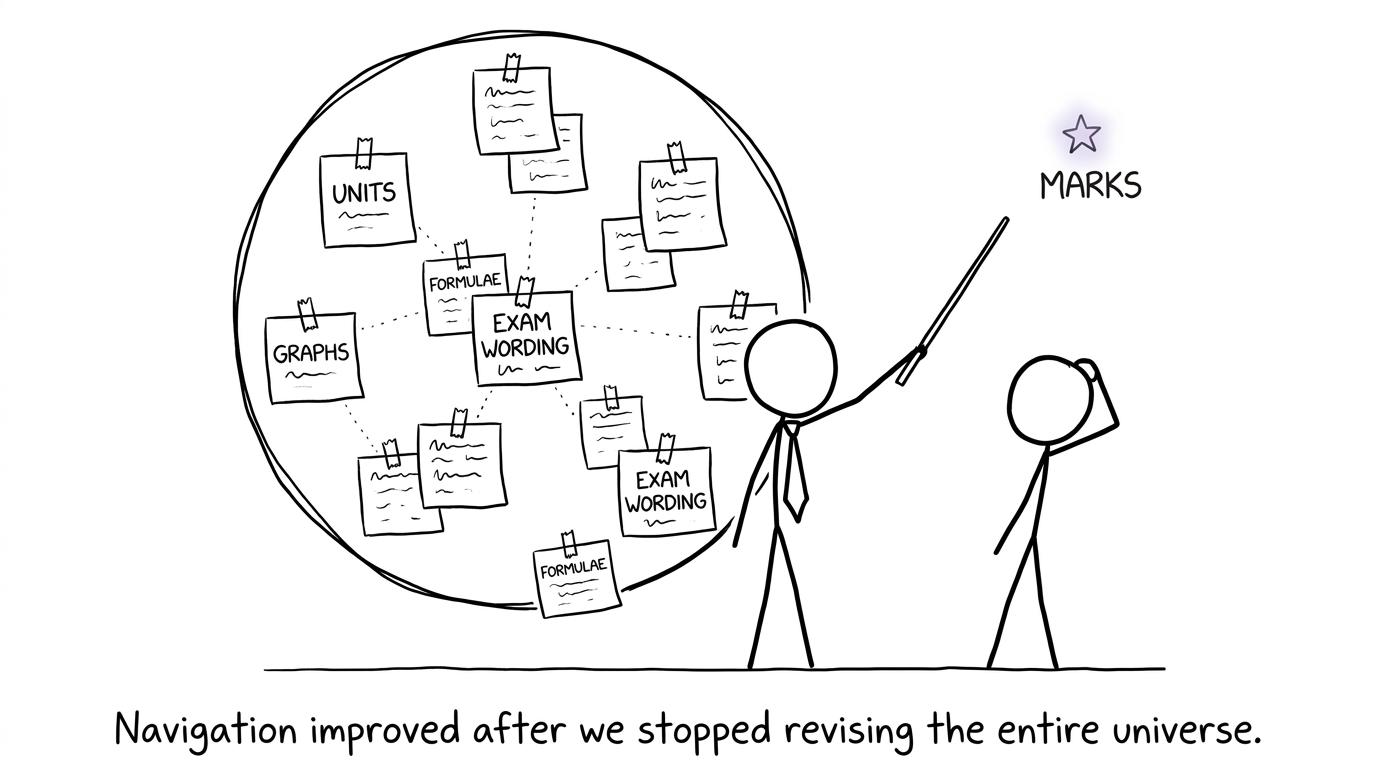 A tutor and student navigate towards marks using a focused map instead of revising the whole universe
Lower-cost alternatives to weekly private tuition
Private one-to-one tuition is only one option. Depending on the difficulty, consider:
- a small group where the cost is shared;
- fortnightly lessons with independent work between them;
- a short exam-season block;
- occasional marking and feedback sessions;
- school support or teacher office hours;
- revision sessions offered by a local observatory or astronomy society;
- focused maths revision before paying for specialist astronomy help.
For students balancing Astronomy with GCSE Maths, MathsGenie’s free resources can carry much of the routine workload. Use the GCSE Maths revision homepage for topic lessons and practice, then build exam habits with Edexcel GCSE Maths predicted papers.
Predicted papers are not a substitute for official papers, but they can provide fresh timed practice. The guide to using predicted topics without guessing explains how to combine them with mark schemes and targeted repair.
Common mistakes when choosing astronomy tuition
Paying for subject knowledge without checking exam knowledge
Enjoying astronomy is not the same as teaching GCSE Astronomy. Confirm that the tutor understands the current Pearson specification, its two papers and its observational requirements.
Booking a long package too early
A large discount is not valuable if the teaching is unsuitable. Start with a trial or small block and review the fit before paying for months of lessons.
Ignoring the complete cost
Travel, platform charges, cancellation rules and paid marking can change the real hourly cost. Request the full terms in writing.
Using tuition instead of practice
Watching a tutor answer questions can feel productive while leaving the student unable to work independently. Lessons should require explanation, retrieval and independent attempts.
Measuring success only by the next total mark
One paper can be easier or harder for a particular student. Also track whether recurring errors have reduced and whether answers are becoming more complete. MathsGenie’s guide to redoing GCSE past papers effectively offers a useful diagnose-and-repair system.
Make the cost serve a clear purpose
A realistic GCSE astronomy tutoring cost is usually around $£25 to $£60 per hour`, with specialist tutors sometimes charging considerably more. The right price depends on experience, format, location and direct familiarity with Edexcel Astronomy.
But price is only the first filter. A worthwhile tutor should identify where marks are being lost, plan focused teaching and make the student less dependent over time. Start small, set a budget and review evidence of progress before extending the arrangement.
Then make every paid hour work harder. Use MathsGenie’s free revision lessons, practice questions, mini tests and video solutions to strengthen the underlying maths. Move on to past papers, mark schemes and predicted papers when you are ready to practise under pressure. Private tuition may bring one part of the course into focus; a consistent revision system is what keeps the whole picture clear.










