

Apprenticeship GCSE Media Studies Requirement Guide
Apprenticeship GCSE Media Studies requirement guide: learn which media routes specify grades, what employers value and what to do if your grade is low.
A careers page can make one disappointing GCSE result feel much larger than it is. You see a media apprenticeship, remember the grade on your results sheet and wonder whether the door has already closed.
The short answer is reassuring: there is no universal apprenticeship GCSE Media Studies requirement in England. The national apprenticeship standards checked for media, advertising, journalism, broadcasting and digital marketing do not prescribe a particular GCSE Media Studies grade. Individual employers can still make one essential for a specific vacancy, but this is unusual. English and maths, relevant experience, aptitude and a portfolio are more commonly considered.
The distinction matters. An apprenticeship route and an individual job advert are not the same thing.
The quick checklist
Before deciding whether you are eligible, check:
- whether Media Studies is listed as essential, desirable or not mentioned;
- the exact apprenticeship level;
- the required GCSE English and maths grades;
- whether equivalent qualifications are accepted;
- whether the employer asks for a portfolio, aptitude test or relevant experience;
- whether the training provider has separate entry criteria;
- whether requirements have changed since an older careers page was published.
For a broader explanation of levels and typical entry criteria, read what GCSE grades apprenticeships may require.
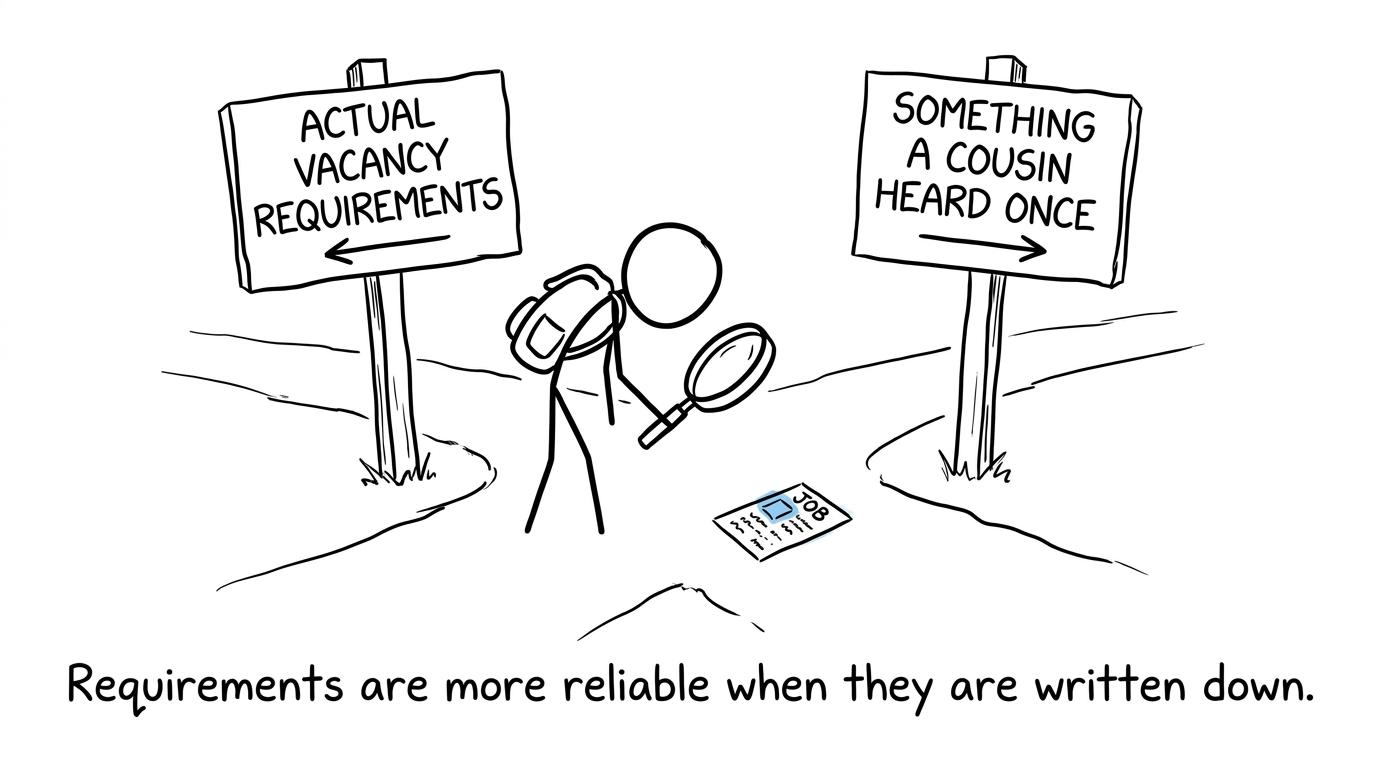 A student chooses written vacancy requirements over hearsay
Do any apprenticeship routes require a Media Studies grade?
At national-standard level, none of the mainstream media-related routes examined for this guide sets a minimum GCSE Media Studies grade. The standards tend to leave entry selection to employers or concentrate on English, maths, relevant Level 333 qualifications and occupational evidence.
That does not mean a Media Studies grade can never appear. An employer is allowed to set selection criteria for its vacancy. A competitive production company, broadcaster or agency could ask for GCSE Media Studies at grade 444, 555 or above. If it does, that condition belongs to that particular recruitment exercise rather than every apprenticeship carrying the same title.
The practical rule is simple: the live vacancy takes priority over general careers advice.
What the main media apprenticeship routes usually specify
The following comparison reflects the published national standards and typical criteria reviewed for this article. Requirements can change, and employers may add their own conditions.
| Apprenticeship route | What the national information emphasises | Specific GCSE Media Studies grade? |
|---|---|---|
| Broadcast production assistant | Employers set their own entry requirements; English and maths have commonly been expected | Not prescribed nationally |
| Broadcast and media systems technical operator | No statutory, regulatory or typical entry requirement is stated in the standard; English and maths rules apply | No |
| Advertising and media executive | English and maths requirements, a portfolio and the IPA Foundation Certificate | No |
| Digital marketer | Employer selection, relevant qualifications or experience, aptitude and enthusiasm for digital media | No |
| Journalist | Employer selection plus the required journalism qualification within the programme | No |
| Broadcast and media systems engineer degree apprenticeship | Typically English, maths and science GCSEs alongside suitable Level 333 qualifications | No |
Creative production and broadcasting
Broadcast production roles may value Media Studies because it develops awareness of audiences, representation, production and communication. Yet the relevant apprenticeship standards generally allow employers to choose their own entry criteria.
A portfolio can therefore matter more than the name of one GCSE. Depending on the vacancy, useful evidence might include an edited video, audio project, storyboard, school publication, photography project or responsibly managed social media campaign. Only submit work you created, and explain your contribution honestly when a project was collaborative.
Advertising and digital marketing
Advertising and digital marketing combine creativity with evidence. Employers may look for clear writing, audience awareness, organisation and confidence with data. Media Studies can support these skills, but it is not normally a nationally mandated GCSE.
Maths has a quieter role here than many students expect. Campaigns involve budgets, percentages, conversion measures, trends and comparisons. Being able to interpret figures accurately makes you more useful in a role where creative decisions must eventually meet commercial reality.
Journalism
Journalism routes place particular weight on communication, accuracy, media law and occupational training. The current Level 555 journalist standard includes a recognised journalism diploma as a mandatory part of the apprenticeship. It does not set a GCSE Media Studies threshold.
English is likely to receive closer attention than Media Studies because apprentices must research, write and communicate precisely. Numeracy also matters when checking statistics, interpreting surveys or recognising when a claim based on percentages is misleading.
Technical broadcast routes
Technical broadcasting can place greater emphasis on maths, science, computing or technical aptitude. The degree-level broadcast and media systems engineer route, for example, describes typical criteria involving English, maths and science alongside Level 333 qualifications.
Again, this is not a GCSE Media Studies requirement. A strong Media Studies result may help demonstrate interest in the sector, but it does not replace technical criteria stated as essential.
Why English and maths appear more often
Apprenticeships are jobs with structured training. Employers need apprentices who can communicate with colleagues, follow instructions, manage information and work confidently with numbers.
In England, current funding rules give English and maths particular status. Apprentices aged 161616 to 181818 when they begin may have to continue working towards approved English or maths qualifications if they do not already hold suitable equivalents. For apprentices aged 191919 or over, funded English and maths study may be available when the employer agrees to include it in the training plan.
Those programme rules are different from an employer's recruitment filter. An employer may still ask applicants to hold grade 444 or above before starting, even where apprenticeship funding rules provide a route for continued learning. Always ask the employer or provider how the rules apply to that vacancy.
This is why protecting your GCSE maths grade remains worthwhile, even if your career goal is creative. Start at the free MathsGenie GCSE and A Level revision hub and choose resources matching your board and tier.
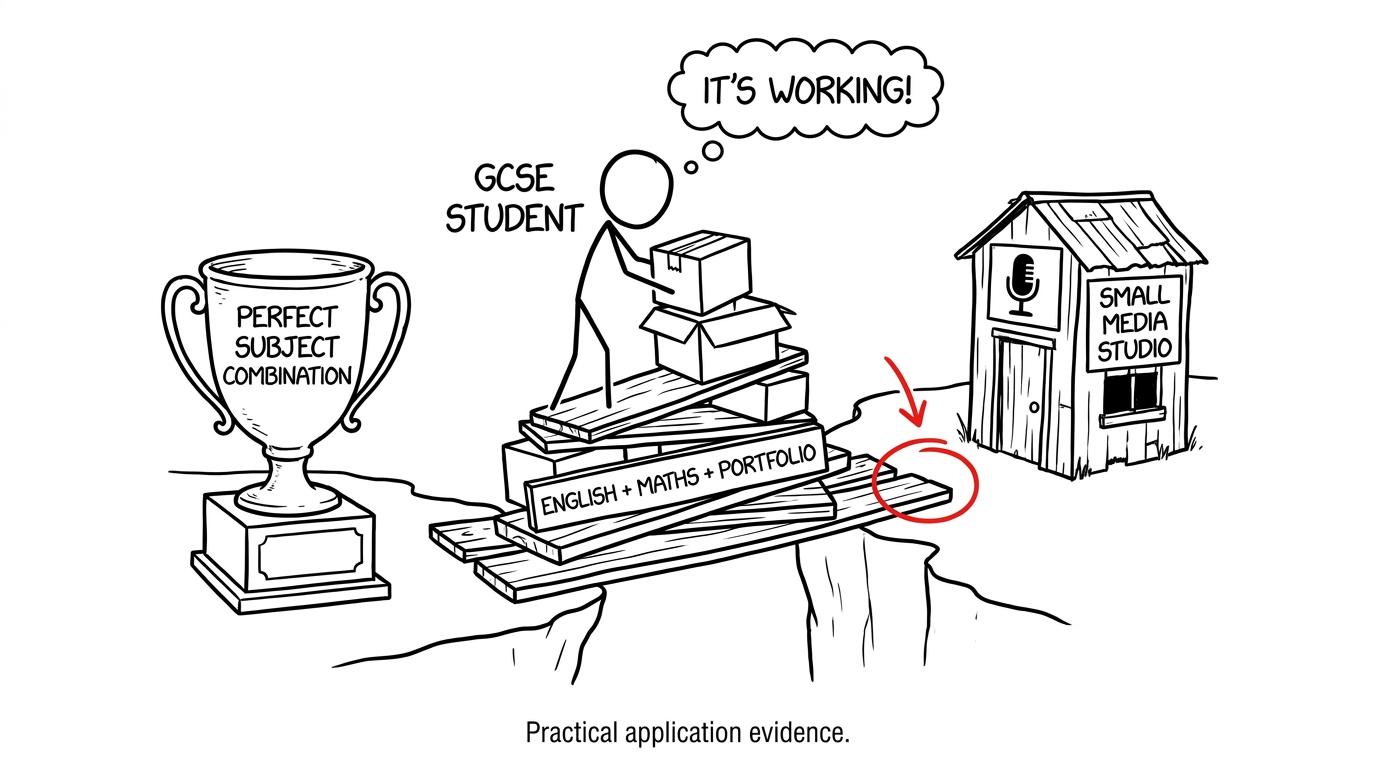 A student builds a bridge to a media studio using useful evidence
What to do if you are short of the requested grade
First, read the wording carefully. A desirable grade is not the same as an essential one.
If Media Studies is desirable
Apply if you meet the essential criteria. Use your application to show equivalent evidence: projects, clubs, volunteering, work experience or independent creative work. Explain what you did, what decisions you made and what you learnt.
Do not apologise for your grade throughout the application. Give the employer stronger evidence to consider.
If Media Studies is essential
Contact the recruiter before ruling yourself out. Ask whether they accept:
- a closely related subject such as Film Studies or creative media;
- a relevant vocational qualification;
- portfolio evidence;
- substantial practical experience;
- a pending resit or equivalent qualification.
The answer may still be no. Essential requirements can be used to shortlist a large field fairly. But a brief, precise question is better than rejecting yourself based on an assumption.
If no alternative is accepted, look for the same apprenticeship standard with another employer. Two vacancies with the same apprenticeship title can have different entry requirements. You could also consider an adjacent route, such as content production, digital marketing, communications or a technical media role.
If English or maths is the missing grade
Treat this as the priority because these subjects appear across far more vacancies. Confirm whether the employer accepts Functional Skills or allows the qualification to be completed during the apprenticeship.
For GCSE maths revision, diagnose the problem rather than revising everything at once. Find your weakest GCSE topics, then use Edexcel GCSE Maths mini tests or equivalent board-specific resources for focused practice.
A useful cycle is:
- attempt questions without notes;
- mark them immediately;
- label the topic behind each lost mark;
- revisit the revision lesson;
- practise a fresh set;
- retest the skill on another day.
If you are preparing for a resit, the GCSE maths resit revision plan will help you turn a result into a practical next step.
Build evidence beyond the grade
A grade summarises one qualification. An application asks a wider question: can this person learn and contribute?
You can strengthen your evidence by:
- creating a small, carefully edited portfolio;
- learning basic editing, design or analytics tools relevant to the role;
- researching the employer's audience and recent work;
- asking for school-based responsibilities involving communication or production;
- practising interview answers based on genuine projects;
- checking spelling, figures and file links before submitting anything.
Keep the portfolio selective. Three pieces you can discuss intelligently are more convincing than a folder of unexplained files.
The same principle applies to maths revision. Volume alone is not progress. A marked paper becomes valuable when it tells you what to repair. Use GCSE past papers at the right stage of revision, then compare your work with the mark scheme and revisit weak topics.
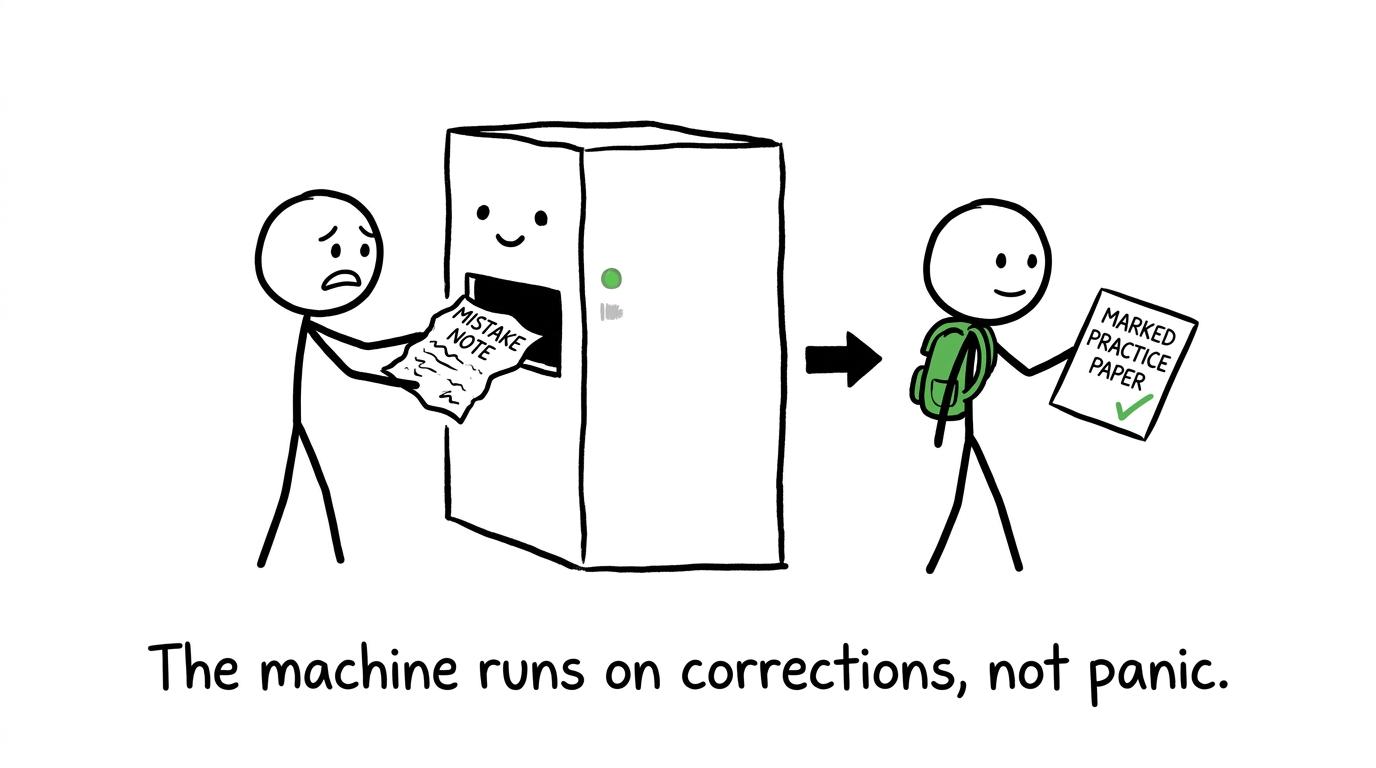 A revision machine turns corrections into calm preparation
Common mistakes when checking apprenticeship requirements
Assuming every employer uses the same criteria
An apprenticeship standard defines occupational training. The vacancy defines who that employer wants to recruit. Always read both, with the advert taking priority for your application.
Confusing desirable with essential
Desirable criteria strengthen an application but do not automatically exclude you. Essential criteria usually form part of initial shortlisting.
Focusing only on Media Studies
A media employer may care more about English, maths, technical subjects, a portfolio or evidence of reliability. Read the whole person specification rather than one subject line.
Using outdated information
Standards, funding rules and vacancies change. Check the live advert and ask the named recruiter or training provider when anything is unclear.
Giving up before asking about equivalents
A related qualification or relevant experience may be accepted, but only the employer can confirm that. Ask a focused question rather than claiming two qualifications are automatically equivalent.
Keep the career goal and the next exam connected
The apprenticeship GCSE Media Studies requirement is rarely a national barrier. For the media routes reviewed here, no specific Media Studies grade is prescribed by the apprenticeship standard. The possible exception is an individual employer that writes a minimum grade into its own vacancy.
So check the advert, separate essential criteria from preferences and ask about alternatives if you are short. Then put most of your energy into what remains changeable: your English and maths results, portfolio, application and interview preparation.
MathsGenie can help make the maths part concrete. Use free revision lessons and practice questions to repair individual topics, mini tests to check progress, and Edexcel predicted papers alongside official past papers. Mark every attempt with the available mark schemes and video solutions. The aim is not vague confidence; it is better evidence, one corrected mistake at a time.










