A-Level Results Day Timeline: August to September
A-level results day timeline for 2026, covering UCAS decisions, Clearing, reviews, accommodation, enrolment and freshers for students and parents.
The strange thing about results day is that years of lessons, revision and exams seem to collapse into one morning. Yet the morning is only the beginning. This A-level results day timeline explains what happens after A-level results, from opening your grades on Thursday 13 August 2026 to enrolment and freshers in September.
For students, the priority is to understand the next action rather than solve every possible problem at once. For parents, it is often to provide calm practical help without taking over the decisions.
Your results day checklist
Before the day, have these ready:
- your UCAS ID and Hub login details;
- your school or college's results collection instructions;
- contact details for your firm and insurance universities;
- a shortlist of possible Clearing courses;
- your student finance and accommodation details;
- a charged phone, notebook and reliable internet connection.
Remember the key distinction: your school or college provides your grades, while UCAS Hub displays the status of your university application.
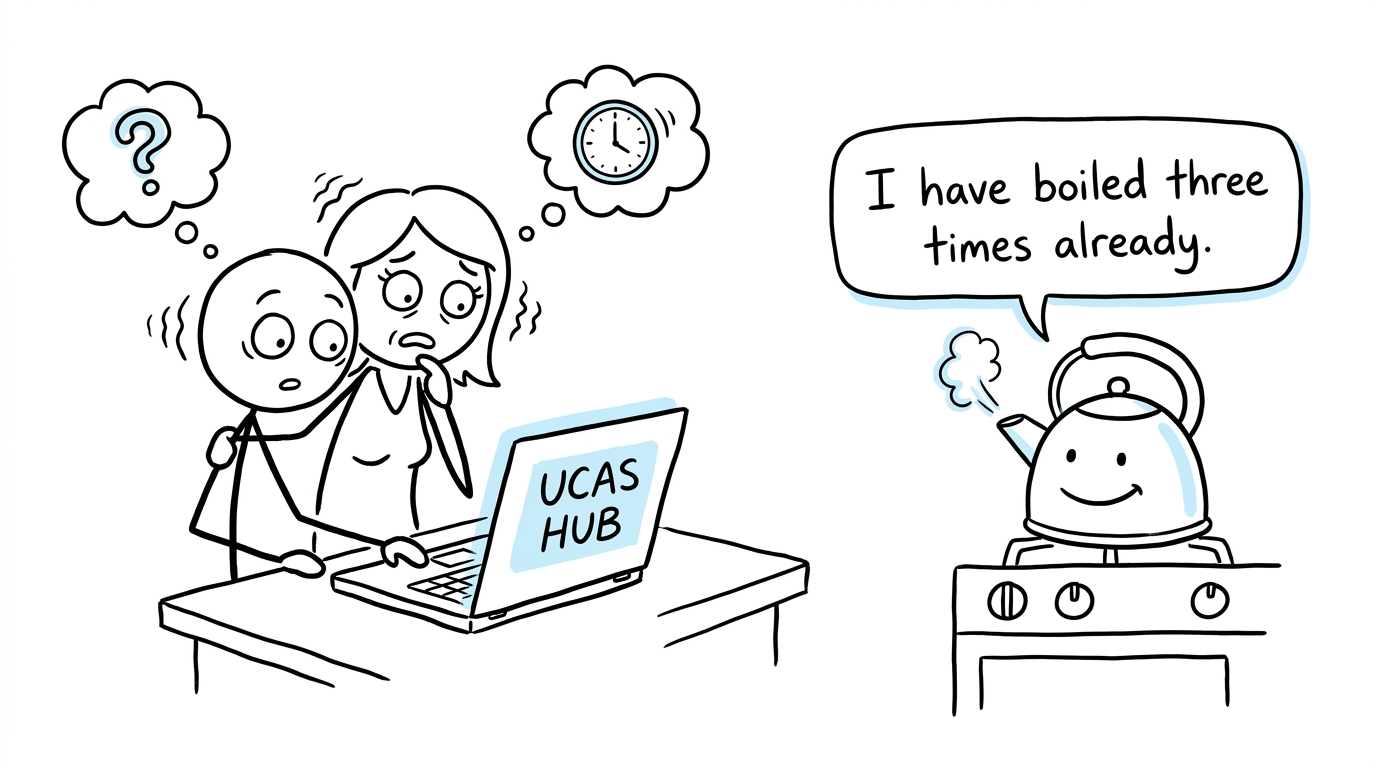 A student and parent waiting beside a repeatedly boiling kettle on results day
Before results day: prepare without predicting
In the week before Thursday 13 August, check that you can access UCAS Hub and receive messages on the email address connected to your application. Find out exactly when and how your school releases results because arrangements vary.
You can also research alternatives. Clearing officially runs from 2 July to 19 October 2026, although students waiting for A-level grades usually become eligible on results day. Researching a few courses is sensible; assuming you will need them is not.
GCSE students can learn something useful here. Choices made after GCSE affect sixth-form subjects, but they rarely create one irreversible route. If you are considering maths beyond Year 11, read the GCSE-to-A Level curriculum guide and explore free A Level Maths revision before choosing.
Results day morning: check grades and UCAS separately
From the morning of Thursday 13 August
A-level, AS and T Level results are released on Thursday 13 August 2026. Your school or college decides its collection time and method, so follow its instructions rather than assuming a universal opening time.
UCAS Hub should show whether a university has confirmed your place, but an application can sometimes take time to update. Do not interpret a delayed decision as a rejection. If the status is unclear, speak to your school and contact the university calmly.
Your likely routes are:
- Firm choice confirmed: the university has accepted you.
- Insurance choice confirmed: your firm has not accepted you, but your insurance has.
- Decision pending: contact the university if UCAS advises you to or the status remains unchanged.
- No confirmed place: begin investigating Clearing.
- Different course offered: read the details before accepting or declining anything.
Meeting an offer usually makes the route simple, but missing a stated grade does not automatically mean rejection. Universities receive results and make their own admissions decisions.
Results day afternoon: use Clearing carefully
If you have no confirmed place, search current vacancies and contact universities directly. Have your grades, UCAS ID, course questions and a pen nearby. The student should normally make the call, even when a parent is helping in the background.
A Clearing conversation is not the final UCAS acceptance. First obtain an offer from the university. Then add the agreed Clearing choice through UCAS Hub when the service allows you to do so. For the main 2026 results day, UCAS lists 1pm as the point from which eligible applicants can add a Clearing choice.
Do not choose purely because somebody answers first. Check the course content, location, accommodation, professional accreditation where relevant and total living costs.
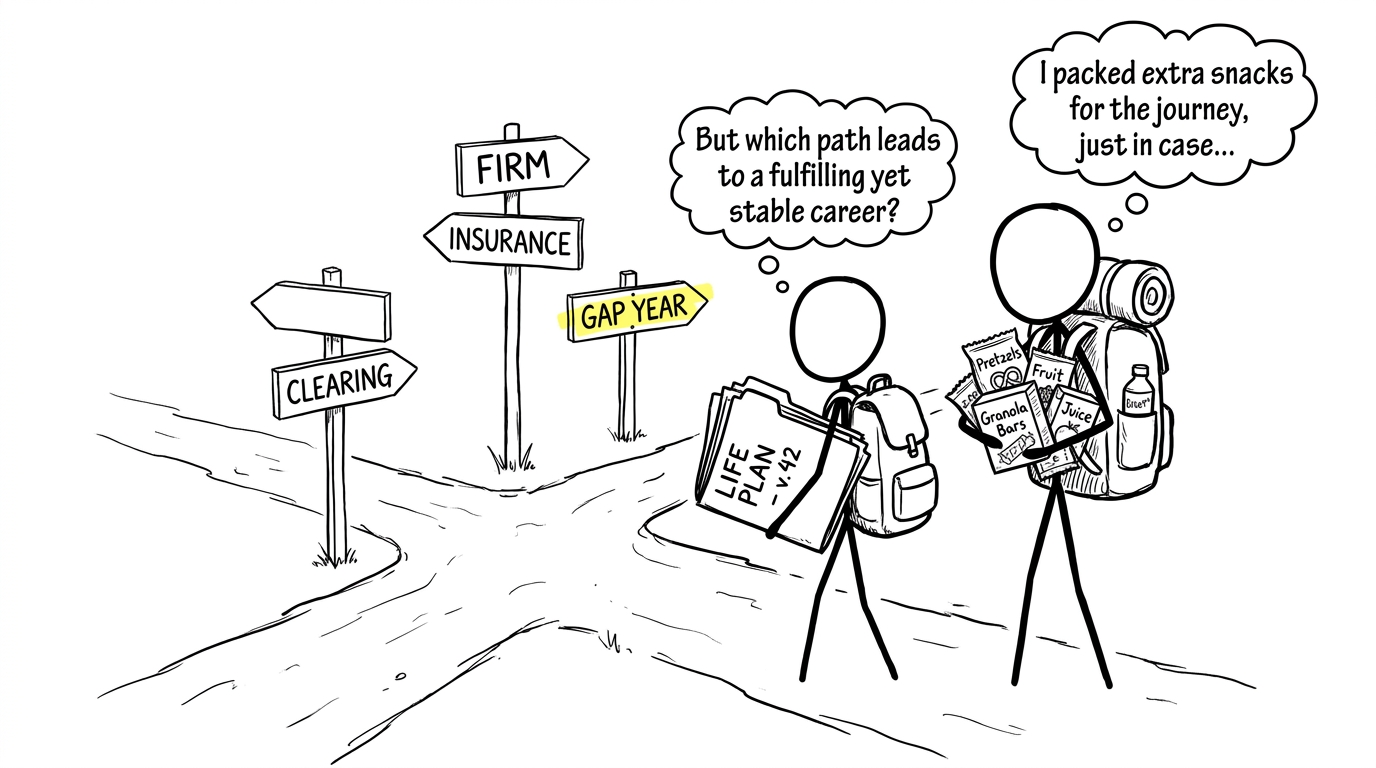 A student choosing between firm, insurance, Clearing and a gap year while a parent carries snacks
The first week after results: resolve urgent questions
If you think a mark may be wrong
Speak to your teacher or exams officer immediately. A review of marking checks whether the mark scheme was applied correctly; it is not an automatic request for extra marks, and a grade can remain unchanged, rise or fall.
For 2026, the deadline for a priority review of marking where a higher education place depends on the outcome is 20 August. Schools need time to discuss consent and submit requests, so do not wait until the deadline. The standard review deadline is 24 September 2026.
Ask the university whether it will hold your place while a priority review is completed. Ofqual states that awarding organisations aim to complete priority reviews by 3 September, but the university controls its own admissions decision.
If your place is confirmed
Read every university email and complete the next administrative tasks:
- accept or apply for accommodation as instructed;
- update student finance if your institution or course has changed;
- complete identity or eligibility checks;
- note deposit, enrolment and arrival deadlines;
- check whether your course has preliminary reading or online tasks.
Each university follows its own timetable. Its applicant portal becomes just as important as UCAS Hub.
Late August: make the decision practical
By late August, the emotional question of “Where am I going?” becomes a practical list: where will I live, how will I travel, and what must I complete before arrival?
If Clearing has produced an offer, compare it thoughtfully. If no available course feels right, a planned gap year or later application may be better than accepting a poor fit through panic. Likewise, resitting can be a valid route where a particular grade is essential. The principles in MathsGenie's guide to what happens after a disappointing GCSE Maths result are useful here too: diagnose the issue, understand the available routes and build a specific plan.
For any maths resit or future preparation, use the relevant AQA A Level Maths resources, Edexcel A Level Maths revision or A Level predicted papers.
September: enrolment, moving and freshers
University enrolment commonly takes place online before arrival or during the opening weeks. You may need identification, a photograph, qualification evidence and confirmation of personal details. Follow your university's instructions because dates and requirements differ.
Freshers' activities are only one part of arrival. Course inductions, library access, academic meetings and safety information matter too. Check which events are compulsory and keep important documents accessible rather than buried beneath moving boxes.
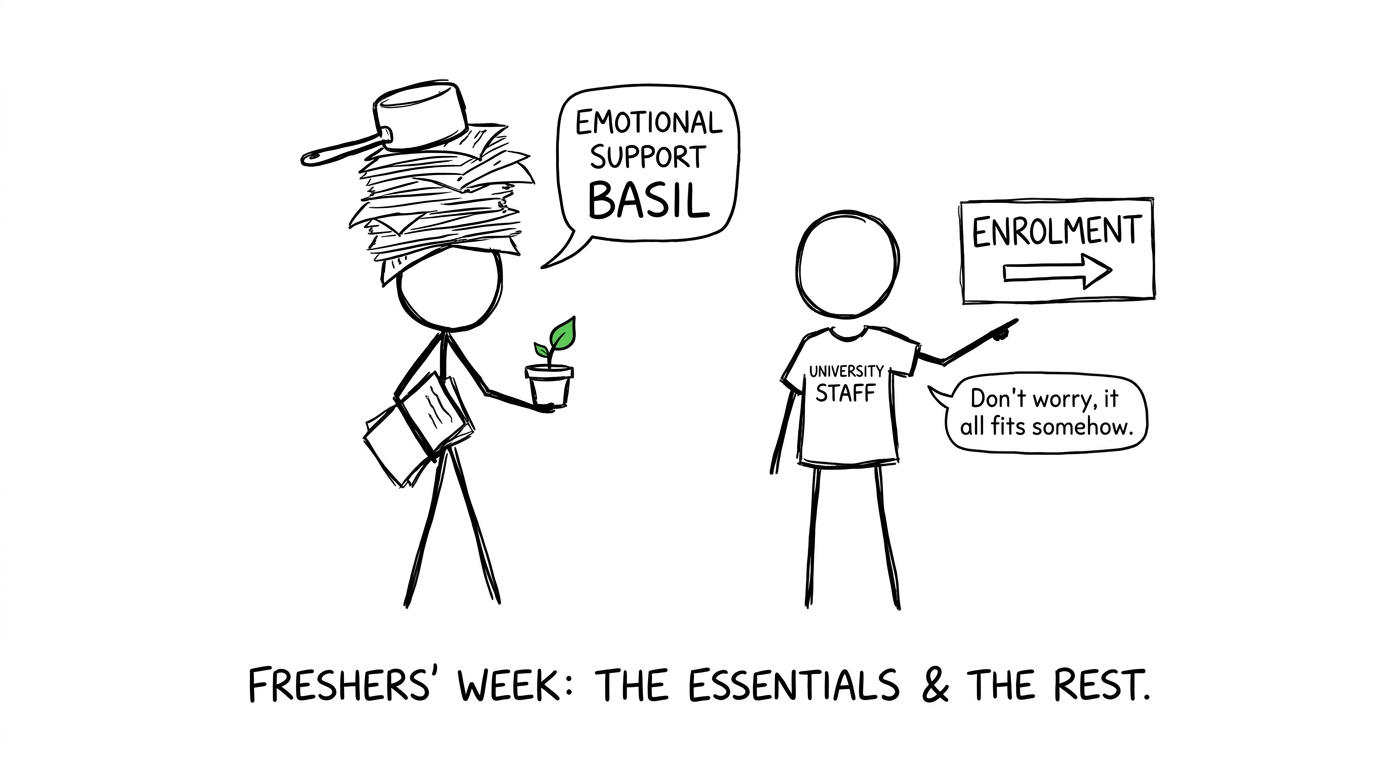 A student arriving at enrolment with forms, one saucepan and emotional support basil
Common mistakes after A-level results
- Looking only at UCAS for grades: obtain the actual results from your school or college.
- Assuming a pending status means failure: decisions can take time to appear.
- Adding a Clearing choice without an offer: contact the university and secure permission first.
- Ignoring review deadlines: speak to the exams officer immediately if a place depends on a disputed result.
- Forgetting finance or accommodation updates: a changed course or university can require updated information.
- Letting a parent make every call: support is valuable, but universities generally need to speak to the applicant.
From exam preparation to the next decision
What happens after A-level results is not one dramatic verdict. It is a sequence of manageable decisions: check, understand, contact, compare and confirm.
GCSE students are earlier on the same road. Build strong habits now with the MathsGenie revision planner, GCSE Maths revision hub and GCSE predicted papers and resources. Use revision lessons to understand, practice questions and mini tests to improve, then past papers, mark schemes and video solutions to prepare for exam conditions. Calm on results day usually begins with useful work completed months before it.