A-Level Politics Resit UCAS Application Guide
A-level politics resit UCAS application advice: declare grades correctly, explain your retake calmly, and show evidence of stronger preparation.
Results day can make one grade feel larger than the rest of your education. It is not. If you are planning an A-Level Politics resit UCAS application, the immediate answer is simple: declare both your original result and the pending retake, check each course's resit policy, and explain the decision briefly through evidence rather than apology.
A resit does not need to become the central story of your application. Universities mainly need accurate information, relevant academic preparation and confidence that you are ready for the course. Your task is to make those things easy to see.
Your resit application checklist
Before writing anything, complete these practical steps:
- Enter your original A-Level Politics result in the UCAS education section.
- Enter the qualification again with the new examination date and result shown as pending.
- Ask your school, college or examination centre how your predicted grade will be supplied.
- Check the resit rules for every individual course and university.
- Contact admissions teams when a published policy is unclear.
- Decide whether the resit needs a brief mention in your personal statement.
- Ask your referee to provide factual context for genuine extenuating circumstances, with your permission.
- Build a revision plan using the correct Politics specification and exam board.
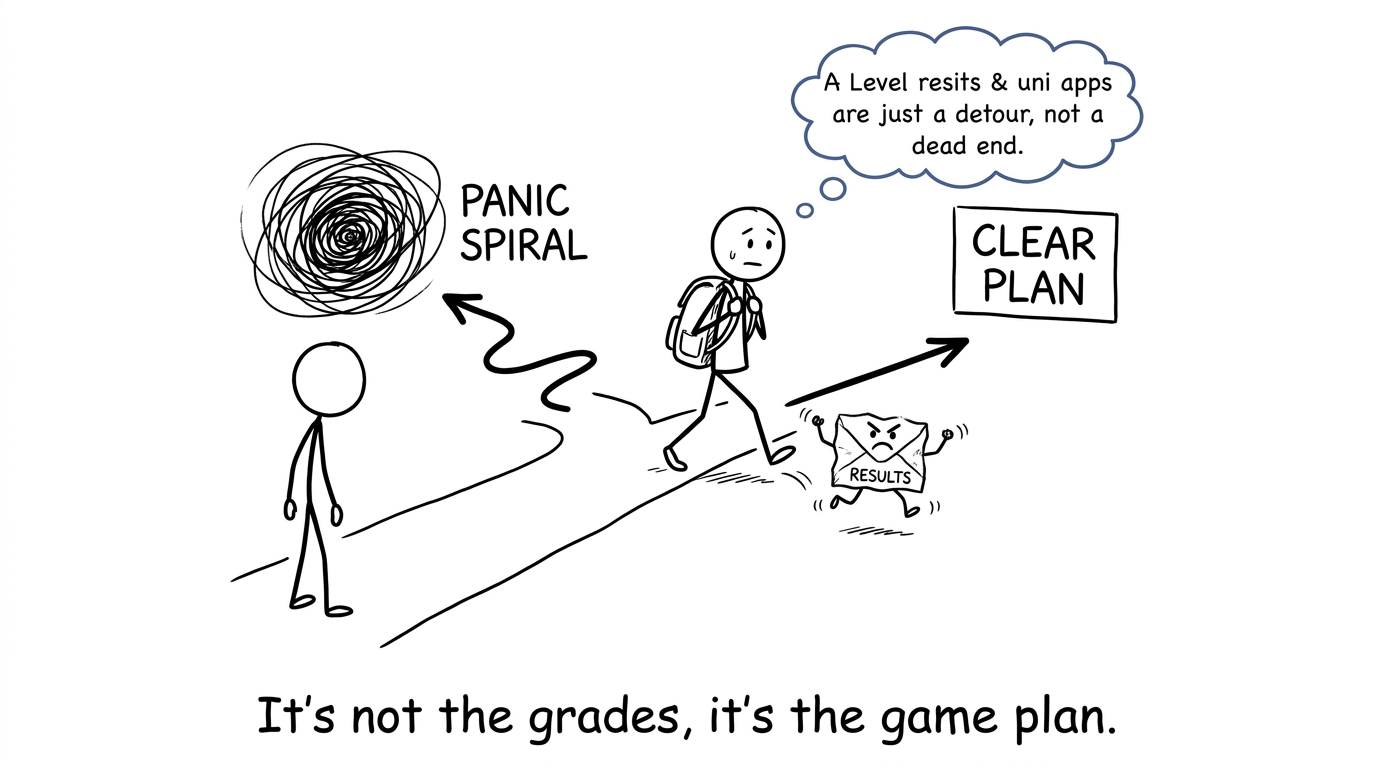 A student choosing a clear plan instead of a results-day panic spiral
Declare your Politics retake correctly
UCAS requires applicants to include completed and pending qualifications, including unsuccessful grades and resits. For an A-Level Politics retake application, that normally means entering the subject twice: once with the achieved grade and once as a pending qualification for the future examination series.
Do not remove, disguise or replace the original result. Transparency is not merely a writing preference; it is part of completing the application accurately.
Make sure the awarding body is correct. A-Level Politics specifications differ, so confirm whether you are taking Edexcel, AQA or another available specification. Your examination centre can verify the entry details and examination date.
University policies also vary. Some institutions consider resit applicants alongside other candidates, while certain competitive courses impose extra conditions or consider the circumstances individually. Never assume that one university's policy applies elsewhere. Check the current course page and ask its admissions team directly if necessary.
Explaining a resit on UCAS without sounding negative
From the 2026 entry cycle onwards, the UCAS personal statement uses three structured questions with a combined limit of 4,000 characters. The second question asks how your qualifications and studies have prepared you for the course. That is usually the most natural place to mention a Politics resit if it adds useful academic evidence.
A strong explanation has three parts:
- Fact: state that you are retaking the qualification.
- Action: identify what you changed.
- Evidence: show how the new approach is preparing you for university.
Keep the emphasis on preparation. Admissions staff do not need a long defence of one grade; they need a credible picture of what you are doing now.
Example wording for a straightforward resit
I am retaking A-Level Politics and have used the additional year to strengthen my evaluation of political evidence, improve timed essay planning and complete regular past-paper practice. This more disciplined approach has developed the independent revision habits I will bring to undergraduate study.
Example wording when Politics supports your chosen course
Preparing to retake A-Level Politics has deepened my engagement with competing interpretations of political institutions and strengthened my ability to construct balanced, evidence-led arguments. Reviewing marked responses has also made my written analysis more precise.
These are templates, not scripts. Only claim activities you have genuinely completed, and replace broad phrases with specific preparation where possible.
For structured subject revision, use the Edexcel A-Level Politics revision hub, which brings together lessons, revision guides, flashcards, past papers and mark schemes. If you are rebuilding knowledge from the first year of the course, the Edexcel AS-Level Politics resources can help you identify foundational gaps.
When circumstances affected your original result
Illness, bereavement, caring responsibilities or serious disruption may provide relevant context, but your personal statement is not always the best place for sensitive detail. UCAS guidance allows referees, with the applicant's permission, to include circumstances that affected academic achievement.
Speak to your referee early. Give them accurate dates and explain the academic impact without exaggeration. A useful reference can establish context independently while leaving your personal statement focused on course suitability.
If circumstances arose after submitting the application, contact the universities concerned. Do not assume that changing UCAS details automatically tells every admissions team everything they need to know.
Turn the resit into evidence of readiness
The strongest positive framing is not “I became more determined”. It is evidence of what that determination produced.
You might refer to:
- a consistent timetable rather than last-minute revision;
- regular timed essays and source questions;
- an error log based on mark schemes;
- improved planning under examination conditions;
- wider reading connected directly to your chosen degree;
- constructive use of teacher or tutor feedback.
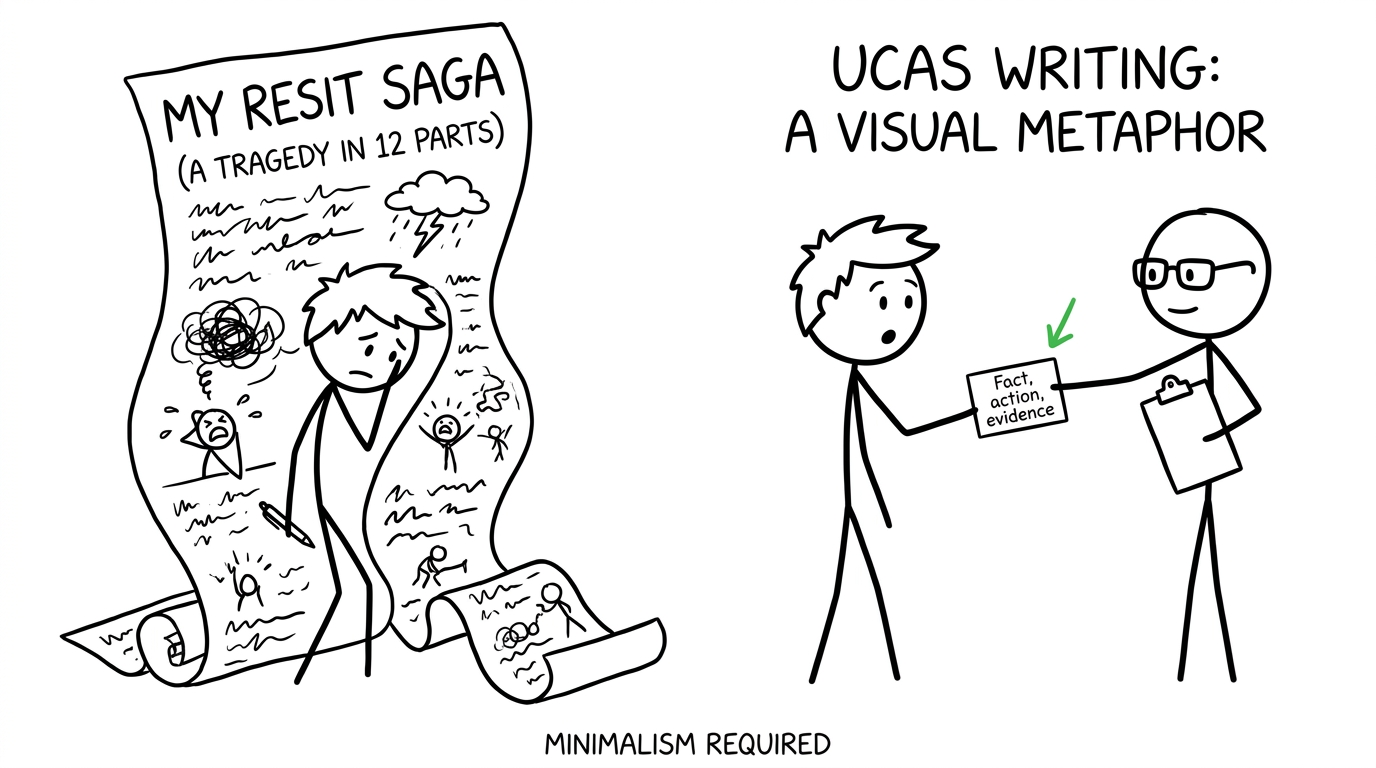 An adviser replacing a dramatic resit saga with fact, action and evidence
The same disciplined loop works across subjects: attempt, mark, diagnose, practise and retest. MathsGenie's guide to finding your weakest topics explains how to turn lost marks into a focused revision list, while the guide to using past papers properly shows why the review after a paper matters as much as sitting it.
If you are retaking Politics alongside maths, use the A-Level Maths revision hub for exam-board resources. Younger students can build the same habits through GCSE Maths revision, GCSE mini tests and the wider MathsGenie resources collection.
Common mistakes when explaining a resit
Hiding the original grade
UCAS expects completed and pending qualifications to be declared. Enter both records accurately.
Writing an extended apology
A defensive paragraph uses valuable space without demonstrating academic potential. Give concise context, then move to action and evidence.
Blaming teachers or the exam board
Even when teaching disruption was real, an accusatory tone weakens the application. Ask your referee to confirm relevant circumstances factually.
Assuming every university accepts resits identically
Policies can differ by institution and course. Check each current entry-requirements page and obtain clarification in writing where necessary.
Making unsupported claims about improvement
“I will work harder” is a promise. Timed practice, revised essay structures and feedback records are evidence.
Make the next result tell the stronger story
A resit is one line in your educational record, not a verdict on your ability. Declare it honestly, explain it only as much as necessary, and let your current preparation show what has changed.
Start with the MathsGenie A-Level Politics revision resources. Use the revision lessons and guides to rebuild knowledge, practise with past papers and predicted papers, and learn from mark schemes rather than merely collecting scores. A calm UCAS explanation helps, but sustained preparation is what makes that explanation convincing.