

A-Level Grade Different From Predicted? Next Steps
A-level grade different from predicted? Understand why it happened, how reviews of marking work and what to do about university offers on results day.
Opening an results envelope can make months of work feel as though they have been reduced to one letter. If you find an A-level grade different from predicted, pause before deciding what it means. A predicted grade is an informed estimate, not a promised result. Check your marks, speak to your school or college, review your UCAS status and act quickly if you believe an error may have affected the outcome.
The gap may change your immediate plan, but it does not erase your ability or close every route forward.
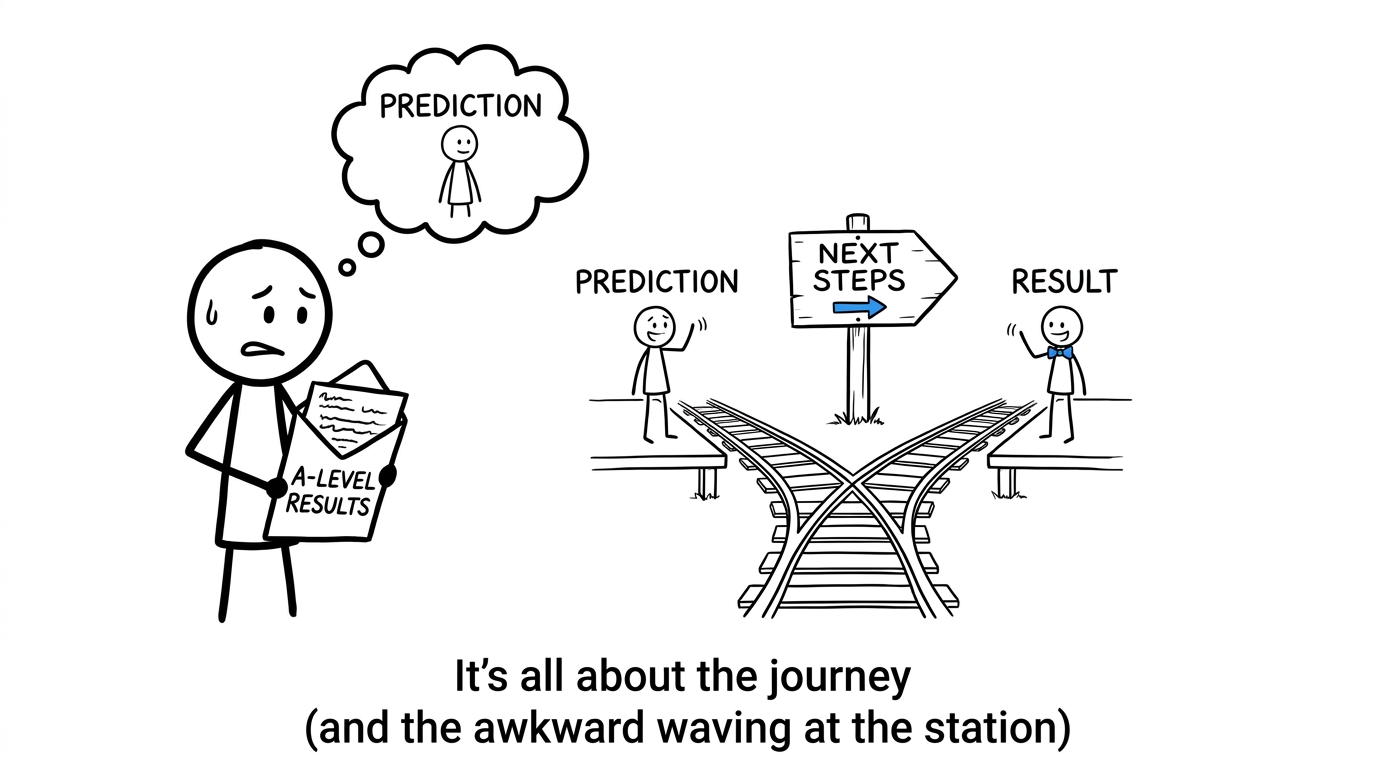 A student watches Prediction and Result arrive at different platforms
Your results-day checklist
If your A-level results do not match your predicted grades:
- collect the complete results sheet and note every component mark available;
- check UCAS Hub before assuming that you have lost a university place;
- speak to a teacher, head of department or exams officer;
- ask how far your mark is from the relevant grade boundary;
- discuss access to your marked script and a review of marking;
- contact your university if your application is unresolved;
- investigate your insurance choice, Clearing or resitting without rushing into a decision.
For students still preparing for GCSEs, the same principle matters now: mock and predicted grades are useful evidence, but they are not final outcomes. Build your preparation around the complete GCSE Maths revision hub, not around one estimate.
Why A-level results and predicted grades can differ
UCAS defines a predicted grade as the grade a school or college believes an applicant is likely to achieve in positive circumstances. It may draw on mocks, class assessments, prior attainment and a teacher's professional judgement. It describes potential rather than guaranteeing an examination result.
Your final grade comes from the marks awarded for your completed assessments and the grade boundaries set by the exam board. Ofqual explains that boundaries are set after the examinations, when marking is nearly complete. They can move because papers cannot be made exactly equal in difficulty every year.
Several ordinary factors can therefore create a difference:
- the prediction was deliberately aspirational but realistic;
- your examination performance differed from earlier assessments;
- timing, interpretation or small accuracy errors cost marks;
- the final paper tested a different mixture of strengths;
- grade boundaries differed from assumptions made during the year;
- an administrative or marking error may have occurred.
A mismatch alone is not evidence that a paper was marked incorrectly. Equally, an unexpected result deserves a calm check rather than a shrug.
What to do when the grade is lower than predicted
Check the practical outcome first
Look at UCAS Hub. A university may confirm your place even if you missed the stated conditions, or it may offer a revised course, year or campus. If the decision is still pending, contact admissions and give your name, UCAS details and confirmed grades.
If neither your firm nor insurance place is confirmed, UCAS Clearing can show courses with vacancies. Compare the course content, location, costs and entry route carefully. The first available option is not automatically the right one.
Ask for the marks and grade boundaries
Speak to your exams officer or subject teacher. Ask for:
- your total mark and available component marks;
- the published boundary for the grade above;
- whether your school recommends obtaining the script;
- the school's internal deadline and charges for post-results services.
Being close to a boundary does not prove that a review will raise your grade. It simply helps your teacher judge the possible benefit and risk using the actual paper.
Understand a review of marking
What students often call a “remark” is normally a review of marking. It checks whether the original mark scheme was applied correctly; it is not a completely fresh attempt to award marks more generously. A clerical re-check instead checks matters such as whether every page was marked and whether marks were totalled and recorded correctly.
For school and college candidates, the centre normally submits the request. Written consent is required because the mark and grade can rise, stay unchanged or fall. Private candidates can approach the exam board directly or work through the centre that entered them.
For the June 2026 series, A-level results are released on Thursday 13 August 2026. JCQ states that priority reviews of marking must reach the awarding body by 20 August 2026, while the deadline for other reviews of results is 24 September 2026. Your centre may impose an earlier internal deadline, so ask immediately when a university place depends on the outcome.
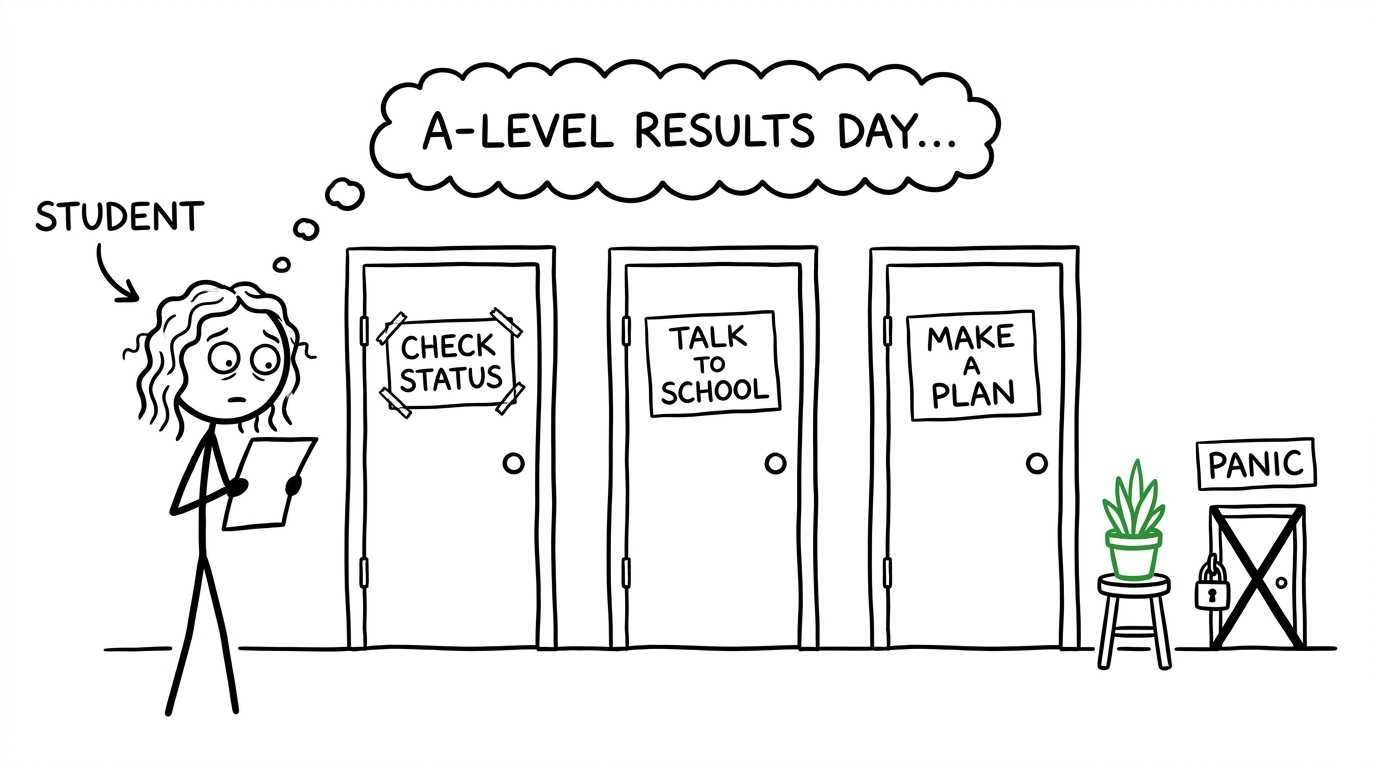 A student chooses calm next steps while the panic door stays locked
Know when an appeal applies
An appeal is not usually the first step. It follows the outcome of a review of results where there is still concern about a marking or procedural error. Your school or college can explain the grounds, evidence and deadline. If your centre decides not to request a review, it must provide a route for you to appeal that decision internally.
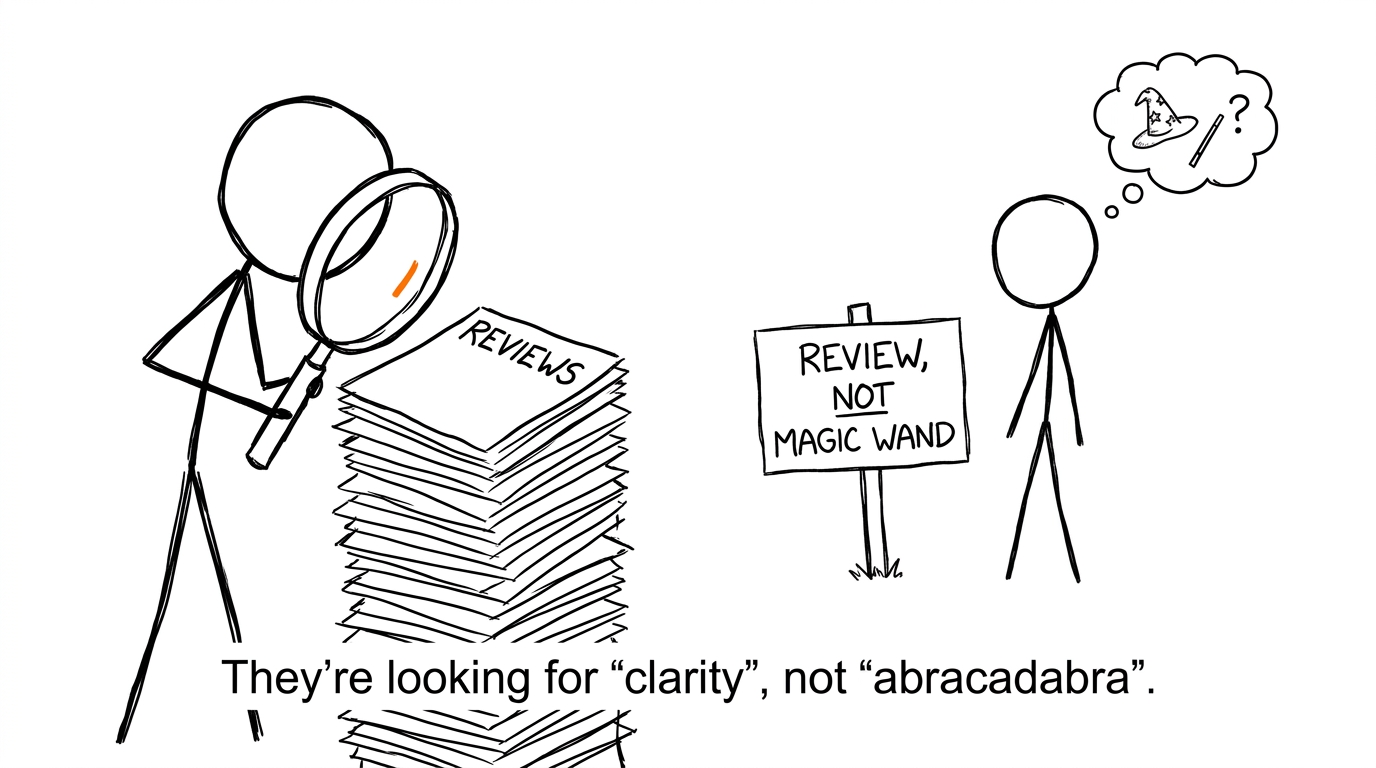 An examiner checks papers beside a sign saying Review, not magic wand
What if your grade is higher than predicted?
A higher result is good news, but it still deserves a considered decision. Check whether your confirmed place remains the course you want. If you would prefer another course, research the alternatives before declining anything in UCAS Hub. Releasing a confirmed place is consequential and should not be done merely because the result-day excitement makes change feel urgent.
The wider lesson for current GCSE students is encouraging: predictions can underestimate as well as overestimate eventual performance. Use Edexcel GCSE Maths revision or the appropriate exam-board area to turn feedback into evidence of progress.
What GCSE students can learn from predicted grades
Predictions are most useful as navigation. They tell you where you may be heading if your present pattern continues, not where you must finish.
Use GCSE predicted papers to experience unfamiliar questions, then use Edexcel GCSE Maths mini tests to isolate weaker skills. After each attempt, follow MathsGenie's guide to turning mark-scheme feedback into marks.
Students moving towards A-level maths can use the Edexcel A-level Maths revision hub for lessons, exam-style questions and past papers. Near the examination period, A-level Maths predicted papers can provide fresh timed practice. They remain preparation tools, however, not forecasts of an exact result.
Common mistakes after an unexpected result
- Treating the prediction as a guaranteed grade. It was an estimate made before the final assessment.
- Assuming a review can only help. Marks and grades can go down, stay the same or go up.
- Waiting for a review before contacting a university. Run both conversations promptly when a place is at stake.
- Calling every post-results process an appeal. A clerical re-check, review of marking and appeal serve different purposes.
- Missing the centre's deadline. School deadlines may be earlier than JCQ's published dates.
- Choosing Clearing in a panic. Confirm the course details and long-term fit before accepting.
Turn the result into a next step
An unexpected grade feels final because it is printed in permanent ink. Your response is not. Gather the evidence, check your university status, speak to the people who can access your script and use the correct review process where there is a credible concern.
For future examinations, make evidence part of revision from the beginning. MathsGenie brings together free revision lessons, practice questions, mini tests, past papers, predicted papers, mark schemes and video solutions. Start by finding your weakest GCSE topics, then practise until your progress is visible in the marks rather than merely hoped for in a prediction.











