An autonomous quadcopter drone is carrying out deliveries.
The diagram shows the drone accelerating vertically upwards. 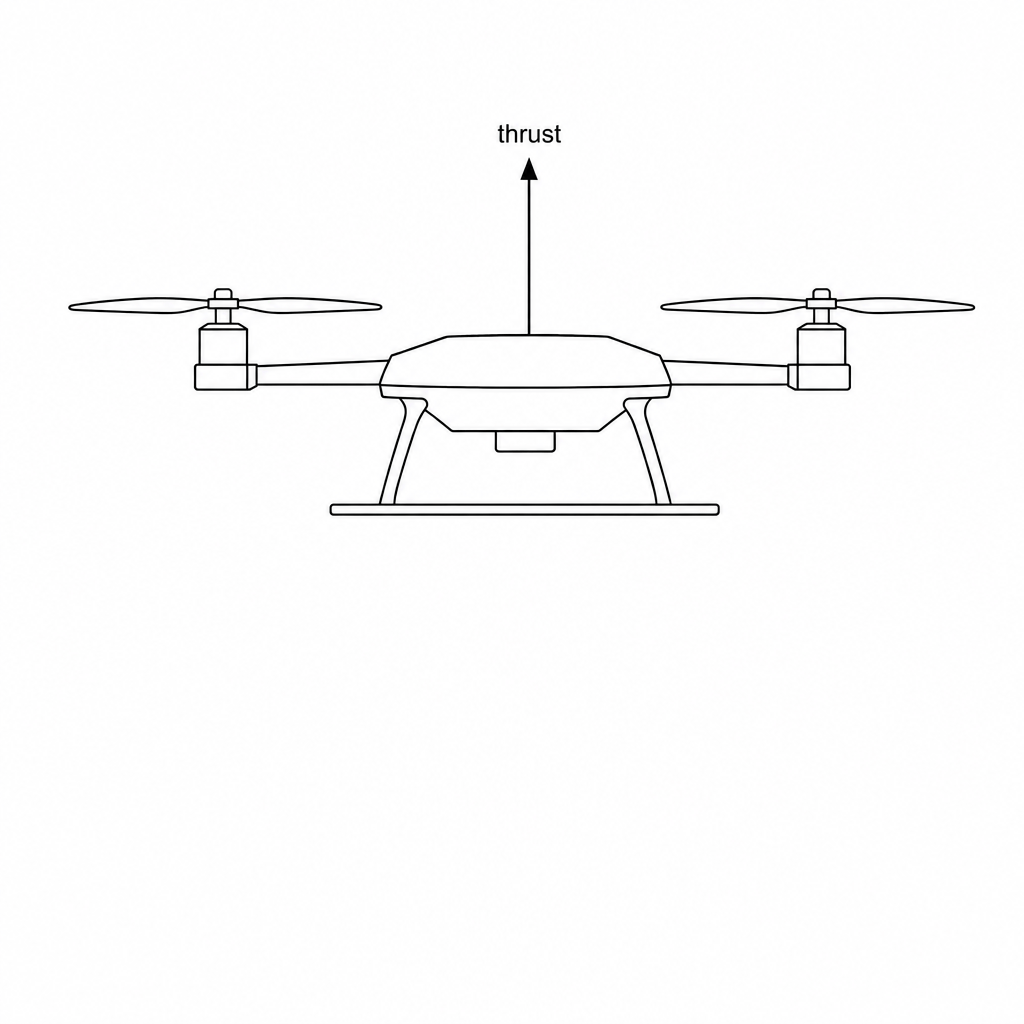 Complete the diagram by adding another labelled force arrow representing the opposing force.
The graph shows a 50-second journey made by the drone during its delivery run. 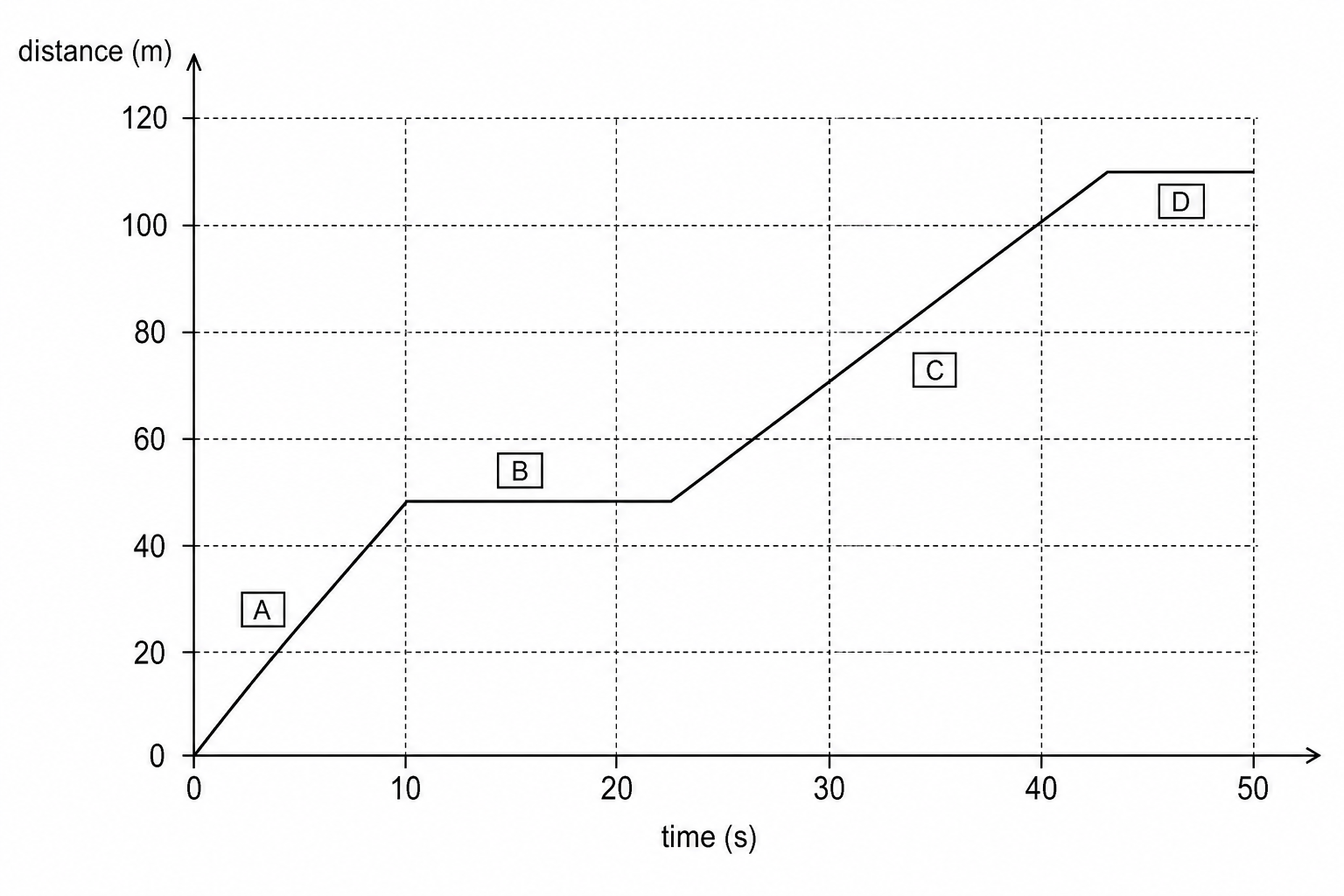 Which stage of the graph shows the drone stopping for the shortest period of time?
Which stage of the graph shows the drone moving at the fastest speed?
State the equation linking average speed, distance moved, and time taken.
Calculate the average speed of the drone during the first 35 seconds of its journey.
Infrared waves are used by the drone's obstacle-detection cameras. State another use of infrared waves.
State one similarity and one difference between infrared waves and visible light waves.

