Question 22
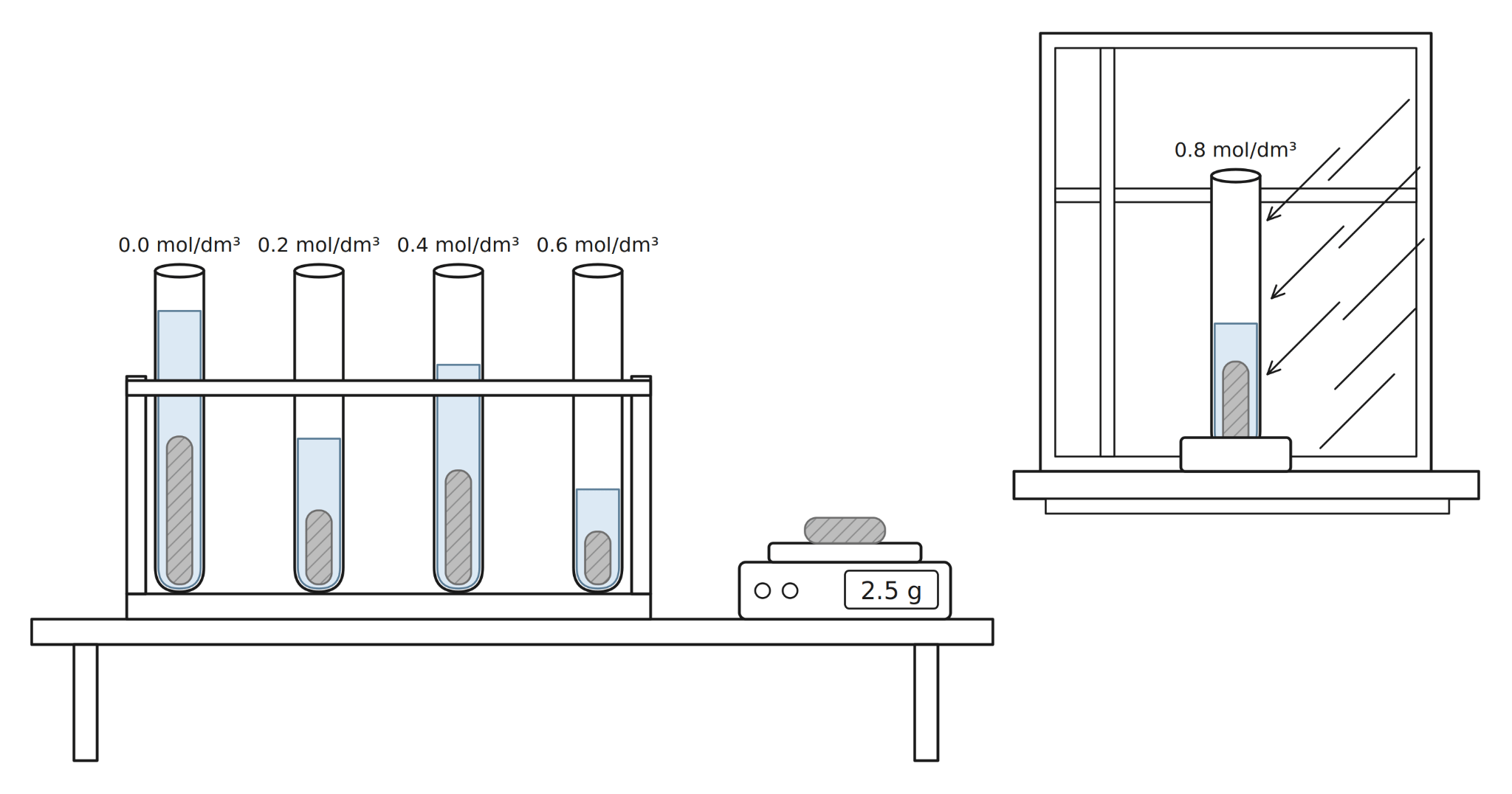
FA student set up the apparatus in Figure to investigate the effect of sugar concentration on potato tissue. He used a balance that measures to the nearest 0.1 g.
Figure: The apparatus a student used to investigate the effect of sugar concentration on potato tissue
a.[2]
Give two errors in the student's method that can be seen in Figure 1.
b.[2]
Explain how the position of the tube on the windowsill would affect the student's results.
c.[2]
Explain why the balance the student used was not suitable for this investigation.
1.3 Transport in cells Questions
58 exam-style questions on AQA GCSE Biology 1.3 Transport in cells, covering 1.3.1 Diffusion, 1.3.2 Osmosis, and 1.3.3 Active transport. Each one has a worked solution and a mark scheme showing where the marks go.