

What to Eat Before a GCSE Combined Science Exam
What to eat before GCSE Combined Science exam: practical breakfasts, lunches and snacks for steady energy, hydration and focus without a sugar crash.

The last hour before an exam can make ordinary choices feel unusually important. Should you eat even if nerves have removed your appetite? Will sugar help? Is an energy drink worth the risk?
The practical answer to what to eat before GCSE Combined Science exam is reassuringly simple: choose a familiar meal containing a starchy carbohydrate, some protein and fruit or vegetables, then drink water regularly. Porridge with fruit and yoghurt, eggs on wholegrain toast, or a rice or pasta lunch with a familiar protein are all sensible options. Avoid experimenting with unfamiliar foods, oversized meals or high-caffeine energy drinks.
Food cannot replace revision. It can, however, help you arrive without preventable hunger, thirst or an energy slump competing for your attention.
Your quick pre-exam food checklist
Before leaving for school, aim to:
- eat a familiar breakfast or lunch rather than skipping the meal;
- include a starchy food such as oats, bread, rice, pasta or potatoes;
- add protein from eggs, yoghurt, milk, beans, fish, meat or a suitable alternative;
- include fruit or vegetables where practical;
- drink water without forcing down an excessive amount at once;
- pack a small familiar snack if there will be a long wait before the exam;
- avoid using an energy drink as a substitute for sleep or food;
- check your school’s rules about water bottles and food in the exam room.
This is not about creating a scientifically perfect breakfast. The goal is a calm, repeatable routine that leaves you comfortably fed.
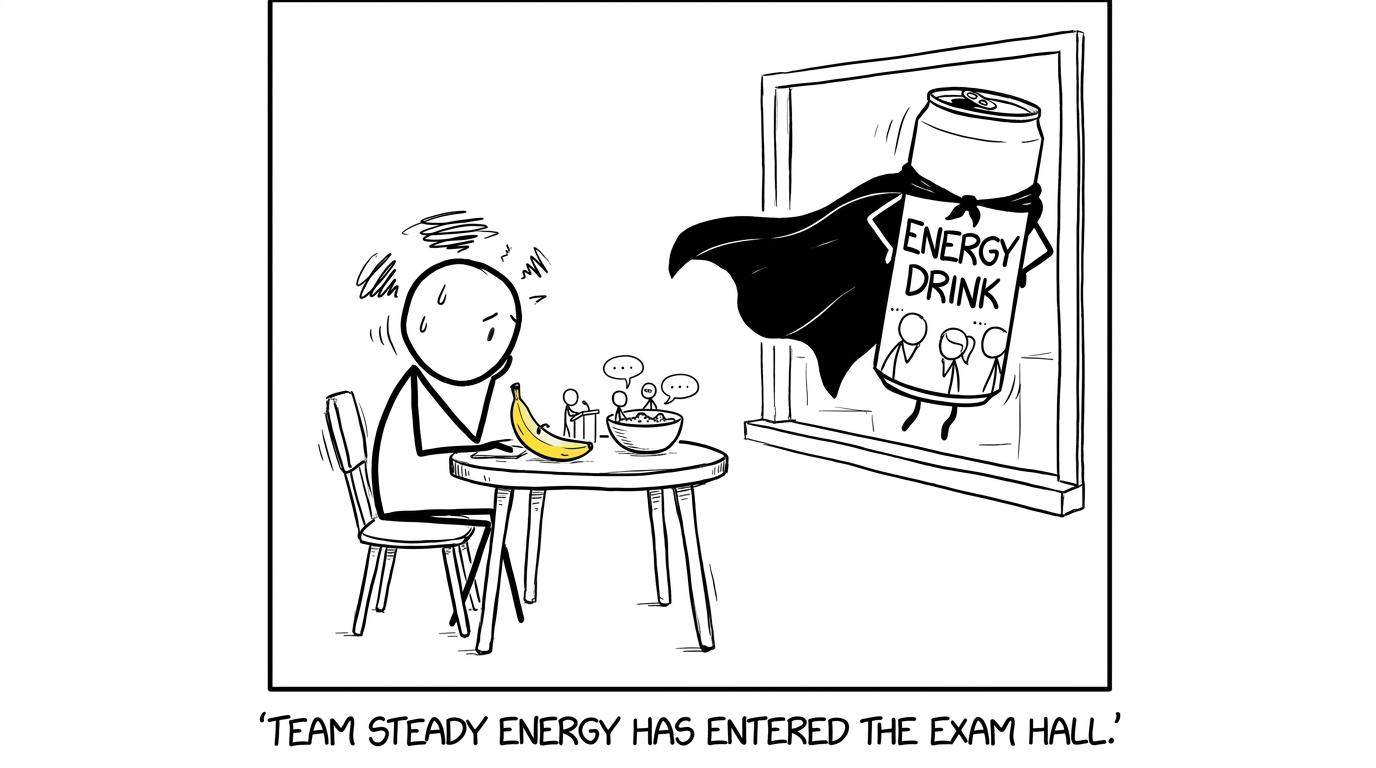 A GCSE student's calm breakfast team politely ignores a villainous energy drink
What actually supports focus and steady energy?
Combine carbohydrates with protein
Your body breaks down carbohydrates to provide glucose, which is an important energy source. A meal based only on a sweet drink or confectionery may feel quick, but it is unlikely to keep you comfortably full through the journey, waiting time and exam.
A more useful pattern combines a starchy carbohydrate with protein. For example:
- porridge with milk or a fortified alternative, plus banana;
- wholegrain toast with eggs;
- lower-sugar cereal with milk and fruit;
- yoghurt with oats and berries;
- a sandwich containing chicken, tuna, cheese, egg or hummus;
- rice or pasta with beans, fish, meat or tofu.
Wholegrain varieties can add fibre and tend to be more filling. They are not compulsory, though. If white toast is the familiar food you can manage when nervous, eating it with a suitable topping is more useful than skipping breakfast in pursuit of an ideal meal.
Treat hydration as a routine, not an emergency
The NHS recommends that most people aim for around 666 to 888 cups or glasses of fluid across a day, although needs vary with factors such as heat, activity and illness. Water is a straightforward choice before an exam.
Drink normally from when you wake up rather than suddenly consuming a large bottle just before entering the hall. That reduces the chance that thirst distracts you without creating a different distraction halfway through the paper. Pale yellow urine is commonly used as a practical sign that you are drinking enough.
Under current JCQ instructions, food and drink may be allowed in an examination room at the head of centre’s discretion. Where bottles are permitted, they must be transparent and have their labels removed. Individual schools may apply stricter arrangements, so follow the instructions from your exams officer rather than assuming every centre has identical rules.
Familiar food matters more than fashionable food
Exam morning is a poor time to test a supplement, an unfamiliar smoothie or a breakfast recommended in a short video. Even nutritious food can be unhelpful if it normally causes you discomfort or you simply cannot face eating it.
Think of your meal as part of your equipment. You would not take an unfamiliar calculator into a physics paper without testing it. Apply the same logic to breakfast.
If anxiety affects your appetite, a smaller option may be easier: toast and yoghurt, a banana with a glass of milk, or a modest bowl of cereal. If eating is regularly difficult, or you have a medical condition, allergy or specialist dietary requirement, seek individual advice from a parent or carer and an appropriate healthcare professional.
Breakfast ideas for a morning science exam
A morning paper often compresses the routine: wake up, get ready, travel and sit down. Prepare anything you can the evening before.
Useful breakfasts include:
- porridge topped with banana or berries;
- wholegrain toast with egg and a piece of fruit;
- low-sugar muesli with yoghurt;
- cereal with milk and fruit;
- toast with peanut butter, provided it is safe for you and permitted around others;
- a dairy or fortified plant-based yoghurt with oats and fruit.
There is no need for a huge portion. Eat enough to feel satisfied, allowing comfortable time before the paper rather than rushing the final mouthful at the school gate.
If you cannot manage a full breakfast, divide it into two smaller parts: something at home and a familiar snack before the exam. Check where and when your school permits eating.
Lunch ideas for an afternoon paper
An afternoon exam creates a different problem. Lunch needs to carry you through the paper without leaving you uncomfortably full.
A balanced packed lunch might contain:
- a sandwich or wrap with a protein filling;
- fruit or chopped vegetables;
- yoghurt or another suitable protein source;
- water.
A school lunch based on potatoes, rice or pasta with vegetables and a protein source can work equally well. Choose a normal portion and food you already know agrees with you. A very heavy meal immediately before the exam may leave you feeling sluggish, while skipping lunch can make hunger hard to ignore.
If there is a long gap between lunch and the exam, consider a small snack such as fruit, yoghurt, toast, oatcakes or a simple sandwich. The snack is a bridge, not a second large meal.
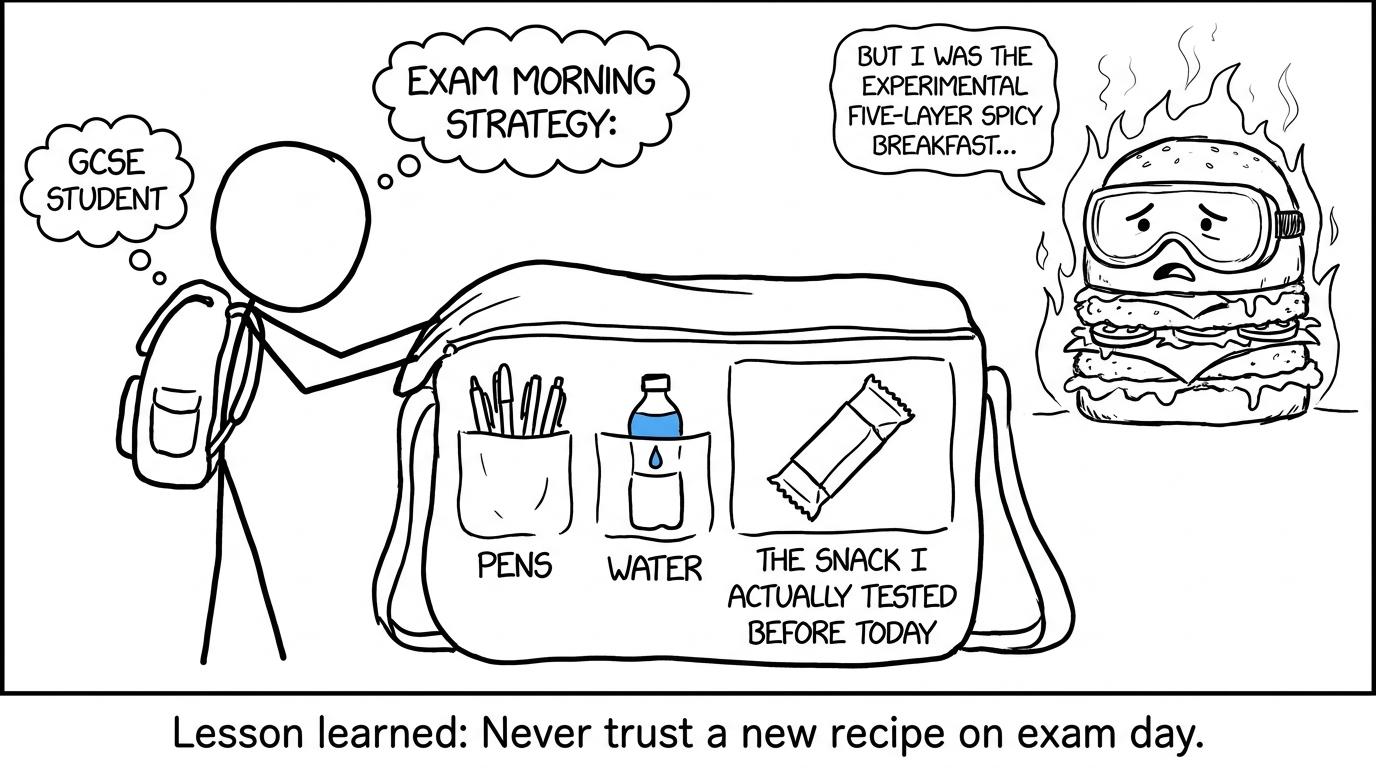 A familiar snack is packed while an experimental breakfast waits in safety goggles
Why energy drinks are a poor exam strategy
High-caffeine energy drinks promise alertness, which makes them tempting after a late revision session. Yet the British Dietetic Association advises that young people should generally avoid them in favour of options such as water or milk. High caffeine intake can be associated with agitation, disturbed sleep and stomach discomfort, none of which helps in a quiet examination hall.
The deeper problem is that an energy drink attempts to repair the wrong part of the system. It cannot restore missed sleep, teach an equation or replace a meal. If you do not usually consume caffeine, exam day is especially unsuitable for discovering how strongly you react to it.
Tea and coffee also contain caffeine. If either is already part of your normal routine, avoid suddenly having much more than usual. Familiarity and moderation are safer than chasing a temporary feeling of being energised.
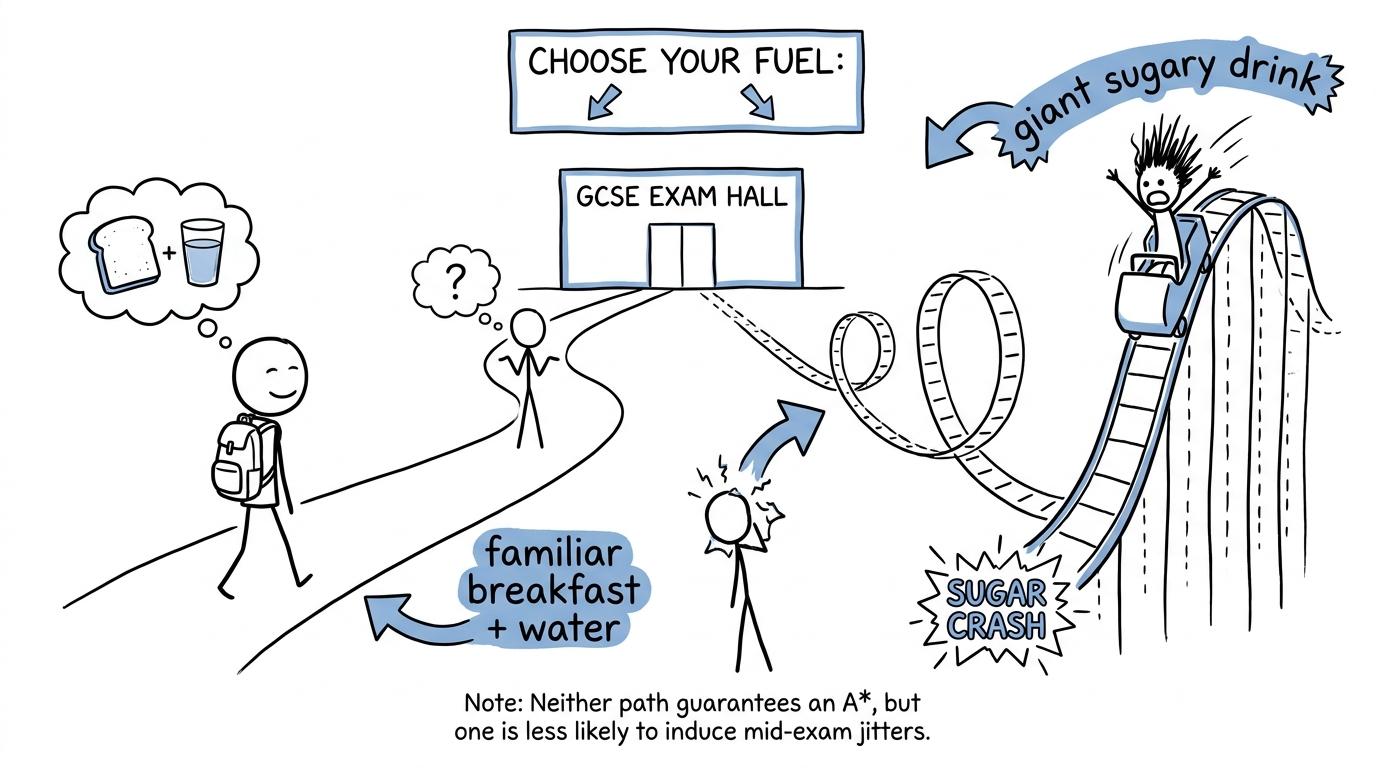 A student chooses the smooth route of breakfast and water over a sugary-drink rollercoaster
Food helps attention, but preparation directs it
Combined Science papers test more than remembered facts. Across AQA, Edexcel, OCR and Eduqas specifications, students may need to interpret graphs, handle units, substitute into equations and explain experimental evidence. Paper lengths and structures vary, so check your own exam board and timetable.
Once breakfast is sorted, use the remaining revision time on the skills that can produce marks. The overlap between science and maths is particularly valuable:
- revisit changing the subject of a formula for physics equations;
- practise standard form for very large and very small quantities;
- strengthen speed and density calculations;
- review direct and inverse proportion;
- use the GCSE maths topics by board and tier to identify related weaknesses.
The underlying relationships often look simple:
density=massvolume\text{density}=\frac{\text{mass}}{\text{volume}}density=volumemass speed=distancetime\text{speed}=\frac{\text{distance}}{\text{time}}speed=timedistanceBut marks are commonly lost through rearranging errors, incorrect units or careless calculator entry. Food may help you feel ready to concentrate; only practice makes those processes reliable.
Common exam-morning food mistakes
Skipping food because you feel nervous
A reduced appetite is understandable. Try a smaller, plain meal rather than automatically eating nothing. Familiar food in manageable portions is often easier than forcing down a large breakfast.
Choosing only something sugary
Sweets or a sugary drink may provide energy, but they are not a balanced replacement for breakfast or lunch. Pair a carbohydrate with protein and choose something that keeps you comfortably satisfied.
Eating far more than usual
More food does not create more marks. An oversized meal can be uncomfortable, particularly when you must sit still for a full paper.
Drinking too much immediately before the exam
Hydration works best when spread through the day. Drink regularly rather than attempting to catch up outside the examination room.
Experimenting with caffeine or supplements
Do not turn exam morning into a trial. Supplements marketed for focus are not a substitute for sleep, balanced meals or revision, and some may be inappropriate for young people.
Revising through breakfast
Reading one more page while neglecting food rarely represents a sensible trade. A calmer approach is to prepare breakfast, your clear water bottle and your equipment in advance, then use a short final review for equations or definitions.
Build a routine you can trust
The best pre-exam meal is not a secret recipe. It is food you tolerate well, containing a sensible mix of carbohydrate and protein, accompanied by normal hydration. Repeat that routine before practice papers so the real morning feels familiar.
Then let revision do its own job. Use MathsGenie’s free revision resources to practise the numerical skills that transfer into Combined Science. Complete GCSE maths past papers with mark schemes, review video solutions and use mini tests or predicted papers to expose the next gap.
Breakfast creates no guarantee. Neither does one revision session. Their value comes from removing avoidable problems: hunger, thirst, uncertainty and unfamiliarity. Prepare a simple meal, take permitted water, and arrive ready to give the paper your full attention.











