What to Eat Before GCSE Arabic Exam for Focus
What to eat before GCSE Arabic exam: choose familiar carbohydrates, protein and water for steady energy, comfort and concentration throughout the paper.
The final hour before an exam creates a strange temptation: to change everything. Eat a “brain food” you never normally touch. Drink something powerful. Find a last-minute trick that promises instant concentration.
If you are wondering what to eat before GCSE Arabic exam, the useful answer is much simpler: choose a familiar meal containing starchy carbohydrate and some protein, drink water normally, and avoid anything likely to leave you hungry, uncomfortable or overstimulated. Food cannot replace Arabic revision, but it can help you arrive with steady energy rather than giving your body another problem to solve.
That matters in a language assessment. Listening requires attention from the opening moments. Reading and writing demand sustained concentration, while speaking feels easier when you are physically comfortable. The goal is not to create extraordinary focus. It is to remove avoidable distractions.
Your quick pre-exam food checklist
A practical exam meal should be:
- Familiar: something you already know agrees with you.
- Balanced: include a starchy carbohydrate, some protein and, where practical, fruit or vegetables.
- Comfortable: enough to prevent hunger, but not so large that you feel sluggish.
- Hydrating: have water regularly rather than drinking a huge amount immediately before the exam.
- Easy to organise: prepare it before the morning becomes rushed.
Suitable combinations include porridge with milk and fruit, eggs on wholemeal toast, yoghurt with oats and a banana, beans on toast, or a sandwich with a protein filling. These are options, not compulsory prescriptions. Cultural foods and home-cooked meals can work just as well when they are familiar and balanced.
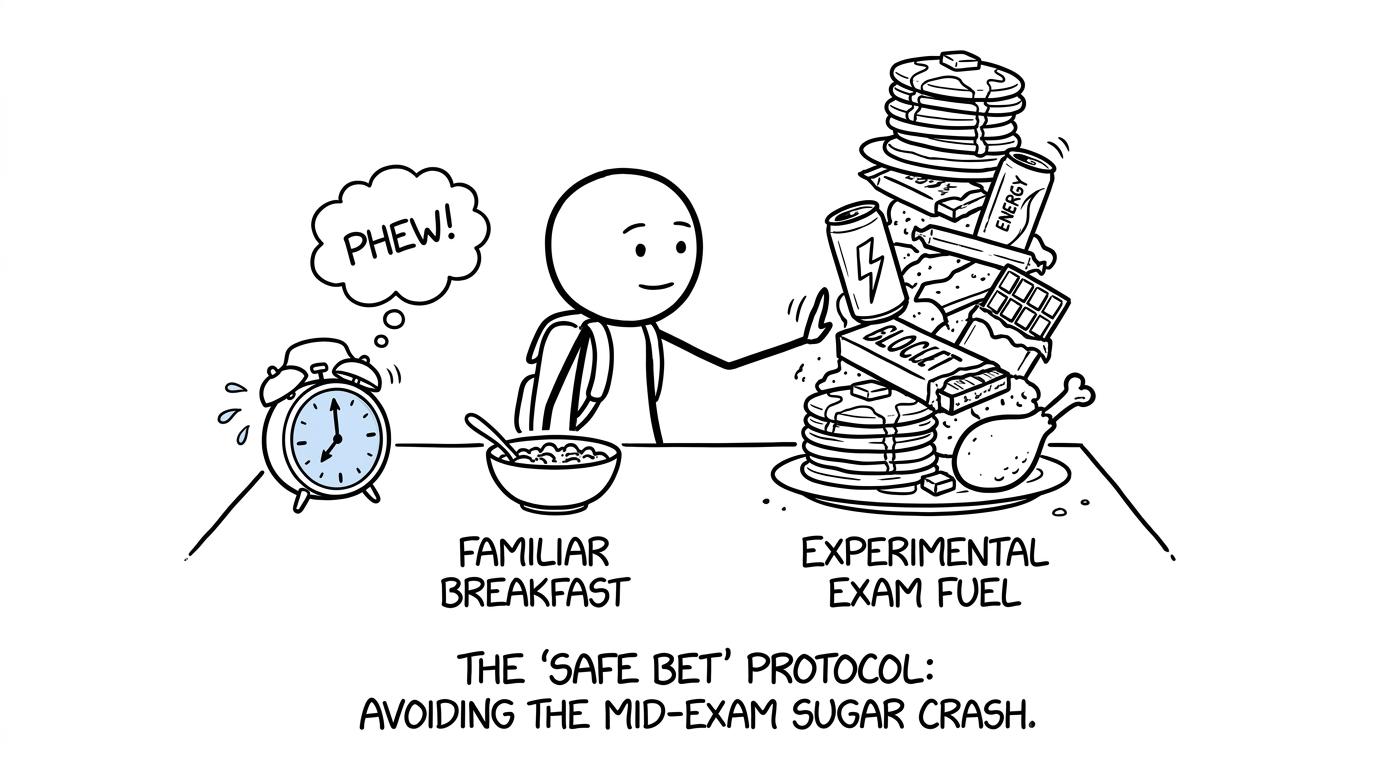 A student chooses a familiar breakfast over an experimental exam feast
What actually supports focus and energy?
There is no special GCSE Arabic menu. The same basic principles that support an ordinary school morning remain useful on exam day.
Include a starchy carbohydrate
UK healthy-eating guidance recommends basing meals around starchy foods such as bread, oats, rice, pasta or potatoes, choosing higher-fibre or wholegrain varieties where suitable. Carbohydrate supplies energy, while higher-fibre choices may help a meal feel satisfying for longer.
Before a morning exam, that could mean porridge, wholegrain cereal or toast. Before an afternoon paper, rice, couscous, potatoes, pasta, chapatti, pitta or bread can form the base of lunch.
There is no need to ban white bread or white rice if those are the foods you tolerate and normally eat. Exam morning is not the moment to impose an unfamiliar diet. A slightly less “perfect” meal that you can comfortably eat is more useful than an idealised breakfast that makes you feel ill.
Add a source of protein
Protein can make the meal more substantial. Straightforward choices include:
- eggs;
- yoghurt, milk or cheese;
- beans, lentils or hummus;
- fish, chicken or lean meat;
- tofu or a suitable dairy alternative;
- nut butter, provided you have no allergy and your school permits it.
You do not need several protein foods at once. Toast with egg, oats with yoghurt, or a hummus sandwich already combines carbohydrate and protein without turning breakfast into a project.
Add fruit or vegetables if they suit you
A banana, berries, an apple or vegetables in a sandwich can contribute to an ordinary balanced meal. Fruit is useful because it is portable and often easy to eat when nerves reduce your appetite.
However, more is not automatically better. If a large amount of fibre commonly causes bloating or an urgent trip to the toilet, keep your exam-day portion normal. The best choice is one your body has already rehearsed.
Match the meal to the time of your Arabic exam
Before a morning exam
Give yourself enough time to eat without rushing. Choose a normal breakfast and sip water as you get ready. If anxiety makes a full meal difficult, use a smaller combination such as toast and yoghurt, a banana with porridge, or a simple sandwich.
Skipping food may leave some students distracted by hunger, tiredness or a headache. Yet forcing down an enormous breakfast is not the answer either. Aim for comfortably satisfied.
Once you have eaten, avoid turning the remaining time into a frantic revision marathon. Maths students can apply the same calm approach before their next paper: use the GCSE maths revision hub for a short, familiar review rather than trying to relearn an entire specification at the door.
Before an afternoon exam
Eat your usual breakfast, then have a balanced lunch with enough time to settle before the assessment. Useful lunches might include a chicken or hummus wrap with fruit, rice with beans and vegetables, pasta with a familiar sauce, or a jacket potato with an appropriate filling.
Avoid making lunch unusually large simply because an exam is coming. A heavy meal may leave you feeling uncomfortable, while an inadequate one may allow hunger to appear halfway through a reading or writing task.
If there is a long gap, pack a familiar snack. A banana, yoghurt, oatcakes or a small sandwich may be practical, subject to allergies, storage needs and school rules.
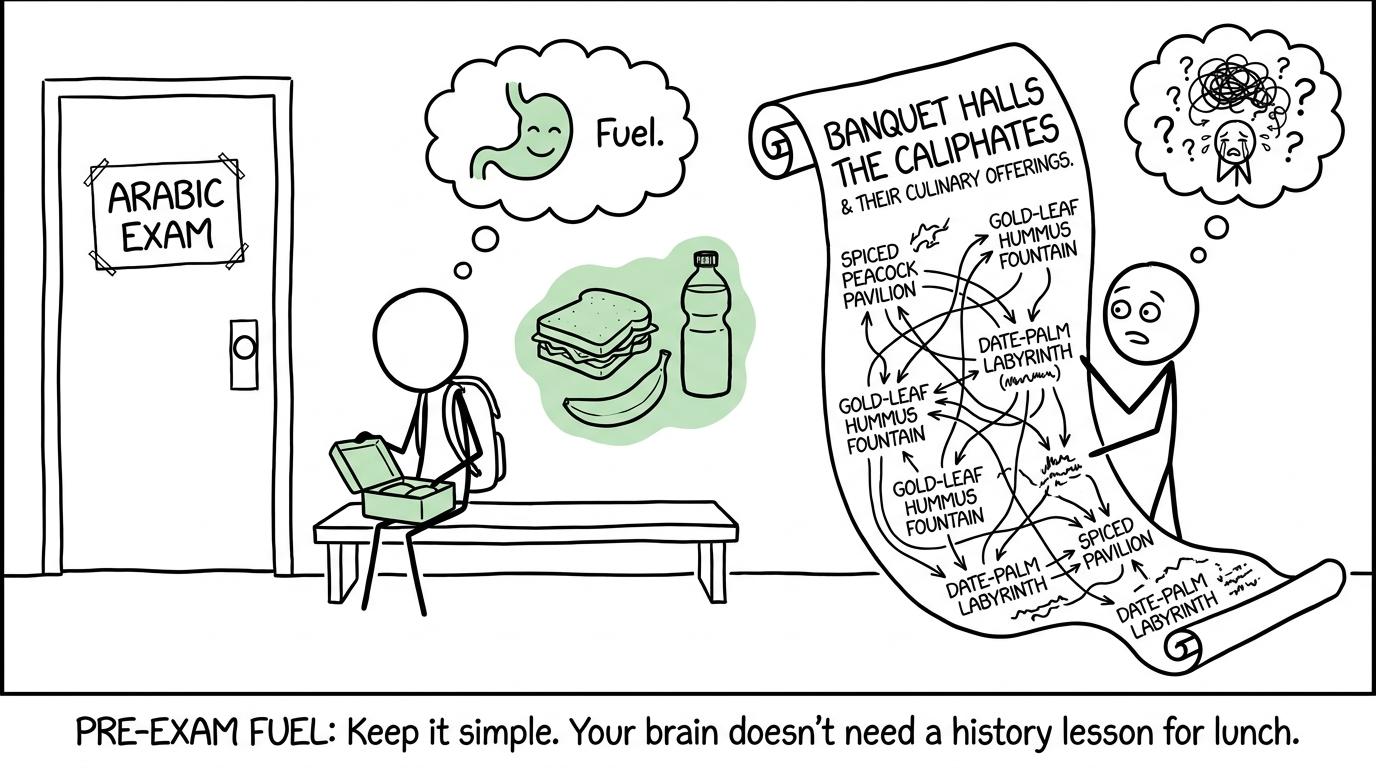 A simple lunchbox defeats an unnecessarily complicated banquet plan
Hydration without the exam-hall problem
Water is the simplest default. UK guidance generally encourages regular fluid intake across the day rather than waiting until thirst becomes distracting. How much an individual needs varies with body size, activity, weather and health, so there is no sensible universal “exam dose”.
Drink normally the evening before and during the morning. Shortly before the assessment, sip rather than rapidly finishing a very large bottle. Overdoing it can replace thirst with repeated toilet worries.
Check your centre’s rules about taking water into the exam room. Schools commonly require a clear bottle without a label, but your invigilator’s instructions are the ones that apply.
For a speaking assessment, normal hydration may also help if nerves leave your mouth feeling dry. It will not improve vocabulary or pronunciation by itself, but physical comfort makes it easier to concentrate on communication.
Caffeine and energy drinks are not revision substitutes
Caffeine can increase alertness, but it can also affect sleep and, in some people, increase jitteriness or anxiety. Energy drinks may contain substantial caffeine and sugar, making them a poor experiment before an exam.
If you do not normally drink coffee or tea, GCSE morning is not a good time to start. If you regularly have a modest cup of tea with breakfast and it suits you, suddenly changing your routine may be unnecessary. Students with health concerns should follow advice from a parent or carer and an appropriate healthcare professional.
Sleep is part of this decision. A late caffeinated drink taken during evening cramming can undermine the rest you need the next morning. A calmer plan is to stop at a set time. Maths students can use the MathsGenie revision planner to organise work before it spills into the night, or follow the GCSE maths night-before plan when an exam is close.
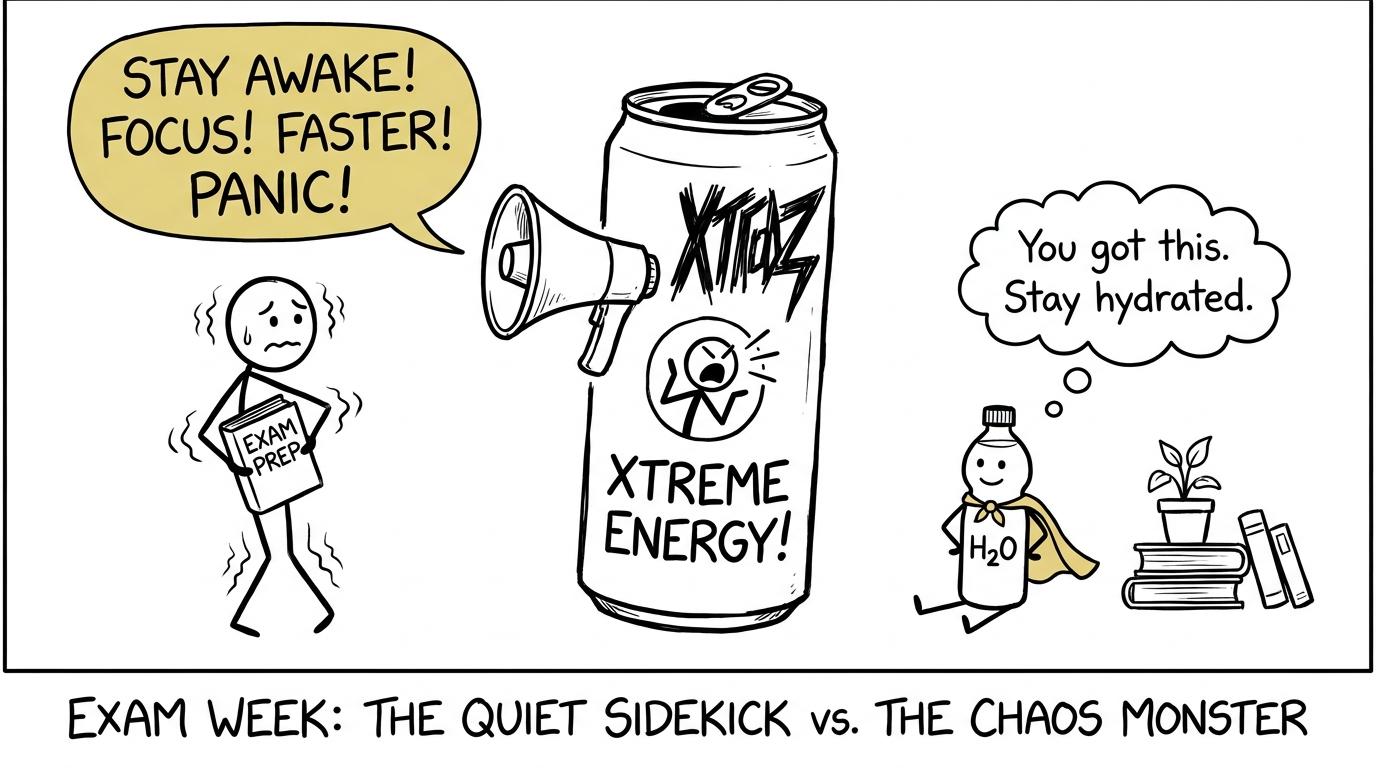 A quiet water bottle faces an overexcited energy drink
Food should support the demands of GCSE Arabic
GCSE Arabic assesses language skills rather than nutrition knowledge. Exact arrangements depend on the specification and exam series, so check your current exam-board information and your school’s instructions. For example, Pearson Edexcel Arabic includes listening, speaking, reading and writing assessments at foundation and higher tier.
Each skill creates a slightly different reason to keep food simple:
- Listening: hunger, thirst or caffeine jitters can compete with attention when audio cannot simply be restarted at will.
- Speaking: a very heavy meal, dry mouth or digestive discomfort can make an already demanding situation feel harder.
- Reading: steady concentration helps when moving between Arabic text, instructions and different question types.
- Writing: physical comfort matters during longer responses, when you need to retrieve vocabulary and monitor accuracy.
None of this means breakfast determines your grade. Preparation still carries the real weight. Food simply protects the conditions in which you use what you know.
The same principle applies to GCSE maths across Edexcel, AQA, OCR and Eduqas: revise the correct board and tier, then protect your attention on the day. The free GCSE mini tests are useful for brief practice well before the exam, while the GCSE predicted papers can build familiarity with sustained exam-style work.
What if nerves make eating difficult?
Exam anxiety can reduce appetite. Telling yourself to “just eat properly” is not always helpful, especially when your stomach feels tight.
Prepare a smaller, manageable option instead. A piece of toast, yoghurt, porridge, a banana or a modest sandwich is better than an elaborate meal you cannot face. Eat slowly and leave enough time. A liquid option such as milk or a familiar smoothie may be easier for some students, although fruit juice and smoothies are sugary and UK guidance advises keeping their combined daily portion limited.
Do not test a new supplement, powder, herbal product or restrictive eating routine. If anxiety regularly prevents you from eating, causes vomiting or substantially affects school, tell a parent, carer, teacher, school pastoral lead or healthcare professional. That deserves proper support rather than another internet food hack.
Common mistakes before a GCSE Arabic exam
Searching for one magical brain food
No individual food can install forgotten vocabulary or guarantee concentration. A reliable routine beats a dramatic ingredient.
Eating far more than usual
An oversized breakfast may cause discomfort and tiredness. Eat enough to feel settled, not so much that digestion becomes the main event.
Relying only on sweets
Sweets may be convenient, but they do not make a balanced meal. If you need portable food, combine familiar carbohydrate with protein or choose fruit alongside a more substantial snack.
Drinking an energy drink for the first time
The possible result is not “extra intelligence” but shaking, anxiety, stomach discomfort or disrupted sleep. Familiarity matters.
Forgetting practical details
A perfect breakfast cannot recover time lost looking for equipment or travelling late. Pack your bag, confirm the assessment time and follow your centre’s instructions. For maths exams, use the one-month GCSE revision plan to move these decisions earlier.
Revising intensely while eating
Scrolling through vocabulary or attempting difficult questions over breakfast can make a calm meal feel like another test. Eat first. If you review anything afterwards, keep it short and familiar.
A calm final routine
The best pre-exam routine is almost boring: wake with enough time, eat food you recognise, drink water normally, check your equipment and arrive without rushing. Boring is underrated. It means fewer surprises are competing for your attention when the paper begins.
Your Arabic performance comes from language preparation. Your food supports the student doing that work. Choose a familiar carbohydrate, add some protein, keep the portion comfortable and avoid last-minute experiments.
Then carry the same routine into your maths exams. Start with MathsGenie’s free GCSE maths resources, build understanding through revision lessons and practice questions, check errors with mark schemes and video solutions, and develop timing through mini tests, past papers and predicted papers. Prepare the knowledge early, protect your energy on the day, and let exam morning feel like the final step rather than a rescue mission.