

What Does 'Reform Not Before 2029' Actually Mean?
What does reform not before 2029 actually mean? A clear parent guide to GCSE Maths timelines, possible changes and current revision in England.
Updated: 3 November 2026
It means your child will not start studying a reformed GCSE before September 2029. It does not mean every GCSE will change in 2029, nor that pupils will sit new GCSE Maths examinations that year.
That is the straight answer to what does reform not before 2029 actually mean. The nuance is that the Department for Education intends reformed qualifications to be introduced in phases, with first teaching in 2029 or 2030. The precise timetable for each subject, including GCSE Maths, depends on further development and consultation.
For a parent trying to decide what their child should revise now, the practical conclusion is reassuring: follow the current specification unless the school says otherwise.
The parent checklist
Here is the position as of November 2026:
- GCSE reform in England is planned to begin with first teaching in 2029.
- Other reformed qualifications are intended to begin first teaching in 2030.
- First teaching is not the same as the first examination.
- The final subject-by-subject timetable is still being developed.
- Pupils taking GCSE Maths before the reformed qualification is assessed should prepare for the current specification.
- Parents do not need to predict an unfinished syllabus or change revision materials prematurely.
The government response to the Curriculum and Assessment Review, published in November 2025, said that some updated GCSEs should be ready for first teaching in 2029 and the remainder in 2030. Ofqual has subsequently used the same intended timeframe in its work on future assessment arrangements.
This timetable concerns qualifications regulated in England. GCSE arrangements elsewhere in the UK are determined separately.
What “first teaching” means
Imagine a parent reading that reform will happen “not before 2029”. It is natural to picture examination papers changing in summer 2029. In education policy, however, dates are often attached to the beginning of a course rather than its final examination.
If a reformed two-year GCSE Maths course were first taught to Year 10 pupils from September 2029, those pupils would normally take their examinations in summer 2031. If first teaching began in September 2030, the corresponding first examinations would normally be in summer 2032.
Those examination years are a logical consequence of the usual two-year GCSE course, not a substitute for the final official timetable. Schools can organise their curriculum differently, and the DfE and Ofqual must confirm the detailed transition arrangements.
| Official phrase | What it means for parents |
|---|---|
| Not before 2029 | No reformed qualification will begin teaching earlier than 2029 |
| First teaching in 2029 | A new course may begin from the 2029-30 academic year |
| First assessment | The first examinations for that qualification, normally later than first teaching |
| Phased reform | Different subjects may move to new qualifications at different times |
The important word is “before”. It sets an earliest boundary. It is not a promise that every reform will arrive on that date.
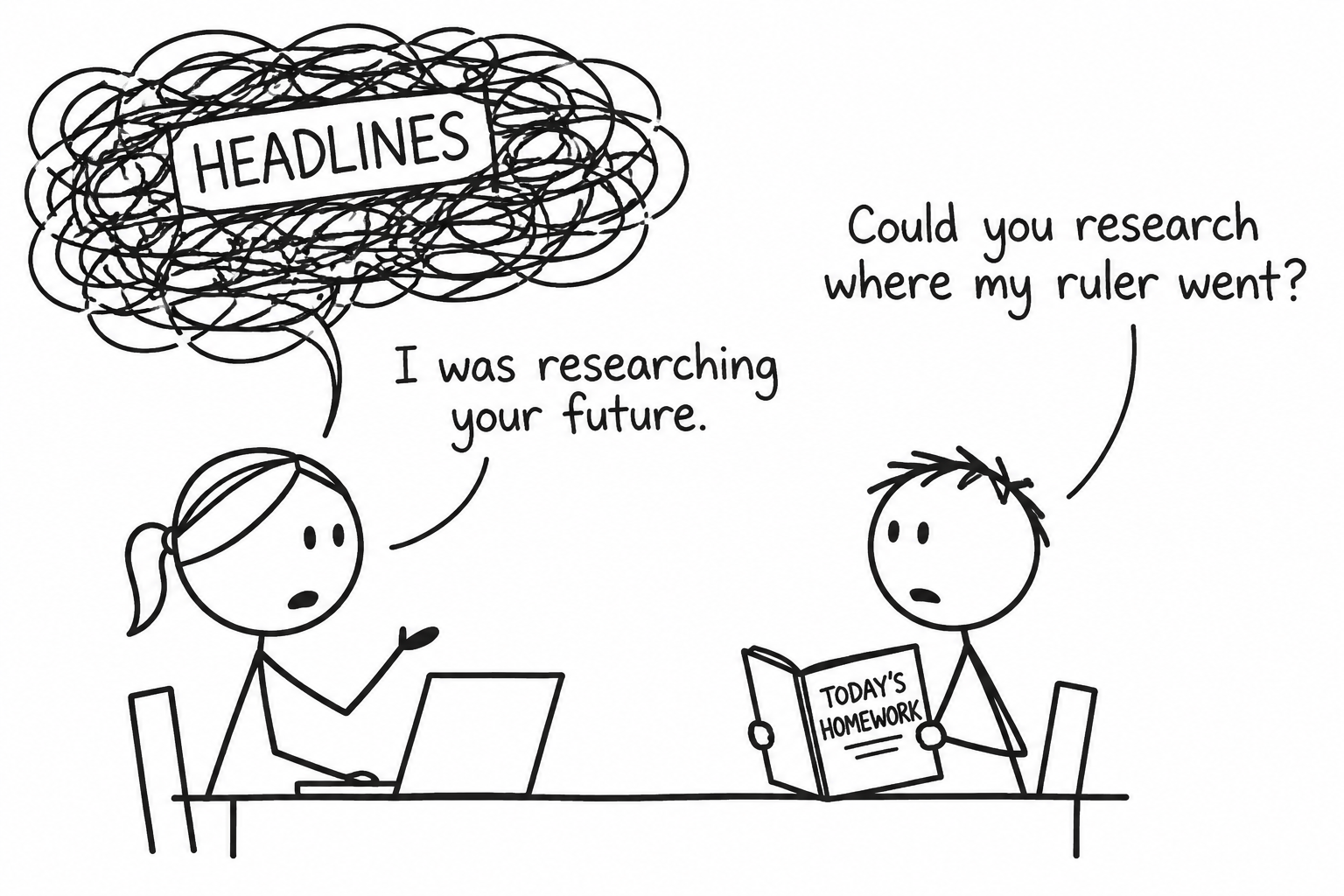 A parent researches GCSE reform while a teenager searches for a ruler
Does this mean a new GCSE Maths is confirmed?
Reform is planned, but parents should distinguish between a policy direction and a finished qualification.
The Curriculum and Assessment Review examined the curriculum and assessment system. The government accepted a programme of change and said that GCSEs would be updated from 2029 onwards. Ofqual’s role includes consulting on and regulating how revised qualifications are assessed.
That process can involve several stages:
- the DfE confirms subject content and policy expectations;
- Ofqual develops or revises assessment rules;
- exam boards produce specifications and sample assessment materials;
- schools choose approved specifications and prepare their courses;
- pupils begin the new qualification on the confirmed first-teaching date.
Until those stages are complete, headlines about a “new GCSE Maths” should not be treated as a complete syllabus. Proposals, consultations and final decisions are not interchangeable.
Which pupils are likely to be affected?
A pupil already taking GCSE Maths in November 2026 is working towards the current qualification. The planned reform timetable does not replace their present specification.
For younger pupils, the answer depends on their eventual GCSE start year and the confirmed subject timetable. A child who is due to enter Year 10 in September 2029 could potentially be in the first reformed cohort if GCSE Maths is placed in that phase. A child entering Year 10 earlier would ordinarily remain on the existing qualification.
Parents should therefore ask one concrete question: Which specification has the school told us this class is following?
That answer matters more than a broad reform headline. Maths Genie’s GCSE Maths topics by exam board and tier can help you identify what is currently required across Edexcel, AQA, OCR and Eduqas courses.
What should your child revise now?
The useful plan is simple.
First, confirm the exam board and whether your child is entered for foundation or higher tier. Next, use the current specification as the boundary for revision. Then identify weak topics and revisit them in an order that builds secure foundations before harder applications.
For example, fluency with fractions, percentages and algebra supports many later topics. The best order for learning GCSE Maths topics explains how those connections can guide revision. Parents can also compare the current course against the Edexcel GCSE Maths revision topic list or explore a current topic such as fractions, decimals and percentages for AQA.
The goal is not to prepare for every possible policy change. It is to help your child learn the course that will appear on their examination papers.
If organising current-specification revision feels like another research project, start with Maths Genie’s GCSE Maths lessons, where the present content is arranged by topic.
What might GCSE Maths changes involve?
Parents may encounter discussion about curriculum content, assessment burden and the support pupils receive in examinations. In March 2026, Ofqual consulted on proposed assessment changes for reformed mathematics, physics and combined science GCSEs. Its subsequent decisions form part of the development process for future qualifications.
The safe interpretation is narrow: assessment arrangements for future GCSE Maths are being considered and developed. It does not follow that the current examination format has already been replaced for pupils sitting the existing qualification.
When reading an announcement, check whether it is:
- a recommendation from the Curriculum and Assessment Review;
- a government response or policy intention;
- an Ofqual consultation;
- a final regulatory decision;
- or an approved exam-board specification.
Each represents a different stage. The closer an announcement is to an approved specification and confirmed first-teaching date, the more directly it affects classroom planning.
Common mistakes parents can avoid
Treating 2029 as an examination date
The published timetable refers to first teaching from 2029 onwards. The first examinations for a reformed course would ordinarily come later.
Assuming every subject changes together
The government intends a phased introduction across 2029 and 2030. The exact placement of individual qualifications needs to be confirmed.
Revising speculative content
A proposed reform is not a revision list. Current pupils should use the specification identified by their school.
Waiting for reform before building foundations
Core numerical and algebraic understanding remains valuable regardless of how a future specification is arranged. A manageable routine, such as this 20-minute GCSE Maths revision approach, can keep attention on today’s learning rather than tomorrow’s policy.
Keep revision tied to the real course
A parent may begin with a date and end up facing a maze of reviews, consultations and headlines. The way through is to separate the earliest first-teaching date from the qualification your child is actually taking.
Knowing that distinction removes uncertainty, but consistent revision still has to happen. Start with the topic your child is learning now, match it to the current specification, and use a clear explanation before moving to harder questions. Start the Maths Genie GCSE Maths lessons for the current specification.















