

UCAS Adjustment Explained: Can You Still Trade Up?
UCAS adjustment explained: learn why it ended, how to trade up a university place through Clearing, and what to check before declining an offer today.
Results day can produce a strange problem: you prepared yourself to miss an offer, then opened the envelope and discovered that you had comfortably beaten it. If you are searching for UCAS adjustment explained advice or wondering about trading up your university place, the crucial answer is simple: UCAS Adjustment no longer operates. It was withdrawn after the 2021 admissions cycle.
Students with stronger-than-expected results can still explore another university, but the current route is Clearing. Unlike the old Adjustment process, entering Clearing requires you to decline your confirmed place. That makes preparation more important than speed.
The essential results day checklist
- Check that your firm place has been confirmed in your UCAS application.
- Decide whether another course is genuinely better, not merely harder to enter.
- Search current Clearing vacancies.
- Contact the university before declining anything.
- Ask about the course, entry requirements, accommodation and response deadline.
- Discuss the decision with a teacher, careers adviser or parent.
- Decline your confirmed place only when you understand the risk and want to proceed.
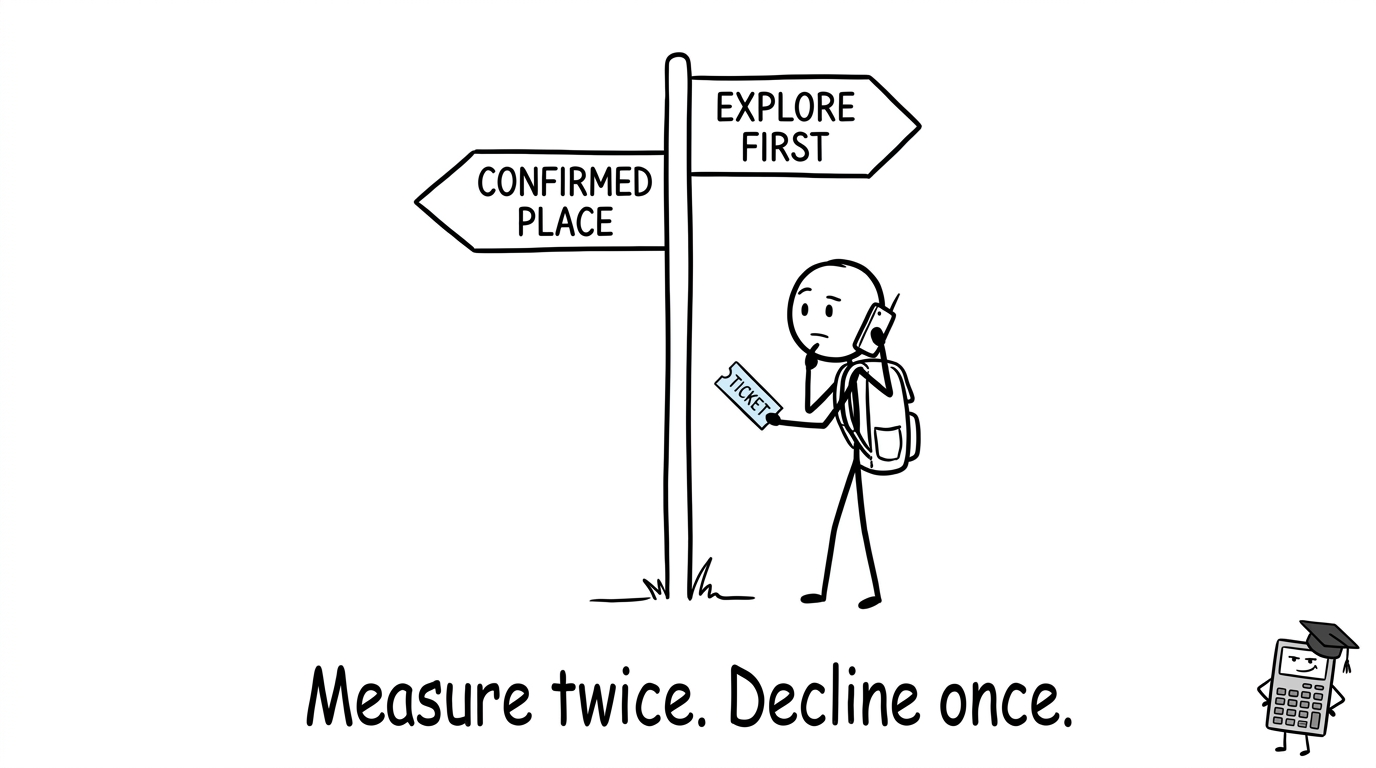 Student carefully exploring university choices while keeping hold of a confirmed ticket
UCAS Adjustment explained: what happened to it?
Adjustment was designed for applicants who met and exceeded the conditions of their firm offer. An eligible student could investigate alternative courses while continuing to hold their original confirmed place for a limited period.
That separate service is now obsolete. From the 2022 entry cycle onwards, students wanting to change university after receiving better results have needed to use Clearing instead.
This distinction matters because old articles and forum discussions may still describe an Adjustment registration button, a five-day window or a protected original place. Those instructions do not describe the current process.
| Old Adjustment process | Current route through Clearing |
|---|---|
| Intended for students exceeding their firm offer | Available when an applicant is not holding an offer |
| Original confirmed place remained protected while searching | A confirmed place must be declined before a Clearing choice can be added |
| Used a separate Adjustment route | Uses the standard Clearing process |
| No longer available | Clearing remains the current route |
For 2026 entry, UCAS states that Clearing runs from 2 July to 19 October. Applicants waiting for A Level results can use it once they have their results and are eligible.
Who can trade up a university place now?
There is no formal modern category called “trading up”. You may explore another course if you have exceeded your offer, changed your mind or found an option that suits you better. To apply through Clearing, however, you must not continue holding your confirmed place.
A sensible candidate will usually have:
- confirmed A Level or equivalent results;
- a confirmed firm place in their UCAS application;
- one or more alternative courses with Clearing vacancies;
- evidence that the new university will consider the achieved grades;
- a clear reason for moving beyond league tables or perceived prestige;
- enough information about accommodation, finance, travel and course content.
Beating the original conditions does not guarantee admission elsewhere. Each university controls its vacancies and admissions decisions, and a course appearing in Clearing can fill quickly.
How to explore another university safely
Keep your place while researching
You can search vacancies and speak to universities before declining your firm place. Use that time carefully. Compare modules, assessment methods, placement opportunities, location and living costs.
A course with higher entry requirements is not automatically a better course for you. The best decision is the one you would still respect after the excitement of results day has faded.
Contact the alternative university
Have your UCAS ID, achieved grades, course details and questions ready. Ask whether places remain and whether the admissions team is prepared to consider you.
An informal indication is useful, but listen carefully to what is actually being promised. Record the name of the course, any deadline and the instructions supplied by the university. Do not describe a general conversation as a guaranteed place unless the university has explicitly confirmed the next steps.
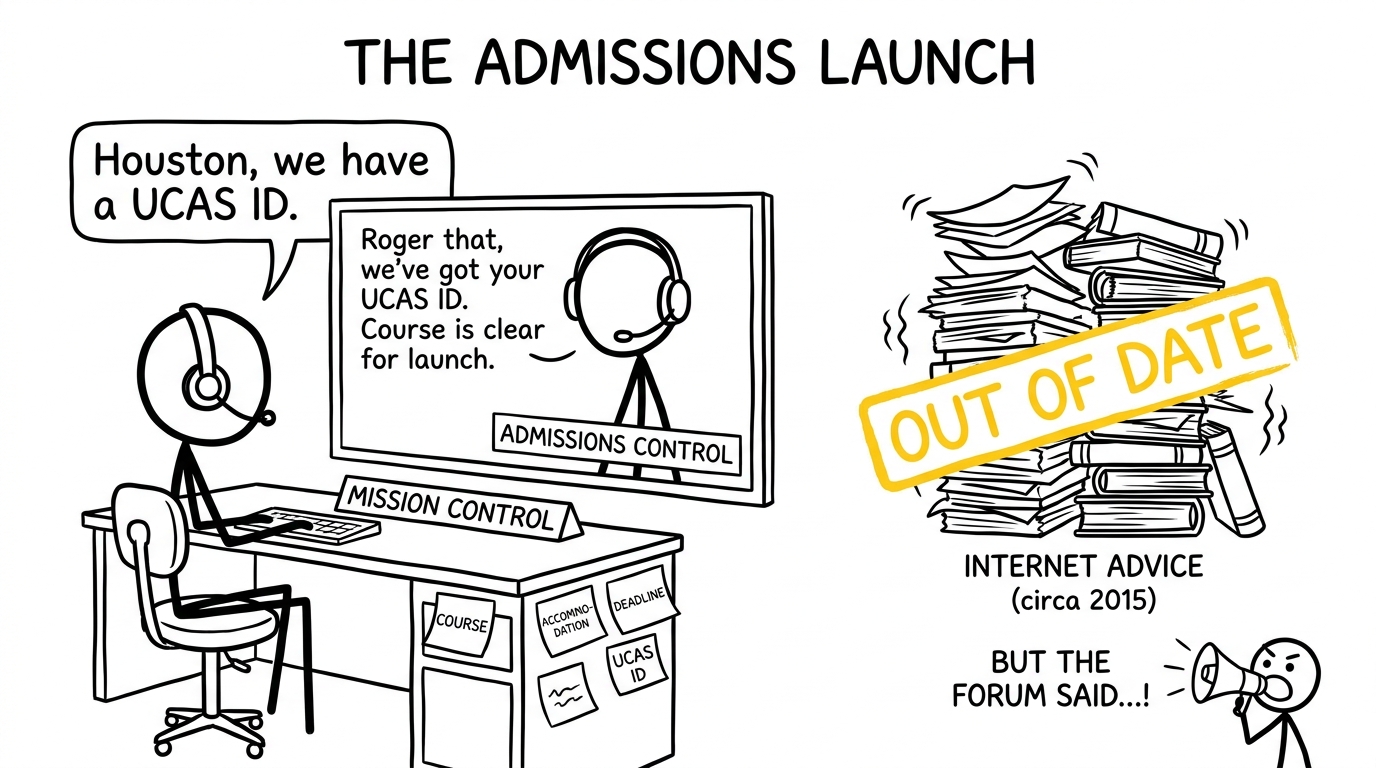 Student running a calm results day phone call while outdated advice is stamped out of date
Decline only when you are ready
UCAS provides a “Decline my place” option for applicants holding a confirmed place who wish to enter Clearing. This is not a browsing button. Using it releases the place you already hold.
UCAS recommends speaking to an adviser before making that decision. Once eligible for Clearing, you can contact universities and add a Clearing choice after receiving their permission. Only one Clearing choice can be added at a time.
If you switch university or course, remember to update your student finance application separately. Changes made through UCAS are not automatically copied into the student finance system.
Adjustment versus ordinary Clearing
The old Adjustment process was specifically associated with exceeding a firm offer. Clearing has a wider purpose. It also supports students who received no offers, missed their conditions, applied later or decided to decline a confirmed place.
The emotional difference can be large. One student may enter Clearing because plans have fallen away; another may use it because unexpected grades created more options. The practical system is now the same, but the decision facing each student is different.
Before acting, read the MathsGenie guide to A Level results day and Clearing for contrast and check the latest instructions shown inside your UCAS application.
Common mistakes when trading up
Following an old Adjustment guide
Any guide telling you to register for Adjustment or rely on its protected search period is outdated. Check the publication date and current UCAS wording.
Declining before making contact
Releasing a confirmed place simply to browse creates unnecessary risk. Research vacancies and contact the prospective university first.
Choosing prestige instead of suitability
Compare the actual course. Module choice, teaching style, professional accreditation, travel and accommodation may matter more than a slightly higher typical offer.
Forgetting practical consequences
A late change can affect accommodation deposits, travel plans and student finance. Ask what is available before committing.
Making the decision alone and under pressure
Results day feels urgent, but urgency is not the same as clarity. Speak to your school or college adviser and write down the advantages, costs and uncertainties.
Strong results begin long before results day
For GCSE students, university decisions may feel distant. Yet the habits are already being built: checking evidence, correcting mistakes and making calm decisions under pressure.
Use the free GCSE maths revision hub to find resources for Edexcel, AQA, OCR and Eduqas, or organise your weeks with the MathsGenie revision planner. Edexcel students can combine revision lessons and practice questions with GCSE predicted papers.
If A Level Maths is already on your horizon, explore the GCSE to A Level curriculum guide. Current A Level students can build exam confidence using Edexcel A Level Maths past papers and A Level predicted papers.
The old Adjustment safety net has gone, but stronger results can still open another door. Research first, protect your confirmed place while asking questions, and move through Clearing only when the new choice is genuinely better. Then return to what creates those choices in the first place: focused revision lessons, practice questions, mini tests, mark schemes, video solutions, past papers and predicted papers on MathsGenie.











