Self Study GCSE History: A Realistic Plan
Self study GCSE History with a realistic 12-week plan covering exam entry, content, source skills, past papers and balanced revision when learning alone.
Yes, you can self study GCSE History outside school. The difficult part is not finding enough information. It is deciding exactly what to learn, securing the correct exam entry and turning knowledge into answers that earn marks.
That distinction matters. Reading about the Cold War may be fascinating, but it is not necessarily revision for your particular paper. A realistic independent plan begins with your exam board and chosen options, then moves through content, retrieval, exam technique and timed practice. If you are preparing for GCSE maths at the same time, it must also leave enough space for regular mathematical practice.
Your self-study checklist
Before building a timetable, confirm that you can answer each of these questions:
- Which exam board and specification will you take?
- Which prescribed History options will you study?
- Where will you sit the examinations?
- What are the centre's entry deadline, total fee and identification requirements?
- Do you need access arrangements, and has the centre been told early enough?
- Do you have the current specification, specimen material, past papers and mark schemes?
- How many hours can you sustain each week alongside maths and other subjects?
If any administrative answer is missing, resolve it before buying books or producing notes. A perfect revision folder cannot compensate for entry under the wrong option code.
Is self-studying GCSE History genuinely doable?
It is doable because GCSE History can be broken into visible tasks: learn the specified content, understand chronology, analyse causes and consequences, evaluate sources and interpretations, and write under timed conditions.
However, self-study requires more than memory. For GCSE History qualifications regulated in England, the assessment objectives give approximately 35%35\%35% to knowledge and understanding, 35%35\%35% to explanation and analysis, 15%15\%15% to source work and 15%15\%15% to interpretations. Exact papers and question styles vary by board, but the message is clear: knowing facts is necessary, not sufficient.
You must become your own teacher in three ways:
- Curriculum manager: deciding what belongs to your specification.
- Examiner: marking answers honestly against official guidance.
- Planner: revisiting weak material instead of repeatedly reading favourite topics.
This is similar to independent maths revision. A student can watch ten algebra videos and still struggle until they attempt questions. The MathsGenie GCSE maths revision hub is organised around that learn, practise and check cycle. History needs the same discipline, even though the answers are written rather than calculated.
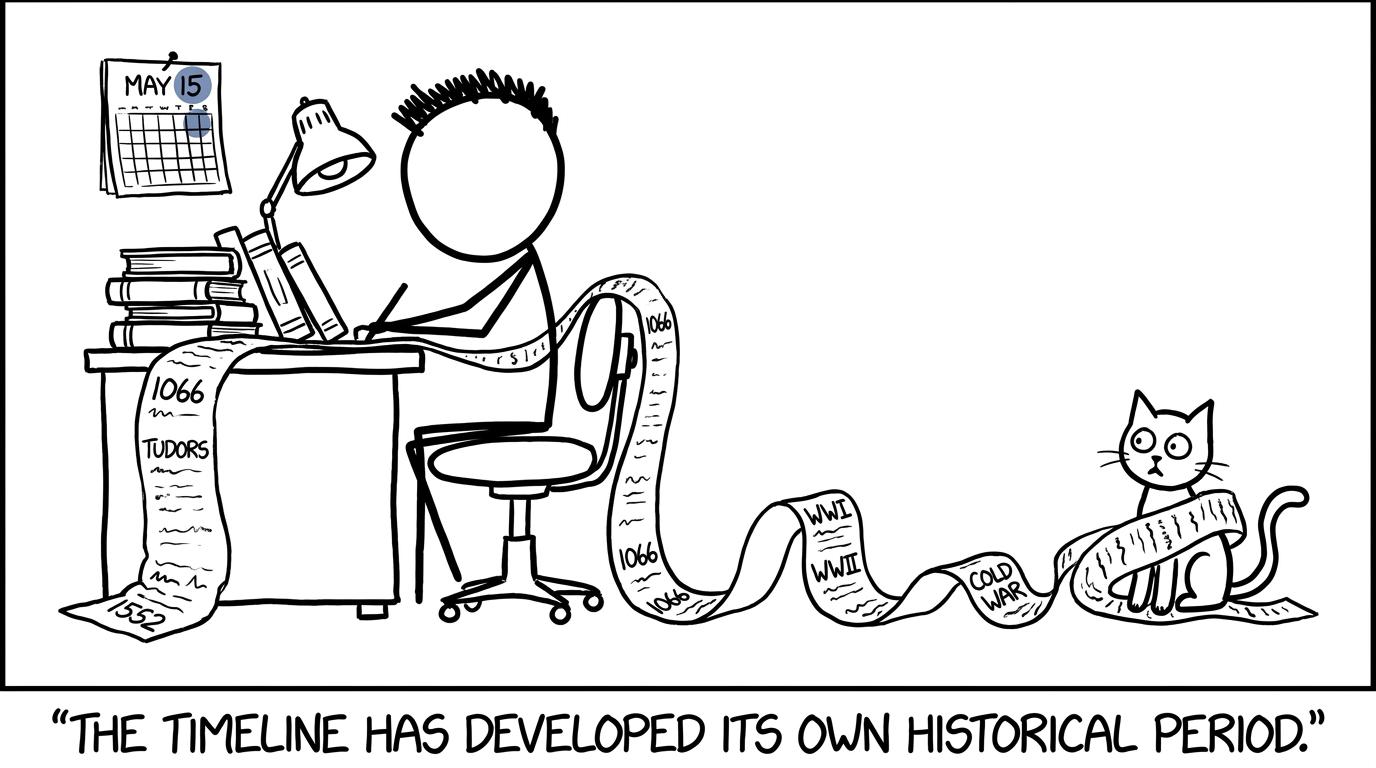 A student discovers that a History timeline has developed a life of its own
Choose the qualification before choosing resources
AQA, Pearson Edexcel, Cambridge OCR and Eduqas do not organise GCSE History identically. They offer different topic combinations, paper structures and question formats. Some specifications also prescribe a particular historic environment or site for an examination series.
Download the current specification directly from your exam board and record:
- the qualification and specification code;
- every option you intend to enter;
- the content statements for those options;
- the paper structure and timings;
- the available specimen papers, past papers and examiner reports;
- any current amendments affecting your examination year.
Do not assume that a revision guide mentioning the same broad period is automatically suitable. Two students may both study Germany, medicine or Elizabethan England while facing different boundaries and questions.
Arrange private-candidate entry early
If you are not enrolled at a school or college that will enter you, you will normally sit the examinations as a private candidate at an approved UK centre. Awarding organisations do not take entries directly from private candidates; the approved centre makes the entry.
Use the current JCQ private-candidate centre search, then contact centres directly. Ask whether they accept your board, qualification and exact History options. Also ask about their internal deadline, full charges, examination dates and access-arrangement process. Centre deadlines can be earlier than awarding-body deadlines, so this is an early task rather than something to leave until revision is finished.
A realistic twelve-week GCSE History plan
This plan assumes that you already possess basic reading and writing skills and can give History roughly four focused sessions each week. If you are learning the entire course from the beginning, repeat or expand the content weeks rather than racing ahead.
| Week | Main objective | Evidence that the week is complete |
|---|---|---|
| One | Confirm the board, options, centre and paper structure | A one-page course map and confirmed entry arrangements |
| Two | Audit each specification statement and complete a short diagnostic paper | Topics labelled secure, developing or unknown |
| Three | Learn the first study in chronological blocks | A timeline plus closed-book retrieval answers |
| Four | Finish the first study and practise its question types | One marked answer for each major question format |
| Five | Learn the second study, focusing on causes, consequences and significance | A concise concept map supported by precise evidence |
| Six | Finish the second study and complete a timed section | Corrections recorded beside the relevant specification points |
| Seven | Learn the third study, tracking change and continuity | A thematic timeline showing turning points and factors |
| Eight | Finish the third study and practise comparison or judgement questions | Two planned answers and one complete timed response |
| Nine | Complete the remaining option or historic-environment material | Full specification coverage with no blank sections |
| Ten | Concentrate on sources and interpretations | A checklist for provenance, content, context and judgement |
| Eleven | Sit complete papers under the correct conditions | Papers marked and mistakes grouped by cause |
| Twelve | Repair recurring weaknesses and rehearse final papers | A short priority list, retested questions and an exam-day plan |
Treat this as a framework, not a promise that every topic needs equal time. A diagnostic may reveal secure knowledge but weak interpretation answers. In that case, move time towards interpretation rather than making more notes.
What to do in each revision session
A useful session lasts long enough to produce evidence, but not so long that attention disappears. Use this four-part routine:
Retrieve
Begin without notes. Write everything you can recall about one specification point, sequence events on a blank timeline or answer several short factual prompts.
Repair
Check your recall against the specification and a reliable board-matched resource. Add only what was missing or inaccurate. Your notes should become smaller and more useful over time, not endlessly longer.
Apply
Plan or answer an examination question. Pay attention to its command word and mark allocation. A request to explain, evaluate or judge demands more than description.
Review
Use the mark scheme and available examiner guidance. Record whether the problem was missing knowledge, weak analysis, misunderstood question wording, poor supporting evidence or time pressure. Reattempt the relevant task later.
The method mirrors effective paper practice in maths. MathsGenie's guide to using GCSE maths past papers properly explains why marking, diagnosis and targeted repair matter more than simply collecting completed papers.
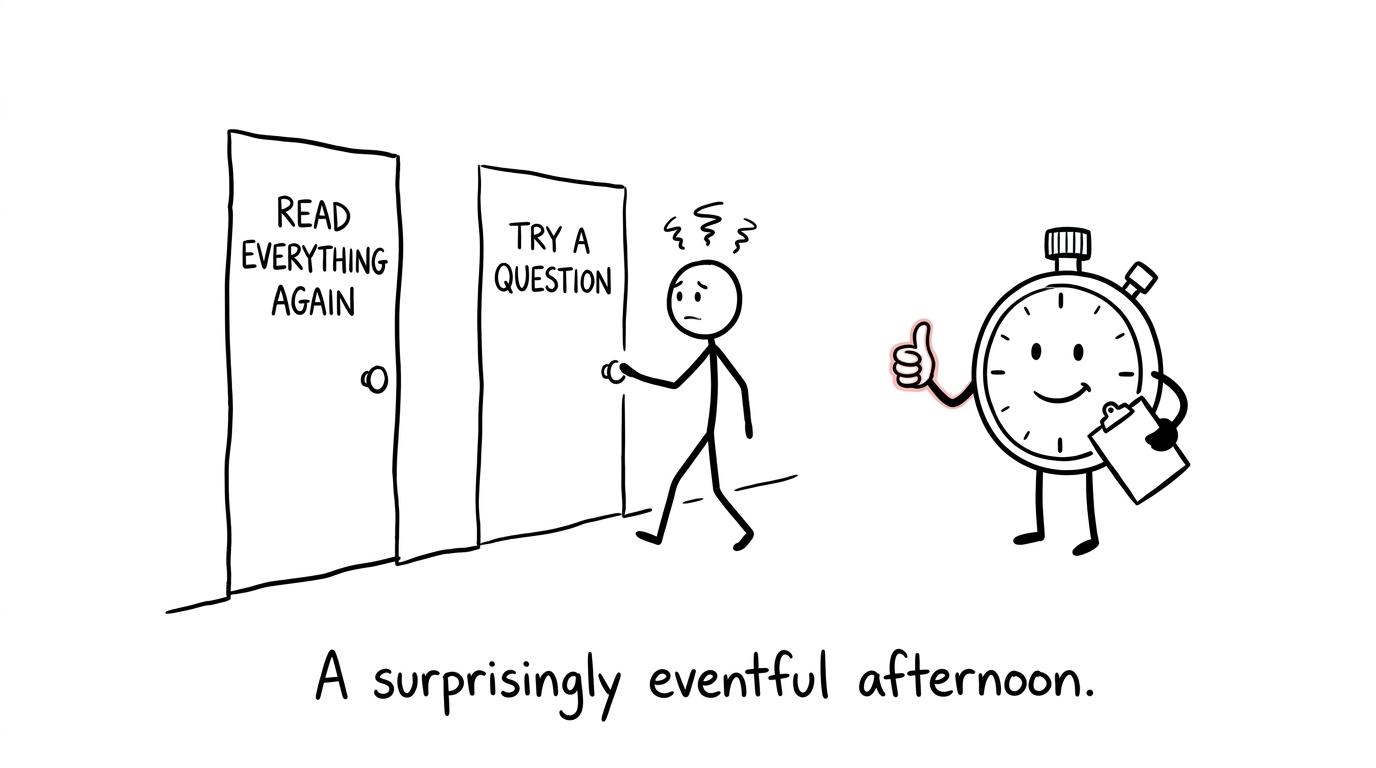 A student bravely chooses an exam question instead of rereading everything
Learn historical knowledge in usable form
Facts become useful when they support an argument. For each event or development, organise your knowledge around:
- what happened and when;
- why it happened;
- what changed and what continued;
- who was affected;
- short-term and long-term consequences;
- why the event was significant;
- precise evidence that could support a judgement.
Timelines help with sequence, but causation is rarely just a chain of dates. Create links between political, economic, social, military and religious factors where the specification requires them. Then practise explaining why one factor mattered, how factors interacted and whether their importance changed over time.
For sources, avoid memorising one universal paragraph formula. Read the exact question first. Depending on the board, useful considerations may include the source's content, purpose, provenance, audience, historical context and limitations. For interpretations, distinguish between evaluating what an interpretation argues and explaining why interpretations differ.
Balance History with GCSE maths
Independent History can expand to fill every available evening because there is always another chapter to read. Maths creates the opposite risk: it can be postponed because progress requires answering questions rather than highlighting pages.
Protect both subjects with a weekly structure. You might use four shorter History sessions, three maths topic sessions and one mixed assessment block, adjusting the pattern around your needs. Keep sessions specific: “practise two interpretation questions” is better than “revise History”.
For maths, use the full GCSE maths topics by board and tier to identify what you actually need, then follow the best order for learning GCSE maths topics if your foundations are uneven. Foundation and higher tier apply to maths, not GCSE History, so do not transfer that terminology across subjects.
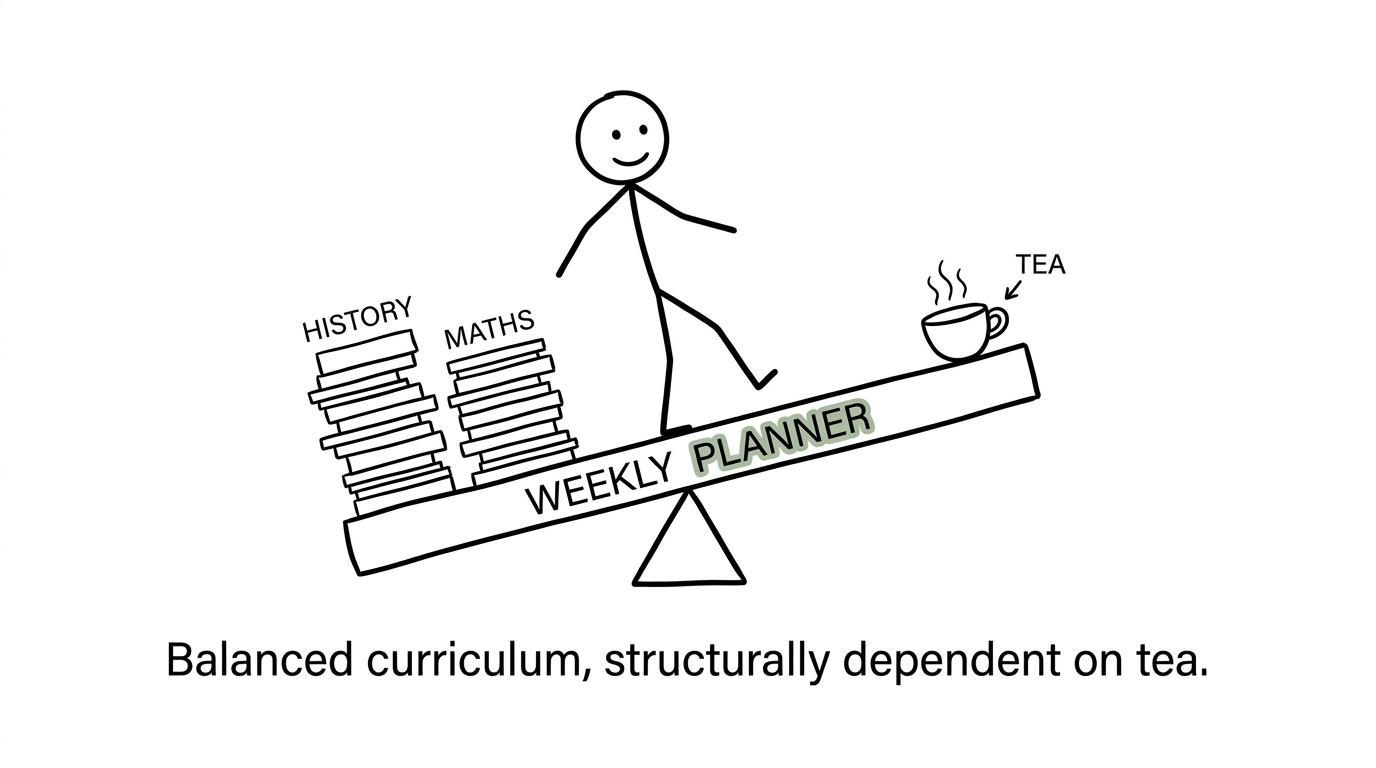 History and maths achieve a delicate timetable balance
Common mistakes when studying alone
Starting with a textbook instead of the specification
A textbook is a tool, not the course definition. Build a checklist from the current specification and attach every resource to it.
Making attractive notes without retrieving them
Recognition feels comfortable. Exams require recall and application. Close the book, reconstruct the idea and then check it.
Ignoring the exact question format
Knowledge can still earn poorly if it answers a different question. Practise board-specific command words, timings and response lengths.
Marking generously
Look for what your answer actually demonstrates, not what you intended to say. If self-marking remains uncertain, compare your structure with official exemplars or ask a qualified teacher or tutor for occasional feedback.
Saving all past papers for the final fortnight
Begin with individual questions and timed sections, then progress to complete papers. The MathsGenie guide to starting past papers offers a useful phased model that transfers well across subjects.
Letting History displace maths practice
Reading can feel easier to begin than problem-solving. Schedule maths explicitly and use the GCSE maths revision resources for lessons, practice questions, mini tests, past papers, mark schemes and video solutions.
Build a course you can actually finish
Self-studying GCSE History is realistic when the project has firm boundaries: one current specification, confirmed options, secure examination arrangements and a weekly cycle of recall, application, marking and repair.
Do not measure progress by hours spent near a book. Measure it by specification statements recalled, arguments improved and timed answers corrected. Then give maths the same clarity. Start at MathsGenie and use free revision lessons, practice questions and mini tests to strengthen individual topics before moving into past papers, predicted papers, mark schemes and video solutions. A calm plan does not make the work disappear. It makes the next useful action obvious.