Remark or Resit GCSE: How to Choose After a Near Miss
Remark or resit GCSE: compare marks from the boundary, cost, risk and timing, then choose the right step after a Maths or English near miss calmly.

Results day can turn months of work into one uncomfortable sentence: “You were only a few marks away.” If you are choosing between a remark or resit GCSE, start by checking whether the marking appears accurate. A review makes sense when there is credible evidence of an error; a resit offers another opportunity when the result fairly reflects your performance.
A near miss at grade 444 can affect college courses, apprenticeships and future applications. Before deciding, compare four things: marks from the boundary, cost, risk and timing.
Your first-step checklist
Ask your school, college or exam centre for:
- your total mark, component marks and grade boundary;
- access to marked scripts, where available;
- a teacher's assessment of any possible marking errors;
- review fees, refund terms and the centre's deadline;
- resit dates, entry costs and eligibility requirements;
- confirmation of how your result affects your course place.
Act promptly. Centres often set earlier internal deadlines than exam boards to allow time for processing requests.
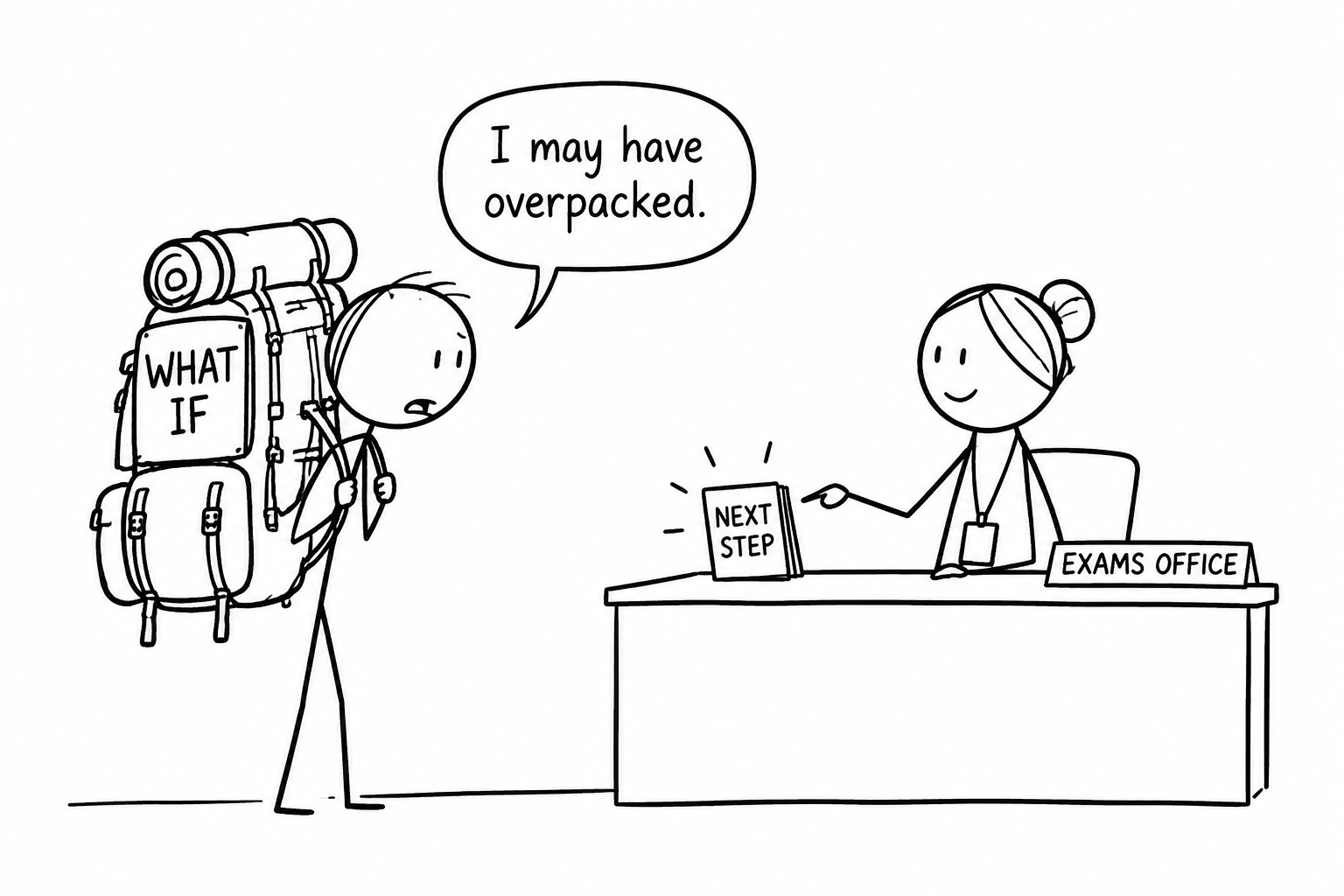 A student realises they have overpacked their GCSE results anxiety
What is a GCSE remark?
“Remark” is the familiar term, but the official service is normally a review of marking. It checks whether the mark scheme was applied correctly. Being close to a boundary does not itself justify extra marks.
Your mark can increase, stay unchanged or decrease. Your grade can therefore rise, remain unchanged or fall, which is why your centre must obtain written consent.
A clerical re-check is different: it checks administrative issues, such as whether marks were recorded and added correctly, rather than reconsidering academic judgement.
In Maths, a teacher can check method and accuracy marks. English Language responses involve more examiner judgement, so a teacher should compare them with the assessment objectives and level descriptors. Neither subject guarantees a successful review.
Remark or resit GCSE: compare your options
Marks from the boundary
The useful question is: “Where could valid marks have been missed?” A small shortfall makes a possible correction more significant, but closeness alone is not evidence.
Ask a teacher to inspect each paper for uncredited working, overlooked answers or incorrectly applied marking criteria. The plausible recovered marks must be enough to change your overall grade for the review to achieve your goal.
Marks lost through blank answers, weak topic knowledge or calculator slips usually suggest preparation for a resit. Use the MathsGenie GCSE Maths revision hub to find lessons and practice questions targeting those weaknesses.
Cost
Review fees vary between Edexcel, AQA, OCR and Eduqas, and between exam series. Charges usually apply per paper or component, so reviewing several can become expensive.
Awarding-body fees may be waived or refunded when a subject grade changes, depending on the applicable policy. Ask your exams officer about the current terms and any separate centre charges.
Resit costs also vary. Your school or college may cover entry, while private centres may charge for administration and invigilation as well. Obtain written totals for both options before comparing them.
Risk
After a review, the revised result normally stands, even if the grade falls. A teacher's identification of a credible marking error helps you weigh that risk more sensibly than hope alone.
A resit requires preparation and another examination, with no guaranteed improvement. However, sitting again does not erase your existing certificated result.
For Maths, use the Edexcel GCSE Maths past papers, or select your own board through the revision hub, to distinguish knowledge gaps from exam technique problems.
Timing
Reviews must be requested within the relevant post-results window. Tell your college or training provider if one is pending, and ask how this affects admission. Do not assume a place will automatically be held.
GCSE Maths and English Language have a November series for eligible candidates. Confirm current eligibility, entry deadlines and examination dates with your centre. A later series may be better if November leaves too little preparation time.
The MathsGenie revision planner can help organise the available weeks into manageable sessions.
When each route makes sense
A review is most defensible when a teacher has identified specific marking concerns, the potential correction could change your grade, and you accept the fee and possible downward movement. Check the script before authorising a request wherever possible.
A resit is usually stronger when marking appears accurate and you can identify improvements in knowledge, timing or answering technique. Several marks below a boundary may make a successful review less plausible, but there is no universal cut-off: the script matters more than a fixed distance.
You can also prepare for a resit while awaiting a review. Check both deadlines with your centre so that waiting for one outcome does not remove the other option.
Turn a Maths resit into a focused plan
Start with a marked paper. Sort lost marks into topics you do not understand, methods you cannot yet complete reliably, and avoidable errors. Each category needs a different response.
Use revision lessons and practice questions for understanding, then topic-focused mini tests to check progress. Build timing with GCSE Maths 45-minute tests before attempting full papers.
Read mark schemes and watch video solutions after attempting questions independently. Return to missed questions later without the solution beside you. The guide to using Edexcel past papers properly explains how to turn marking into an improvement plan.
GCSE Maths predicted papers provide additional practice, but cannot guarantee examination questions. For English Language, seek teacher feedback on timed responses against the relevant assessment objectives.
Common mistakes to avoid
- Requesting a review simply because you were close. Ask where specific marks may have been missed.
- Reviewing every paper automatically. Component fees make evidence-led selection important.
- Missing the centre's deadline. Contact the exams officer promptly, even while considering your options.
- Waiting before revising. Begin preparation while the review is pending to protect valuable time.
- Repeating ineffective revision. Use marked work to decide what to change, rather than completing papers without analysing mistakes.
Choose your next step from evidence
A near miss is disappointing, but the next decision can be practical. Collect your scripts, boundaries, fees and deadlines. Ask a teacher whether credible marking errors could change the grade, then compare that evidence with what another examination opportunity offers.
If a Maths resit is the right route, start with MathsGenie's free revision lessons, practice questions and past papers. Use the resources above to build a realistic plan, mark your work carefully and check that each session addresses an identifiable weakness.