GCSE: How to Use Edexcel Maths Past Papers Properly
GCSE Edexcel maths past papers: learn a smart method to practise, mark, spot patterns, fix weak topics, and raise your grades 9-1 with YesGenie.
When most students say they’ve “done a past paper”, what they often mean is: they sat with it for a while, got stuck, checked a few answers, then moved on. It feels like revision, and it is work, but it’s not the kind of work that reliably moves GCSE grades.
Using GCSE Edexcel maths past papers properly is less about volume and more about feedback. Past papers are a mirror: they show you exactly how Edexcel asks questions, where your method marks disappear, and which topics look easy until the timer starts. If you treat each paper as data (not judgement), you can turn the same three papers into a month of targeted improvement.
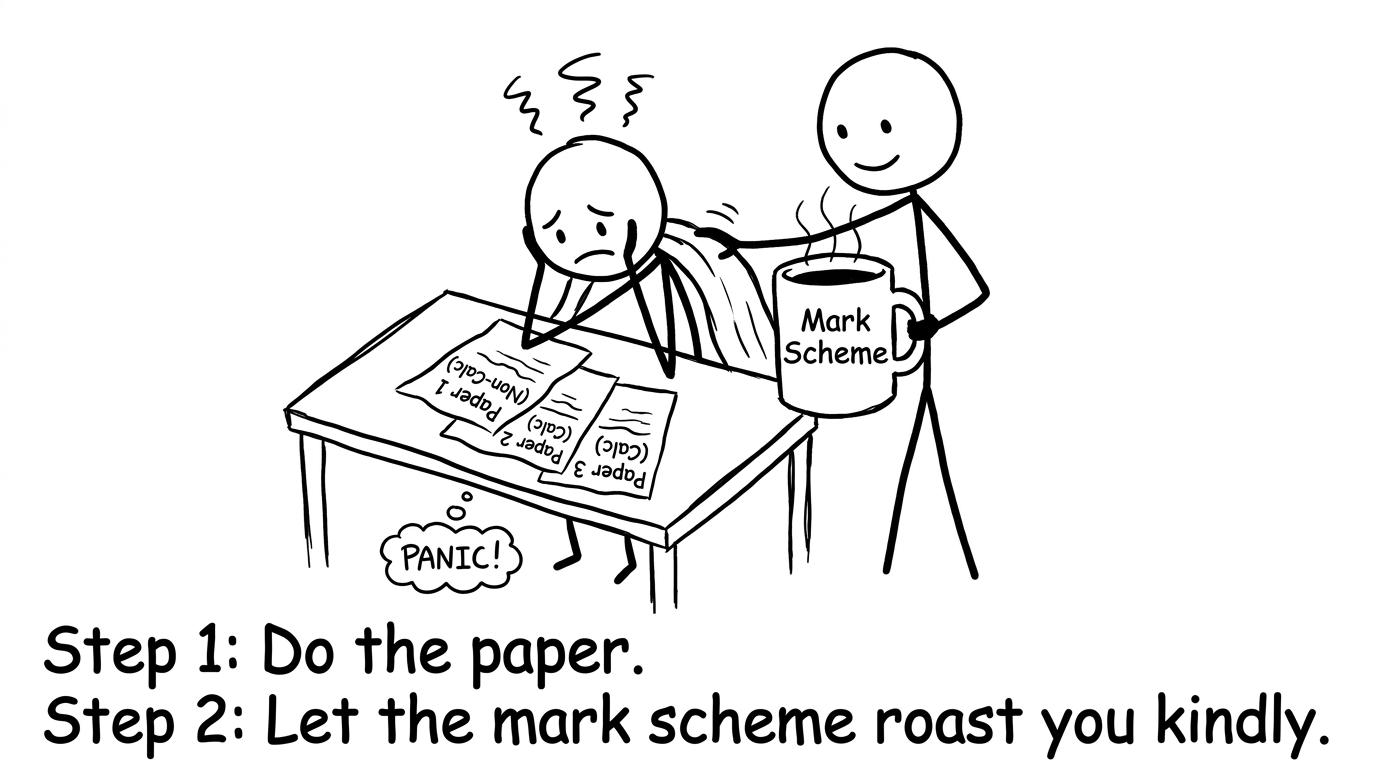 Stick figures with papers and a comforting mark scheme
The right way to use Edexcel GCSE maths past papers (quick checklist)
Use this as your repeatable routine for every GCSE paper:
- Choose the right tier (foundation or higher) and the right paper type (non-calculator or calculator).
- Sit the paper in exam conditions (timed, no notes, one attempt).
- Mark it using the mark scheme, but also annotate your working for method marks.
- Build an “error log” (topic, mistake type, fix).
- Do focused practice on the weak topics using YesGenie lessons and topic questions.
- Re-attempt only the questions you missed (spaced re-try), then later re-sit a full paper.
You’ll find everything you need on YesGenie’s Edexcel GCSE Maths hub and the dedicated Edexcel GCSE Maths past papers pages.
Why “more papers” doesn’t always mean higher GCSE grades
There’s a quiet trap with GCSE past paper revision: you can get addicted to the feeling of familiarity. After a few papers, you start recognising the shape of questions. You feel quicker. You feel calmer. But your marks don’t rise much, because familiarity isn’t the same as skill.
Skill is what remains when the numbers change.
Edexcel papers reward:
- clear algebra and logically ordered working,
- correct use of calculator methods (especially rounding and exact values),
- method marks even when the final answer is wrong,
- time management across easier and harder questions.
So the goal of each GCSE past paper isn’t “finish it”. The goal is: learn one or two repeatable upgrades to your method, then bake them into the next attempt.
Set up your paper like a real Edexcel GCSE exam
Pick the right paper (and keep it consistent)
Edexcel GCSE maths has three papers per series:
- Paper 1: Non-Calculator
- Paper 2: Calculator
- Paper 3: Calculator
If you’re higher tier, commit to higher tier papers. If you’re foundation, commit to foundation. Mixing tiers can be useful for confidence, but it can also distort your revision: foundation papers can hide higher-tier gaps, and higher tier can swamp you with topics you’re not sitting.
On YesGenie, you can access both routes and choose a specific sitting quickly from the Edexcel GCSE Maths past papers list.
Sit it properly (because the timer changes everything)
For a full GCSE paper, replicate exam conditions:
- 1 hour 30 minutes.
- phone away.
- no notes.
- one calculator (for Papers 2 and 3) and the same one you’ll use in the exam.
If you’re building stamina, use shorter versions first: YesGenie’s Resources page links to 45-minute paper options and other exam practice formats.
Marking: how to turn a GCSE past paper into actionable feedback
Marking is where most of the progress lives.
A strong routine looks like this:
- First pass: mark strictly, using the official mark scheme style. Don’t “give yourself the mark” because you nearly got it.
- Second pass: check for method marks. Often Edexcel gives marks for a correct setup, a correct substitution, or correct rearrangement even if arithmetic fails later.
- Third pass: classify each lost mark.
A simple classification system for GCSE revision:
- Concept gap (didn’t know what to do)
- Method slip (knew what to do, did wrong method)
- Accuracy (sign error, arithmetic, rounding)
- Exam craft (poor working, not answering the question, units, form)
- Time (left blank or rushed)
YesGenie makes the marking stage easier because many papers have worked solutions you can compare line-by-line. For example, you can open a worked solution view like June 2024 Paper 2: Worked Solution to see clean exam-style method.
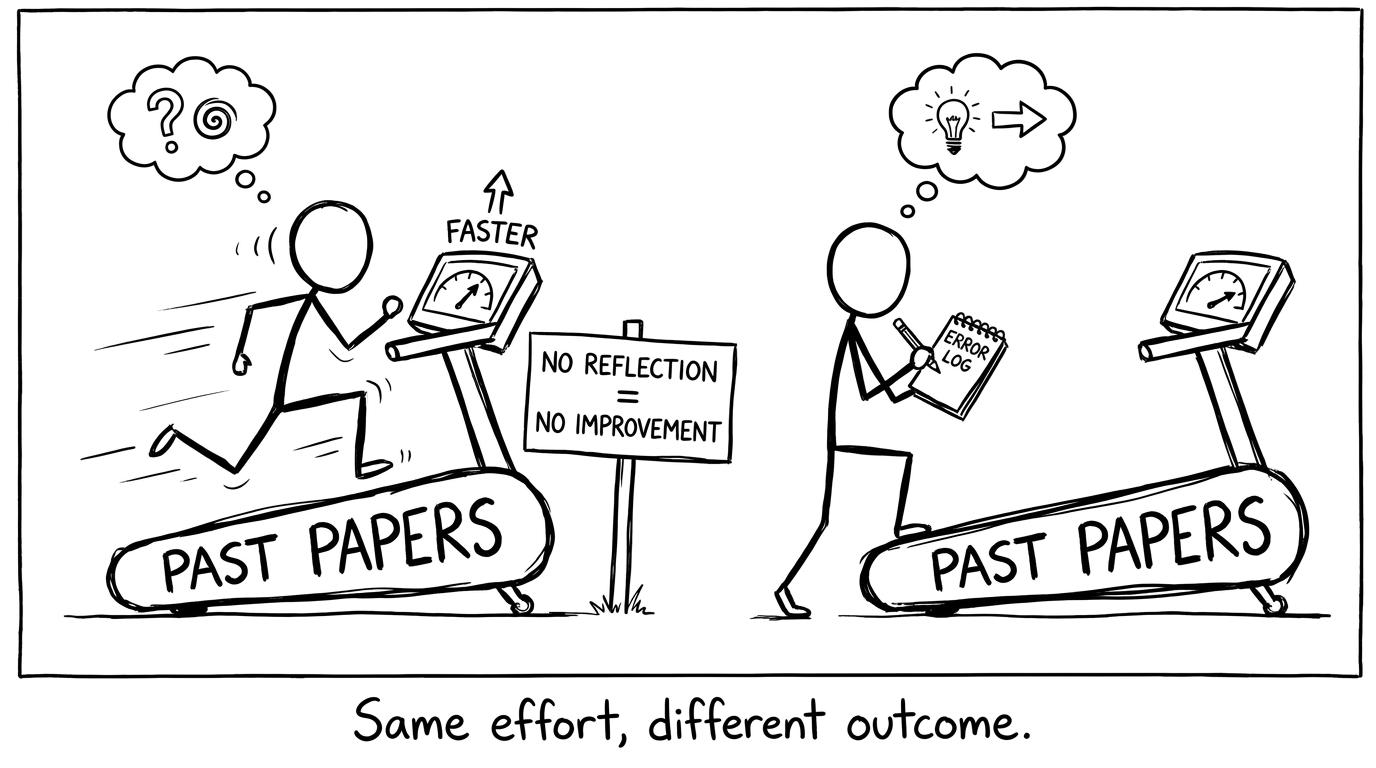 Treadmill vs error log
Build an “error log” that actually improves your GCSE score
An error log is just a small table you keep after each GCSE past paper. It stops you wasting revision on what you already know.
Use three columns:
- Question/topic (e.g. “simultaneous equations”, “probability tree”)
- What went wrong (concept/method/accuracy/exam craft/time)
- Fix (what you will do next time)
The “fix” must be specific. Not “practise more”, but “always write substitution line”, or “always factorise first”, or “write units on every final answer”.
Then you use YesGenie to fill the gap: go to Edexcel revision guides for the topic explanation, then do topic questions and solutions until that error type stops appearing.
Worked example: method marks and clean working (GCSE algebra)
A lot of Edexcel GCSE maths marks are won by showing the method clearly.
Suppose a past paper question leads you to solve:
3(x−4)=2x+5 3(x-4)=2x+5 3(x−4)=2x+5A good exam-method solution:
3x−12=2x+5 3x-12=2x+5 3x−12=2x+5 3x−2x=5+12 3x-2x=5+12 3x−2x=5+12 x=17 x=17 x=17Now imagine you expanded correctly but made an arithmetic slip and wrote 5+12=165+12=165+12=16. You would still likely gain method marks for expanding and rearranging correctly. That’s why your working matters: it preserves marks even when your brain drops one cog.
In your error log, that would be:
- Topic: forming/solving equations
- Mistake type: accuracy
- Fix: write addition carefully; quick sense-check (if x=16x=16x=16, LHS =3(12)=36=3(12)=36=3(12)=36, RHS =37=37=37 so it’s close but not equal)
This is also where short targeted practice helps. If algebra slips are costing you marks, use mini papers and focused sets before returning to a full GCSE past paper. Start with the Edexcel GCSE Maths mini tests.
Worked example: Edexcel-style probability (GCSE reasoning)
Probability questions often punish rushed reading. Here’s a clean example that mirrors common GCSE past paper structure.
A bag contains only red, blue and green counters.
P(red)=0.35P(blue)=0.40 P(\text{red})=0.35 \quad P(\text{blue})=0.40 P(red)=0.35P(blue)=0.40Find P(green)P(\text{green})P(green).
Because the outcomes listed are the only outcomes:
P(red)+P(blue)+P(green)=1 P(\text{red})+P(\text{blue})+P(\text{green})=1 P(red)+P(blue)+P(green)=1So:
P(green)=1−0.35−0.40=0.25 P(\text{green})=1-0.35-0.40=0.25 P(green)=1−0.35−0.40=0.25If you repeatedly lose marks here, it’s rarely “probability is hard”. It’s usually one of these:
- forgetting totals must be 111,
- subtracting in the wrong order,
- copying numbers inaccurately.
That’s why the fix might be: “write the total-to-1 equation first”. You can reinforce this method in a short, focused session using a revision guide like Probability revision guide (the skill is the same across boards; Edexcel just wraps it differently).
How to choose what to revise between past papers
After you mark a GCSE Edexcel paper, you’ll usually see two kinds of weaknesses:
- Big gaps (you scored 000 on a topic across multiple questions).
- Leaky topics (you scored some marks but bled accuracy/method marks).
Prioritise like this:
- Fix leaky topics first (fastest marks back).
- Then tackle one big gap at a time.
On YesGenie, your revision path can look like:
- Read/watch the topic on Edexcel revision guides.
- Do topic-by-topic questions and check solutions.
- Do a mini test from the Edexcel GCSE Maths mini tests.
- Return to the next full past paper.
This loop is what makes GCSE past paper practice compound. You’re not just doing papers; you’re changing the kind of student who sits them.
Common mistakes when using Edexcel GCSE maths past papers
- Marking too kindly. In the real GCSE, there is no “I basically meant that”. Be strict now so you’re relaxed later.
- Only checking answers, not methods. Two students can have the same wrong answer; one gets method marks and one gets zero.
- Re-doing the same paper too soon. If you re-sit immediately, you’ll remember questions rather than improve skills. Leave at least a week and re-attempt only missed questions first.
- Ignoring non-calculator skills. Paper 1 exposes shaky fractions, standard form, and mental arithmetic. Treat it as its own training block.
- No error log. Without a record, your revision becomes random. With a record, your revision becomes inevitable.
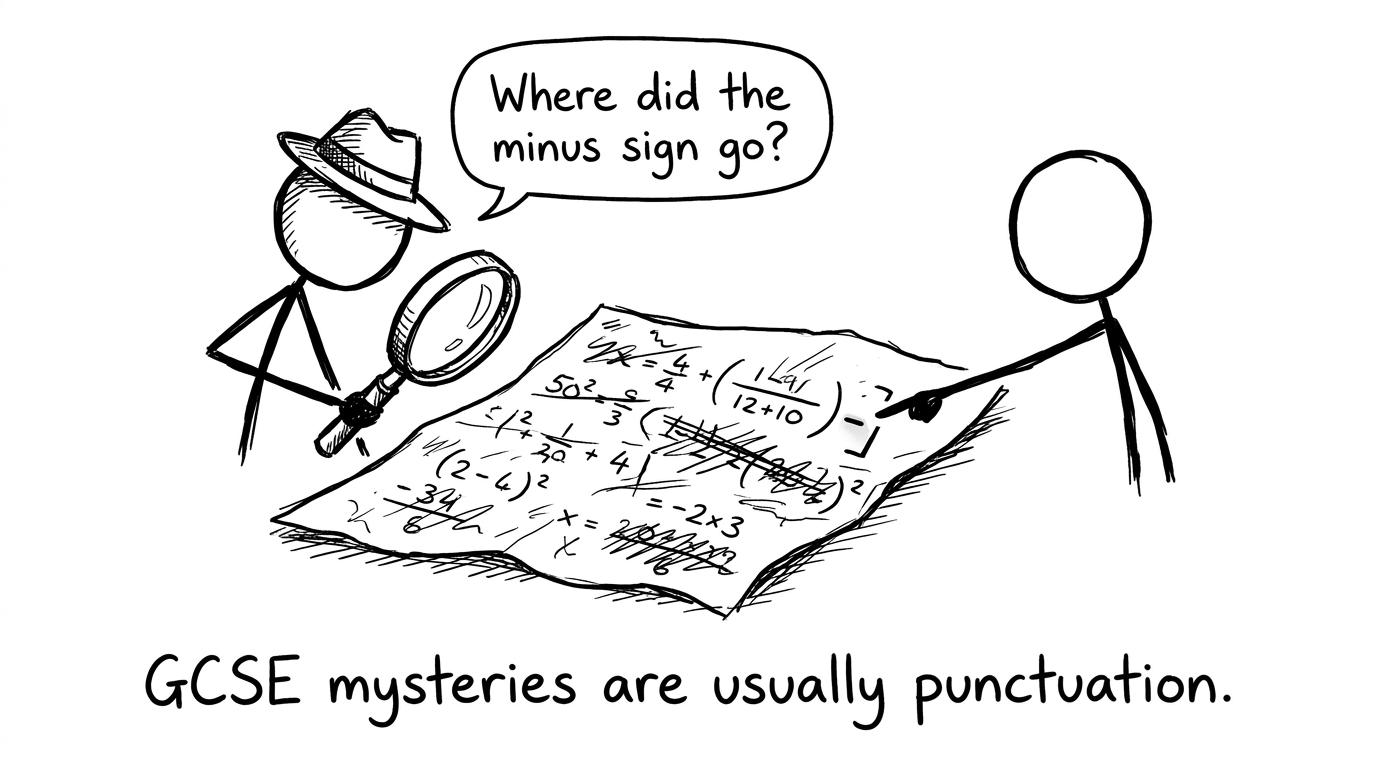 Minus sign detective
A simple 2-week plan (repeatable all year)
If you want structure without overcomplicating it:
- Day 1: Sit one Edexcel GCSE past paper (timed).
- Day 2: Mark it, build your error log, rework the worst 3 questions with correct method.
- Days 3-5: Targeted topic revision using Edexcel revision guides plus topic questions.
- Day 6: Mini test practice using Edexcel GCSE Maths mini tests.
- Day 7: Rest or light recall.
- Day 8: Sit the next paper.
Repeat. Your confidence will rise, but more importantly, your errors will shrink.
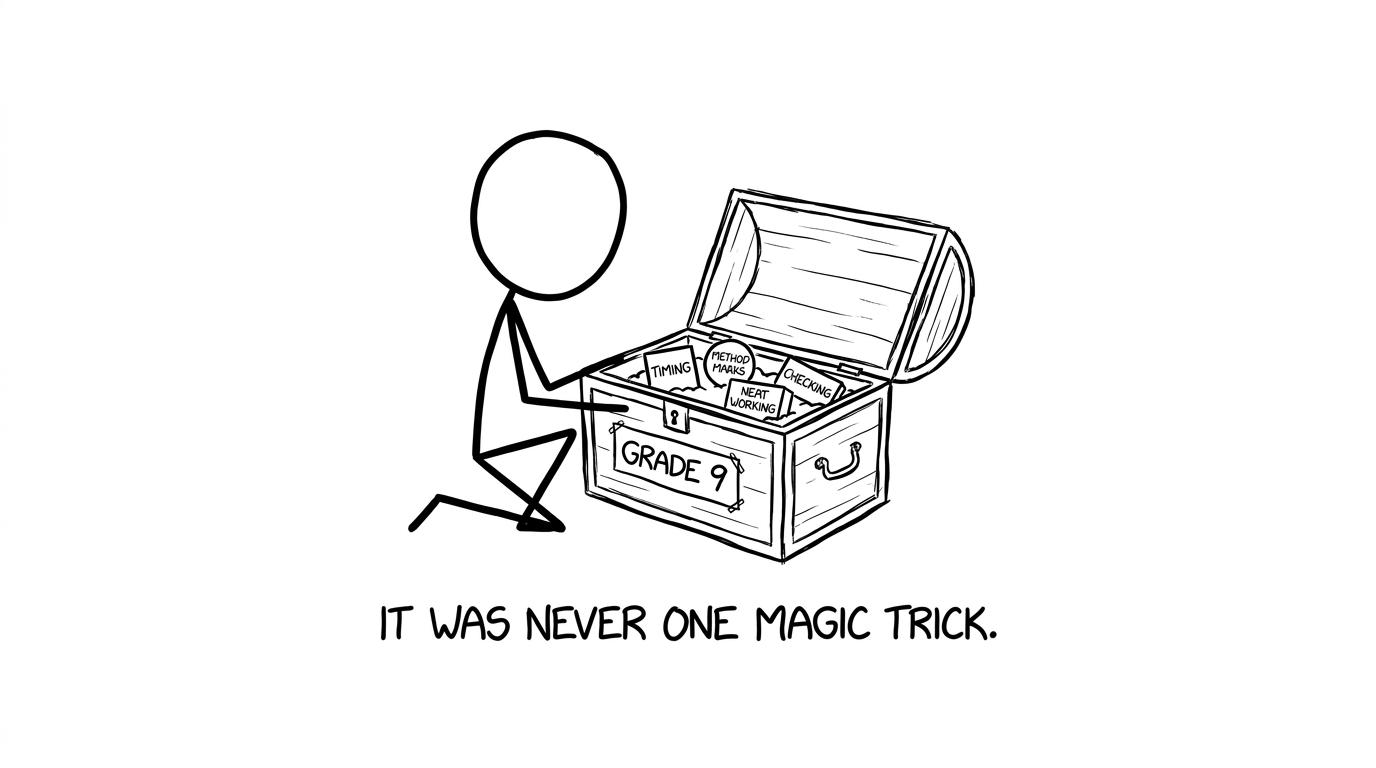 Treasure chest of grade gains
Closing: make every GCSE past paper count
The best part about using Edexcel GCSE maths past papers properly is that it removes the guesswork. You stop revising “maths” and start revising your maths: the exact methods and habits that are leaking marks.
So if you’re sitting down to do another GCSE paper this week, make it a full cycle: sit it like the exam, mark it like the examiner, log the mistakes like a detective, and fix them with focused practice.
Head to YesGenie to build that routine in one place: start on the Edexcel GCSE Maths past papers, patch gaps using the Edexcel revision guides, and sharpen exam technique with the Edexcel GCSE Maths mini tests and other tools on the Resources page. Then repeat. That’s how GCSE grades move: quietly, steadily, and on purpose.