Recover From Bad GCSE English Language and Literature Mock
Recover from a bad GCSE English Language and Literature mock with a calm plan for analysing lost marks, improving exam skills and balancing maths revision.
A disappointing mock result can feel strangely final. You see one grade, remember every paragraph that went wrong and begin predicting the summer before it has happened. But if you want to recover from bad GCSE English Language and Literature mock results, the answer is not to revise everything again. It is to identify where marks disappeared, turn teacher feedback into specific actions and retest those skills under realistic conditions.
A mock is evidence, not a verdict. Its most useful purpose is to reveal what needs changing while there is still time to change it. The recovery plan is simple: separate Language from Literature, analyse marks by question and assessment objective, repair a small number of weaknesses, then practise them again.
Your recovery checklist
Start with these actions rather than immediately completing another full paper:
- Give yourself a little time to absorb the result without making decisions based on panic.
- Collect both scripts, the questions, teacher feedback and any available mark schemes.
- Check that you know your exam board: Edexcel, AQA, OCR or Eduqas.
- Separate knowledge gaps from writing, timing and exam-technique problems.
- Choose no more than three priorities for each subject.
- Complete short, targeted tasks before attempting another mock.
- Protect your GCSE maths revision rather than allowing one result to consume the whole timetable.
- Ask your teacher to clarify feedback that you cannot convert into an action.
The important shift is from a judgement such as “I am bad at English” to a diagnosis such as “my Literature paragraphs use quotations but do not analyse the writer’s methods”. Only the second statement gives you something you can practise.
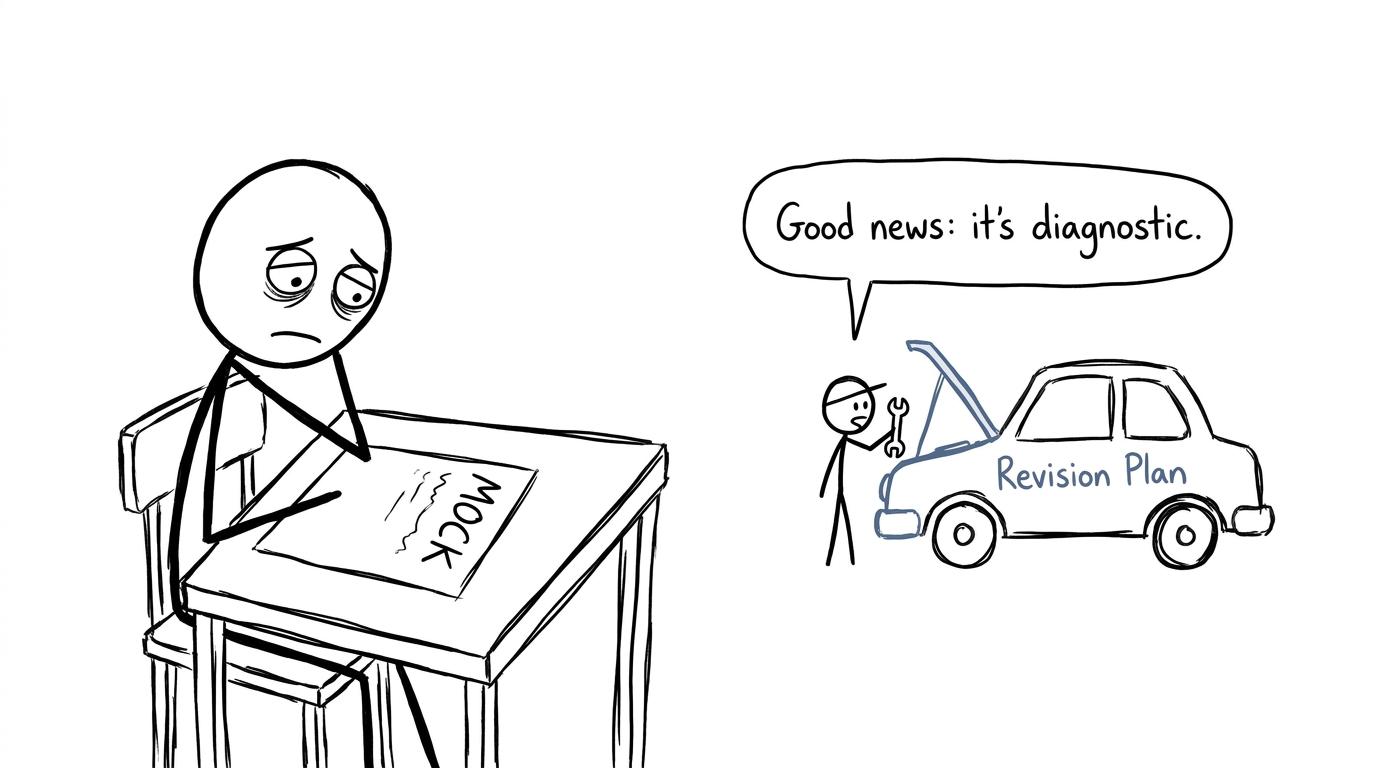 A disappointing mock paper being treated as useful diagnostic information
Start with the paper, not the grade
A grade compresses an entire performance into one symbol. That makes it convenient, but not especially useful for revision. Two students receiving the same mock grade may need completely different plans. One may know the Literature texts but run out of time. Another may finish comfortably but write general comments without enough textual support.
Review each question and record:
- the marks available and marks awarded;
- the relevant assessment objective;
- whether you understood the task;
- whether your response contained appropriate evidence;
- whether you developed analysis rather than identifying techniques;
- whether time pressure affected the answer;
- the next action required.
Mock grades can also depend on the paper used and the boundaries chosen by your school. Treat the grade as a broad indicator. The marked script and feedback contain the better information.
This process resembles marking a maths paper properly. MathsGenie’s guide to using AQA GCSE Maths past papers recommends classifying mistakes and attaching a specific fix. The subject changes, but the logic does not: every lost mark should point towards a trainable skill.
Separate English Language from English Literature
English Language and English Literature are related, but they are not interchangeable. Revising both as one vague subject usually produces vague progress.
Diagnose English Language weaknesses
Across GCSE English Language specifications, the written papers assess skills including retrieving and interpreting information, analysing language and structure, comparing perspectives, evaluating texts, communicating effectively and writing accurately. Exact paper structures, timings and question wording differ between exam boards, so use the specification and materials for your board.
Sort your Language problems into four areas:
- Reading accuracy: Did you misunderstand the source, overlook implicit ideas or select weak evidence?
- Analysis: Did you name a method without explaining its effect or connection to the writer’s purpose?
- Writing: Did you adapt tone, form and register to the stated audience and purpose?
- Control: Did paragraphing, spelling, punctuation or sentence construction reduce clarity?
Do not respond to a weak analysis answer by memorising a longer list of techniques. Recognising alliteration is not the same as explaining why a particular choice matters. Practise the complete chain: select evidence, identify a meaningful choice, explain its effect and connect it to the question.
For a more detailed paper-review routine, use MathsGenie’s guide to using AQA English Language past papers properly. If you follow another board, keep the review method but use your own specification and question timings.
Diagnose English Literature weaknesses
Literature requires secure text knowledge, but recall alone is not enough. The shared assessment objectives cover informed responses supported by textual references, analysis of language, form and structure, relevant understanding of context and accurate written expression. The weighting and application of those objectives can vary by question and specification.
Ask which of these caused the difficulty:
- insecure knowledge of characters, themes or events;
- too few flexible quotations or references;
- an argument that did not directly answer the question;
- analysis that remained at word level and ignored form or structure;
- context added as a detached historical fact;
- weak comparison between poems or texts;
- unfinished responses caused by timing.
For example, if recall failed, build a small quotation bank organised by theme and character. If the argument drifted, practise writing thesis statements and paragraph plans. If context felt bolted on, revise only the contextual ideas that genuinely illuminate the writer’s choices and the text’s meaning.
Check your board before planning. Specifications are not identical. For instance, AQA English Literature assessments are closed book, while the supplied extracts and exact task formats depend on the paper.
Convert feedback into actions you can observe
Feedback such as “analyse in more detail” may be accurate, but it is too broad to schedule. Translate it into behaviour.
“Improve analysis” might become:
- choose shorter, more precise quotations;
- explain the implication of one word rather than listing several devices;
- connect each paragraph to the question;
- include form or structure where it genuinely shapes meaning.
“Use context” might become:
- attach one relevant contextual idea to each major theme;
- explain how that idea changes the interpretation;
- remove memorised facts that do not answer the question.
“Improve timing” might become:
- plan briefly before writing;
- set a stopping time for each section;
- practise one timed response rather than repeatedly sitting whole papers.
A useful target describes something visible on the page. Your teacher should be able to look at the next response and tell whether you did it.
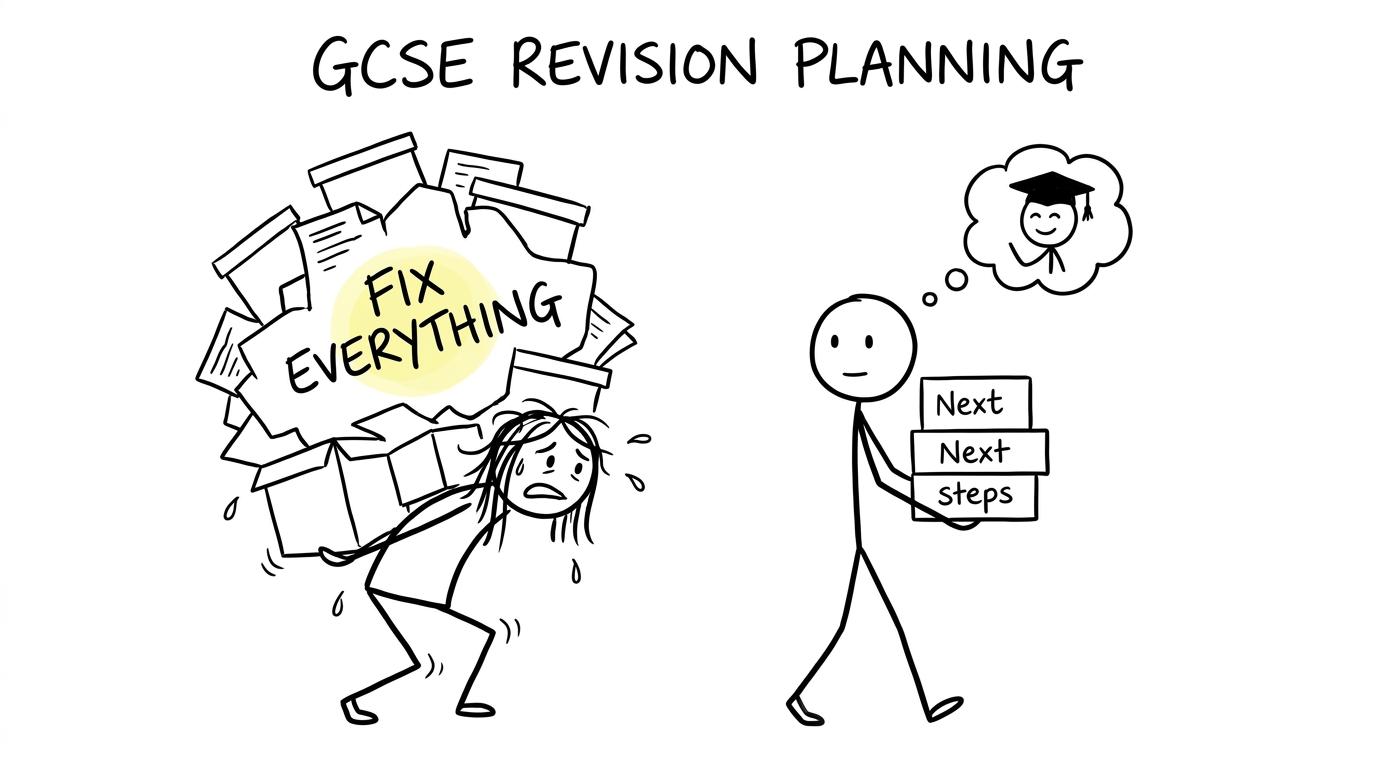 A student choosing three manageable next steps instead of trying to fix everything
Build a short recovery cycle
The temptation after a poor mock is to produce an enormous timetable. It feels serious, but complexity often becomes another form of avoidance. A better plan repeats a small cycle.
Repair
Choose one priority and revisit the relevant teaching, notes or model material. Keep this stage focused. You are not rereading the entire novel because one poetry comparison was weak.
Practise
Complete a short task that isolates the skill: a paragraph plan, quotation retrieval, an analytical paragraph, a comparison outline or part of a Language paper. Writing is essential. Reading revision notes can improve familiarity, but the examination assesses what you can produce.
Check
Use the mark scheme, teacher guidance or an annotated model answer. Ask whether the target is now visible. Do not award yourself marks for an idea that stayed in your head.
Retest
Return to the same skill on a different question several days later. Eventually place it inside a timed section, then a full paper. Maths students will recognise this progression: learn the method, practise it, mark it and test it under pressure.
MathsGenie’s article on when to start GCSE past papers explains why papers work best in phases rather than as endless tests. The same principle applies to English. Targeted repair should come before repeated full mocks.
Balance English recovery with GCSE maths revision
One bad subject result can distort the whole revision week. That is risky if you are also preparing for foundation or higher tier GCSE maths. English needs a plan, not ownership of every available evening.
Use separate blocks. A manageable week might contain short English skill sessions alongside maths topic revision, with one longer timed session at the weekend. Keep the exact workload realistic for your timetable and ask teachers for guidance if several subjects need urgent attention.
For maths, continue the same diagnostic loop through the MathsGenie AQA GCSE Maths revision hub or Edexcel GCSE Maths past papers. Revision lessons repair understanding; practice questions develop fluency; mini tests check individual areas; full papers build timing and stamina.
If planning several subjects feels overwhelming, adapt the structure in the GCSE one-month maths revision plan: diagnose, prioritise, practise, mark and revisit. Keep separate error logs for English and maths so that each session begins with a decision already made.
Common mistakes after a disappointing mock
Revising the entire course from the beginning
This ignores the evidence in your script. Begin with the areas that actually cost marks, while maintaining lighter retrieval of everything else.
Completing another paper without repairing anything
A second paper may reproduce the same weaknesses. Practise the missing skill first, then use a fresh question to test whether it has improved.
Copying model answers
Models can reveal structure and quality, but copying creates recognition rather than independent performance. Read the model, identify what makes it effective, close it and apply that feature to a different task.
Memorising impressive language
Unnatural vocabulary cannot rescue an unclear argument. Precision, relevance and control matter more than forcing elaborate words into every paragraph.
Ignoring the exam board
Edexcel, AQA, OCR and Eduqas do not use identical papers. Confirm your specification, texts, timings and question types before choosing practice materials.
Letting English replace maths entirely
Urgency is not the same as priority. Maintain your maths routine using GCSE predicted papers and revision resources, but remember that predicted papers supplement topic work and official past papers rather than guaranteeing future questions.
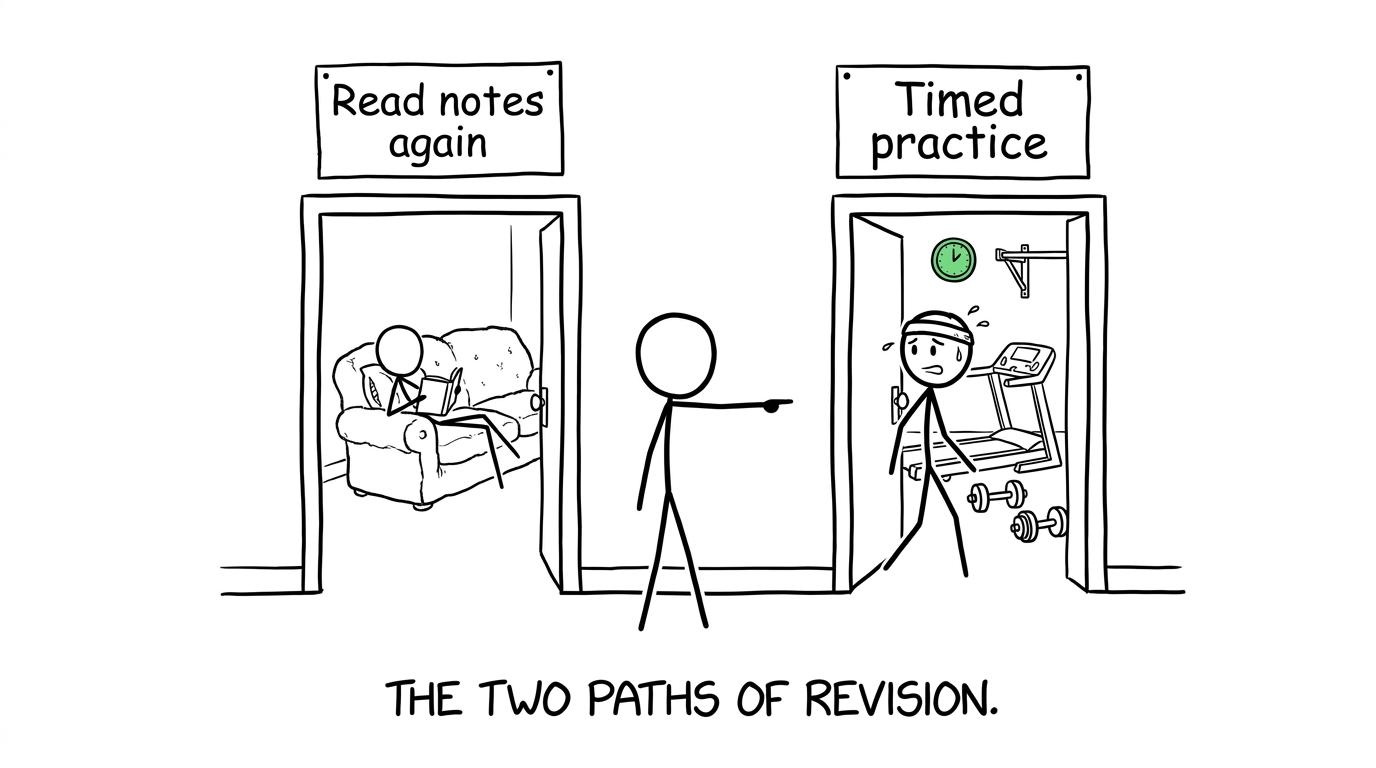 A student leaving comfortable rereading behind and entering the timed-practice gym
Turn the mock into your next decision
Recovering from a bad English Language and Literature mock does not require pretending the result did not hurt. It requires giving the result a useful job. Let it identify the question types, assessment objectives and habits that need attention. Then make each target small enough to practise and clear enough to check.
Start today by reviewing one script and writing three specific next actions. Schedule the first short practice task, ask your English teacher about any unclear feedback and keep your maths preparation moving.
MathsGenie can be the steady centre of that wider revision routine. Use the free revision lessons and practice questions to repair maths gaps, mini tests to check progress, past papers and mark schemes to diagnose mistakes, video solutions to understand methods, and predicted papers to sharpen your preparation nearer the exams. One disappointing mock is information. What you do with it is the plan.