

How to Use AQA GCSE Maths Past Papers Properly
GCSE students: learn how to use AQA GCSE Maths past papers properly with timings, mark schemes, mistake logs and targeted practice on YesGenie.
AQA GCSE Maths past papers can feel like a mirror you’re not ready to look into. You sit down with the best intentions, see Question 1, and within minutes you’re either flying (false confidence) or sinking (panic). The problem usually isn’t your ability; it’s your method. Used properly, past papers are the most honest, high-impact form of GCSE maths revision you can do, because they teach you how marks are actually awarded.
This guide shows you how to use AQA GCSE Maths past papers properly, step by step, so each paper turns into better exam technique, sharper topic knowledge, and calmer timing.
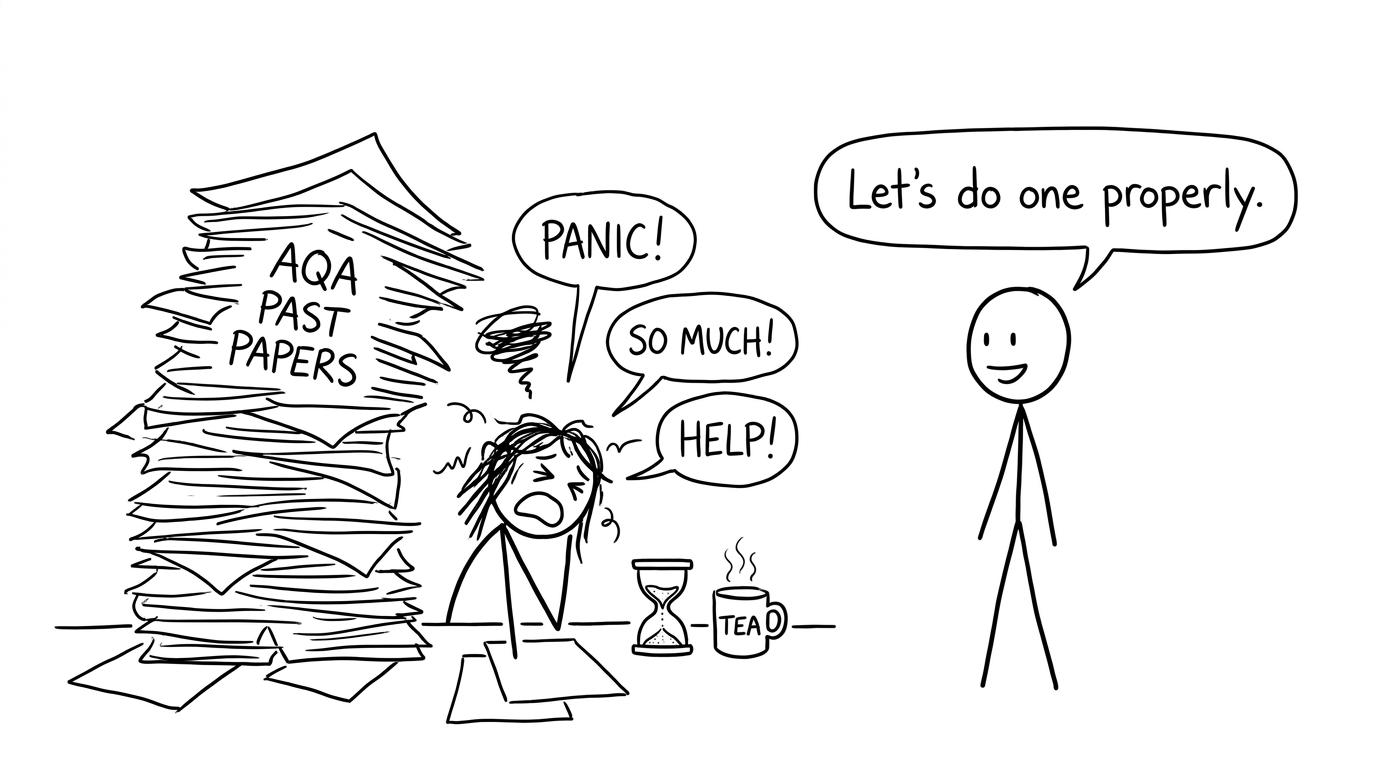 A stressed student vs doing a paper properly
The “proper” way to use AQA GCSE Maths past papers
Before you start, keep this simple checklist nearby. It’s the difference between “doing lots of papers” and getting better at GCSE maths.
Quick checklist
- Pick the right tier (foundation or higher) and paper type (non-calculator or calculator).
- Sit the paper in realistic conditions some of the time (silence, timer, no help).
- Mark with the mark scheme like a detective: look for method marks.
- Build a mistake log (topic, error type, fix, follow-up practice).
- Do targeted practice on the exact skills you missed.
- Reattempt the same questions after 484848 hours and again after a week.
On YesGenie, you can combine past papers with revision lessons, practice questions, mark schemes and video solutions, so each mistake becomes a plan rather than a bruise.
Helpful starting points:
- AQA GCSE Maths Lessons
- GCSE Past Papers (all boards)
- Resources hub (predicted papers, mini tests and more)
Choose the right paper: tier, year, and purpose
AQA GCSE Maths past papers are not all the same task. Choose based on what you’re trying to improve.
Foundation vs higher tier (be honest, not hopeful)
If you’re on foundation tier, your goal is consistency: dropping easy marks is what hurts. If you’re on higher tier, your goal is control under pressure: you need to secure the early marks quickly, then stay calm for the harder multi-step questions.
A useful rule for GCSE revision:
- Foundation: prioritise accuracy and full working.
- Higher: prioritise pacing and decision-making (when to move on).
Non-calculator vs calculator
Non-calculator papers expose number sense: fractions, indices, exact values, rearranging, mental arithmetic. Calculator papers expose setup skills: forming equations, interpreting contexts, using trig correctly, and avoiding calculator slips.
The three-pass method (how top students actually sit papers)
Most students sit AQA GCSE Maths past papers in one speed: panic. A better approach is three passes. It’s calmer and it protects your grade.
First pass: secure marks fast
Aim to collect the marks you should get without negotiation. If a question looks like it needs more than a minute of thinking, leave a clean gap and move on.
Second pass: build method marks
This is where GCSE papers are generous. Even if you can’t finish, you can often earn method marks by setting up correctly.
Third pass: the “examiner-friendly” pass
Spend the final minutes making your solutions readable: units, rounding, final answers clearly stated, and any missing justifications added.
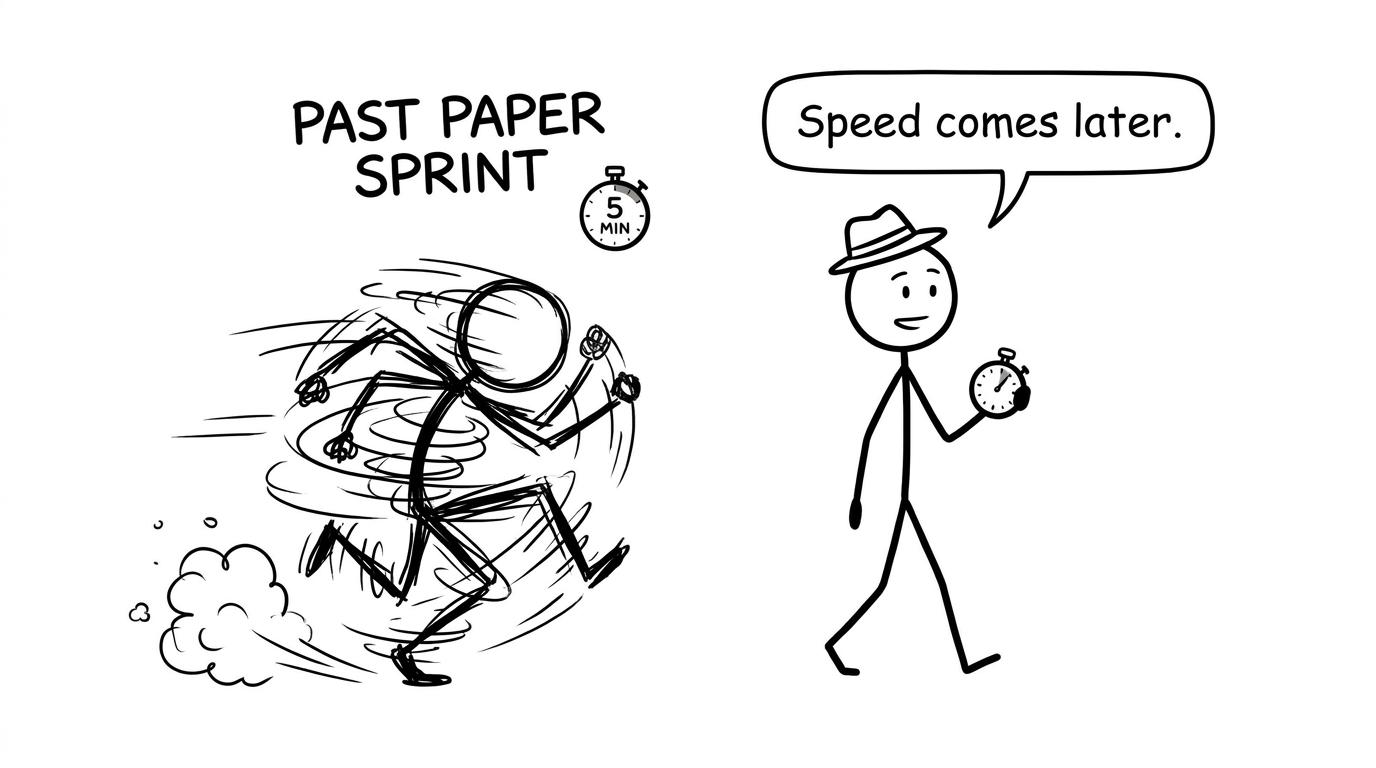 Speed comes later
Mark schemes: how to get marks back from the paper you already sat
The mark scheme isn’t just an answer key. It’s a map of what the examiner rewards.
Learn the language of marks
Even if you don’t memorise codes, you should recognise the idea:
- Method marks reward correct processes.
- Accuracy marks reward correct results.
- Reasoning marks reward explanations and justification.
When you mark an AQA GCSE Maths past paper, ask:
- What did the examiner want to see written down?
- Where could I have earned a method mark even if my final answer was wrong?
- Was my error a topic gap or an execution slip?
On YesGenie, many papers and questions have worked solutions and video support, so you can see what “examiner-friendly working” looks like in real time.
Worked example: how method marks save you
Here’s a typical GCSE-style algebra question where method matters.
Example: forming and solving an equation
Solve 3(2x−5)=2x+73(2x-5)=2x+73(2x−5)=2x+7.
Step 1: expand
3(2x−5)=6x−15 3(2x-5)=6x-15 3(2x−5)=6x−15So the equation becomes
6x−15=2x+7 6x-15=2x+7 6x−15=2x+7Step 2: collect like terms Subtract 2x2x2x from both sides:
4x−15=7 4x-15=7 4x−15=7Step 3: isolate xxx Add 151515 to both sides:
4x=22 4x=22 4x=22Divide by 444:
x=224=112=5.5 x=\frac{22}{4}=\frac{11}{2}=5.5 x=422=211=5.5If you expanded correctly and rearranged to 4x=224x=224x=22 but made an arithmetic slip at the end, you’d still often earn most method marks. That’s exactly why you must write steps clearly in every AQA GCSE Maths past paper.
For targeted follow-up revision, use lesson pages like AQA GCSE Maths Lessons to practise the precise skill you dropped.
Turn every paper into a personalised revision plan
AQA GCSE Maths past papers work best when they feed your next week of GCSE revision.
Build a mistake log that actually changes things
After marking, create a simple log with four columns:
- Question and topic (e.g. “probability tree”, “bounds”, “circle theorems”).
- Error type: misunderstanding, forgotten method, or accuracy.
- The fix: one sentence summarising the correct method.
- The follow-up: one lesson + one set of practice questions + a reattempt date.
If you want quick follow-up tests, use the Resources hub to find mini tests and other structured practice.
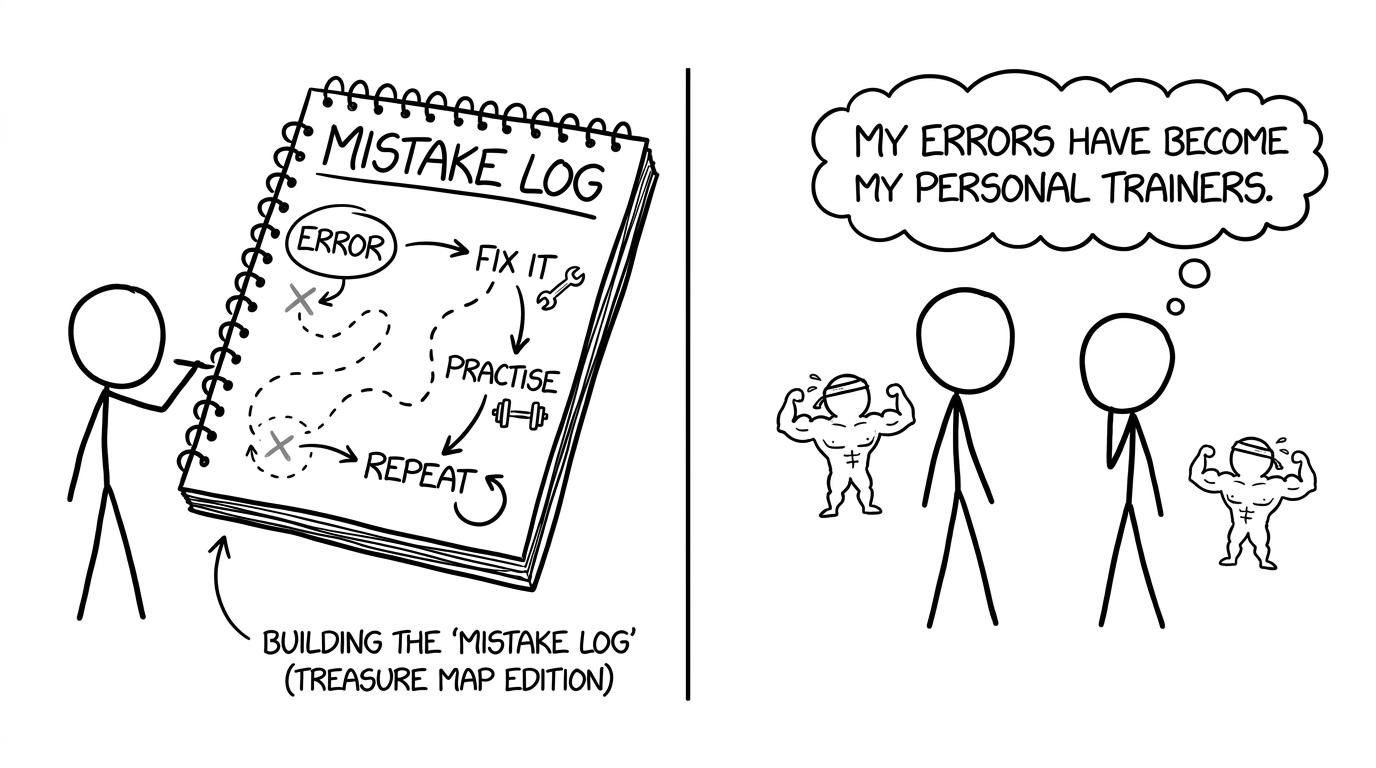 Mistakes as personal trainers
Practise the “classic” GCSE maths skills that repeat
AQA, Edexcel, OCR and Eduqas all test the same core ideas, just with different phrasing and contexts. When your AQA GCSE Maths past papers reveal a weakness, you’ll usually find it sits in one of these buckets:
Algebra and graphs
Typical repeat skills include rearranging, solving equations, interpreting gradients, and using y=mx+cy=mx+cy=mx+c.
Ratio, proportion, and percentages
Errors here are often not “hard maths” but poor structure. Write what each number represents and keep units consistent.
Geometry and measures
Show steps clearly. If you use Pythagoras or trig, write the formula you’re using before substituting.
Probability and statistics
Most lost marks are explanation marks: not stating outcomes, not labelling, or not interpreting a probability correctly.
Common mistakes when using AQA GCSE Maths past papers
These are the traps that make students feel like past papers “don’t work”, when really the process is incomplete.
- Doing papers open-book too early: it feels productive but trains dependence. Use help only after you’ve attempted.
- Marking like it’s all-or-nothing: GCSE mark schemes often reward correct setup. You must look for method marks.
- Not reattempting questions: improvement comes from revisiting the same style until it feels boring.
- Ignoring non-calculator practice: it exposes weak number fluency quickly, which affects every topic.
- Chasing harder questions while dropping easy marks: grade jumps often come from consistency, not heroics.
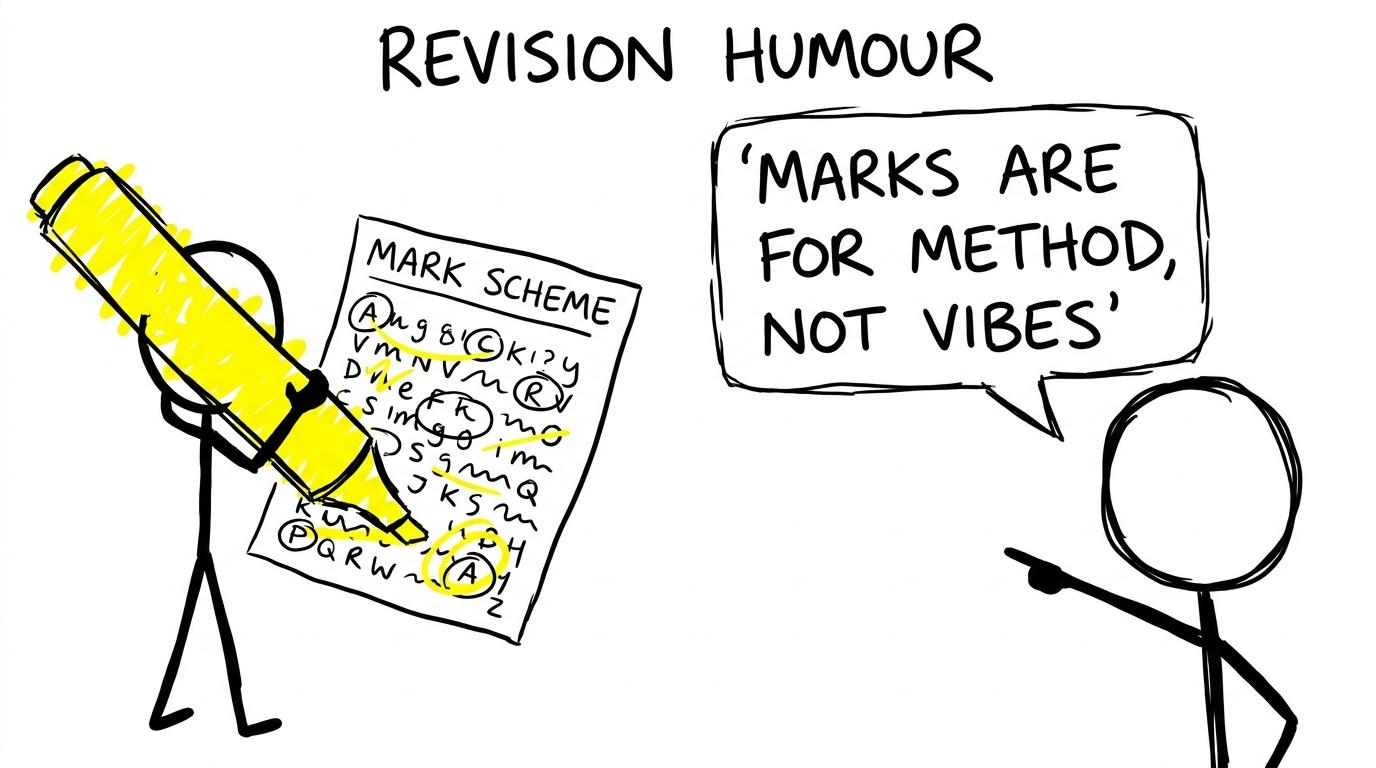 Marks are for method, not vibes
Closing: make past papers your unfair advantage
Used casually, AQA GCSE Maths past papers are just hard work. Used properly, they become a feedback machine: attempt, mark, diagnose, fix, and reattempt. That cycle is how students turn “I did loads of revision” into higher GCSE grades.
If you want a clear, free system, use YesGenie to connect everything in one place: revision lessons when you’ve found a gap, practice questions to rebuild confidence, past papers with mark schemes and solutions to sharpen exam technique, and predicted papers and mini tests when you want focused preparation. Start with the AQA GCSE Maths Lessons and the GCSE Past Papers, then let each paper write your next week of revision for you.










