Peaking Too Early: GCSE Art and Design Revision
Peaking too early GCSE Art and Design revision advice: keep creative skills fresh until May while maintaining a balanced, effective GCSE maths plan.
A strange thing can happen halfway through Year 11. Your sketchbook looks strong, your ideas feel clear and you can explain every artistic decision. Then you look at the calendar. There are still months to go.
If you are worried about peaking too early GCSE Art and Design revision, the short answer is reassuring: yes, feeling most confident early can be completely normal. Confidence naturally rises after an intense project or successful piece. It does not mean your ability has reached a permanent peak, and it does not need to disappear before May.
The solution is not to keep working at maximum intensity. It is to shift from building to maintaining: revisit your intentions, practise techniques briefly, preserve evidence of your process and leave enough energy for maths and your other GCSE subjects.
A quick checklist for staying ready
- Identify what made you feel confident: technique, ideas, organisation or teacher feedback.
- Keep a short record of materials, processes and artistic decisions.
- Revisit your work regularly without endlessly changing finished pieces.
- Use small creative exercises to maintain practical fluency.
- Check your work against all four assessment objectives.
- Follow your teacher's deadlines and your exam board's current instructions.
- Protect regular time for GCSE maths practice.
- Increase intensity gradually as assessments approach.
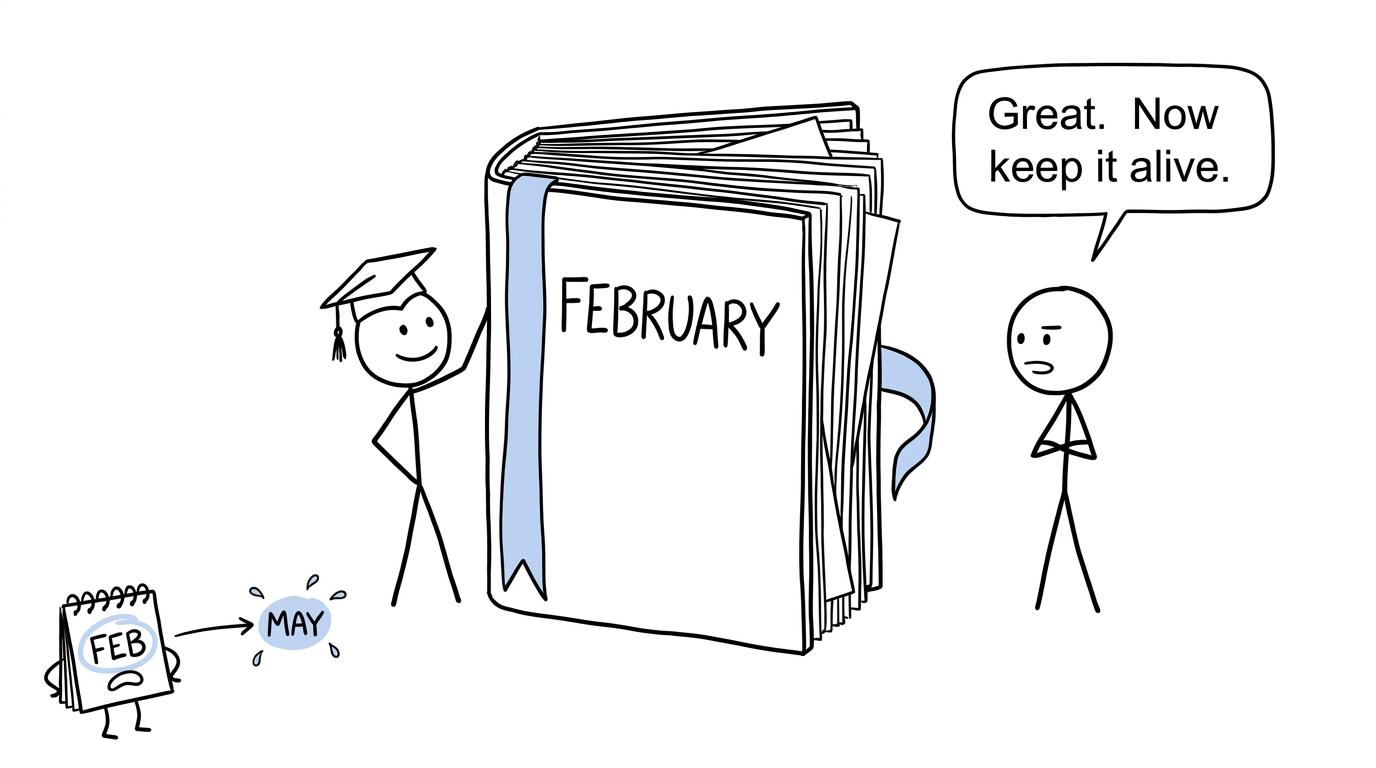 A student discovers that feeling ready in February still requires keeping a portfolio alive until May
Why GCSE Art confidence can arrive early
Art and Design does not behave like a subject in which every fact must be recalled in one written examination. Much of your confidence may come from momentum. You have recently spent several lessons researching sources, experimenting with materials and refining an outcome. The decisions are still vivid because you have been living with them.
That creates a real sense of fluency. You know why you rejected one composition, why a particular material worked and how your response developed. When attention later moves to algebra, science or English, those details can feel less immediate. This is not necessarily lost ability. It is often lost accessibility.
There is another reason. Creative work can produce a visible result much earlier than written-exam revision. A completed page or resolved outcome feels concrete. By contrast, progress in GCSE maths is often discovered through questions you can answer now but could not answer a month ago. It is quieter progress, but equally important.
Treat early confidence as evidence that your process worked. Your next task is to preserve that process rather than chase the emotional high of finishing something new every week.
What being ready actually means in Art and Design
For the main GCSE Art and Design specifications in England, including AQA, Pearson Edexcel, OCR and Eduqas, assessment is organised around a portfolio component and an externally set component. The usual weighting is 60%60\%60% for the portfolio and 40%40\%40% for the externally set assignment or task.
Work is considered through four equally weighted assessment objectives. In plain terms, these ask you to:
- develop ideas through investigation and understanding of sources;
- refine work by experimenting with media, materials and processes;
- record observations, ideas and insights as work progresses;
- present a personal and meaningful response that realises your intentions.
The externally set component normally includes preparatory work followed by a 101010-hour supervised period. Exact arrangements, access rules and school dates matter, so always follow your teacher's guidance and the current specification for your board.
This structure explains why an attractive final piece is not the whole story. Sustainable readiness means being able to show the journey: where the idea came from, what you tested, what changed and why the outcome is personally meaningful.
Use the assessment objectives as a maintenance check
Every few weeks, look through your selected work with four questions in mind:
- Can someone see how my ideas developed?
- Is there meaningful experimentation rather than disconnected samples?
- Have I recorded observations and decisions as the work progressed?
- Does the final response clearly grow from the preceding pages?
Do not invent a journey afterwards. Instead, identify genuine gaps and ask your teacher what can appropriately be clarified or developed under your assessment conditions.
How to keep artistic knowledge fresh until May
The aim is not constant production. It is regular reconnection.
Create a one-page project map
Summarise each project using concise prompts: starting point, important sources, experiments, turning points, strongest evidence and intended outcome. This is not a replacement for sketchbook annotation. It is a private memory aid that helps you recover the logic of your project quickly.
The act of recalling that logic is more useful than repeatedly reading every page. Evidence on retrieval practice supports recalling previously learnt material, although classroom research also warns that techniques must suit the subject and task. In Art, retrieval might mean explaining your decisions from memory before checking the sketchbook, not completing a traditional factual quiz.
Maintain techniques in small doses
If a process depends on physical familiarity, use brief exercises to keep your hand and eye active. That might involve observational drawing, testing colour relationships, controlling a camera setting or handling a material safely under your teacher's direction.
Keep these sessions purposeful. Ask what ability you are maintaining. Unfocused making can consume hours while adding little to your assessed work or wider examination preparation.
Preserve the practical details
Record the materials, tools, settings and sequence that helped a successful experiment work. Photographs can preserve temporary stages where your school permits them. Clear records reduce the risk of returning weeks later and trying to reconstruct a process from memory.
Revisit, then leave it alone
Spacing revision across time can support retention, but more contact is not automatically better. Schedule short check-ins rather than repeatedly reopening completed work. If each visit produces unnecessary changes, your maintenance plan has become interference.
A useful rhythm is: recall the project, inspect the evidence, choose one legitimate next action and stop. Your teacher should determine what work remains permitted and worthwhile.
Balance Art with GCSE maths revision
Feeling ahead in Art can create two opposite mistakes. Some students continue pouring time into the subject because it feels rewarding. Others abandon it completely and assume the confidence will remain untouched. A balanced timetable avoids both.
Start with the MathsGenie GCSE maths revision hub, where free revision lessons, exam questions and papers can be matched to your level. Unlike Art and Design, GCSE maths has foundation and higher tiers, so your practice must reflect the tier and specification you will sit.
A practical weekly balance could contain:
- one short Art maintenance session;
- one longer Art session when genuine development is required;
- several shorter maths sessions covering weak topics;
- one mixed maths test or timed paper section;
- protected rest and contingency time.
The exact timetable should fit your deadlines, but the principle matters: allocate time according to need, not according to which subject currently feels most enjoyable.
The GCSE maths revision timetable guide can help you build a realistic pattern. If balancing Art with several written subjects feels chaotic, reduce the size of each session before removing subjects entirely.
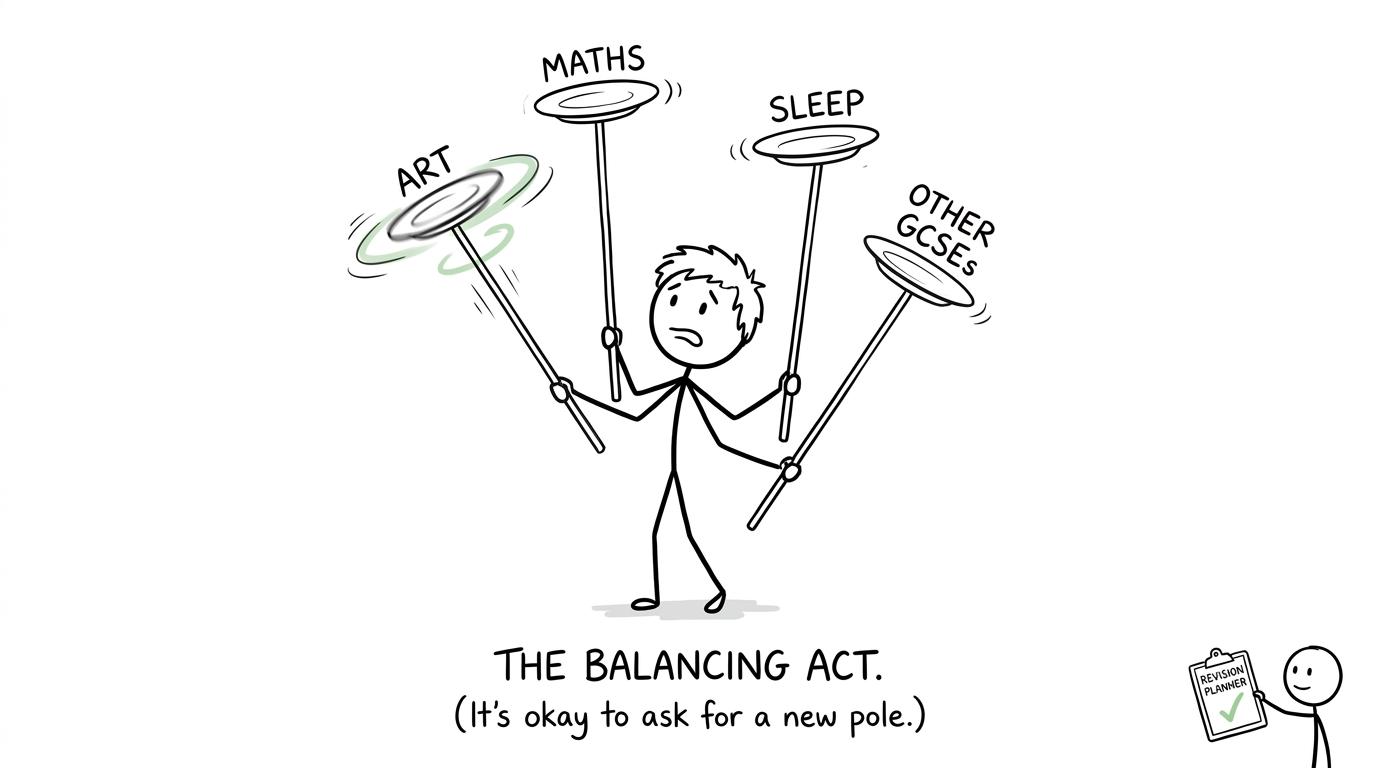 A student balances Art, maths, sleep and other GCSE subjects with help from a revision planner
Turn early confidence into a long runway
A peak is dangerous only when it is followed by exhaustion, neglect or endless alteration. Used properly, early confidence gives you room to improve calmly.
Diagnose rather than perform
Early in the revision cycle, you do not need to prove that you can complete everything perfectly. Use small tasks to find weaknesses while there is time to address them.
This is especially useful in maths. MathsGenie's guide to when to start GCSE past papers explains why shorter sections and topic questions can be more useful than repeatedly sitting complete papers too soon. Mark schemes and video solutions then turn mistakes into specific next actions.
Change the type of practice over time
Your work should evolve as the examination period approaches:
- Early phase: maintain Art techniques and diagnose maths gaps.
- Middle phase: refine relevant Art preparation and complete timed maths sections.
- Final phase: follow supervised Art arrangements and sit maths papers under realistic conditions.
If you are approaching the final month, use the GCSE one-month maths revision plan to organise lessons, practice questions and paper review without sacrificing every evening.
For Edexcel students, GCSE maths predicted papers can provide fresh exam-style practice near the examinations. They should supplement, not replace, real past papers and targeted topic work.
Signs that confidence is becoming burnout
Being confident is not the same as being overworked. Pay attention if you are:
- repeatedly changing work without a clear assessment reason;
- avoiding other subjects to make minor portfolio adjustments;
- losing interest in techniques you previously enjoyed;
- treating every free evening as an emergency Art session;
- sleeping less to maintain an impossible standard;
- feeling unable to stop because nothing looks finished enough.
If this pattern appears, speak to your teacher, tutor or another trusted adult. Ask for help separating essential actions from optional improvements. Rest is not evidence that you have stopped caring. It protects the judgement and concentration both creative and written assessments require.
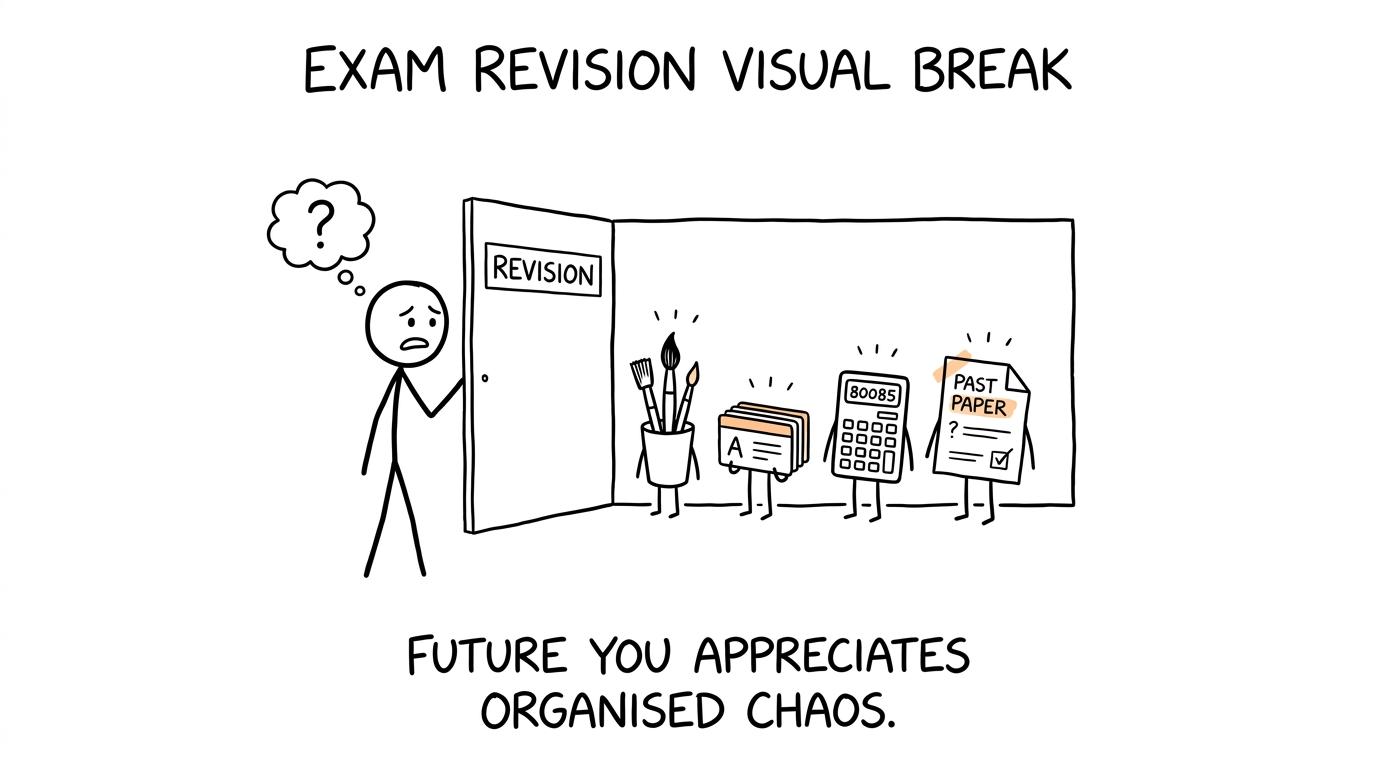 Art materials, flashcards, a calculator and a past paper wait in an unusually organised revision cupboard
Common mistakes when trying not to peak early
Starting the whole project again
A temporary dip in confidence does not prove that the original idea failed. Return to the assessment objectives and your teacher's feedback before making a major change.
Polishing only the final outcome
A beautiful outcome cannot substitute for clear development, refinement and recording. Consider the coherence of the complete submission rather than one image in isolation.
Confusing hours with progress
Long sessions can feel serious while producing little. Define the intended result before beginning: document an experiment, clarify a decision or maintain a particular technique.
Ignoring your board and school instructions
AQA, Pearson Edexcel, OCR and Eduqas use closely related assessment objectives, but administrative rules and terminology can differ. Your school's supervised dates may also occur before the main written-exam period. Follow the instructions given for your actual entry.
Leaving maths until Art is completely finished
There may never be a moment when creative work feels perfectly complete. Keep maths active throughout. Use revision lessons and practice questions now, then introduce papers progressively. The guide to using Edexcel GCSE maths past papers properly shows how marking, diagnosing and reattempting questions converts practice into marks.
Saving all pressure for the final evening
Last-minute intensity cannot replace months of sensible contact. If anxiety rises immediately before a maths paper, use a calm GCSE maths night-before plan rather than attempting to relearn the whole specification.
Confidence should become consistency
You do not need to preserve exactly how confident you felt months earlier. Feelings change with workload, feedback and fatigue. What you can preserve is the evidence beneath that confidence: understood intentions, practised techniques, organised records and a clear view of the assessment objectives.
Keep Art alive through brief, purposeful contact. Let your teacher guide any development of assessed work. Then give maths the regular practice it needs.
MathsGenie makes that side of the balance simpler. Start with free revision lessons, answer topic-based practice questions, check your work with mark schemes and video solutions, then build towards mini tests, past papers and predicted papers. Early confidence does not have to be a peak. With a steady plan, it becomes a platform.