

Opening A-Level Results Alone or With Friends?
Opening A-Level results alone or with friends? Compare both choices and make a calm results day plan that protects your emotions and puts you first.
The envelope is small. The feelings around it may not be. If you are considering opening A-Level results alone or with friends, there is no universally correct choice. Open them privately if you need space to process; open them with others if calm company helps you feel secure. A hybrid plan, checking privately, then meeting friends, often gives you both.
For GCSE students, this decision may feel distant. Yet learning to plan for uncertainty now is useful preparation for GCSE results, sixth form and eventually A-Level results day.
Your results day checklist
Before the morning arrives:
- decide who, if anyone, should be beside you;
- ask your school or college how and when results will be available;
- choose one calm person you can contact;
- agree that nobody will share your grades without permission;
- write down your next practical step for each possible outcome;
- avoid making social media part of the first five minutes.
In 2026, A-Level results day in England, Wales and Northern Ireland is Thursday 13 August. Collection arrangements vary, so check directly with your school or college. If you applied to university, UCAS Hub shows the status of your application rather than a subject-by-subject results slip.
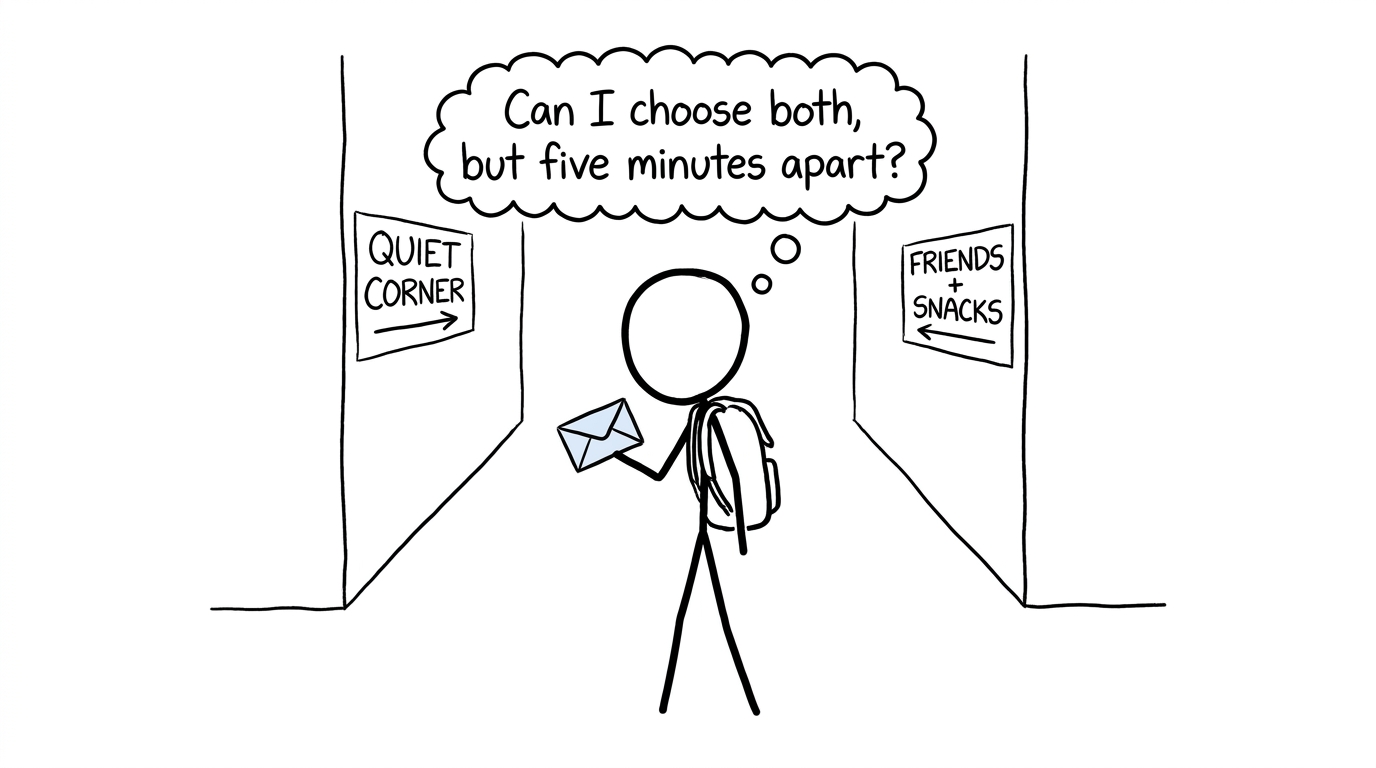 A student choosing between a quiet corner and opening results with friends
Opening A-Level results alone
Privacy gives you control. You can read every grade, pause and decide what it means before reacting publicly. This may suit you if you compare yourself quickly, dislike being watched or need silence when emotions are intense.
The disadvantage is that a disappointing result can feel heavier without immediate reassurance. Opening results privately should not mean becoming unreachable. Arrange for a parent, teacher or trusted friend to be available afterwards.
Opening results with friends or family
Supportive company can make the moment less intimidating. Someone steady can help you read the information carefully, celebrate with you or find a member of staff if you need advice.
But a group can turn several private moments into one public comparison. One person may be celebrating while another is processing disappointment. If you choose company, pick people who will not demand an instant reaction or ask for every grade.
A useful boundary is simple: “I want you there, but please let me read everything before we talk.”
The hybrid option
You do not have to choose between complete solitude and a crowded hall. You might collect results with friends, open the envelope in a quiet space, then return when ready. If results arrive online, you could check them privately before calling someone.
Good A-Level results day emotional prep is less about predicting your reaction and more about giving yourself options. Your first feeling is information, not a final judgement on your future.
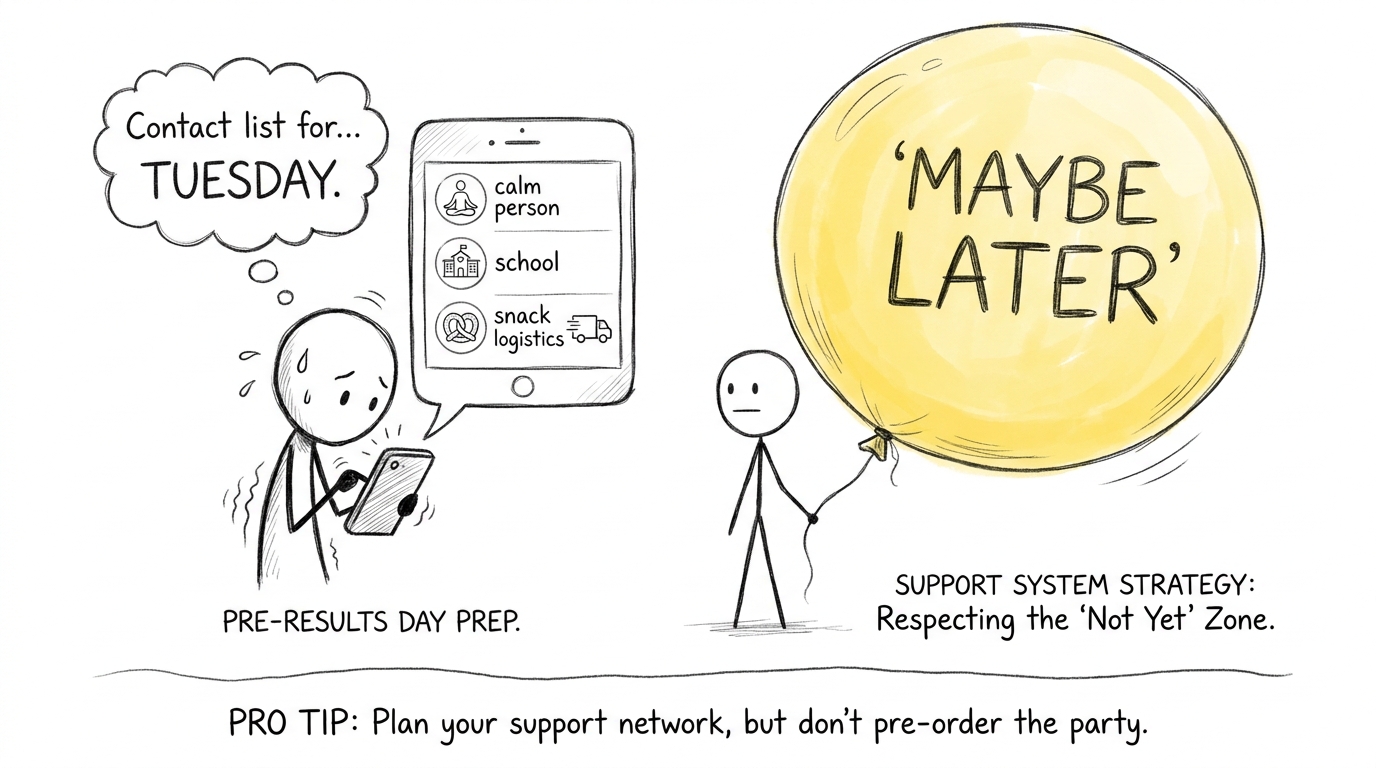 A student preparing calm contacts while a friend saves the celebration balloon for later
What GCSE students can learn now
Results-day confidence begins before results day. A realistic revision process gives you evidence that you prepared thoughtfully, even when the final outcome remains uncertain.
Start with the GCSE Maths Revision hub, use GCSE predicted papers as practice rather than prophecy, and build confidence through Edexcel GCSE Maths mini tests. The GCSE maths night-before plan can also help you separate useful preparation from anxious overworking.
If A-Level Maths is part of your future, explore the A-Level Maths revision resources and AS Level past papers when the time is right.
Common mistakes to avoid
- Choosing a group because everyone else is doing it.
- Allowing friends to photograph or announce your grades.
- Checking other people’s results before processing your own.
- Treating one unexpected grade as proof that every route is closed.
- Having no support contact or next-step plan.
Choose the setting that protects you
Results are important, but the opening ceremony does not need to become a performance. Choose privacy, company or a mixture of both according to what helps you think clearly.
Until then, keep the focus on what you can control. MathsGenie offers free revision lessons, practice questions, past papers, predicted papers, mini tests, mark schemes and video solutions. Use the resources gently and consistently, then let results day be a moment you meet with a plan, not one you have to fear.











