Moving Sets GCSE Religious Studies: Does It Matter?
Moving sets GCSE Religious Studies does not directly decide your grade. See what may change, what stays fixed, and how to adapt your revision calmly now.
A set change can feel like a judgement arriving before the exam has even begun. Move up and expectations suddenly seem heavier. Move down and it is easy to assume that your target grade has moved with you.
The important answer is reassuring: moving sets GCSE Religious Studies does not directly determine your final grade. GCSE Religious Studies is untiered, so students following the same qualification route normally sit papers covering the same specification and have access to the full range of grades. Your examined work is marked against the exam board's mark scheme, not against the name of your class.
A move can still affect your learning indirectly. The pace, topics, teaching style and support may change. That means the right response is not to panic about the label, but to check what has changed and close any gaps deliberately.
Your set-change checklist
After moving class, confirm these details as soon as possible:
- your exam board: AQA, Edexcel, OCR or Eduqas
- the exact specification and entry code
- whether you are taking the full course or short course
- the religions, themes and optional routes your school has selected
- which topics your new class has already completed
- which topics your previous class covered in a different order
- the question structures and timings you must practise
- where you can obtain missed notes, assessments and teacher feedback
These questions matter more than whether the new class is informally called a top, middle or lower set.
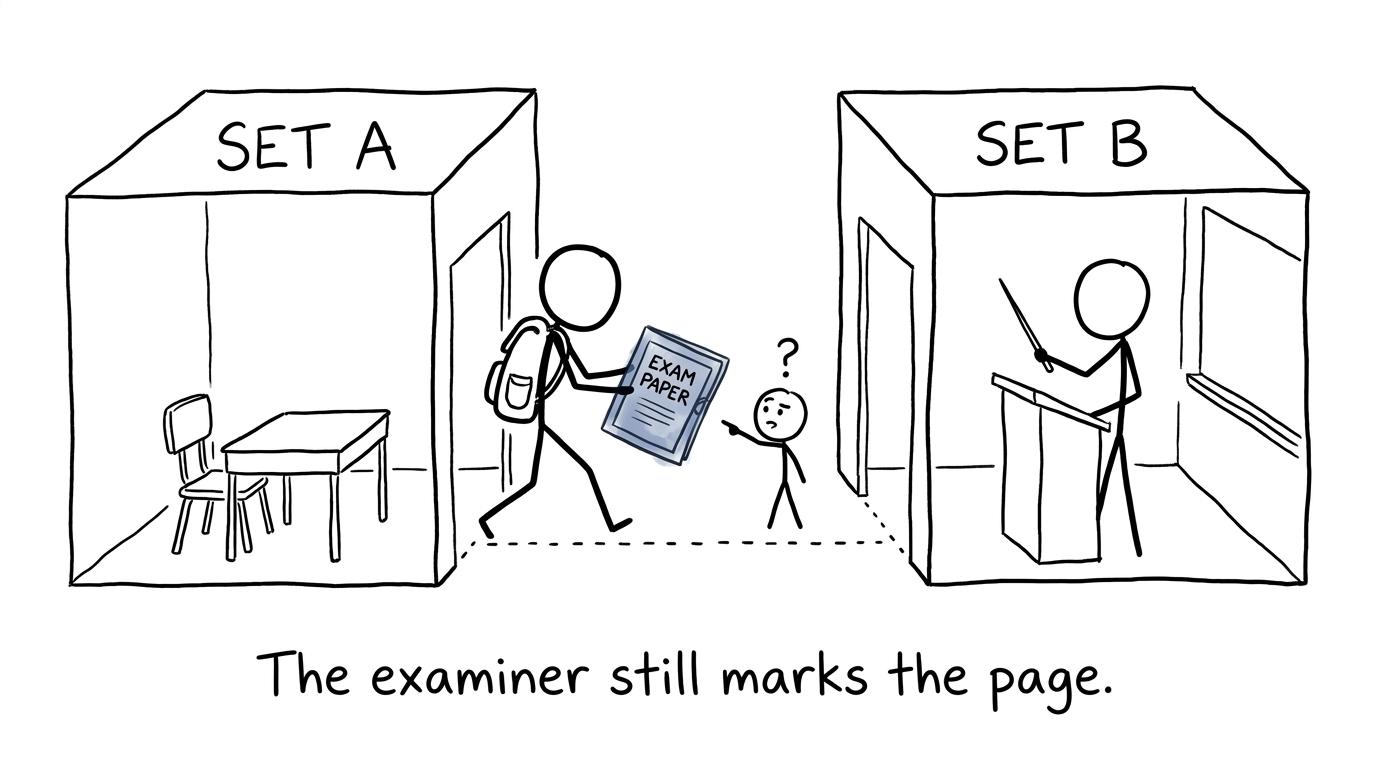 A student changes classroom while the examiner still focuses on the exam paper
Does moving sets change your GCSE Religious Studies grade?
Not by itself. Religious Studies GCSEs are untiered. Unlike GCSE maths, there is no foundation paper with a restricted grade range and a separate higher paper with a higher ceiling. Students entered for the same Religious Studies specification route are assessed through the relevant external examinations.
The set name does not appear in the mark scheme. Nor does it create a maximum grade. Examiners award marks for the knowledge, analysis and evaluation shown in your answers.
Across regulated GCSE Religious Studies qualifications, the central assessment objectives are:
- AO1: demonstrating knowledge and understanding of religion and belief
- AO2: analysing and evaluating aspects of religion and belief
Each objective carries 50%50\%50% of the subject assessment. In practical terms, memorising teachings without learning to evaluate them leaves a major part of the qualification underdeveloped. Equally, a thoughtful opinion without accurate religious knowledge and sources will not satisfy the whole mark scheme.
Your final result therefore depends on the marks earned across the components in your entry, subject to that year's grade boundaries. A teacher's set decision or predicted grade may influence the support you receive, but it does not replace the evidence in your examination scripts.
What can genuinely change after a set move?
The formal grade range usually stays the same. Your daily learning environment may not.
Teaching pace and depth
A new class may move through material more quickly or spend longer consolidating key beliefs. Faster is not automatically better, and slower is not automatically limiting. What matters is whether you learn the required specification content and can apply it under examination conditions.
If you move up, avoid assuming that everyone else understands every reference or quotation. Ask when something is unfamiliar. If you move down, do not interpret additional explanation as a ceiling on your ambition. Use the extra consolidation to make your AO1 knowledge more precise, then stretch your AO2 evaluation independently.
Topic order and missing content
This is often the most important practical issue. One class might study relationships and families before peace and conflict, while another does the reverse. Moving between them can create an accidental gap or cause you to repeat a unit.
Request a topic list from both classes. Mark each item as secure, partly secure or not yet covered. This is the same diagnostic habit that makes the MathsGenie GCSE maths revision hub effective: identify the precise gap before choosing the resource.
Religions, themes or specification routes
Do not assume two Religious Studies classes are following identical options simply because they share an exam board. Specifications can include different religions, themes, papers or routes. Full-course and short-course entries are also different qualifications.
If the move takes you into a class studying different options, speak to your teacher or examinations officer promptly. Ask what you will actually be entered for and how any missing teaching will be provided. The issue is not the set level; it is alignment between your lessons and your examination entry.
Question format and classroom technique
Teachers sometimes use different paragraph structures or acronyms. These can organise thinking, but the acronym itself earns no marks. The examiner rewards what the answer demonstrates.
Check current materials for your exact specification. For example, AQA Religious Studies A adopted a 111, 111, 444, 666, 121212 mark question sequence from summer 202620262026. Other boards and specifications use different structures. An old worksheet or another class's technique may therefore be useful for content but mismatched to your paper format.
How to adapt without restarting the whole course
A set move can tempt you to copy every new note from the beginning. That feels thorough, but it often consumes time without revealing what you can actually recall.
Use a shorter cycle:
- Audit: compare the specification with your folders and assessments.
- Learn: repair one missing belief, teaching, practice or theme.
- Recall: close the notes and retrieve the key ideas from memory.
- Apply: answer a question in your board's current format.
- Check: use a mark scheme or teacher feedback.
- Retest: return to the same weakness several days later.
This is not a promise that a class change will have no effect. It is a way to prevent the change from controlling your preparation.
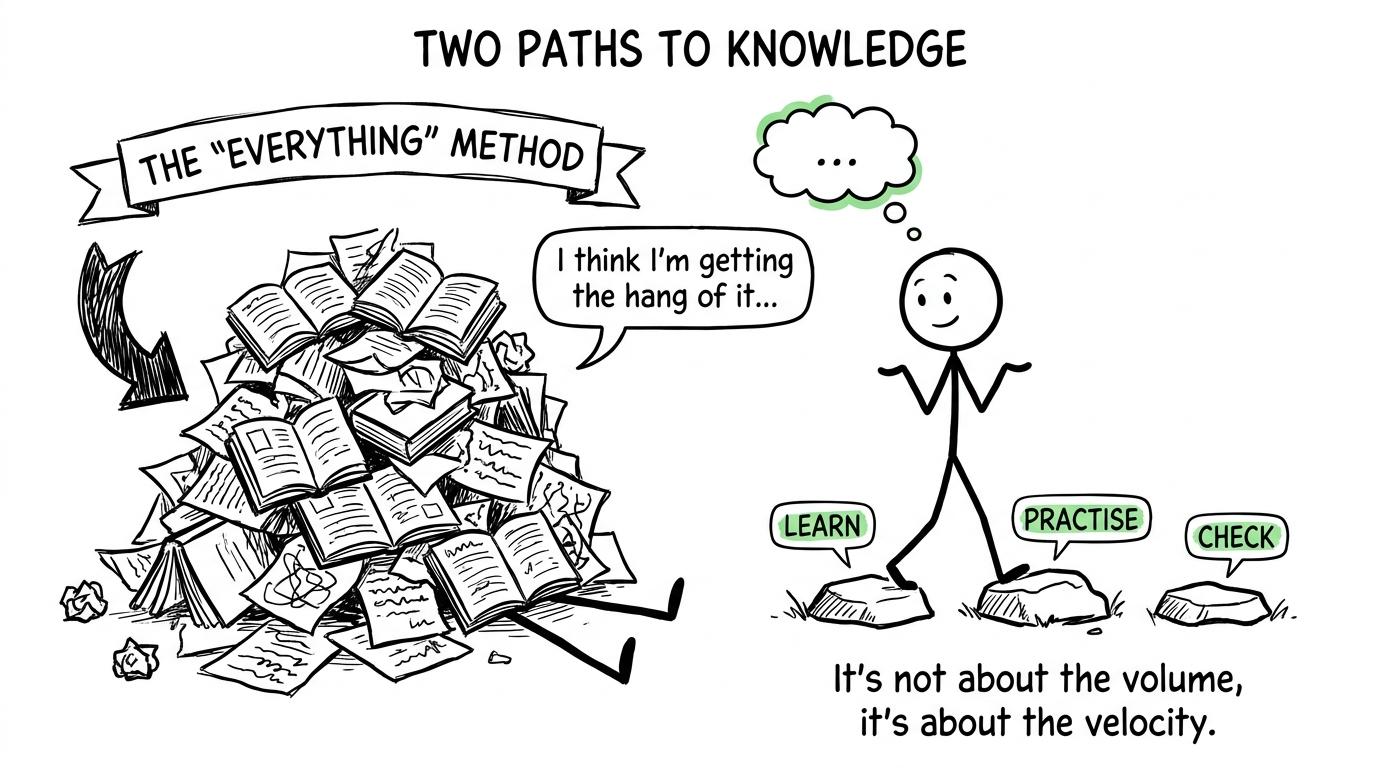 A student chooses a calm learn, practise and check revision route
Build a transition sheet
Keep one page containing four lists:
- content missed because the classes used different orders
- unfamiliar sources of wisdom and authority
- question types needing more practice
- actions agreed with your teacher
Make every entry specific. “Christianity” is too broad. “Different Christian views about divorce and the supporting sources” is something you can revise and test.
This resembles the marks-leak approach in MathsGenie's guide to finding your weakest GCSE topics. A useful diagnosis names the exact weakness rather than judging the whole subject.
Protect both AO1 and AO2
For AO1, check that you can accurately explain beliefs, practices, influences, similarities and differences. Build a manageable bank of relevant sources, but understand what each source supports rather than collecting quotations without context.
For AO2, practise reaching a justified conclusion. Consider different viewpoints, explain why an argument is strong or limited, and connect each point to the statement. Evaluation is not simply adding “I agree” to the final sentence.
When marking practice, investigate missing marks like a detective. Was the problem inaccurate knowledge, thin explanation, unsupported evaluation, poor timing or failure to answer the precise statement?
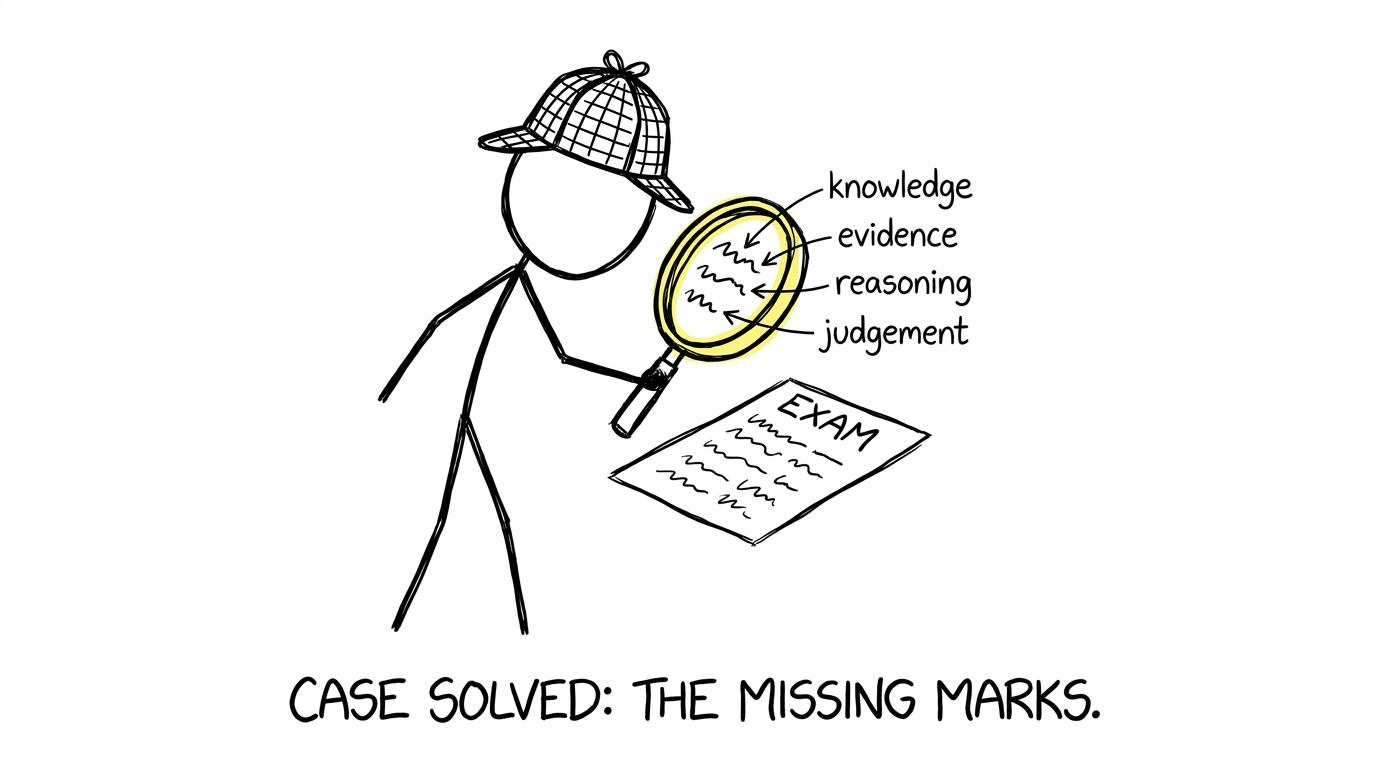 A student detective investigates the mystery of missing exam marks
Moving up a set: how to respond
Moving up may bring quicker lessons, more independent work or classmates who answer confidently. Confidence, however, is not the same as complete understanding.
Before each lesson, spend a few minutes recalling the previous topic. Afterwards, write down one uncertainty and resolve it while the lesson is still fresh. Begin timed questions early rather than waiting until you feel fully ready.
Most importantly, do not hide a gap to appear as though you belong. Asking a precise question is evidence that you are monitoring your learning. Your place in the class does not require instant perfection.
Moving down a set: how to protect your ambition
A downward move can feel more personal, particularly if it follows one difficult assessment. Treat it as information about what the school believes will help now, not as a permanent forecast of your grade.
Ask what evidence informed the decision and what improvement would look like. Then focus on controllable measures: recall accuracy, completion of practice, quality of evaluation and performance in timed assessments.
This is where Religious Studies differs sharply from tiered GCSE maths. In maths, changing tier can affect the grades available, as explained in MathsGenie's foundation and higher tier guide. In Religious Studies, the qualification is untiered. Moving to a differently named class does not itself impose a lower examination ceiling.
Balancing Religious Studies with GCSE maths revision
Students preparing for several GCSEs face a quieter problem: one unsettling event can consume revision time across every subject. A set move in Religious Studies should not derail the maths plan that was already working.
Use separate evidence for separate subjects. Your RS transition sheet should track missing themes and answer technique. Your maths plan should track topics, tier, paper performance and recurring errors.
MathsGenie provides free board-specific resources through the Edexcel GCSE maths revision collection and the wider GCSE hub. Revision lessons and practice questions can repair individual skills, while mini tests reveal whether the repair has held.
When you are ready for mixed practice, follow the principles in the guide to using GCSE maths past papers effectively. Start early enough for the feedback to change your revision; the GCSE past-paper timing guide explains how to build from short diagnostics towards complete timed papers.
Predicted papers can add fresh maths practice near the examination, but they should supplement rather than replace official past papers. MathsGenie's guide to predicted GCSE topics explains how to use predictions without treating them as guarantees.
Common mistakes after moving sets
Assuming the set label determines the grade
It does not. Your examination entry, specification knowledge and performance matter. Replace “What grade is this set?” with “What evidence is my next assessment testing?”
Failing to confirm the exact course
Exam board names are not enough. Confirm the specification, full or short course, religions, themes and route. A mismatch here is more significant than the class label.
Copying notes instead of testing recall
Neat notes can disguise weak memory. Use brief recall tasks and exam-format questions to discover what you can produce without prompts.
Ignoring content covered in a different order
Do not wait for a missing topic to reappear. Compare schemes of work immediately and agree on how gaps will be taught or revised.
Treating one assessment as a final verdict
A score is a snapshot. Study where marks were lost, make a focused correction and retest. The same principle underpins MathsGenie's calm GCSE night-before plan: fewer decisions, well-chosen practice and attention to repeated errors.
Using another exam board's answer structure blindly
AO1 and AO2 are shared foundations, but paper formats and mark tariffs differ. Practise with current materials for your exact board and specification.
Your next step
Moving sets can change the room, the pace and the people around you. It does not automatically change the grade available in GCSE Religious Studies. The decisive task is to preserve continuity: confirm your entry, identify content gaps, understand the current question format and keep practising both knowledge and evaluation.
Then protect the rest of your revision. Open the MathsGenie GCSE revision hub, choose your exam board and use the revision planner to turn weak topics into scheduled actions. Combine free revision lessons and practice questions with mini tests, past papers, mark schemes, video solutions and predicted papers.
A class label describes where you are taught today. It does not write the answers you will give on exam day.