

Managing Family Expectations on A-Level Results Day
Managing family expectations around A-level results starts with clear boundaries, a results-day plan and calm conversations about your next steps.
Results day can feel crowded before anyone enters the room. Alongside your own hopes, you may be carrying a parent's university ambitions, a relative's comparisons and questions you are not ready to answer. Managing family expectations around A-level results starts with one principle: the results belong to you. You can appreciate your family's concern without giving them control of your reaction or your next decision.
For GCSE students, this matters now too. The habits you build around grades 999-111, setting boundaries, asking for practical support and separating results from self-worth, will remain useful at sixth form and beyond.
A calm results-day checklist
Before the day, decide:
- where and how you will receive your results;
- who you want beside you;
- when extended family may be told;
- which teacher or adviser you can contact;
- what you will say if somebody asks an intrusive question;
- what your realistic next options are.
In 2026, A-level results day in England, Wales and Northern Ireland is Thursday 13 August. Your school or college will provide your grades, while UCAS Hub shows the status of a university application. Check your centre's arrangements rather than relying on somebody else's results-day routine.
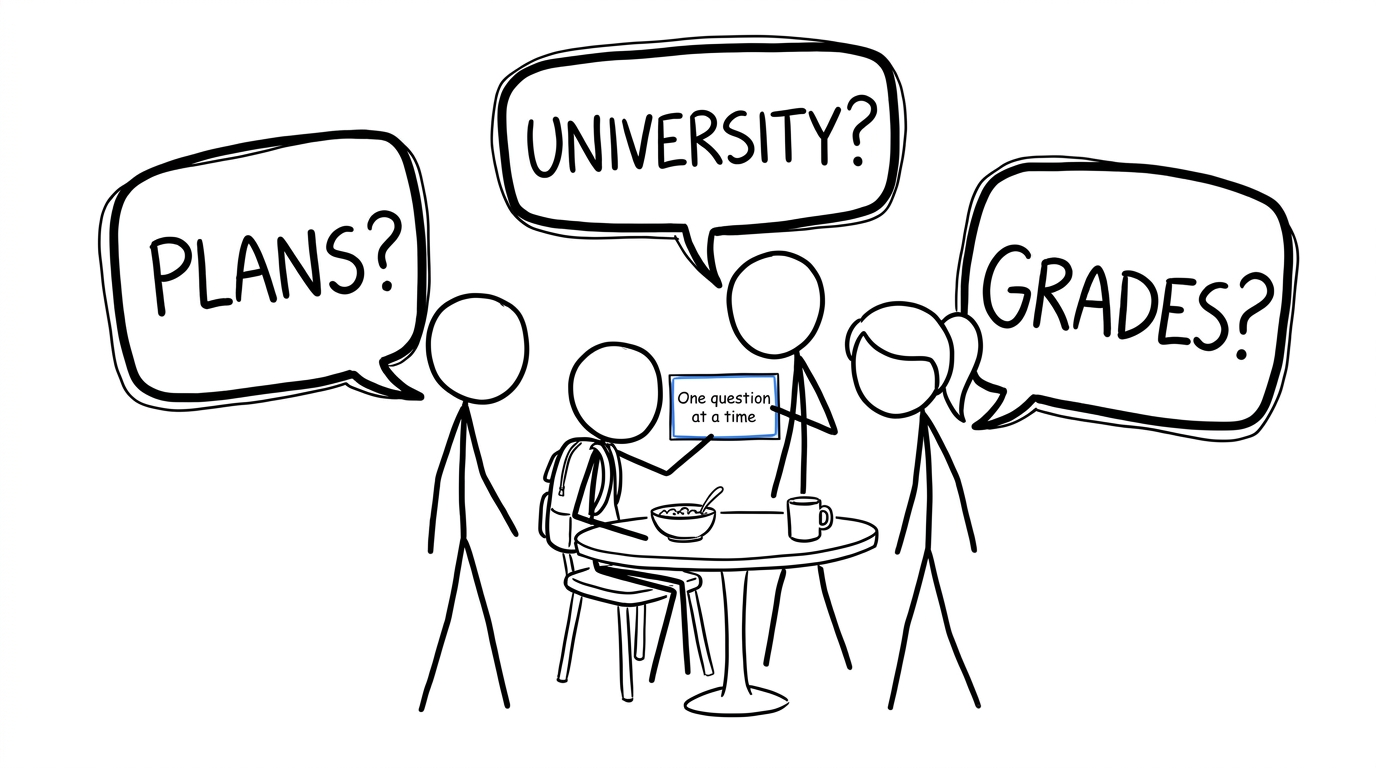 A student asking an enthusiastic family to take results-day questions one at a time
Tips for managing family pressure on A-level results
Tell people what support actually looks like
Families sometimes apply pressure because they do not know what else to do. Replace vague requests such as “Please stop worrying” with a specific instruction:
“Please let me open my results privately. I will talk to you when I have checked my options.”
You might ask a parent to drive you to college, make notes while you telephone an admissions team or keep the family group chat quiet. This turns nervous energy into something useful.
Agree a communication boundary beforehand
Choose who may share your results and when. You do not owe every relative an immediate announcement. A simple response is enough:
“I am taking time to understand the result before discussing it.”
That is not rude. It prevents you from having the same emotional conversation repeatedly while important decisions may still need your attention.
Separate the grade from the story around it
A grade is information about assessed work under particular conditions. It is not a complete measure of intelligence, effort or future potential. Families can accidentally turn one result into a sweeping story: “You have always been the academic one” or “Everyone expected more.”
Return to facts. What grades did you receive? Has an offer been confirmed? Do you need advice from your school or college? What options are genuinely available? Deal with those questions before debating what the result supposedly says about your future.
Prepare more than one acceptable route
Pressure grows when everybody believes there is only one successful outcome. Before results day, write down a preferred route and several alternatives. These could include an insurance choice, Clearing, a different course, an apprenticeship, a gap year or a resit.
If you believe a marking error may have occurred, speak to your school or college promptly. For GCSE, AS and A-level qualifications, the centre normally requests a review of marking from the exam board. Do not let a relative's anger rush you into assuming that a disappointing grade must be incorrect.
Ask an independent adult to join the conversation
If discussions at home become circular, talk to a teacher, tutor, head of year or careers adviser. They can clarify realistic options without the emotional history of a family conversation. NHS guidance also recommends talking to somebody you trust and seeking further help when stress persists or interferes with everyday life.
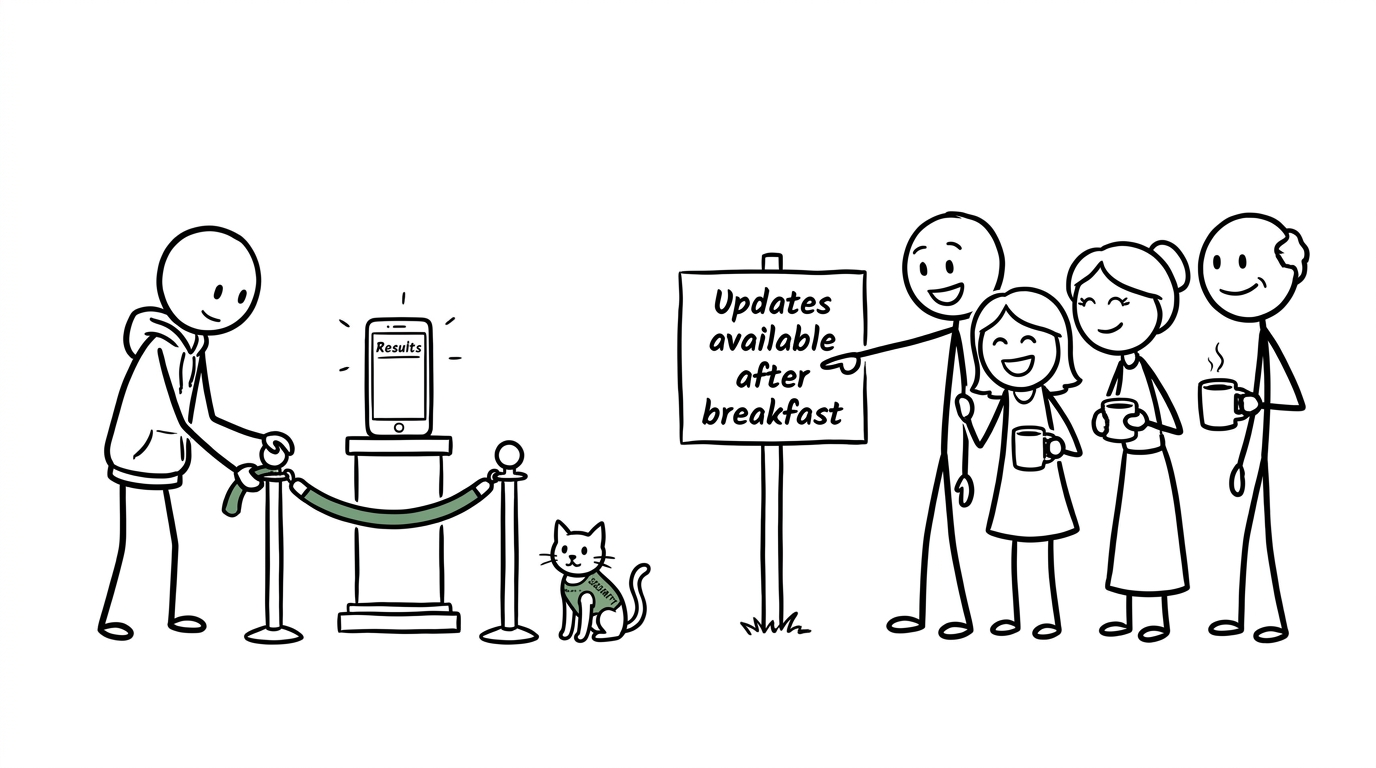 A tiny cat guarding a student's sensible results-day communication boundary
Focus on controllable preparation
GCSE students cannot control future grade boundaries or relatives' reactions. You can control today's practice. Start with the GCSE maths revision hub, then combine topic lessons with questions, mark schemes and video solutions. Use GCSE predicted papers as practice rather than prophecy, alongside the broader collection of mini tests and revision resources.
Parents who want to help can read the MathsGenie guide to supporting GCSE maths revision without nagging. It encourages calm routines and evidence of progress rather than constant questioning.
If you later take A-level maths, the Edexcel A-level maths revision hub and A-level maths past papers can help you build the same steady routine.
Common mistakes when handling family expectations
- Waiting until results morning to set boundaries. Agree privacy and communication plans earlier.
- Promising a particular grade. Talk about preparation and possible outcomes instead.
- Comparing yourself with siblings or cousins. Their route does not determine your options.
- Making a major decision immediately. Collect accurate information and speak to qualified staff first.
- Hiding severe stress. Tell a trusted adult. If anxiety is persistent or affecting daily life, speak to your GP or another appropriate support service.
Your result is a decision point, not a verdict
Family expectations often come from care mixed with fear. You can recognise that care while refusing the idea that one envelope defines you. Set boundaries, establish a practical plan and give yourself time to react before explaining anything to relatives.
For now, make progress quieter and more manageable. Use MathsGenie's free revision lessons, practice questions, past papers, predicted papers, mini tests, mark schemes and video solutions to focus on the work you can control: one topic and one honest correction at a time.











