

GCSE Results Day Backup Plan: What to Do Next
GCSE results day backup plan: prepare for every grade, compare sixth-form options, understand reviews and plan a calm route into maths resits now.
Results day can feel as though several years of work are being compressed into one envelope. Yet the most useful preparation is not predicting every grade. It is deciding what you will do next in several possible situations. A GCSE results day backup plan gives you clear actions for grades above, at or below your expectations, especially when maths affects sixth-form, college or apprenticeship entry.
For the June 2026 exam series, GCSE results are released to candidates on Thursday 20 August 2026. Your school decides how and when you receive them, so check its collection or online-access arrangements beforehand.
Your GCSE backup plan checklist
Before results day:
- write down the exact entry requirements for your preferred course;
- identify one alternative course or provider;
- save the relevant admissions and exams-office contact details;
- decide which adult can help you make calls or compare options;
- note any enrolment instructions and deadlines;
- prepare questions about resits and reviews of marking;
- keep revising lightly if a maths resit is a realistic possibility.
This is not pessimism. It is the academic version of carrying an umbrella: preparation does not make rain more likely.
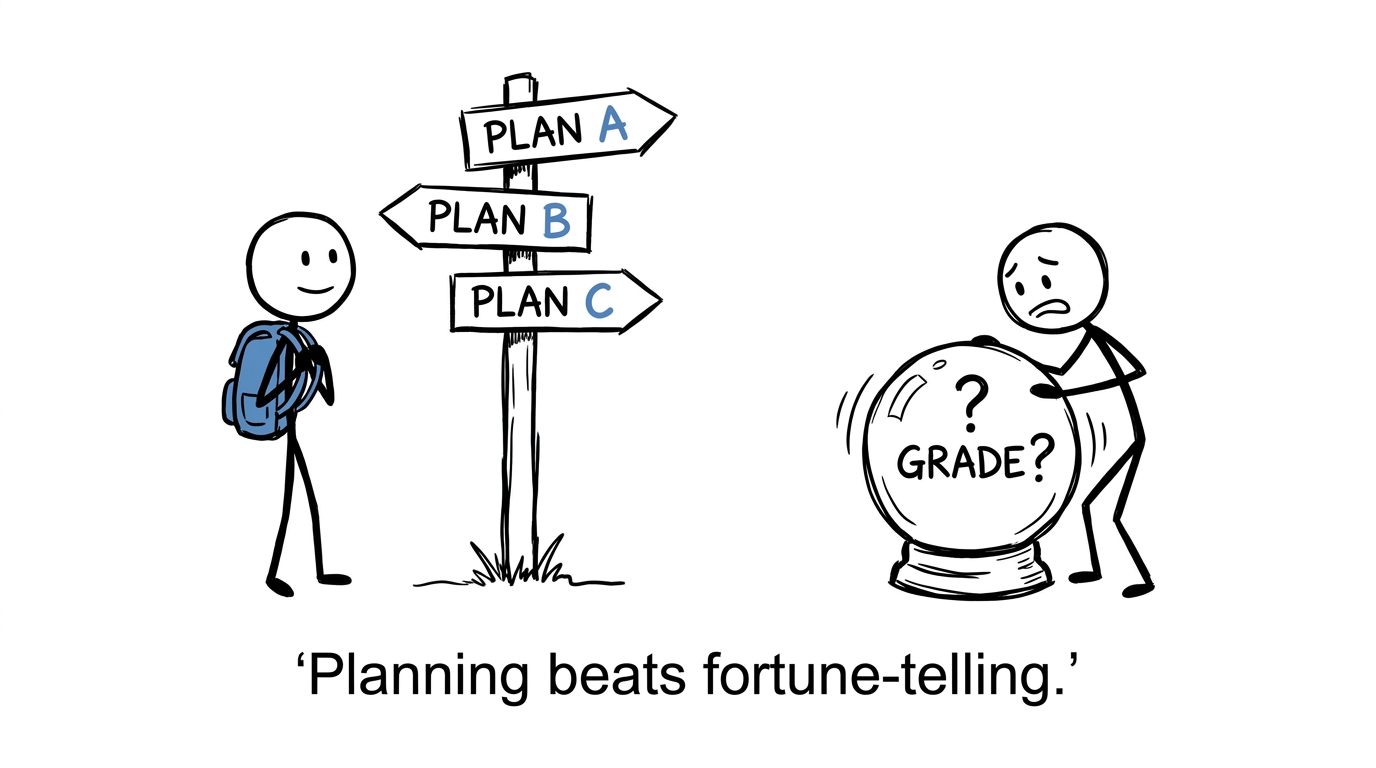 A student chooses between sensible plans while someone else attempts to predict grades
Scenario A: your grades meet the requirements
This is the simplest outcome, but it still requires action. Read your results carefully, compare them with the written offer conditions and complete the provider's enrolment process.
If you plan to take A Level Maths, meeting the entry requirement is only the beginning. GCSE algebra, graphs, trigonometry and number skills quickly become working tools rather than isolated topics. Use the summer to revisit weak areas through the free GCSE Maths revision hub, then preview the structure of A Level Maths revision.
Do not assume every sixth form uses the same requirement. Providers set their own course-entry rules, and A Level Maths may require a higher maths grade than the general sixth-form entry threshold. Check the condition attached to your actual offer.
Scenario B: you miss one condition narrowly
A missed condition does not automatically mean a rejected place. Contact the sixth form, college or apprenticeship provider promptly and give them four clear pieces of information:
- your name and application details;
- the course you hoped to join;
- the required grade;
- the grade you received.
Ask whether your place can still be confirmed, whether a different subject combination is available, or whether you could transfer to another programme. Avoid beginning the conversation with an apology or an assumption that the answer is no. You are requesting an accurate decision based on the provider's current capacity and rules.
If the result appears seriously out of line with your previous work, speak to your school's exams officer. Your school can request access to your script and may recommend a clerical re-check or review of marking. A reviewed mark can rise, fall or remain unchanged, and fees may apply if the grade does not change. For the June 2026 series, the common JCQ deadline for reviews of results is 24 September 2026, but your school may set an earlier internal deadline.
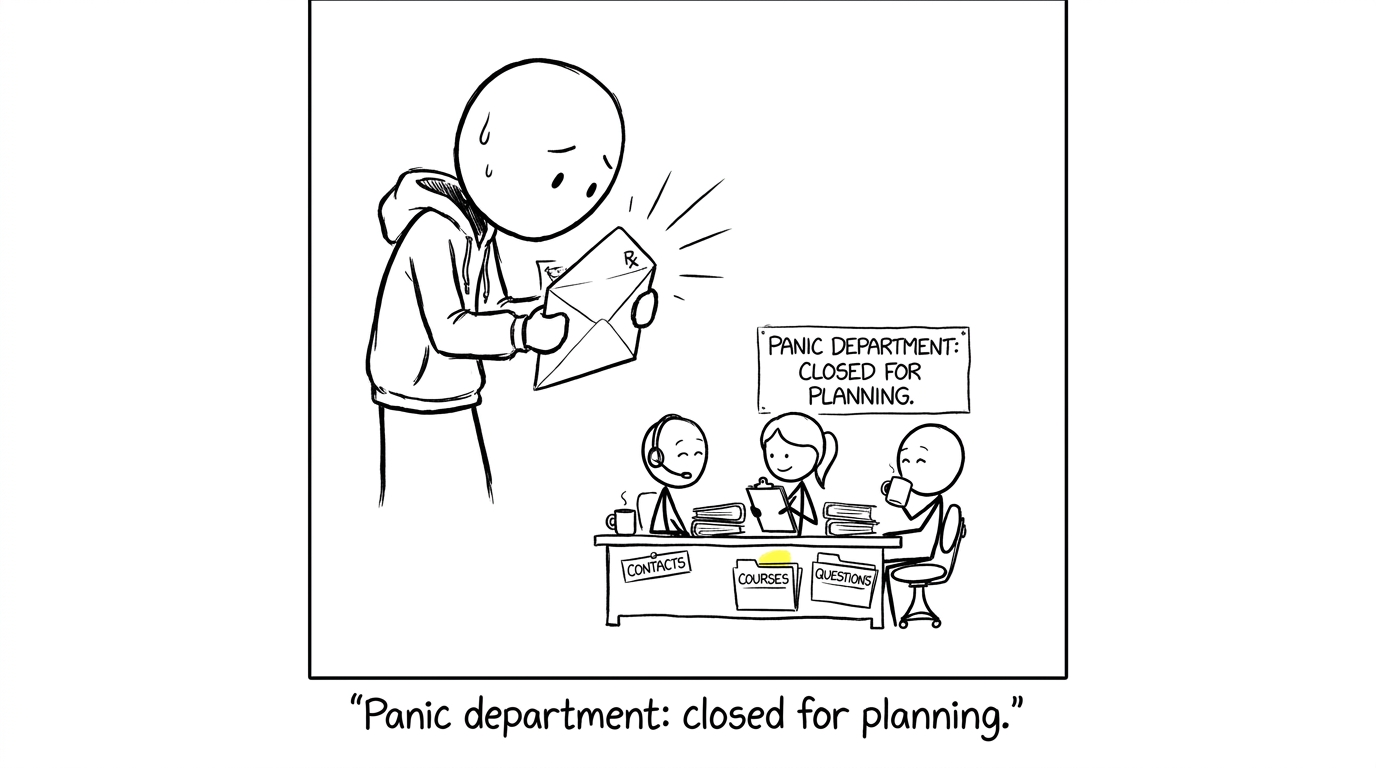 A remarkably calm emergency planning team waits behind a student opening an envelope
Scenario C: you receive below grade 444 in maths
In England, students on relevant 16-to-19 study programmes who do not hold grade 444 or above in GCSE Maths must continue working towards an approved maths qualification. The exact route depends on your prior grade, programme and provider; it is not sensible to assume that everyone follows an identical resit timetable.
Ask your new school or college:
- which maths qualification you will take;
- whether you will sit GCSE Maths in November or the following summer;
- which tier and exam board you will use;
- when lessons begin;
- whether the timetable affects your preferred course.
Then treat the resit as a defined project, not a judgement about your ability. Start with what happens after an unsuccessful GCSE Maths result, choose your board through the GCSE Maths resources, and diagnose gaps with target-grade mini tests.
Scenario D: your grades change your preferred route
Sometimes the result is not disastrous, but it changes what is realistic. You may need to switch subjects, choose a different level of course or consider another provider.
Compare routes using the same questions:
- Does this option lead towards the career or later course I want?
- Can I progress after one successful year?
- Is additional maths support included?
- What are the attendance, assessment and resit expectations?
- When must I accept the place?
A different route is a detour, not proof that the destination has disappeared. Ask advisers to explain progression rather than simply naming the next available course.
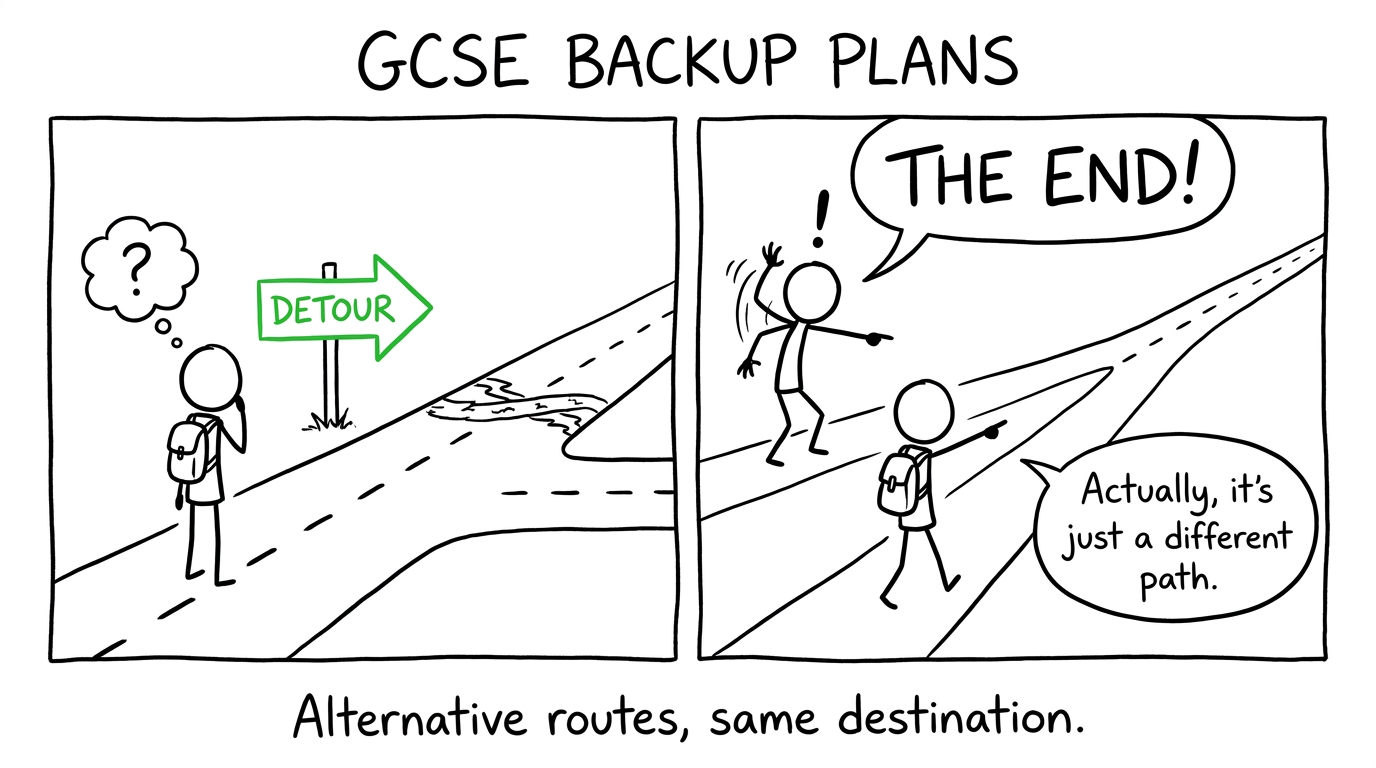 A small results-day detour reconnects with the road towards the same destination
Keep revision useful before results arrive
If maths is the grade most likely to affect your next step, keep your skills warm without recreating exam season. Complete a short test, mark it and revisit one weak topic. The Edexcel GCSE Maths revision pathway combines lessons and questions, while the wider GCSE resources collection includes mini tests and shorter papers.
Predicted papers can support preparation for an upcoming sitting, but they cannot guarantee its content. Use GCSE predicted papers alongside topic practice and official-style past papers, not as a replacement for broad revision.
Common GCSE results day mistakes
Checking grades without checking conditions: A result only becomes actionable when compared with your specific offer.
Waiting too long to contact a provider: Admissions teams may be handling many cases. Call promptly when a grade affects enrolment.
Assuming a review means a higher grade: A review checks whether marking was applied correctly; the outcome can move in either direction or stay unchanged.
Choosing an alternative in a panic: Ask where the course leads, how transfer works and whether it supports your longer-term aim.
Stopping maths completely: If a resit or A Level Maths is likely, a small weekly routine makes September considerably easier.
Build the plan before you need it
Results day feels powerful because it contains information you cannot yet see. A backup plan changes the balance. You may not control the grade, but you can control the questions, contacts and next actions waiting beside it.
Use MathsGenie's free revision lessons, practice questions, mark schemes, video solutions, mini tests, past papers and predicted papers to prepare for whichever route appears. If a resit becomes necessary, begin with the GCSE Maths resit and next-steps guide. If sixth-form maths is next, explore the A Level Maths revision hub and make the transition with confidence.











