GCSE Resit Cost: Maths and English Fees
GCSE resit cost explained for Maths and English. Compare exam board fees, centre charges, private candidate prices and when college resits may be free.
A disappointing result can make the next decision feel urgent: find a centre, pay whatever is quoted and move on. But the GCSE resit cost is not one standard national price. Private candidates can use £150-£350 per subject as an indicative budget for Maths or English Language, although individual quotes vary. Treat this as a starting point, not a guaranteed price. (liftcollege.co.uk)
Your school or college may provide a funded route instead. Before paying privately, ask whether it will enter you and request a complete written quote if charges apply. Eligible students on funded programmes in England often do not pay personally for scheduled entries. (gov.uk)
GCSE resit cost at a glance
Before booking, check:
- whether your school or college will enter you
- the total fee, including board and centre charges
- whether every paper and required English Language arrangement is included
- the centre's deadline and late fees
- cancellation, transfer and refund policies
| Resit route | Indicative student cost | What to check |
|---|---|---|
| Current school | Sometimes free; local charges may apply | Whether former pupils can enter |
| Funded college programme | Often free for eligible students | Funding and entry conditions |
| Private exam centre | Around £150-£350 per subject | Whether every charge is included |
| Late private entry | Standard fee plus possible supplements | Final booking deadline |
These are planning guides. Centres set their own administration charges, while funded entry depends on eligibility and applicable conditions. (aqa.org.uk)
What makes up GCSE resit fees?
A private candidate's bill usually contains the exam board entry fee and a centre administration charge. Published board fees therefore do not necessarily show what you will pay. Pearson, AQA and OCR explain that centres may charge additional administration fees. (support.pearson.com)
The board fee covers qualification entry. The centre handles responsibilities such as checking identity, submitting entries, providing examination facilities and communicating results. A centre may quote one inclusive price or list separate charges. (aqa.org.uk)
Ask whether the total includes:
- the board entry and all written papers
- invigilation, room costs and administration
- access arrangement assessment or administration, where relevant
- the English spoken language component, if required
- certificates, postage and VAT, if applicable
Check each item rather than assuming every centre offers identical services. Also ask how results and certificates are supplied: some centres require collection rather than postage. A cheaper headline price is only useful when you understand the complete arrangement. (excelcentres.co.uk)
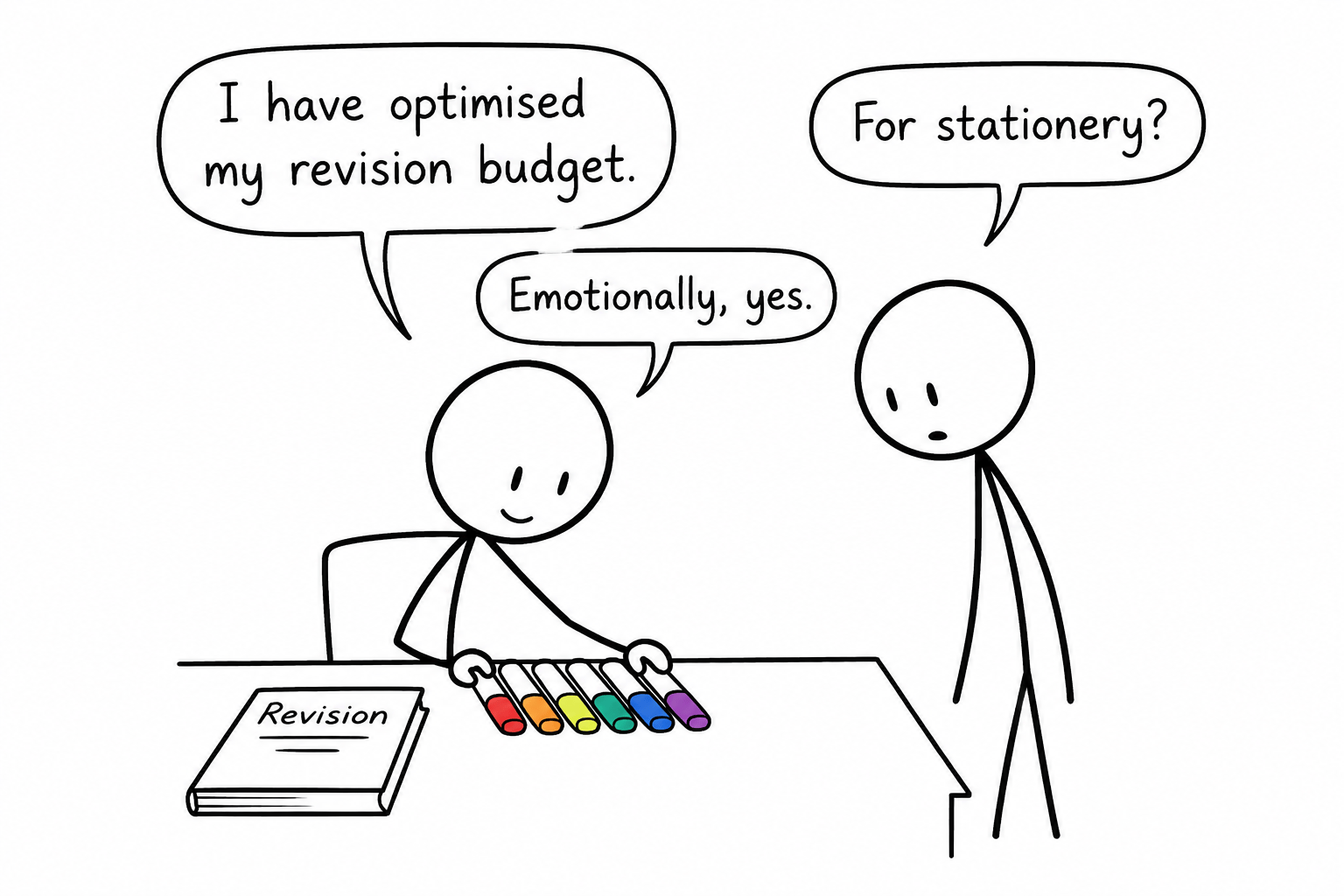 XKCD-style comic of a student optimising a revision budget by arranging highlighters
Comparing private candidate exam fees
Request quotes from two or three centres using the same details: subject, exam board, specification code, Maths tier, examination series and access requirements. AQA also asks candidates for identification and any previously issued candidate identifiers. (aqa.org.uk)
For both subjects, the indicative combined budget is £300-£700, before travel, tuition or late charges. This simply doubles the per-subject guide; your actual quote may differ.
Revision need not add another bill. MathsGenie's free GCSE Maths revision resources provide board-specific materials, questions and past papers. (mathsgenie.co.uk)
When are GCSE Maths and English resits free?
Ask your current institution first. In England, the maths and English condition of funding requires suitable continued study for students on relevant programmes who have not achieved the required standard. The detailed route depends on previous attainment, programme and exemptions. (gov.uk)
This is a study requirement, rather than an automatic instruction to sit the next examination. Discuss readiness and entry timing with your college. (mathsgenie.co.uk)
Eligible students on funded programmes commonly receive teaching and scheduled entry without paying personally. However, attendance conditions, missed examinations and optional grade improvements can affect charges. Former students and adults should ask which arrangements apply to them. (gov.uk)
Ask the examinations office whether your programme and entry are funded, which specification you will take, and whether attendance requirements apply. For autumn planning, use the November GCSE resits guide, then confirm your centre's arrangements. (mathsgenie.co.uk)
Why timing changes the price
Late or very late entry fees may apply after standard deadlines. Centres can also set earlier internal deadlines, so the board's published date is not necessarily your booking deadline. Contact the examinations office early. (aqa.org.uk)
Before paying, confirm the qualification code and Maths tier. Then select the matching materials through GCSE Maths revision by exam board. This keeps your preparation aligned with your entry. (mathsgenie.co.uk)
Costs that are easy to overlook
Build travel for every paper into your budget, alongside any tuition and time away from work. These personal costs can make two similar centre quotes feel quite different.
If you previously received extra time or another access arrangement, tell the new centre immediately. Ask what evidence it needs, whether assessment is required and whether any additional charge applies. Do not assume previous arrangements transfer automatically. (aqa.org.uk)
For English Language, explain whether you have completed the spoken language endorsement. Ask how the centre will handle it and what its fee includes. (mathsgenie.co.uk)
Keep revision costs under control
Once your entry is secure, make preparation manageable. Identify weak topics, answer questions independently and use marking to decide what needs another attempt.
MathsGenie's GCSE Maths revision hub brings together lessons, topic questions, mini tests, past papers and mark schemes. Its Edexcel predicted papers provide additional practice for students taking that specification. (mathsgenie.co.uk)
Use the GCSE Maths revision timetable guide to organise a repeatable routine. Leave time for corrections and revisiting mistakes, rather than filling every session with another paper. (mathsgenie.co.uk)
Common GCSE resit fee mistakes
- Comparing incomplete quotes: ask every centre for the total payable, including administration.
- Paying before checking funding: speak to your school or college first.
- Missing the centre's deadline: record its internal date, rather than relying solely on the board's deadline.
- Booking without checking details: confirm the specification, examination series and Maths tier before payment.
- Assuming a refund is available: request written cancellation and withdrawal terms.
Board guidance confirms that additional charges, internal deadlines and refund restrictions can affect private entries. (aqa.org.uk)
Make the resit count
A clear budget removes one uncertainty. Start with your institution, compare complete quotes if you need a private centre, and confirm the correct entry before paying.
Then give each revision session a specific purpose: understand a method, practise a weakness or correct lost marks. Begin with MathsGenie's free lessons and questions, then build towards past papers, predicted papers, mark schemes and video support. Effective preparation can remain affordable. (mathsgenie.co.uk)