GCSE Physics Marks per Grade: 2025 Boundaries
GCSE physics marks per grade: compare the latest confirmed AQA and Edexcel raw mark thresholds by tier and check your result accurately on results day.
Results day can turn one small number into a large question: what grade does my mark actually mean? The answer comes from the GCSE physics marks per grade published for your exam board, tier and exam series. There is no permanent mark for a grade 999, 777 or 444.
The latest confirmed summer boundaries are from June 202520252025. For both AQA and Edexcel GCSE Physics, the qualification was worth 200200200 raw marks. The exact thresholds are below.
GCSE Physics grade threshold checklist
Before comparing your mark with a table, confirm:
- your exam board, such as AQA, Edexcel, OCR or Eduqas
- whether you took foundation or higher tier
- that you studied separate GCSE Physics rather than Combined Science
- the correct exam series and year
- your total qualification mark, not a single-paper score
You can find historical figures through the MathsGenie GCSE grade boundaries hub.
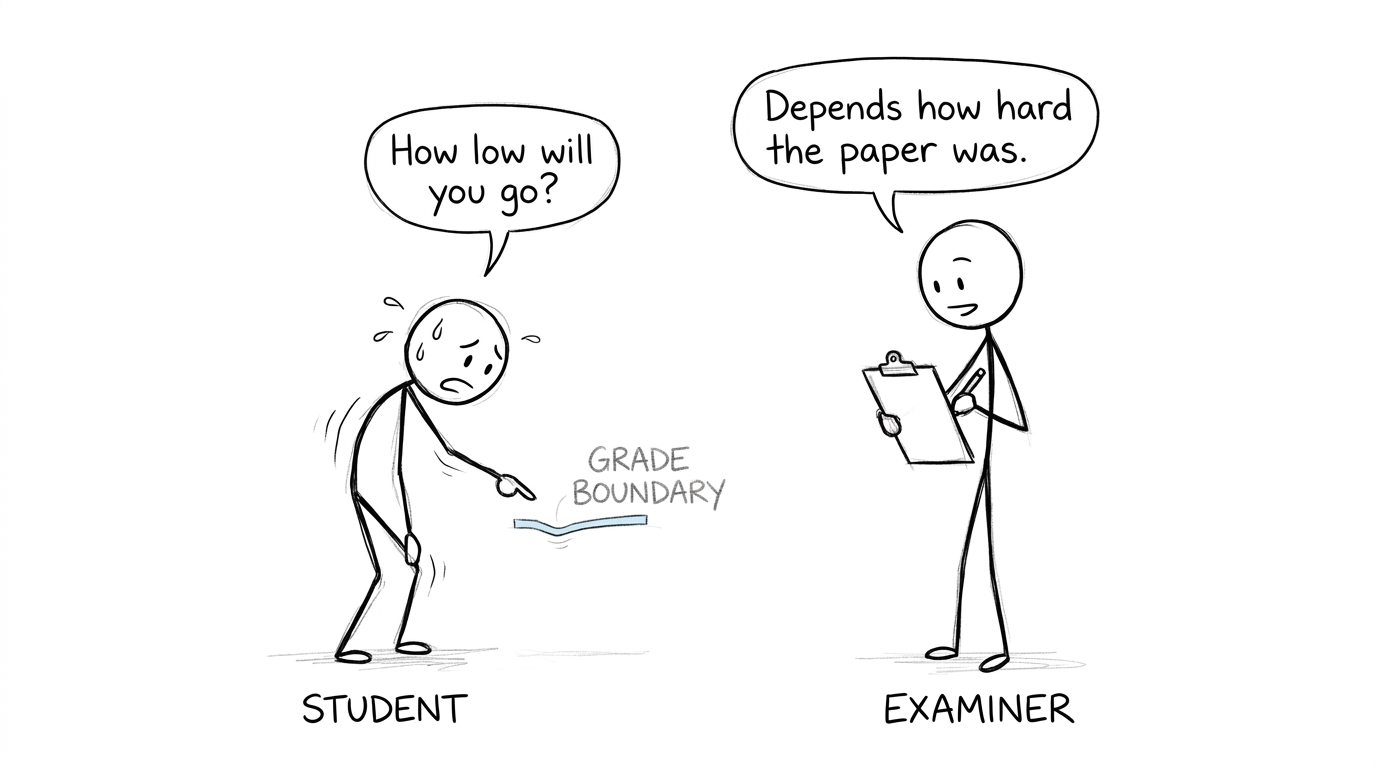 A student asking a grade boundary how low it will go
GCSE Physics marks per grade for June 2025
These tables show the minimum confirmed raw mark needed for each grade in the June 202520252025 series. Reaching a boundary gives you that grade; you do not need to exceed it.
AQA GCSE Physics raw marks
| Tier | Maximum | Grade 999 | Grade 888 | Grade 777 | Grade 666 | Grade 555 | Grade 444 | Grade 333 | Grade 222 | Grade 111 |
|---|---|---|---|---|---|---|---|---|---|---|
| Higher | 200200200 | 152152152 | 139139139 | 126126126 | 107107107 | 888888 | 707070 | 616161 | N/A | N/A |
| Foundation | 200200200 | N/A | N/A | N/A | N/A | 144144144 | 131131131 | 959595 | 595959 | 242424 |
See the complete current and historical AQA GCSE Physics grade boundaries.
Edexcel GCSE Physics raw marks
| Tier | Maximum | Grade 999 | Grade 888 | Grade 777 | Grade 666 | Grade 555 | Grade 444 | Grade 333 | Grade 222 | Grade 111 |
|---|---|---|---|---|---|---|---|---|---|---|
| Higher | 200200200 | 161161161 | 145145145 | 130130130 | 110110110 | 909090 | 717171 | 616161 | N/A | N/A |
| Foundation | 200200200 | N/A | N/A | N/A | N/A | 131131131 | 114114114 | 868686 | 585858 | 303030 |
Check earlier years on the dedicated Edexcel GCSE Physics grade boundaries page, or enter both paper marks into the Edexcel Physics predicted grade calculator.
The tables are not interchangeable. For example, a higher-tier raw mark of 155155155 reached grade 999 in AQA but grade 888 in Edexcel in this series. That does not mean one board was easier. Boundaries reflect differences in the papers and are designed to maintain comparable standards.
What are GCSE Physics raw marks?
A raw mark is the number of marks awarded for your answers before it is matched to a grade threshold. In most linear GCSE qualifications, marks from the relevant papers are combined to determine the subject grade.
A component boundary is different. Exam boards may publish notional boundaries for individual papers, but your official grade is awarded for the complete qualification. That is why adding your paper marks and using the overall boundary matters.
If your board is OCR, check the exact specification because OCR offers Gateway Physics and Twenty First Century Physics. The OCR Twenty First Century Physics revision page helps you identify the correct route and resources.
Why GCSE Physics grade thresholds change
Grade boundaries are set after papers have been taken and marked. A paper that students find more demanding may have lower raw thresholds; a less demanding paper may have higher ones. This keeps the standard represented by each grade broadly consistent between years.
Consequently, nobody can know the official 202620262026 boundaries before they are published on results day. Predicted boundaries are estimates, not confirmed results. Use previous thresholds as revision targets rather than promises.
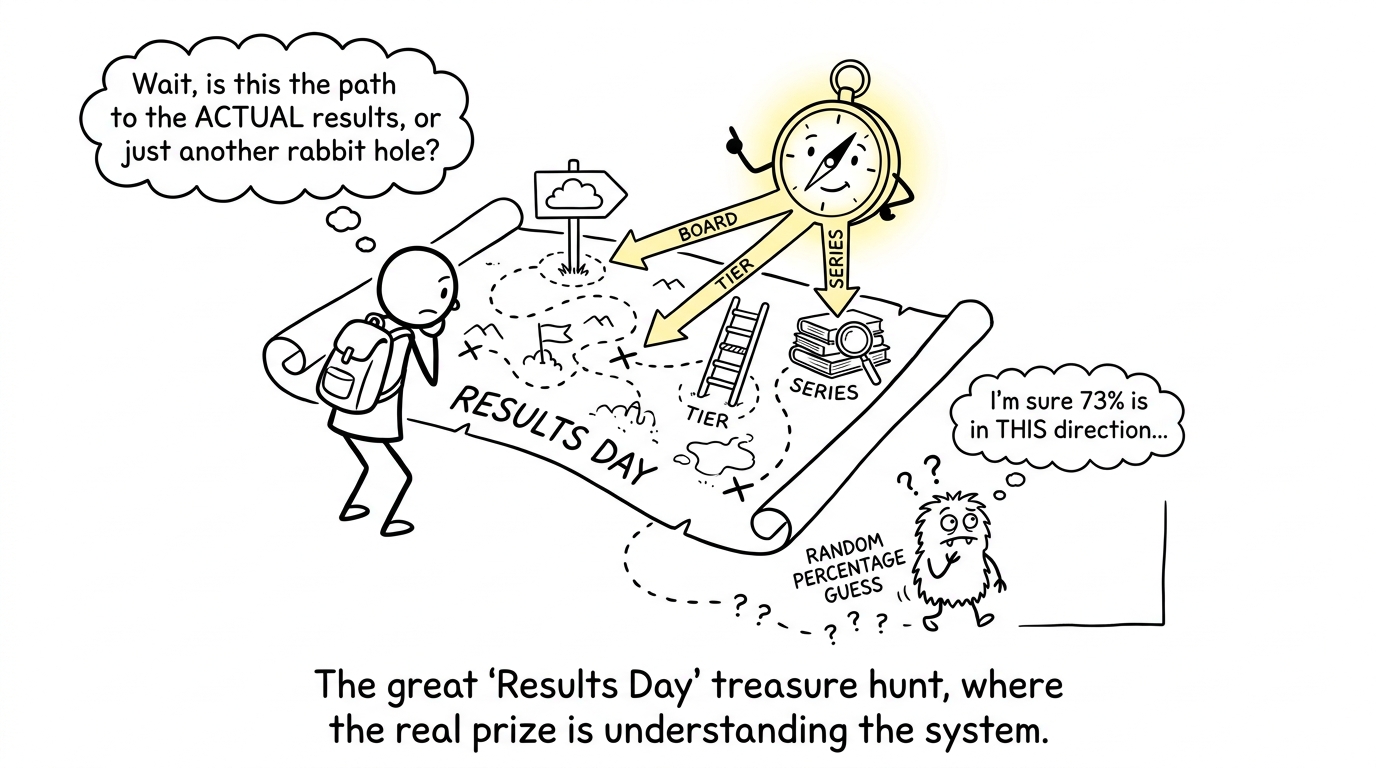 A results-day map pointing towards board, tier and series
Common mistakes when checking Physics marks
- Using maths boundaries: Physics and maths have separate maximum marks and thresholds.
- Checking Combined Science: Separate Physics receives one grade; Combined Science produces a double grade.
- Choosing the wrong tier: Foundation and higher have different boundaries and available grades.
- Using one paper: Your final grade normally depends on the combined qualification total.
- Treating last year as fixed: GCSE Physics grade thresholds can move between exam series.
- Comparing boards directly: A lower threshold does not automatically mean an easier qualification.
Turn a boundary into a revision target
A boundary explains the past. Revision changes what happens next. Use the GCSE Physics revision hub to choose your board, complete timed questions and mark them honestly. If you study AQA, the AQA GCSE Physics predicted papers provide realistic practice with mark schemes and worked solutions. Edexcel students can strengthen specification-matched knowledge through the Edexcel Physics revision guides.
Do not aim for the boundary exactly. Build a sensible margin by correcting weak topics, practising calculations and repeating questions that cost you marks. MathsGenie brings revision lessons, practice questions, past papers, predicted papers, mark schemes, video solutions and mini tests into one free revision routine.
Start with the full MathsGenie GCSE Physics grade boundaries, confirm your board and tier, then turn the number you need into focused practice.