

GCSE Physics Grade: What It Means for Sixth Form
GCSE physics grade sixth form guide covering grades 9-1, typical A Level entry expectations, Combined Science results and the maths skills to improve.
Opening a GCSE results envelope can make one number feel unusually powerful. If Physics is part of your sixth-form plan, the immediate question is simple: does your grade let you progress?
The short answer is that a GCSE physics grade for sixth form has no single national meaning. Schools and colleges set their own entry requirements. Many ask for grade 666 or 777 in separate Physics, comparable Combined Science grades, and often grade 666 or 777 in GCSE Maths. Check the published requirements for every institution you are considering.
Your grade is a doorway, not a verdict. It shows your current preparation against a GCSE specification. It does not permanently define your ability to understand Physics.
Your sixth-form decision checklist
Before accepting or changing an option, check:
- whether your result is for separate Physics or Combined Science;
- the exact Physics, Science and Maths grades required by your sixth form;
- whether A Level Maths is required, recommended or optional alongside Physics;
- whether the institution allows discretion after a near miss;
- how confident you are with algebra, graphs, units and standard form.
If you are still preparing for the exams, use the GCSE Physics revision hub alongside GCSE Maths revision resources. A stronger Maths result can matter almost as much as the Physics grade when you apply.
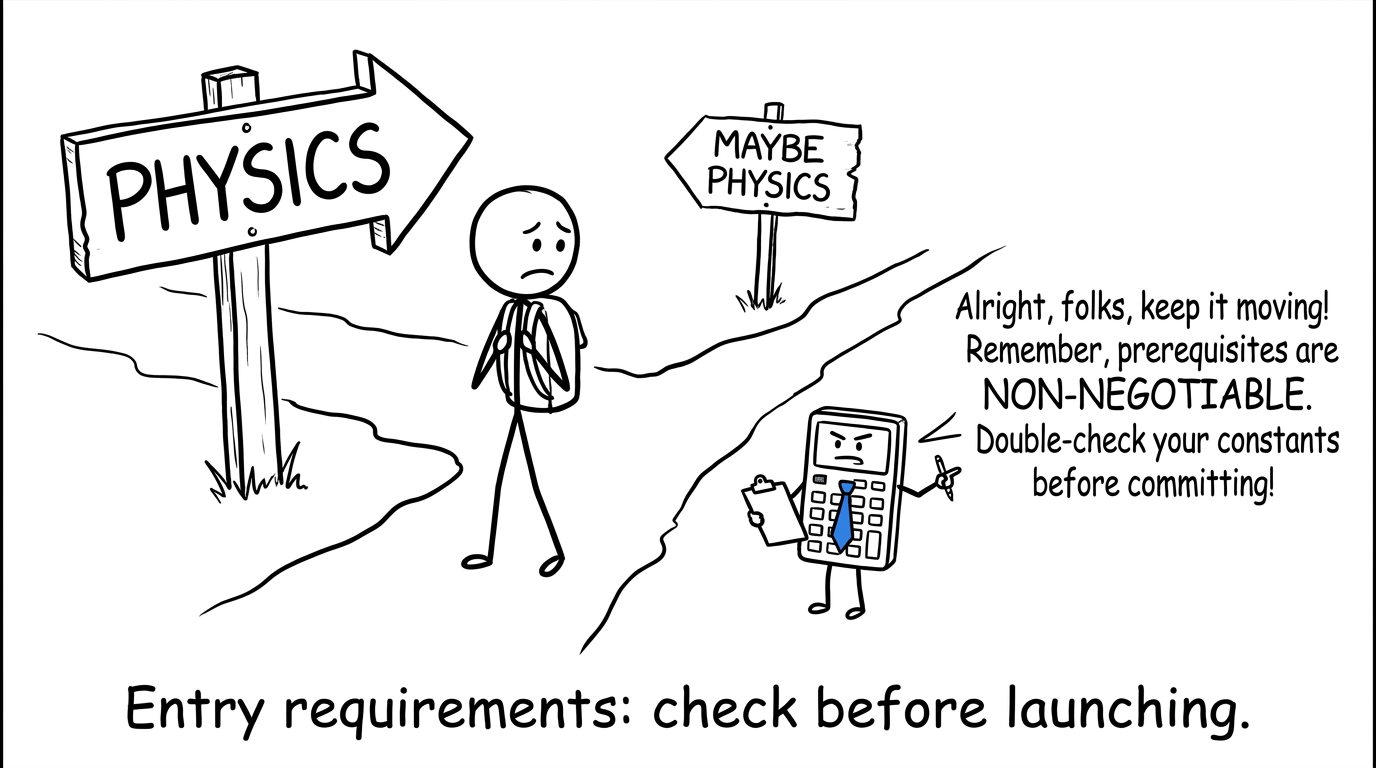 A student checks the route towards sixth-form Physics
GCSE physics grade meaning: a grade-by-grade guide
These interpretations are guidance, not universal admissions rules. Published entry criteria vary: some providers accept grade 666 in Physics and Maths, while more selective courses may expect grade 777 in both.
| GCSE Physics grade | What it usually suggests | Likely next step |
|---|---|---|
| 999 | Exceptional command of GCSE knowledge and demanding applications | Strong preparation, provided your Maths is equally secure |
| 888 | Very strong understanding and reliable problem-solving | Normally above typical subject requirements |
| 777 | Secure higher-tier knowledge and good quantitative confidence | Meets many A Level Physics entry requirements |
| 666 | Sound GCSE understanding, with some areas still to strengthen | Accepted by many providers, but not all |
| 555 | A respectable pass, although consistency may be uneven | Direct entry may be limited; check each provider |
| 444 | Standard pass with significant preparation gaps for A Level | Consider an alternative route or substantial consolidation |
| 333-111 | GCSE knowledge is not yet secure enough for typical A Level entry | Discuss resits and alternative Level 222 or Level 333 pathways |
Grade 999
A grade 999 indicates outstanding GCSE performance. You are likely to have handled multi-step calculations, practical analysis and unfamiliar contexts successfully.
Do not assume the transition will therefore be effortless. A Level Physics becomes more abstract, and equations must be selected and manipulated rather than merely recalled. Use the summer to preserve your fluency instead of racing through the specification.
Grade 888
A grade 888 is excellent preparation for progressing to A Level Physics. Most published entry thresholds will be below it, although your overall GCSE profile and Maths result may also be considered.
Your best preparation is diagnostic: find whether errors tend to involve explanations, practical work or mathematical technique. The AQA GCSE Physics revision guides illustrate how specification-matched revision can keep that knowledge active.
Grade 777
Grade 777 commonly meets the Physics requirement at sixth forms that set demanding subject criteria. It suggests that you can apply GCSE ideas rather than only reproduce familiar methods.
Now examine your Maths grade. Official A Level Physics specifications require at least 40%40\%40% of assessment marks to involve mathematical skills at Level 222 or above, applied within Physics. Rearranging equations, interpreting graphs, trigonometry and standard form are not side topics. They are part of the course.
Grade 666
Grade 666 is where local rules matter most. Many colleges publish grade 666 as their minimum for separate Physics, often alongside grade 666 in Maths. Others require grade 777.
If you meet the stated threshold, focus on readiness rather than worrying that someone else achieved more. If you narrowly miss a requirement, contact the sixth form and ask how it handles near misses. Do not assume an exception, but do not reject yourself before asking.
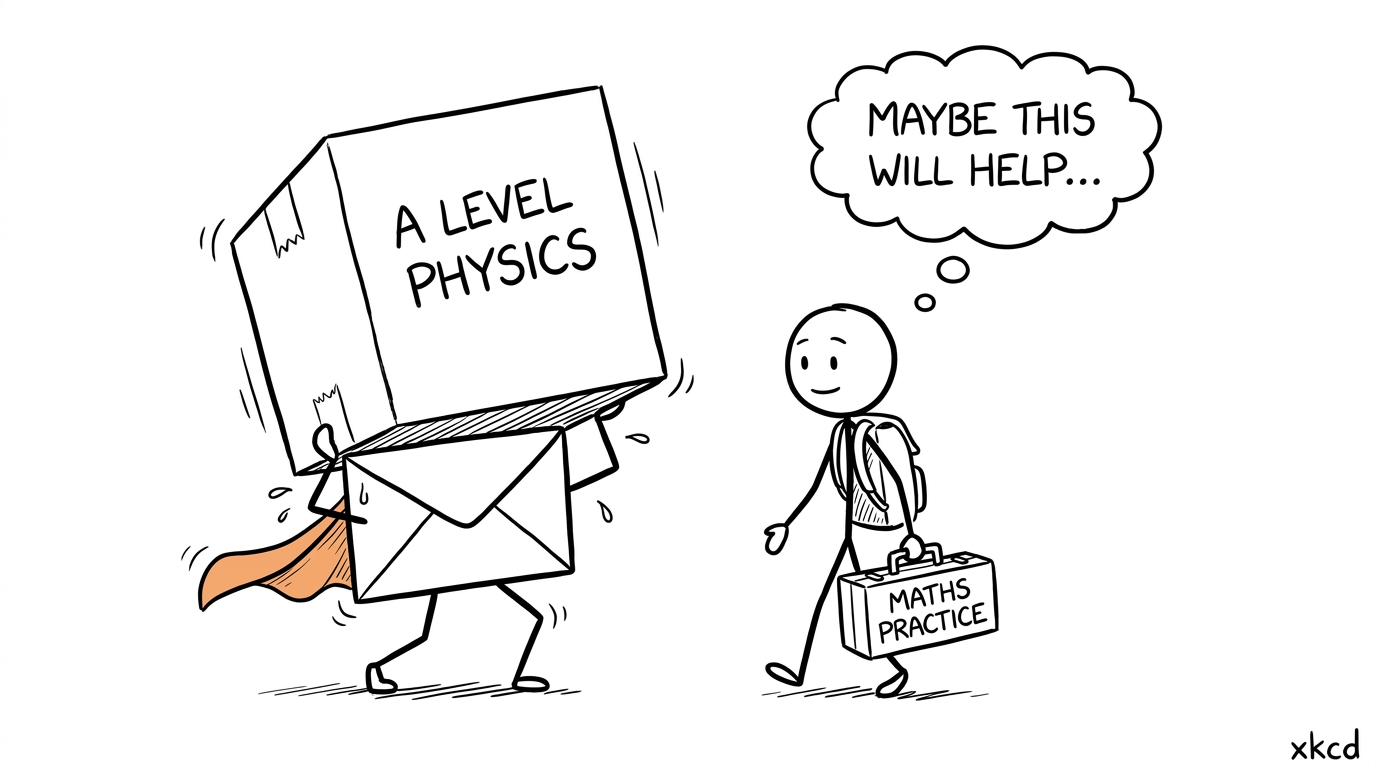 A Physics grade gets support from a maths practice toolbox
Grade 555
A grade 555 demonstrates meaningful GCSE achievement, but it is below the standard entry requirement published by many A Level Physics providers. A small number of institutions may accept it when combined with stronger Maths results or additional conditions.
Ask what evidence the course team considers. Then be honest about your experience of higher-tier calculations. A Level Physics moves quickly, so gaining admission matters less than being prepared to remain successful once lessons begin.
Grade 444
Grade 444 is a standard GCSE pass, but it usually does not provide direct entry to A Level Physics. That is not the same as saying Physics is closed forever.
A college may offer a different science qualification, a transition route or the opportunity to improve relevant GCSEs. Speak to an adviser about routes that fit your longer-term goal rather than choosing a course only because its title sounds closest.
Grades 333 to 111
These grades indicate that important GCSE foundations are not yet secure. Typical A Level entry is unlikely, so the sensible next step is a conversation about resits, Level 222 provision or another pathway that rebuilds the necessary knowledge.
A lower result can describe where preparation stands today. It cannot tell you how far careful practice may take you next.
How Combined Science grades are treated
Combined Science is worth two GCSEs and produces two equal or adjacent grades, such as 777-777 or 666-555. It does not award a separate Physics grade. Marks across Biology, Chemistry and Physics contribute to the overall double grade.
Sixth forms therefore write separate conditions for Combined Science applicants. One might request 666-666, while another asks for 777-777 or higher. Never convert your double grade into an invented individual Physics result; use the institution's stated Combined Science requirement.
Why your GCSE Maths grade matters
Progressing to A Level Physics means working confidently with proportionality, vectors, graphs, uncertainties and equations. The mathematical demand is at least higher-tier GCSE standard in substantial parts of the assessment.
Before September, prioritise:
- changing the subject of a formula;
- standard form and unit conversions;
- gradients and areas on graphs;
- ratios and proportional reasoning;
- trigonometry and vectors;
- significant figures and percentage uncertainty.
The A Level Maths revision hub can show where these skills develop next. Taking A Level Maths alongside Physics is recommended or required by some providers, but the policy is local rather than universal.
Common mistakes when interpreting your result
Treating a typical threshold as a national rule
There is no universal minimum GCSE grade for A Level Physics. Read the current prospectus for your chosen school or college.
Looking only at Physics
A provider may also set minimum grades in Maths, English or your overall GCSE programme. Check every condition, not just the subject heading.
Confusing Combined Science with separate Physics
A Combined Science grade such as 777-666 is one double award, not separate grades for individual sciences.
Assuming admission guarantees readiness
Meeting the threshold gives you access to the course. It does not remove the need to strengthen weak algebra, graphs or units.
Revising passively
Confidence comes from answering questions and correcting mistakes. Use GCSE predicted papers at the right stage, then follow the practical past-paper revision method: attempt, mark, fix and retest.
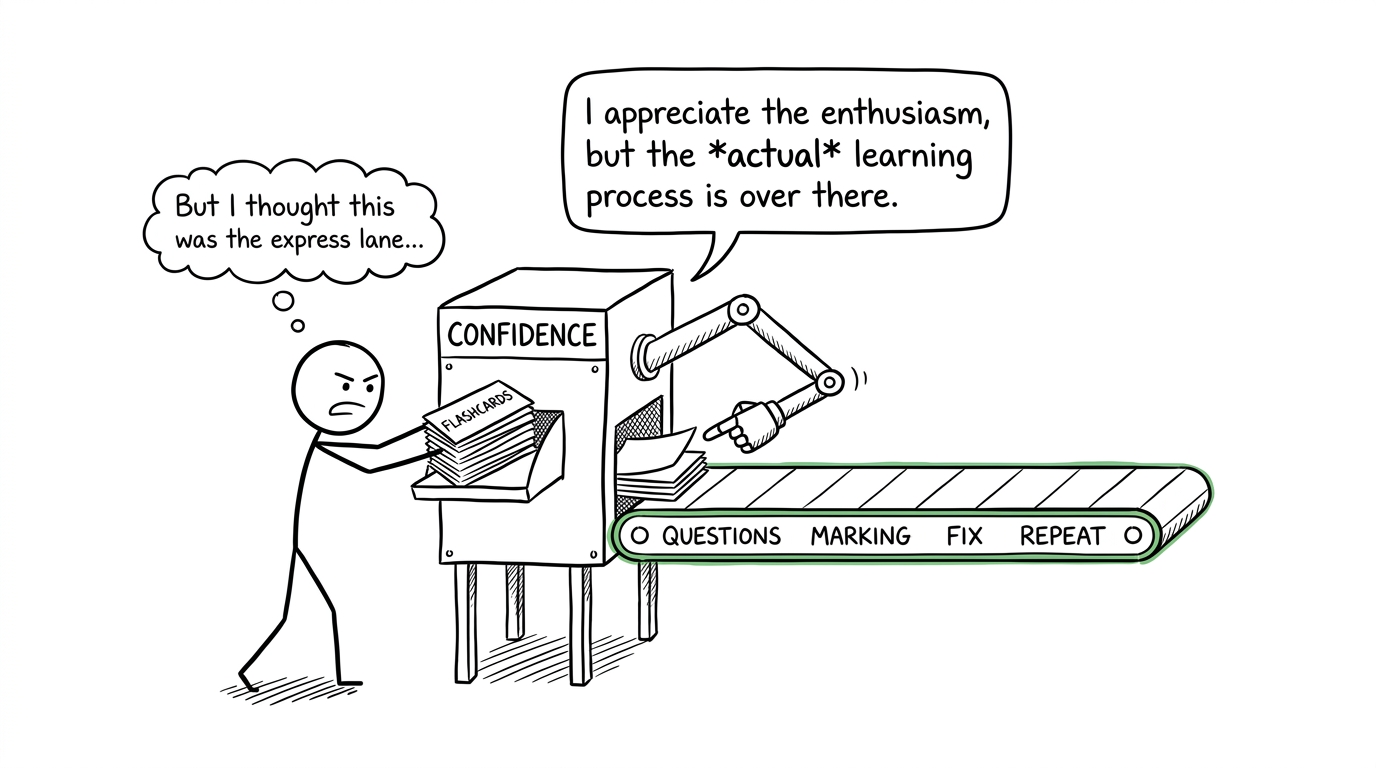 A revision machine requests questions, marking and repetition
Turn your grade into a next step
The useful meaning of a GCSE grade is not simply what it says about the past. It is what it helps you decide next.
Compare your result with each provider's published criteria. Ask about near misses where necessary. Then strengthen the maths that A Level Physics will repeatedly demand.
MathsGenie gives you a free place to make that preparation concrete: revision lessons, practice questions, mini tests, past papers, predicted papers, mark schemes and video solutions. When you are ready to see the course ahead, explore the AQA A Level Physics revision page or select the appropriate exam-board resources. Start with one weak skill today, practise it, mark it honestly and let the next question show you what to improve.











