GCSE Geography Paper 1: What to Actually Expect
GCSE Geography Paper 1 explained: compare exam boards, timings, topics and question styles, then build a focused revision plan for exam day.
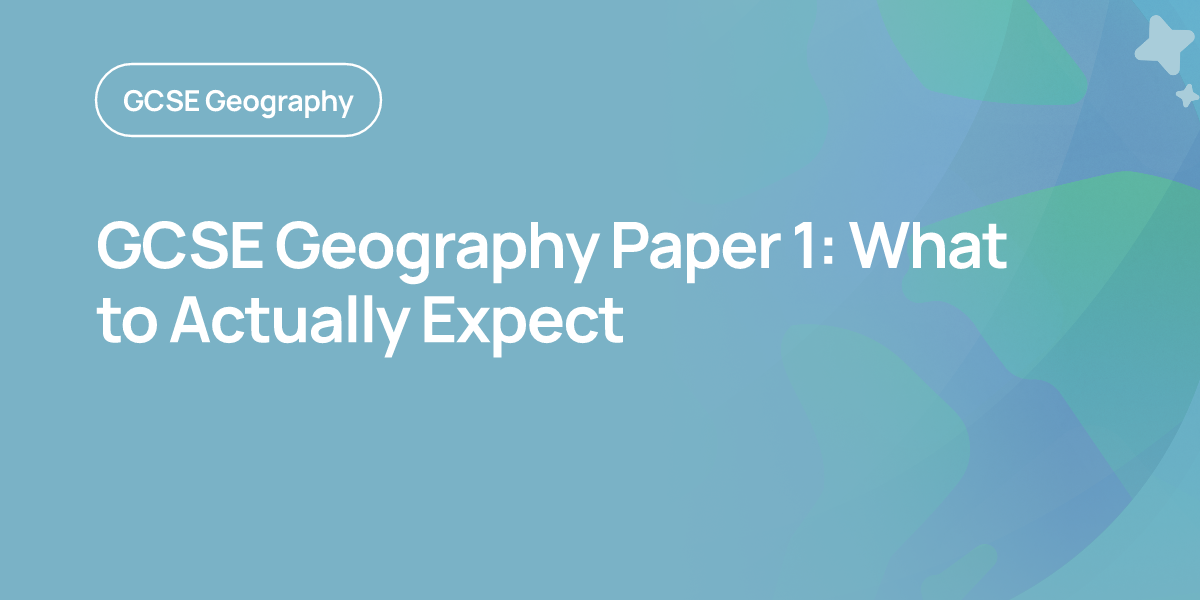
The first page of an exam paper can make familiar knowledge feel strangely distant. You know the case studies. You recognise the diagrams. Yet the clock begins, the wording looks unfamiliar, and suddenly you are unsure what the paper is really asking you to do.
The practical answer is that GCSE Geography Paper 1 usually tests a combination of subject knowledge, application, resource interpretation, geographical skills and extended writing. However, its content and timing depend on your exam board. For AQA and Edexcel Geography A, Paper 1 centres on physical geography. Edexcel Geography B includes global human topics too, while OCR and Eduqas organise their components differently.
That distinction matters. Paper 1 is not one national paper with one universal format.
GCSE Geography Paper 1 at a glance
Before planning your revision, confirm:
- your exam board and specification, including whether you take Geography A or B;
- the current duration and total marks shown by that board;
- which topics and optional landscapes your school has taught;
- whether every question is compulsory;
- which command words appear in longer questions;
- what equipment you may use, including a calculator where permitted.
Unlike GCSE maths, Geography is not divided into foundation and higher tiers. Everyone following the same specification sits the same paper, although questions range from straightforward recall to demanding evaluation.
| Exam board and course | Paper 1 focus | Current duration and marks |
|---|---|---|
| AQA GCSE Geography | Living with the physical environment | 111 hour 303030 minutes; 888888 marks; 35%35\%35% of the GCSE |
| Edexcel Geography A | The Physical Environment | From the 2026 examinations, 111 hour 454545 minutes; 949494 marks; 37.5%37.5\%37.5% |
| Edexcel Geography B | Global Geographical Issues | 111 hour 303030 minutes; 949494 marks; 37.5%37.5\%37.5% |
| OCR Geography B | Our Natural World | From the June 2026 examinations, 111 hour 303030 minutes; 707070 marks; 35%35\%35% |
OCR Geography A and Eduqas use different component titles and structures, so do not borrow the timing from another course. Check the specification named on your school timetable and use a current paper from that exact qualification. Exam boards can amend assessment arrangements, as Edexcel and OCR have done for 2026.
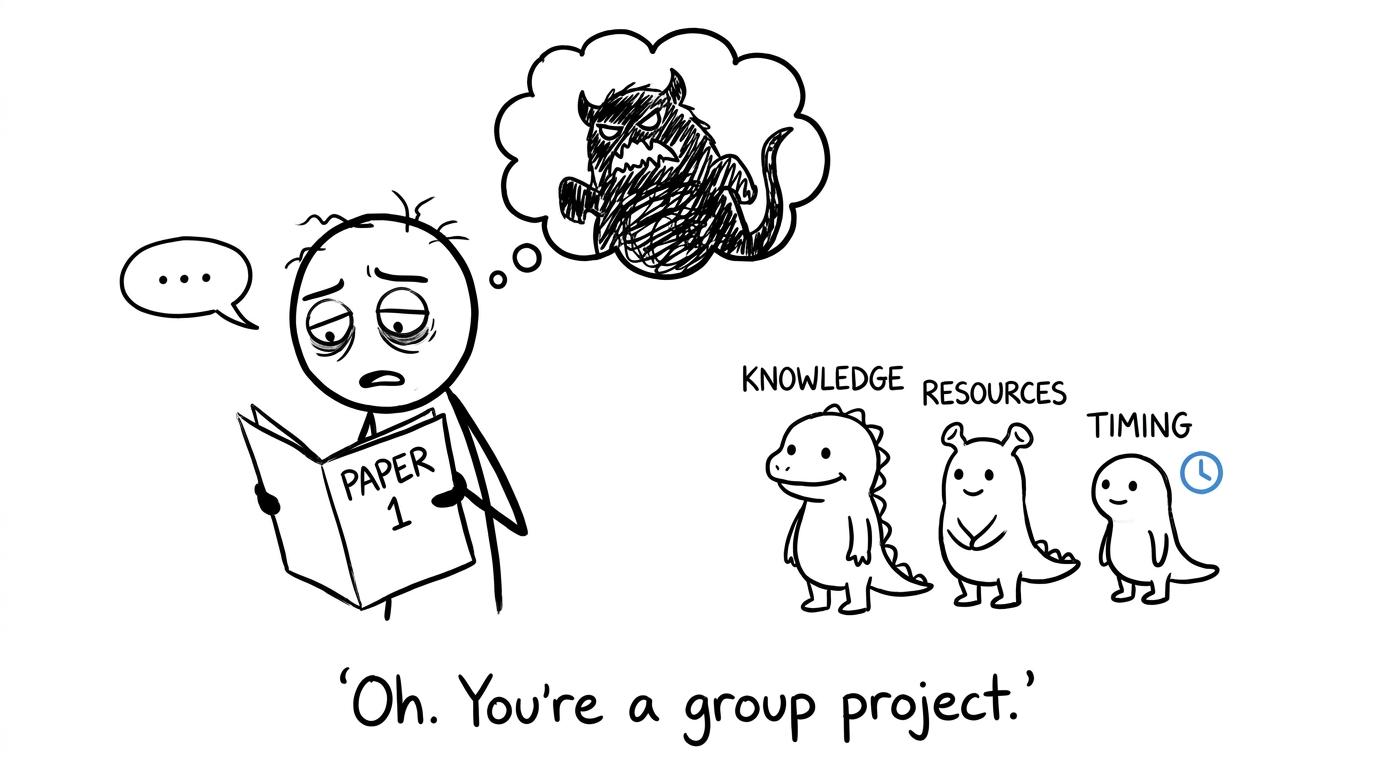 A GCSE student discovers that Paper 1 is a manageable group of knowledge, resources and timing
What is actually different about Paper 1?
Students often hear that Paper 1 means physical geography. That is a useful starting point, but not a safe rule for every specification.
AQA focuses on the physical environment
AQA Paper 1 covers natural hazards, the living world and physical landscapes in the UK, together with geographical skills. The paper contains multiple-choice questions, short answers, level-marked responses and extended prose.
Its optional structure deserves attention. In the physical landscapes section, students answer questions on the landscapes their school has studied rather than completing every available option. Knowing your taught options prevents wasted time in the examination.
AQA also includes marks for spelling, punctuation, grammar and specialist terminology on this paper. Accurate geographical vocabulary therefore matters alongside accurate ideas.
Edexcel Geography A is physical, but resource-heavy
Edexcel Geography A Paper 1 is called The Physical Environment. It examines topics such as the changing landscapes of the UK, weather hazards and climate change, and ecosystems, biodiversity and management, according to the options taught.
From the 2026 examination series, its duration increased from 111 hour 303030 minutes to 111 hour 454545 minutes. The total remains 949494 marks. That change gives students more time to interpret resources and construct extended answers, but it does not remove the need for deliberate pacing.
Edexcel Geography B mixes physical and human geography
Edexcel Geography B Paper 1 is Global Geographical Issues. It covers Hazardous Earth, Development Dynamics and Challenges of an Urbanising World. So a student who assumes that Paper 1 is entirely physical could leave a substantial part of the course under-revised.
This paper combines multiple-choice items, short and open responses, calculations, resource interpretation and extended writing. Case-study knowledge must be used as evidence rather than reproduced as a memorised paragraph.
OCR and Eduqas need specification-specific preparation
OCR offers Geography A and Geography B, which have different component names and topic arrangements. OCR Geography B Paper 1, Our Natural World, includes global hazards, changing climate, distinctive landscapes and sustaining ecosystems, as well as geographical skills.
Eduqas also has more than one Geography specification. Treating the word “Eduqas” as enough information is risky: identify the full qualification and component before downloading a paper. Your teacher’s specification code, examination entry or official timetable is the safest reference.
The question types Paper 1 tends to favour
Paper 1 is rarely a pure memory test. Its questions usually move through several kinds of thinking.
Short recall and explanation
Lower-tariff questions may ask you to define a term, identify a feature or state one consequence. These reward precision. If the question asks for one reason, give one developed reason rather than a list of loosely connected ideas.
“Explain” normally requires a chain of cause and effect. A geographical process should unfold logically: what happens, why it happens and what follows.
Resource interpretation
Expect maps, photographs, diagrams, graphs, tables or written extracts. A resource is not decoration. Read its title, key, scale, labels, dates and units before answering.
A strong response combines what the resource shows with geographical understanding. Where appropriate, use values from the figure rather than writing that something is merely “high” or “low”. The OCR Geography numerical and statistical skills guide is useful even beyond OCR because it develops graph reading, scale, percentages, averages and evidence-based conclusions.
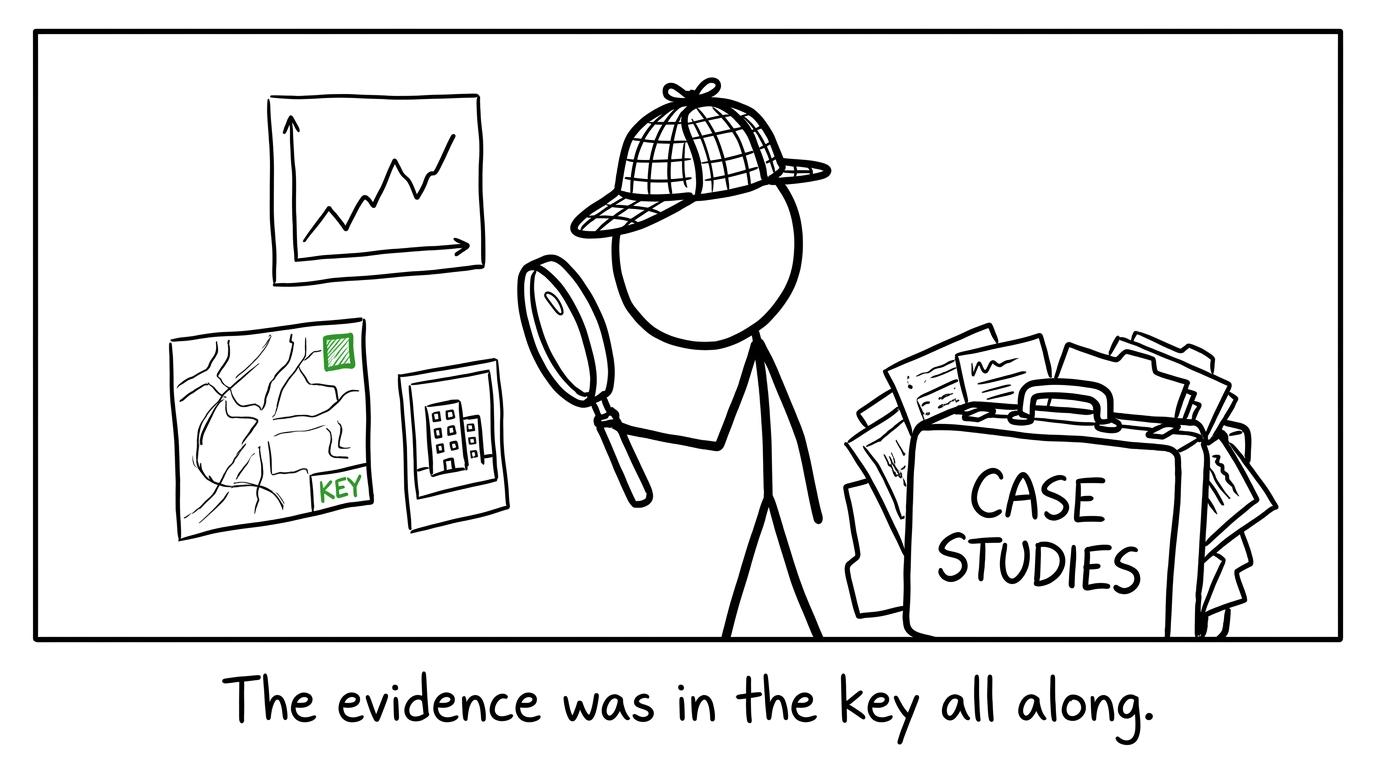 A student detective discovers that the evidence was in the map key
Geographical calculations
Paper 1 can include numeracy involving scale, distance, ratios, averages, percentage change and graph interpretation. Two useful relationships are:
mean=sum of the valuesnumber of values\text{mean}=\frac{\text{sum of the values}}{\text{number of values}}mean=number of valuessum of the valuesand
percentage change=new value−original valueoriginal value×100\text{percentage change}=\frac{\text{new value}-\text{original value}}{\text{original value}}\times 100percentage change=original valuenew value−original value×100Show your working, retain units and round only when the question requests it. If percentages are a weak spot, revisit the free MathsGenie percentages lesson before applying the skill to geographical data.
Extended responses
Longer questions usually assess more than the quantity of facts remembered. Command words such as “assess”, “evaluate”, “examine” and “to what extent” require judgement.
A useful extended response normally has:
- a direct argument addressing the wording;
- linked geographical reasoning;
- relevant evidence from a named example or supplied resource;
- consideration of different factors, places or timescales;
- a conclusion that answers the exact question.
Do not force the same paragraph plan onto every command word. An explanation needs causal reasoning; an evaluation needs criteria and judgement.
How to manage the timing
A simple starting estimate is:
minutes per mark=total examination minutestotal marks\text{minutes per mark}=\frac{\text{total examination minutes}}{\text{total marks}}minutes per mark=total markstotal examination minutesThis is a planning guide, not a rule. Multiple-choice questions may take less time, leaving more for reading resources and writing longer responses. Reserve a small checking period, but do not leave a large section unfinished to create it.
Practise with the current duration for your board. In particular, students taking Edexcel Geography A or OCR Geography B from 2026 should not automatically use the timing printed on an older paper. You can still use older questions, but adapt the session to the current assessment time.
Maths revision builds many of the same habits. The best order for learning GCSE maths topics explains how to move from learning a skill to topic practice and finally timed paper practice. That cycle works well for geography too.
Revise case studies as usable evidence
A case study is useful only when it helps answer the question in front of you. Instead of memorising every available statistic, organise each example around:
- location and geographical context;
- causes or processes;
- primary and secondary effects;
- immediate and long-term responses;
- management strategies;
- evidence supporting an overall judgement.
Choose a small collection of accurate, flexible details. Attach each fact to an idea it proves. This is more reliable than memorising an essay that may not fit the command word.
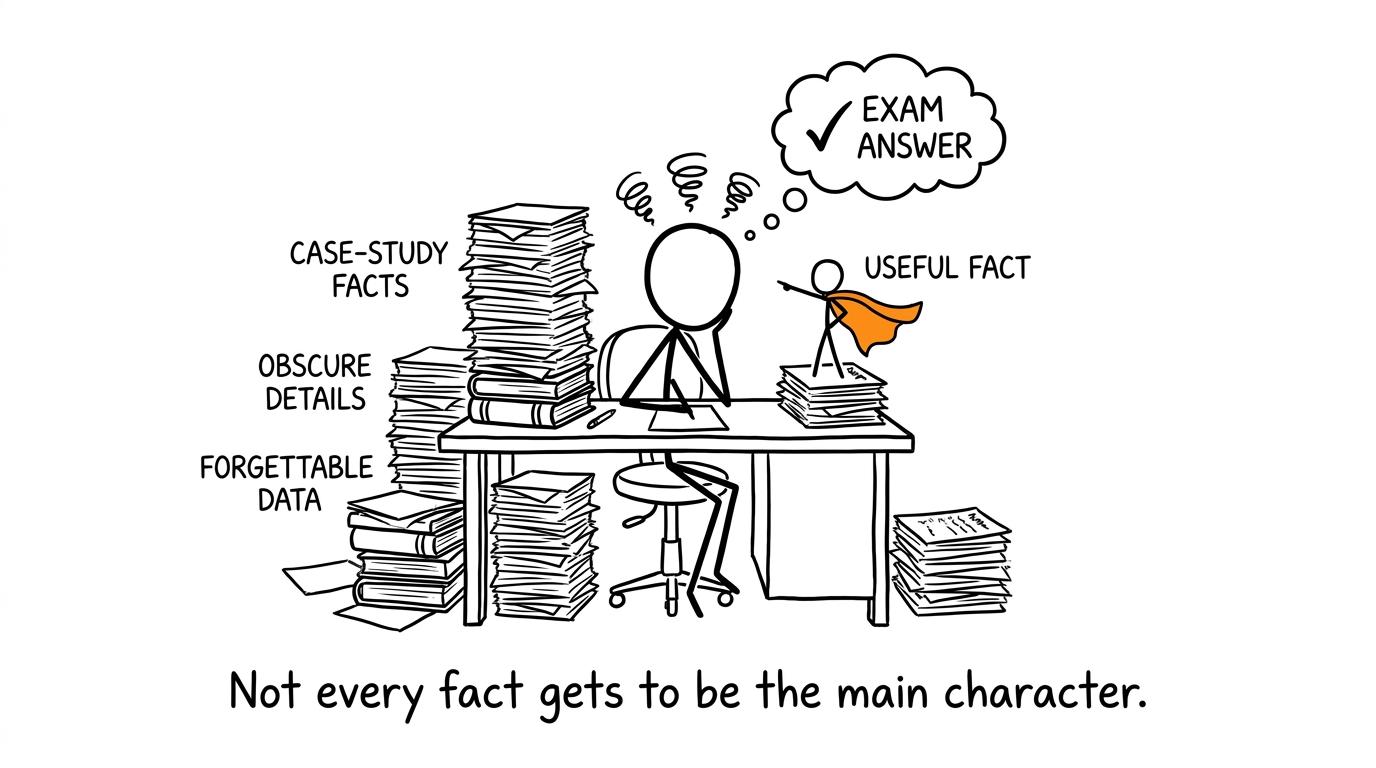 One useful case-study fact becomes the main character
A focused Paper 1 revision plan
Start with the specification checklist rather than your thickest textbook. Label each topic as secure, uncertain or missing. Then use this sequence:
- retrieve key processes and definitions without notes;
- practise interpreting unfamiliar maps, graphs and photographs;
- review the exact case studies taught by your school;
- complete individual longer questions under time pressure;
- attempt a whole current-format paper;
- mark it and classify each lost mark by cause.
Separate missing knowledge from weak technique. If you knew the topic but misread a scale, more case-study revision will not fix the problem. Work on the underlying numerical skill instead. MathsGenie’s guide to GCSE maths topics by exam board and tier can help you locate gaps in percentages, ratio, graphs and statistics.
For data confidence, the Analysing Research revision guide also revisits averages, range, ratios, percentages and suitable charts. The context differs, but the habit of reading data carefully transfers directly.
Common mistakes on GCSE Geography Paper 1
Revising the wrong specification
AQA, Edexcel A, Edexcel B, OCR A, OCR B and Eduqas papers are not interchangeable. Confirm the complete course title before using online materials.
Describing when the question says explain
Description identifies a pattern or feature. Explanation gives reasons. Add a clear causal chain using language such as “because”, “therefore” and “as a result”.
Ignoring the resource
If a question says “using Figure”, include specific evidence from that figure. Background knowledge alone may not satisfy the task.
Giving generic case-study facts
A place name by itself is not developed evidence. Use accurate detail and explain how it supports your argument.
Losing easy numerical marks
Check units, axes, scale and whether the question wants a difference, percentage or percentage change. Show working so that a correct method remains visible.
Writing until time runs out
More writing does not automatically earn more marks. Use the mark tariff to judge depth, make your point clearly and move on. Timed practice matters in geography for the same reason it matters when using GCSE maths past-paper revision strategies: it exposes the gap between knowing a method and producing it under examination conditions.
Go into Paper 1 knowing what it is
Paper 1 becomes less intimidating once it stops being vague. Identify your board, learn its actual content and timing, then practise the tasks it favours: precise recall, causal explanation, resource interpretation, calculations and evidence-based judgement.
Use MathsGenie to strengthen the numerical side of geography through free revision lessons, practice questions, mini tests, mark schemes and video solutions. Then transfer those habits into geography past papers: read carefully, show working, review mistakes and return to the exact weakness that cost the mark.
That is how confidence becomes practical. Not by trying to predict every question, but by making sure the paper has fewer ways to surprise you.