

GCSE Geography Lower Grade Than Expected? Next Steps
GCSE geography lower grade than expected? Learn how to check marks, request a review, protect college plans and decide whether a resit is worthwhile.
Opening your results can compress two years of work into a single uncomfortable moment. If you received a GCSE geography lower grade than expected, pause before deciding that the result defines your ability. It does not.
Your immediate GCSE geography next steps are practical: confirm your component marks, speak to your teacher, check whether the grade affects your post-161616 plans, and investigate a review of marking before its deadline. If the grade is accurate but genuinely limits your next move, you can then consider a resit.
Your results-day checklist
- Keep your results statement and note the exam board.
- Ask for your marks in each paper or component.
- Check how far the total was from the next grade boundary.
- Tell your school immediately if a sixth-form or college place is affected.
- Ask whether accessing your marked scripts would be useful.
- Discuss the risks, cost and deadline before requesting a review.
- Consider a resit only after checking whether it is necessary.
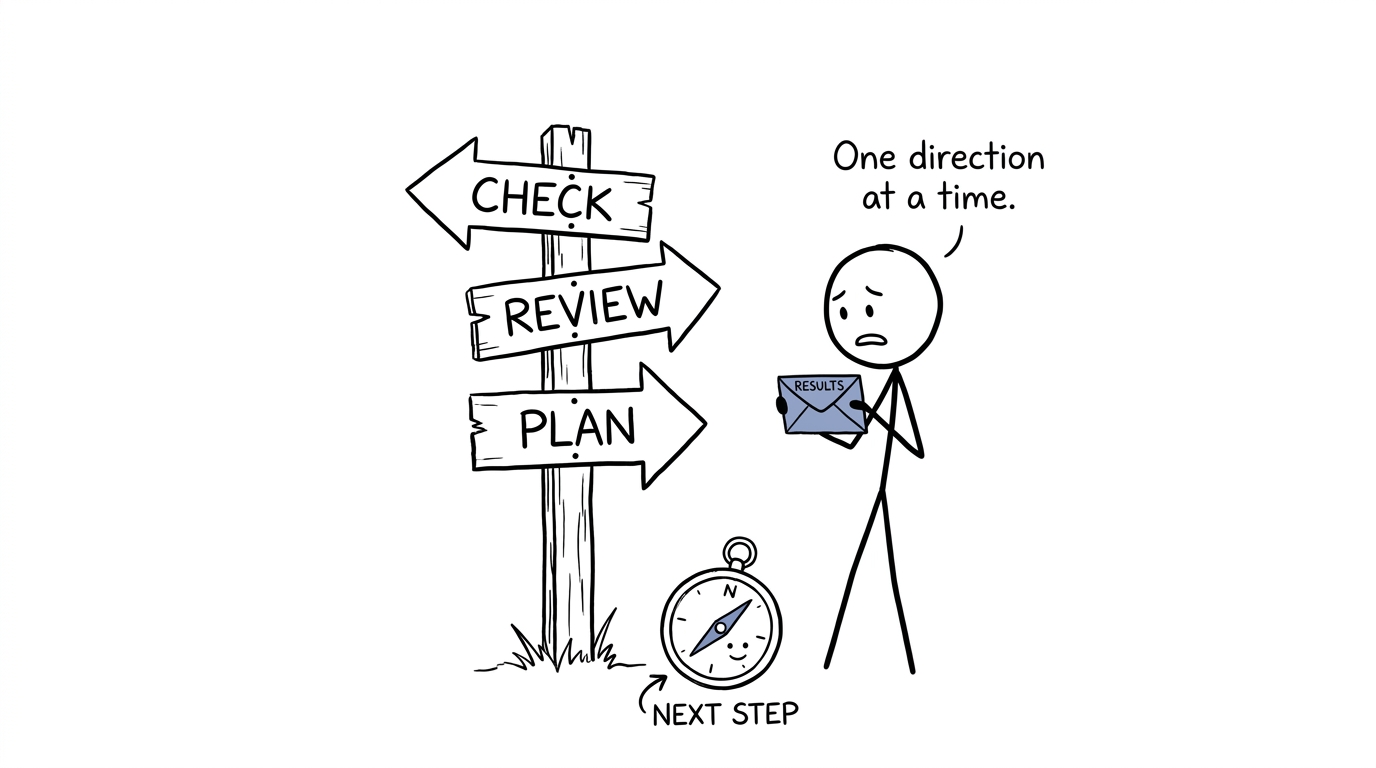 A student choosing between checking, reviewing and planning after results day
Give yourself time before interpreting the grade
Disappointment is real, but it is not evidence. A predicted grade, mock result and final GCSE grade measure performance in different circumstances. The final result reflects the work credited under the mark scheme across the assessed components; it is not an average of everything you knew during the course.
Avoid comparing grades with friends before understanding your own result. Instead, ask three questions:
- Is the grade unexpected when compared with my usual assessed work?
- How many marks separate it from the grade I expected?
- Does it change an offer, subject choice or career route?
The third question matters most. A lower result may feel painful without changing any practical outcome. If your chosen sixth form does not require a particular geography grade, accepting the result may be more sensible than paying for a review or committing to another exam series.
Speak to your school and check the evidence
Your geography teacher, head of department or exams officer should be your first contact. Ask for the mark from every paper and, where appropriate, information about any non-exam assessment arrangements.
Grade boundaries should be used carefully. Being close to the next boundary does not itself prove that marking was wrong. It only tells you that a small mark change could alter the grade.
Your school can also request access to marked scripts. A teacher can compare your responses with the mark scheme and look for possible marking errors, such as a response that appears not to have been credited appropriately. This is more useful than requesting a review simply because the result feels surprising.
Deadlines are set for each exam series, so act promptly. For summer 2026 results, official post-results processes begin on GCSE results day, 20 August 2026, with deadlines varying by service and exam board.
Decide whether to request a review of marking
A review of marking is not an automatic fresh mark by a completely new examiner. It checks whether the original mark scheme was applied correctly and whether any marking errors occurred.
For most school candidates, the school or college submits the request to AQA, Pearson Edexcel, OCR or Eduqas. Your consent will normally be required, and a fee may apply. A private candidate should contact the centre that entered them or follow the relevant awarding organisation's process.
Before agreeing, understand that the mark and grade can go down, remain unchanged or go up. Ask your teacher:
- Does the marked script show a credible reason for a review?
- Which paper should be reviewed?
- Could a lower mark create a problem?
- What is the centre's deadline and fee policy?
A clerical re-check is different. It checks matters such as whether every question was marked and whether marks were totalled and recorded correctly. If concerns remain after a review, the school may be able to use the formal appeals process, but an appeal requires appropriate grounds rather than simple disagreement with the result.
Protect your sixth-form or college plan
If your GCSE geography disappointing result affects an offer, contact the sixth form, college or training provider immediately. Explain that you are obtaining component marks or considering a review. Do not assume the place has disappeared before speaking to them.
Ask whether the stated grade is an absolute entry requirement, whether another subject result can demonstrate suitability, and whether your place can remain open while a review is considered. Keep a written record of names, dates and agreed actions.
Consider whether a geography resit is worthwhile
In England, ordinary GCSE Geography is generally resat in the next summer exam series rather than the November series. The standard November GCSE series is available for English language and mathematics, subject to eligibility rules, but not normally Geography. Availability can differ for qualifications in Wales, legacy specifications and International GCSEs, so confirm the position with your centre and exam board.
A resit may be reasonable when the grade blocks a specific route, you need Geography for a future course, or your teacher believes a higher grade is realistic with focused preparation. It may offer little benefit when your destination has already accepted you and the additional workload would compete with new post-161616 courses.
If you resit, ask who will enter you, where you will sit the papers, which specification applies and whether you must prepare independently.
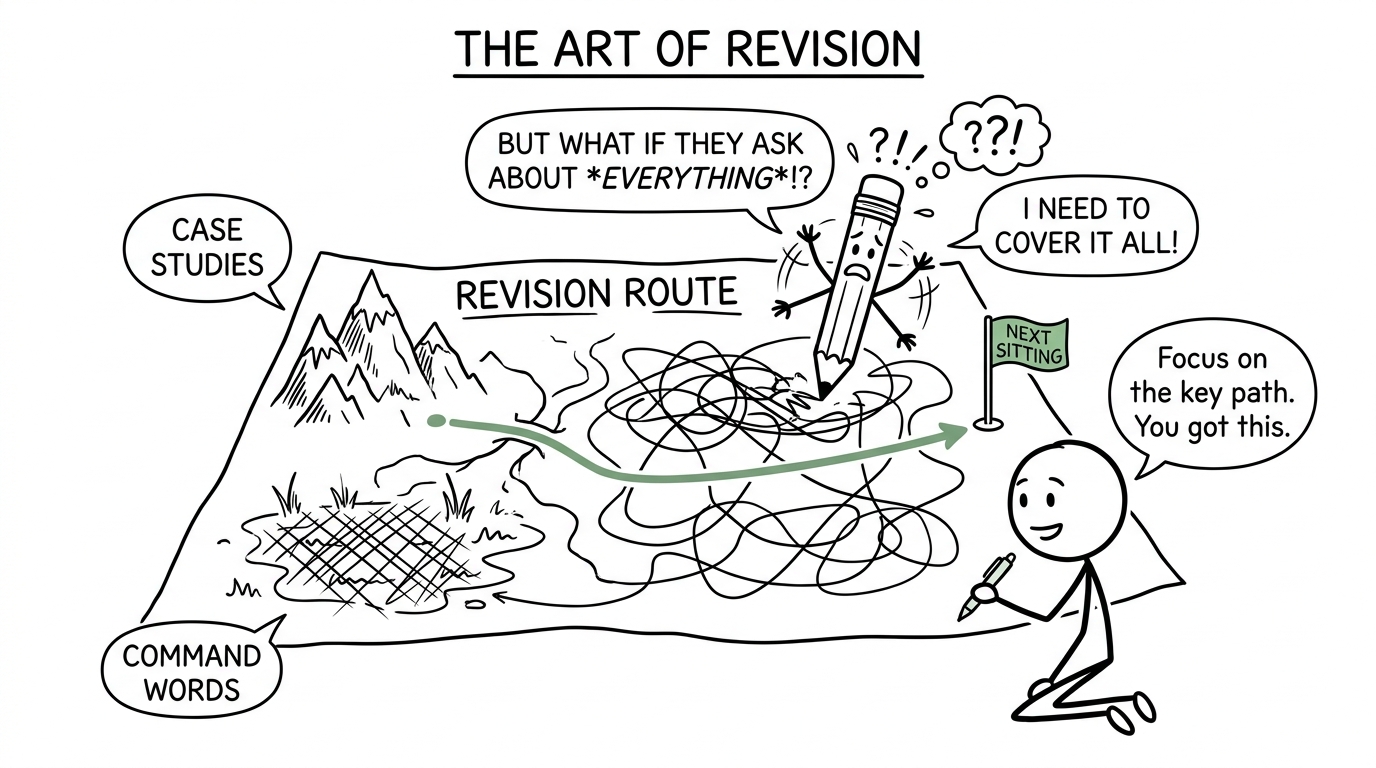 A student plotting a calm route across a revision map
Build a focused Geography resit plan
Do not restart the entire textbook without diagnosing the problem. Use your scripts, teacher feedback and mark schemes to separate weaknesses into knowledge, case-study detail, fieldwork, command words, timing and geographical skills.
GCSE Geography specifications assess cartographic, graphical, numerical and statistical techniques. At least 10%10\%10% of subject marks must assess mathematical and statistical techniques, so stronger quantitative skills can support a future attempt.
Use MathsGenie's free GCSE maths revision hub to strengthen transferable topics including ratio, percentages, scale, averages and graphs. The averages revision lesson supports geographical data work, while Edexcel GCSE maths videos cover graphs, scale drawings, percentages and scatter graphs.
For active practice, use topic worksheets with answers, then organise sessions with the free revision planner. Geography-specific specifications, past papers and mark schemes should come from your school or awarding organisation because MathsGenie specialises in maths revision.
The same evidence-led routine can support both subjects. The guide to finding your weakest GCSE topics explains how to log lost marks, while GCSE maths past-paper resources and predicted papers can keep your maths preparation moving alongside any Geography resit.
Common mistakes after a disappointing result
- Waiting too long: Post-results services have firm deadlines.
- Assuming proximity proves an error: Being one mark below a boundary does not show that marking was incorrect.
- Requesting a review without teacher advice: A script and mark scheme provide better evidence than disappointment alone.
- Forgetting that marks can fall: Review outcomes can move in either direction.
- Resitting without a clear benefit: Confirm what the improved grade would change.
- Neglecting current courses: A resit plan must leave enough time for new qualifications.
Turn the result into a decision
A result is fixed until an approved process changes it, but your response is still yours. Check the evidence, meet the deadlines and choose the option that improves your future rather than merely soothing the shock of results day.
If a Geography resit becomes part of that plan, obtain subject-specific resources from your school or exam board. Then use MathsGenie as your free home for the quantitative skills and wider maths exams that continue alongside it. Start with the GCSE maths revision resources, build accuracy through lessons and practice questions, and test progress with past papers, mark schemes, video solutions, mini tests and predicted papers.











