GCSE Geography Early Entry: Is It a Good Idea?
GCSE geography early entry: weigh readiness, fieldwork, workload, resits and effects on maths revision before deciding whether Year 10 is right.
A timetable can make an early GCSE look wonderfully simple. Finish Geography in Year 101010, remove one subject from Year 111111, and create more space for maths, English and science. But timetables show hours, not pressure. They cannot tell you whether knowledge is secure, fieldwork has been understood or exam technique is mature.
The short answer is that GCSE geography early entry can be a good idea for a well-prepared student with strong teaching, completed course requirements and a clear revision plan. It is less sensible when it compresses the specification, relies on a future resit or takes essential time from maths and other core subjects.
The decision should be based on evidence rather than the appeal of finishing early.
GCSE geography early entry checklist
Before agreeing to an early examination, ask:
- Has the full specification genuinely been taught?
- Have the required fieldwork opportunities been provided?
- Are current timed-paper results close to the grade you want?
- Can you explain case studies rather than merely recall isolated facts?
- Is your geographical skills work secure, including graphs, maps and data?
- Will Geography revision reduce regular maths practice?
- What happens if the first result is below your target?
- Which result will count in your school's performance measures?
- Does the plan leave enough time for sleep, lessons and other subjects?
If several answers are uncertain, waiting is not failure. Sometimes an extra year is not delay. It is development.
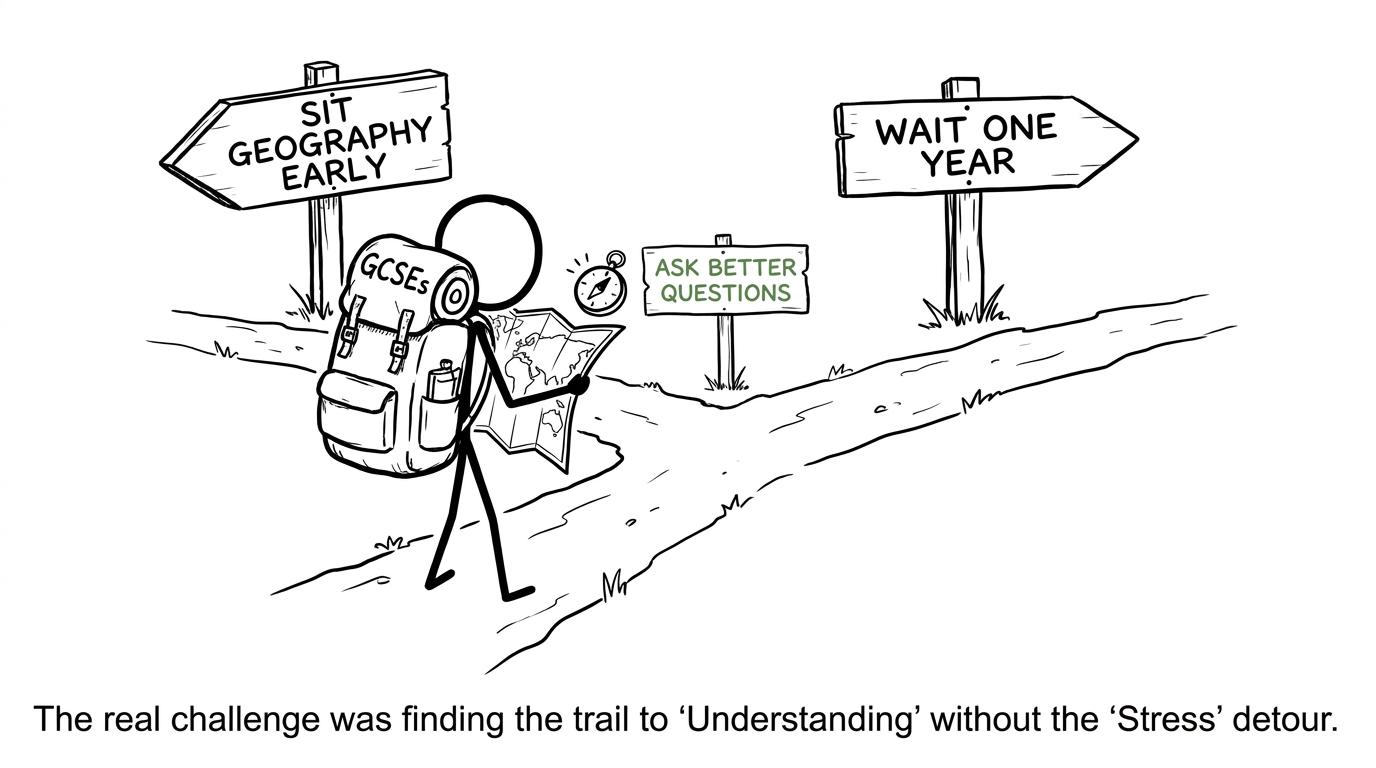 A student choosing between sitting Geography early and waiting
What early entry actually means
Early entry normally means completing and sitting the GCSE before the usual end of Year 111111, often in Year 101010. It is not a different or reduced qualification. You sit the assessment required by your exam board and are judged against the same grade standards as other candidates in that examination series.
Geography specifications differ across AQA, Edexcel, OCR and Eduqas. Their paper structures, optional topics, pre-release arrangements and precise fieldwork assessment can vary. Your school should therefore explain the exact specification, examination series and course plan rather than discussing early entry only in general terms.
Geography is also more than a collection of case-study facts. GCSE courses connect physical and human processes with geographical enquiry, data interpretation, maps, fieldwork and extended written arguments. Completing the textbook is not the same as being ready to apply that knowledge under timed conditions.
Fieldwork cannot be treated as an optional extra
GCSE Geography subject requirements include fieldwork outside the classroom and school grounds on at least two occasions in contrasting environments. Specifications require students to encounter both physical and human geographical contexts, although exam boards organise and assess the details differently.
That matters because an accelerated course still needs to provide proper fieldwork opportunities. You should know what investigations were completed, how data was collected, what limitations existed and how conclusions were evaluated. A rushed worksheet about somebody else's fieldwork is not an adequate substitute for a properly delivered course.
Ask your teacher directly whether every content and fieldwork requirement for your specification will be completed before entry.
When taking Geography early may make sense
Your performance is already stable
One encouraging mock result is useful, but readiness is better shown by a pattern. Look at several assessments completed under realistic conditions. Are your marks stable across physical geography, human geography, fieldwork and geographical skills? Can you still perform when the questions are unfamiliar?
A student consistently working around the intended grade has a stronger case for early entry than one whose result depends on the paper containing favourite topics. The question is not simply, “Could I pass?” It is, “Am I likely to achieve a result that reflects my ability?”
The teaching plan is complete rather than compressed
Early entry can work when a school has deliberately designed the course over sufficient teaching time. It is more questionable when chapters are skipped, case studies are hurried or independent revision is expected to replace substantial teaching.
A sound plan should identify when content finishes, when fieldwork takes place, when timed papers begin and how weaknesses will be repaired. It should also leave room for forgetting and relearning. Knowledge often feels secure immediately after a lesson; examinations ask whether it remains usable months later.
It creates useful space in Year 11
Finishing Geography early may reduce the number of subjects competing for attention during the final GCSE examination season. That can create space for regular maths practice, particularly if algebra, ratio, geometry or problem solving needs sustained attention.
However, that benefit appears only if the freed time is protected. A blank lesson or revision slot has a habit of being claimed by something else. Decide in advance how the time would be used. The GCSE maths revision hub provides board-specific lessons, exam questions, papers and revision tools when you need a structured next step.
You want genuine examination experience
Sitting a complete GCSE can teach you about pacing, preparation and managing an examination day. But this is a secondary benefit, not a sufficient reason on its own. Mocks and timed papers can provide much of that experience without attaching a certificated result to an experiment.
Reasons to wait until Year 11
Another year may improve the quality of your answers
Geography rewards connections. A strong response may link cause and effect, compare evidence, evaluate management strategies and reach a supported judgement. These abilities can improve as your knowledge of the wider course deepens.
Waiting can therefore produce more than additional revision time. It can produce better thinking. Students who know many facts but cannot select and apply them may benefit from another year of structured practice.
Early entry can displace maths revision
Workload is not measured only by the number of hours available. It is also affected by how frequently you switch between tasks, how close deadlines are and how much concentration each subject demands.
If early Geography preparation removes repeated maths practice, the trade-off may be poor. Maths develops through regular retrieval and problem solving. Long gaps make methods less automatic, especially when you are preparing for foundation or higher tier papers alongside other GCSEs.
Use GCSE mini tests to check whether your maths remains secure during the Geography revision period. A short diagnostic can reveal whether supposedly “temporary” neglect is becoming a real weakness.
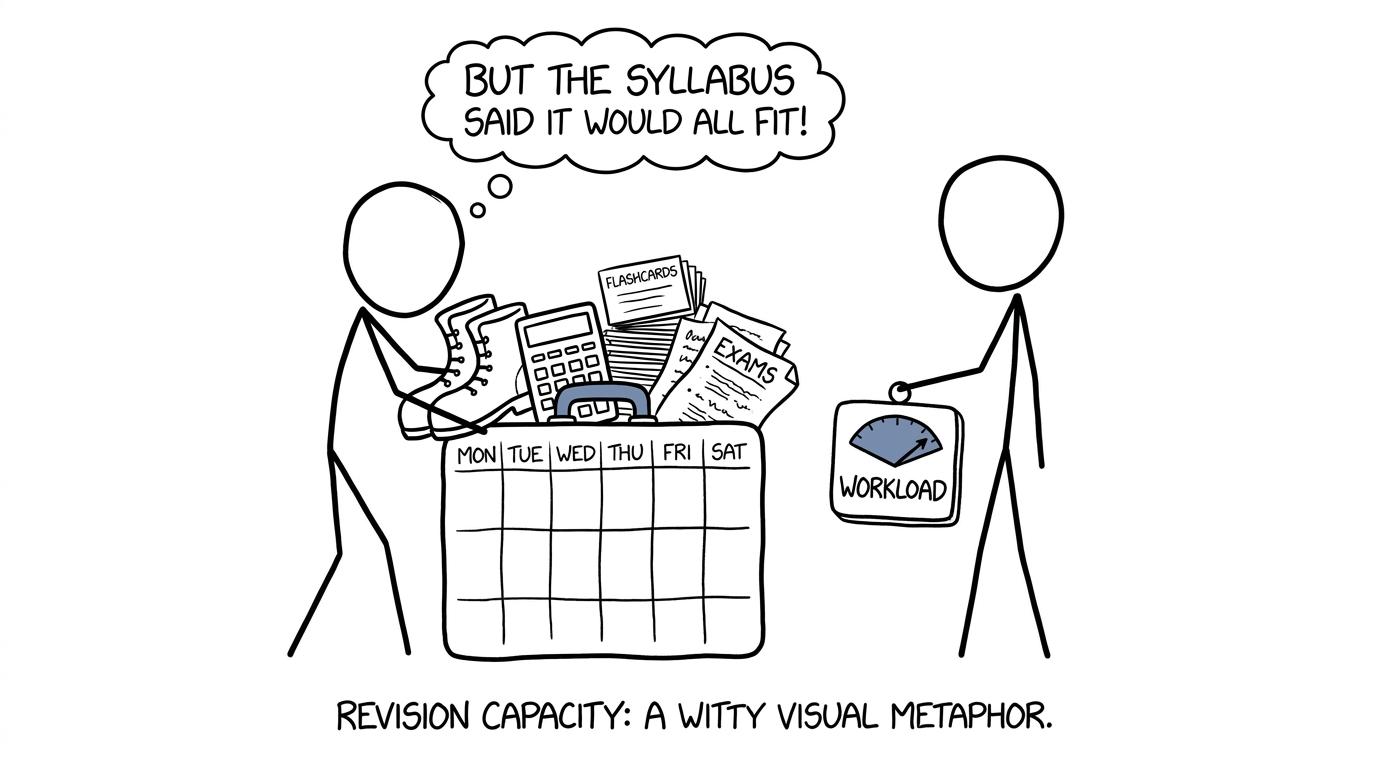 A student trying to pack every GCSE task into one calendar
A resit is not a risk-free backup plan
Students can be entered again after an early result, subject to their school's arrangements and the available examination series. But “I can always resit” is not a complete strategy.
In England, current school accountability guidance generally applies a first-entry rule: the first qualification taken in a subject is normally the one used for the school's performance measures, subject to specific exceptions. A later attempt therefore does not simply erase the first entry for accountability purposes. Rules and practical arrangements can differ across UK nations and individual circumstances, so ask your exams officer for an explanation relevant to your school.
A resit also consumes teaching, revision and examination time in Year 111111: precisely the time early entry was supposed to release.
Your target may be higher than your current secure grade
There is a difference between being ready to obtain a grade and being ready to obtain your best realistic grade. If your current papers fluctuate significantly below your target, extra teaching may be more valuable than early completion.
Do not let the pride of finishing first become more important than the result itself. Qualifications are not races. The useful finish line is the one that reflects what you can genuinely do.
How to judge the effect on maths
Because maths is cumulative, it is a good indicator of whether the early-entry plan is balanced. Continue one small maths routine throughout Geography preparation:
- complete one focused topic session each week;
- use one short mixed test to check retention;
- mark every attempt and record the reason for lost marks;
- return to the weakest skill within a few days;
- complete occasional timed paper sections.
Students following Edexcel can use the Edexcel GCSE Maths past papers. Equivalent AQA GCSE Maths past papers are available for AQA students, while the OCR GCSE Maths revision area combines lessons, questions and paper practice.
If maths scores begin falling, do not automatically add more hours. First examine the plan. You may have concentrated too much revision into a short period or stopped revisiting earlier topics. MathsGenie's guide to building a realistic GCSE maths revision timetable can help you protect consistent practice without creating an impossible week.
Questions to ask before agreeing
A productive conversation with your teacher, parent or carer should cover more than whether you are “good at Geography”. Ask:
About course coverage
- Which exam board and specification am I following?
- When will all required content be finished?
- How have the fieldwork requirements been met?
- Will I receive time to revise the whole course?
About evidence of readiness
- What grade range do several recent assessments suggest?
- Have I completed a full timed paper or equivalent assessment?
- Which parts of the course are currently weakest?
- Is the recommendation based on my evidence or a whole-class policy?
About consequences
- What support is available if I do not reach my target?
- Would the school recommend a resit, and when could it happen?
- How would first-entry rules apply in my circumstances?
- What lessons or supervised study would replace Geography afterwards?
Clear answers make the decision safer. Vague assurances make it harder to judge.
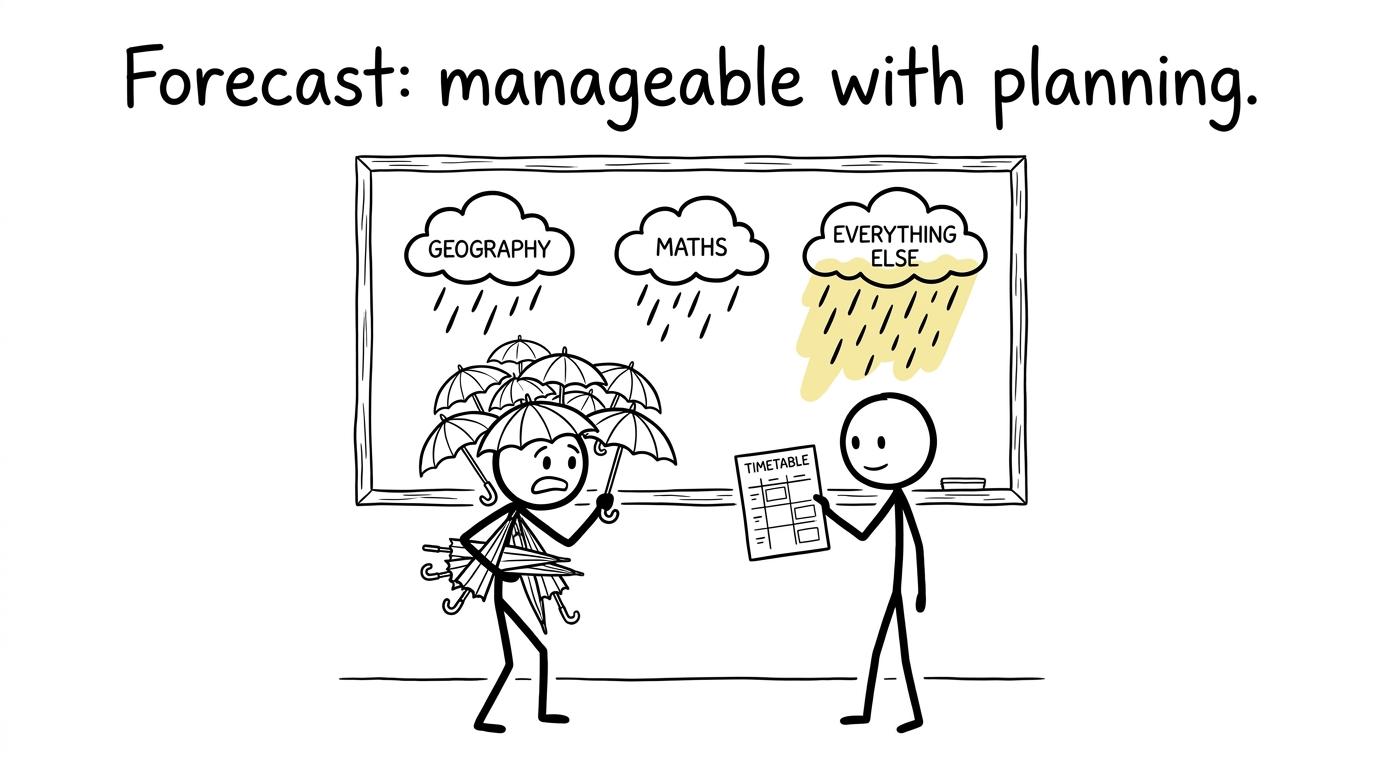 An exam-season weather forecast made manageable by a timetable
Common mistakes with GCSE geography early entry
Treating a pass as the only goal
A pass may be the right target for some students, but the decision should reflect your own progression plans and realistic potential. Ask whether early entry supports the grade you need, not merely whether it produces a result quickly.
Revising case studies without practising application
Knowing names, locations and statistics is not enough if you cannot select relevant evidence for the question. Preparation should include unfamiliar resources, geographical skills and extended responses as well as factual recall.
Assuming Geography has no effect on maths
Every accelerated subject uses time and attention. Keep measuring maths performance rather than assuming it will recover later. When exams approach, Edexcel predicted papers can support focused practice, but they should follow regular topic revision rather than replace it.
Depending on a future resit
A resit should be a contingency, not the foundation of the plan. It adds another examination and may not solve the school-accountability consequences of an early first entry.
Agreeing without checking the specification
“GCSE Geography” is not one identical course across every board. Check the actual papers, topics, fieldwork arrangements and assessment plan used by your school.
The decision: good idea or not?
GCSE geography early entry is sensible when the course is complete, fieldwork has been properly delivered, timed results are stable, the target grade is realistic and other subjects remain protected. It is probably not sensible when the main argument is convenience, speed or the belief that a resit removes all risk.
The calmest decision is evidence-led. Review several assessments. Ask precise questions. Build a weekly plan and see whether it is sustainable before committing.
Whatever happens with Geography, keep maths moving in small, regular steps. Use MathsGenie's free revision lessons and practice questions to repair individual gaps, mini tests to check retention, past papers and mark schemes to develop exam technique, and predicted papers with video solutions as the final examinations approach. Start at the GCSE Maths revision hub and make sure finishing one subject early does not mean leaving another behind.