

GCSE English Literature Grade: Sixth Form Guide
GCSE English Literature grade sixth form guide: learn what grades 9-1 mean for entry, A Level choices, requirements and your practical next steps.
Opening a results envelope can make one number feel much larger than it is. If you are choosing post-16 courses, understanding your GCSE English Literature grade meaning for sixth form matters, but there is no single national grade that guarantees or prevents entry.
Each school or college sets its own general and subject-specific requirements. Recent published examples ask for anything from grade 555 to grade 777 in English Literature, sometimes alongside the same or a different grade in English Language. Your first action should therefore be simple: check the exact admissions policy for every sixth form you are considering.
The short answer
Use this checklist before making decisions:
- Check the sixth form's overall GCSE entry requirements.
- Check the separate requirement for A Level English Literature.
- Notice whether it asks for English Literature, English Language or both.
- Compare the requirement with your predicted grade, not your target alone.
- Ask the English department what happens if you miss the requirement by one grade.
- Keep revising every subject needed for your wider offer, including maths.
A grade is evidence of your performance in a particular assessment series. It is not a permanent measurement of how thoughtful, creative or capable you are.
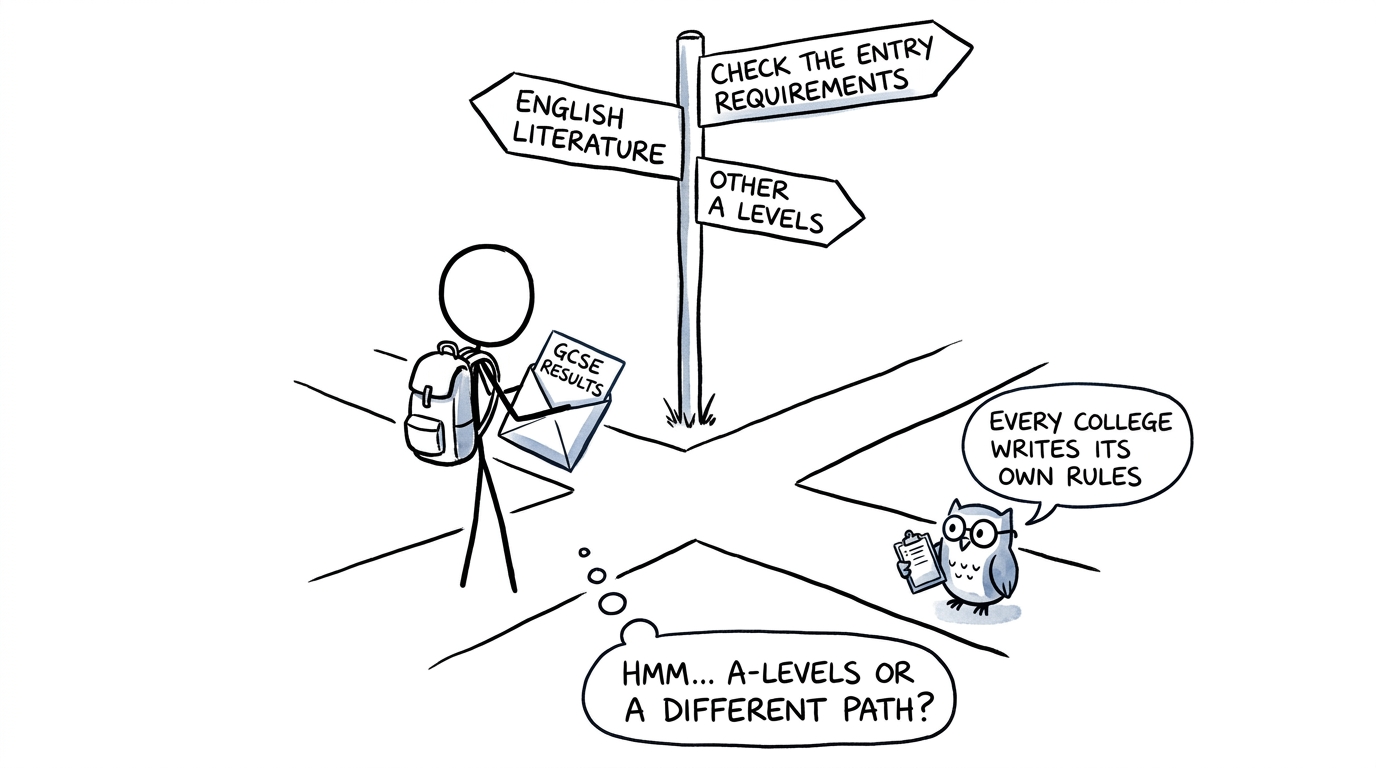 Student choosing between sixth-form options while an owl recommends checking entry requirements
GCSE English Literature grades and sixth-form expectations
The GCSE scale in England runs from grade 999, the highest grade, to grade 111, with U meaning ungraded. Grade 444 is aligned with the bottom of the former grade C, while grade 777 aligns with the bottom of the former grade A. These are official comparison points, not exact translations for every grade.
The breakdown below is guidance rather than a universal admissions rule.
| GCSE English Literature grade | What it may mean for sixth form |
|---|---|
| 999 | Exceptional GCSE performance. You are likely to exceed the published English Literature requirement at most providers, although the course will still demand wider reading and independent argument. |
| 888 | Very strong preparation for progressing to A Level English Literature. Check the general entry conditions as well as the subject requirement. |
| 777 | A strong result that meets even some of the more demanding published requirements. It suggests secure analytical writing, but it does not make the transition automatic. |
| 666 | A common subject requirement in the sixth forms examined during current research. This is often a solid position for applying, provided any English Language and overall GCSE conditions are also met. |
| 555 | Accepted by some providers, but below the requirement at others. Compare policies carefully and ask what support is available before deciding. |
| 444 | A standard pass, but often below the stated threshold for A Level English Literature. Some colleges may consider your wider profile or offer a different Level 333 route. |
| 333 or below | Usually unlikely to meet direct A Level English Literature requirements. Speak to the college about Level 222 study, alternative courses and possible progression routes. |
In England, the Department for Education's published 202520252025-262626 funding guidance treats grade 444 or above in either GCSE English Language or English Literature as meeting the English condition of funding. That is different from qualifying for a particular A Level: a college can still require grade 555, 666 or 777 for its English Literature course.
Why English Language may affect your application
One of the easiest details to miss is the word and. A course might require grade 666 in both English Language and English Literature, while another might accept grade 555 in each or focus mainly on Literature.
This distinction exists because the subjects provide different evidence. Literature assesses responses to literary texts; Language more directly demonstrates comprehension and writing across forms. Sixth forms may use both when judging readiness for sustained essay writing.
Do not rely on a friend's offer or last year's prospectus. Read the requirements for your own intended entry year and ask the admissions team to clarify anything ambiguous.
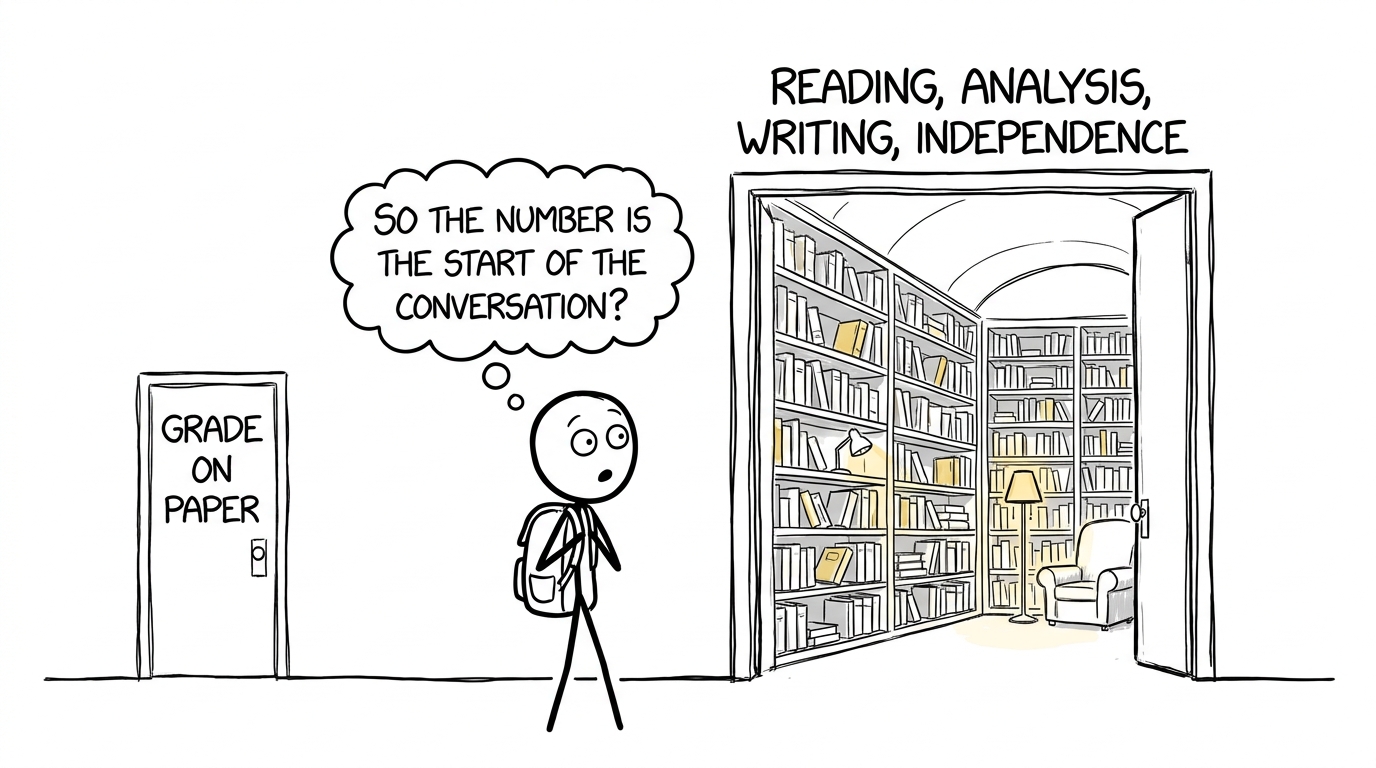 A small grade door opening into a much larger library of reading, analysis and independence
Progressing to A Level English Literature
Progressing to A Level English Literature involves more than remembering quotations. Across UK specifications, students are expected to read widely, analyse how writers shape meaning, consider contexts and interpretations, connect texts, and communicate informed judgements accurately.
That makes three questions more useful than asking whether your grade is “good enough”:
- Do you enjoy rereading difficult passages rather than only following the plot?
- Can you build an argument and select evidence for it?
- Are you willing to read independently and improve essays through feedback?
If the answer is broadly yes, explore the free Edexcel A Level English Literature revision page. It gives you a clearer view of the papers and revision tools ahead. You can also strengthen current exam preparation through GCSE English Literature revision resources and the guide to revising GCSE English Literature efficiently.
Keep your wider sixth-form offer in view
A strong Literature grade cannot always compensate for missing a sixth form's overall entry conditions. Many providers also specify a minimum set of GCSE grades and requirements in English and maths.
That is why your option planning and maths revision belong in the same conversation. Start with the GCSE maths revision hub, then choose resources for your exam board. The Edexcel GCSE maths revision page and OCR GCSE maths revision page organise topics, questions and papers in one place.
For exam practice, use AQA GCSE maths past papers or shorter Edexcel GCSE maths mini tests. One focused session is better than vaguely worrying about every subject at once.
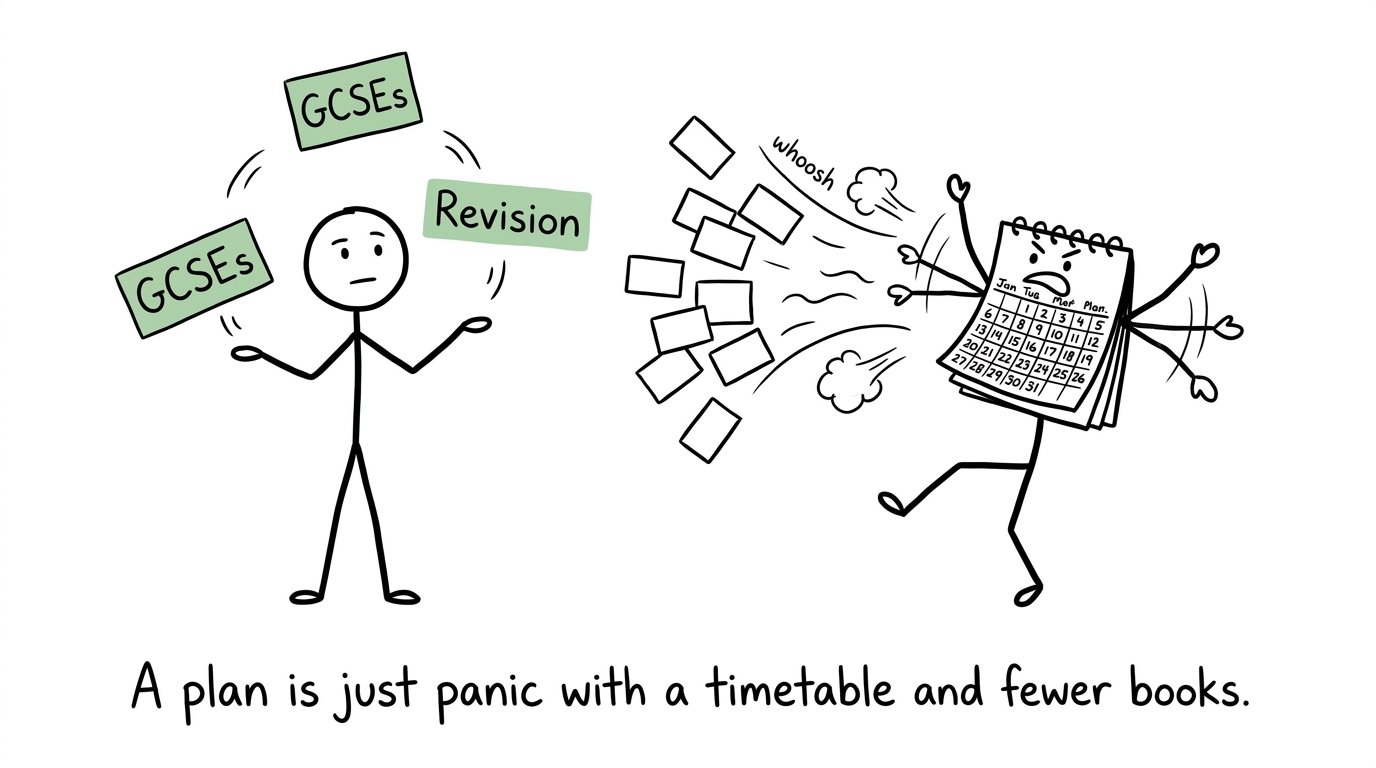 Student calmly balancing GCSEs, options and revision while a calendar creates unnecessary drama
Common mistakes when interpreting your grade
Treating grade 444 as automatic A Level entry
Grade 444 is a standard pass, but A Level English Literature courses commonly publish higher subject requirements.
Looking only at English Literature
Your offer may also depend on English Language, maths and your overall GCSE profile.
Assuming every sixth form uses the same threshold
Published requirements vary. Check each provider separately and confirm whether its rules have changed for your entry year.
Choosing the course for the grade alone
A high grade shows strong prior attainment, not necessarily enjoyment. Read the course outline and consider whether sustained reading, comparison and essay writing suit you.
Your grade is a doorway, not a verdict
Your GCSE English Literature grade helps a sixth form judge readiness, but its meaning depends on the provider and course. Check the precise policy, compare it with both English grades, and ask questions early if you are close to the threshold.
Meanwhile, protect the rest of your sixth-form application. Use MathsGenie's free revision lessons, practice questions, mark schemes, video solutions, mini tests, past papers and GCSE predicted papers to turn your revision planner into specific actions. The goal is not to make one grade carry your future. It is to give yourself several strong options.











