

GCSE English Language Resit: Your Revision Plan
GCSE English Language resit plan for after Results Day: diagnose lost marks, build a weekly routine and use past papers confidently before your retake exam.
Results Day can turn one grade into the only grade you see. Yet a GCSE English Language resit is not a return to the beginning. You already know the paper, the pressure and many of the skills. Your task now is narrower: discover where marks escaped, practise those areas deliberately and become more reliable under timed conditions.
Start by confirming your exam board, resit series and entry with your school or college. Then use this plan:
- collect your script or teacher feedback where possible;
- diagnose weaknesses by question type and assessment objective;
- complete short, focused practice before attempting full papers;
- mark every response and rewrite weak sections;
- rehearse both papers under timed conditions;
- keep maths revision moving alongside English.
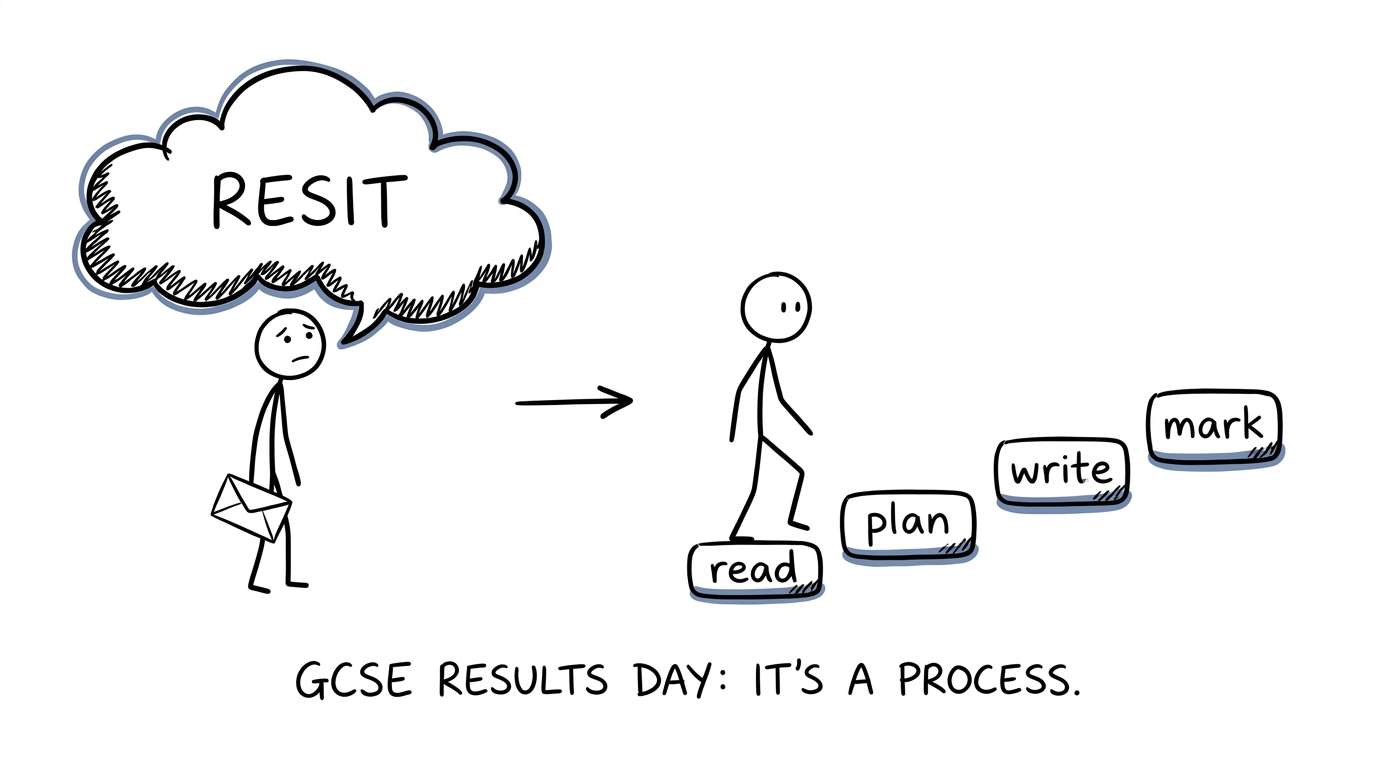 A student turns the resit cloud into manageable revision steps
First, confirm what you are resitting
Do not build a plan around a paper you might not sit. Ask your school or college:
- Which exam board am I entered for: AQA, Edexcel, OCR or Eduqas?
- Am I preparing for the November or summer series?
- What is my entry deadline?
- Will my previous Spoken Language endorsement carry forward?
- What access arrangements will be in place?
GCSE English Language has no foundation or higher tier. Although the assessment objectives are common across exam boards, paper structures, timings and question wording differ. Begin at the GCSE English Language revision hub, then select resources for the correct board.
In England, eligible post-16 students who have not met the government’s English and maths funding condition must continue studying an approved qualification. A grade 4 or above in either GCSE English Language or English Literature at Key Stage 4 can meet the English condition, although a course, employer or institution may specifically require English Language. Ask your provider what applies to you rather than relying on a general rule.
For the November 2026 series, JCQ’s current key dates place examinations between 2 and 11 November, with candidate results released on 14 January 2027. Individual English Language paper dates vary by board, so confirm the official timetable with your centre.
Milestone one: diagnose the lost marks
Your result tells you the outcome, not the cause. During the first week after Results Day, gather your mark breakdown, mock papers, teacher comments and, where available, your exam script.
Sort each weakness into one of five categories:
- Reading accuracy: misunderstanding explicit or implied information.
- Analysis: identifying a method without explaining its effect.
- Comparison or evaluation: making general claims without precise evidence.
- Writing: weak organisation, an unsuitable register or undeveloped ideas.
- Exam control: poor timing, missed questions or rushed proofreading.
Make every target observable. “Improve language analysis” is vague. “Explain why the writer’s verb influences the reader” gives you something you can practise and check.
If you sat AQA, the AQA GCSE English Language revision page brings the relevant lessons, questions and revision tools together. Edexcel students should use the corresponding Edexcel English Language revision resources.
Milestone two: rebuild one skill at a time
For the next two or three weeks, avoid writing full papers every evening. Full papers reveal weaknesses; they do not automatically repair them.
Use three focused sessions each week:
Reading session
Attempt one reading question under a realistic time limit. Check whether you answered the exact command word, selected concise evidence and explained meaning or effect rather than merely naming a technique.
Writing session
Plan one response and write either a substantial section or the complete task. Review audience, purpose, form, paragraph order, sentence control, vocabulary, spelling and punctuation. Technical accuracy matters: AO6 represents one fifth of the qualification across GCSE English Language specifications.
Feedback session
Use the mark scheme, annotate what earned credit and identify the change needed to reach the next level. Rewrite your weakest paragraph immediately. The guide to using AQA English Language past papers properly explains this attempt, mark, rewrite cycle in more detail.
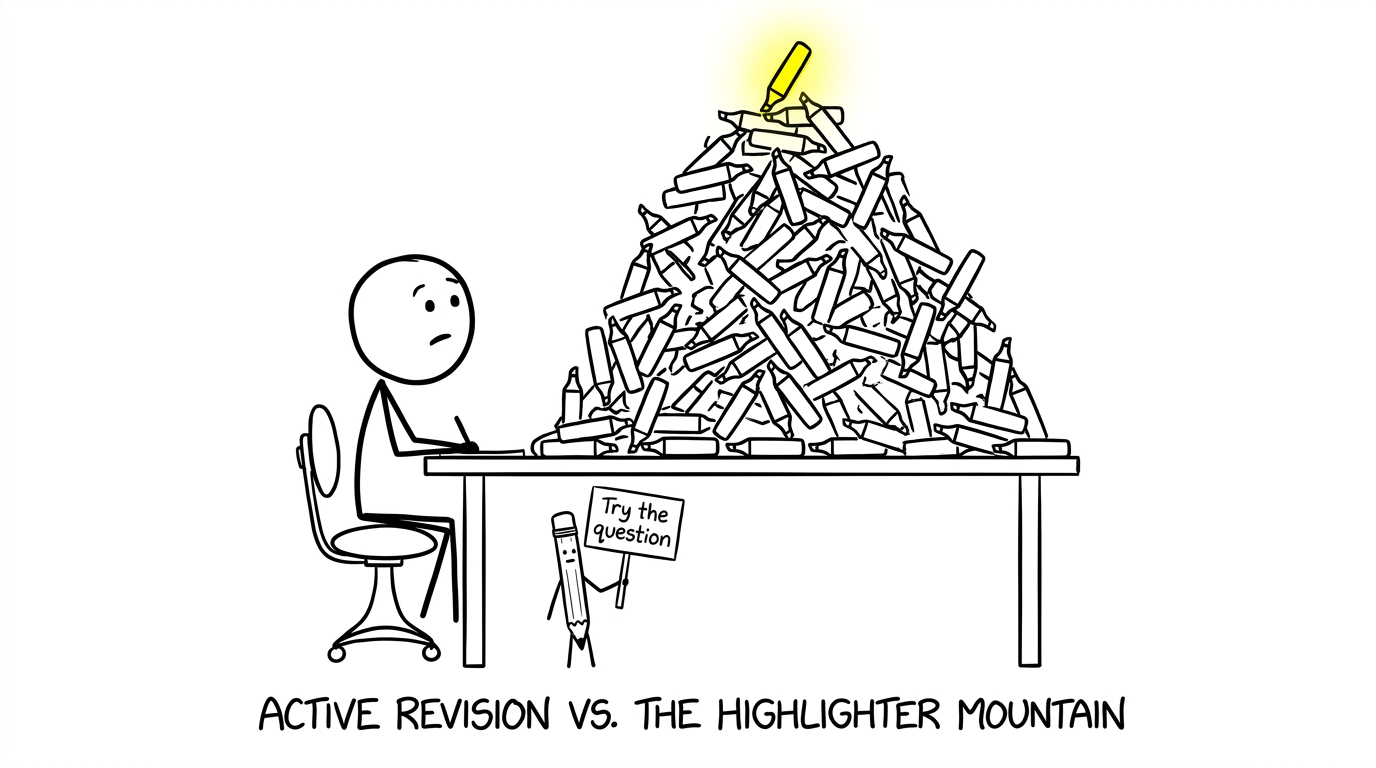 A sensible pencil challenges a mountain of revision highlighters
Milestone three: move into timed papers
When individual questions feel more controlled, complete one full paper each week. Alternate between papers so that reading and writing receive balanced attention.
The AQA English Language past-paper library includes papers by year and exam series with mark schemes. Use an unseen paper, remove distractions and follow your board’s precise time allowance.
After marking, record only three priorities. A long list creates noise; three actions can shape the next week. For example, your priorities might concern selecting shorter evidence, comparing perspectives directly and reserving time to proofread.
Return to the same question type within seven days. Improvement becomes visible when you retest a skill, not when you simply recognise the mark-scheme wording.
Protect your maths revision too
English resit preparation often begins while a new college timetable is settling. If you are also resitting maths, divide the week by task rather than waiting to feel motivated.
A sustainable pattern is three English sessions and three shorter maths sessions, with one evening kept free. Use the GCSE maths revision hub for revision lessons, worksheets, practice questions and past papers. Nearer the examination, GCSE predicted papers can support maths preparation without replacing topic practice or official past papers.
The principle is the same in both subjects: attempt, mark, identify the leak and retest.
Common mistakes when resitting GCSE English Language
Re-reading instead of producing answers
Notes can create familiarity without improving performance. Spend more time planning, writing and marking than highlighting.
Revising the wrong board
Question order and timing differ. Check the specification code and use matching papers throughout your preparation.
Writing continuously without feedback
More writing is not always better writing. Every response should produce one precise target and a short rewrite.
Ignoring accuracy marks
Ambitious vocabulary cannot compensate for sentences that lose clarity. Leave time to check punctuation, spelling, paragraphing and sentence boundaries.
Treating November as automatically easier
A resit uses the same qualification and grading scale. Exam boards maintain standards across series, so prepare for the full specification rather than trying to predict an easier paper.
Turn Results Day into a starting line
Resitting GCSE English Language is emotionally difficult because the first attempt is still fresh. But it also gives you something valuable: evidence. You now know that broad revision was not enough, and you can replace it with a tighter system.
Start today at MathsGenie’s free GCSE English Language resource centre. Choose your exam board, diagnose one question, use the worksheets and practice resources, then progress to past papers and mark schemes. Keep your maths grades moving with MathsGenie’s revision lessons, mini tests, predicted papers and video solutions. A resit does not need a dramatic reinvention; only a calm plan repeated often enough to work.











