

GCSE Engineering Exam Season Results: Does It Matter?
GCSE engineering exam season results explained: compare summer and winter sittings, grading fairness, availability and a practical revision plan for students.
A date on an exam timetable can feel strangely powerful. Summer brings a crowded run of papers; a winter sitting may appear quieter and offer more preparation time. It is natural to wonder whether GCSE engineering exam season results show that one season is easier than another.
The short answer is no: the season itself should not change the standard required for a grade. Grade boundaries are set after papers have been marked and can move to reflect differences in paper difficulty. More importantly, the current AQA GCSE Engineering specification is normally assessed and certificated in the May/June series, so an autumn or winter GCSE Engineering sitting is not generally available. Where a different engineering qualification offers more than one series, your preparation, assessment rules and cohort matter more than the weather or month.
The essential exam-season checklist
Before building a revision plan around a supposed summer or winter advantage, check:
- the exact title of your qualification;
- the awarding organisation and specification code;
- whether it is a GCSE, Technical Award or Cambridge National;
- which assessment series your components are available in;
- whether all components must be completed in the same series;
- how much is assessed by a written paper and by non-exam assessment;
- your school or college's internal deadlines.
Do not rely on the word “engineering” alone. Two courses with similar classroom content can have different assessment structures. Your teacher or exams officer can confirm what you are actually entered for.
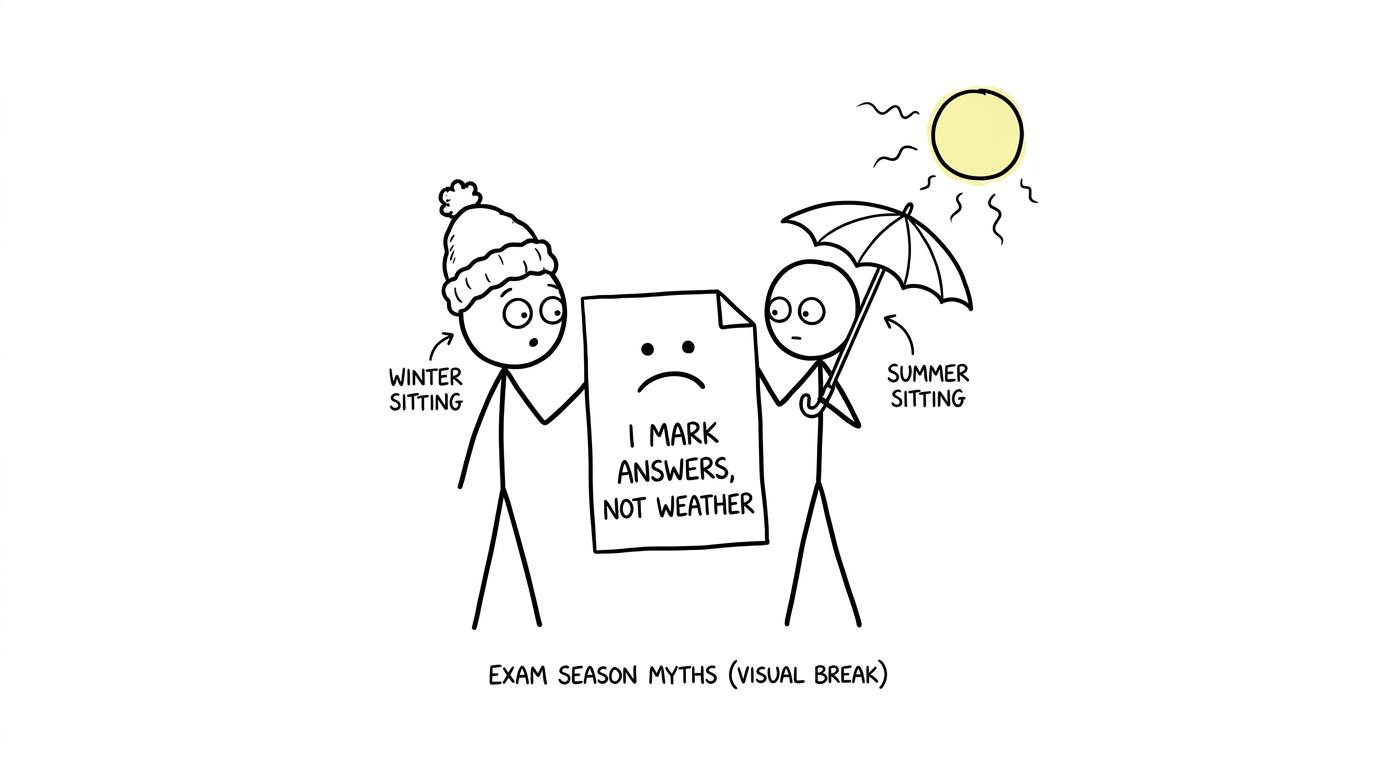 Two students discover that an exam paper marks answers rather than weather
Is there a winter sitting for GCSE Engineering?
For the current AQA GCSE Engineering qualification, specification code 8852, exams and certification are available in May/June. AQA describes it as a linear qualification: students complete the required assessments at the end of the course and in the same series.
Its assessment is divided into:
- a written examination lasting 222 hours, worth 120120120 marks and 60%60\%60% of the qualification;
- practical engineering non-exam assessment, worth 808080 marks and 40%40\%40%.
The overall scaled total is therefore 200200200 marks. Conceptually, the result combines the two components as follows:
Total mark=written-paper mark+NEA mark\text{Total mark}=\text{written-paper mark}+\text{NEA mark}Total mark=written-paper mark+NEA markThis matters because students sometimes apply the autumn resit arrangements for GCSE English language and GCSE maths to every GCSE. In England, the regular November GCSE series is principally associated with English language and maths. It does not automatically create a November opportunity for Engineering.
Some schools teach engineering qualifications from other awarding organisations, including vocational Level 111/222 courses. These may have January, February or summer assessment windows, depending on the qualification and component. That is not the same as having a winter sitting of AQA GCSE Engineering. Always check the current specification and entry information rather than assuming that AQA, Edexcel, OCR and Eduqas use identical arrangements.
Would summer and winter results be graded differently?
Where two legitimate series are available for the same regulated qualification, the intended grade standard should remain comparable. A grade 444 is not supposed to represent weaker work simply because it was awarded in winter, and a summer grade is not automatically more valuable.
Exam boards do not normally reuse a fixed raw-mark boundary regardless of paper difficulty. Senior examiners review evidence from the assessment and recommend boundaries that preserve the required standard. A more accessible paper may need a higher boundary; a more demanding paper may need a lower one.
This is why the following conclusion is unsafe:
higher boundary≠harder grade to achieve\text{higher boundary} \neq \text{harder grade to achieve}higher boundary=harder grade to achieveThe boundary is a conversion point between raw marks and grades. It is not, by itself, a measurement of how harshly a series was treated.
Ofqual has also warned against directly comparing overall summer and November outcomes in subjects where the cohorts differ. November GCSE English language and maths entries, for example, contain many resitting students. The students are not a random copy of the summer cohort, so differences in pass rates do not prove that the season caused the difference.
The same caution would apply to an engineering course with multiple windows. Students entered early, students completing a resit and a full Year 111111 summer cohort may differ in prior attainment, preparation time and assessment history.
What can genuinely make one season feel harder?
The awarding standard may be designed to remain stable, but the experience of sitting the assessment can still change.
Preparation time
A later series can provide extra weeks to revisit weak knowledge. That sounds like an automatic advantage, but additional time only helps when it contains deliberate practice. Months do not improve a grade by themselves.
A useful plan identifies gaps first. MathsGenie's GCSE maths revision hub brings together revision lessons, questions and exam-board resources, while the GCSE maths revision timetable guide explains how to turn available weeks into manageable sessions.
Competing examinations
The summer timetable is crowded. Engineering preparation may compete with maths, sciences, English and other subjects. A winter window may involve fewer simultaneous exams, although it can also arrive while new course content is being taught.
The useful question is not “Which season sounds calmer?” It is “In which period can I complete consistent, specification-matched preparation without neglecting other subjects?”
Non-exam assessment deadlines
For a course containing practical work, changing the written-paper date does not erase the demands of design, manufacture, testing and evaluation. Schools may also set internal deadlines before the awarding body's submission deadline.
Because AQA GCSE Engineering is linear, the written paper and NEA belong to the same final qualification structure. A strong written performance cannot make an incomplete practical component irrelevant.
Familiarity with the assessment
A student taking a later opportunity may know more about formal exam conditions, but may also be returning to content that has become less familiar. The advantage comes from reviewing errors and rebuilding fluency, not from the month printed on the paper.
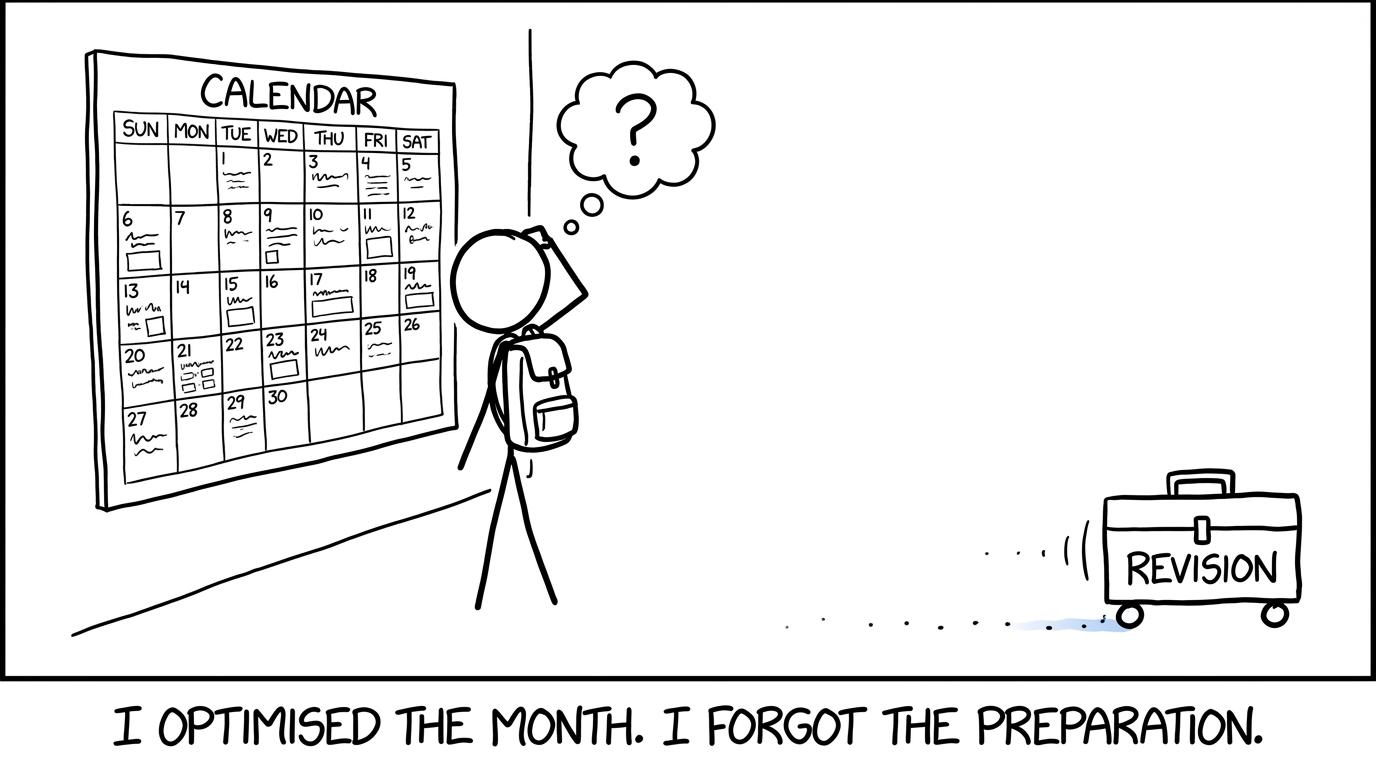 A student optimises the calendar while revision quietly escapes
The maths skills that support Engineering results
Engineering questions can require calculations, interpretation and clear communication. Secure GCSE maths reduces the amount of attention spent wrestling with basic operations, leaving more capacity for engineering decisions.
Useful areas include:
- ratio, proportion and scale;
- rearranging and substituting into formulae;
- unit conversions;
- area, surface area and volume;
- percentages and tolerances;
- interpreting tables, diagrams and graphs;
- accuracy, rounding and significant figures.
The GCSE maths topics by exam board and tier guide can help you map these skills to your maths specification. For measurement work, use the conversions and units revision resources. Higher-tier students can also strengthen scale-factor reasoning through similar shapes, area and volume.
Keep units visible throughout calculations. Engineering values without units can be ambiguous, while premature rounding can distort a final answer. Unless a question instructs you otherwise, retain sufficient calculator accuracy during the method and round once at the end.
How to prepare without trying to game the season
A sensible revision strategy treats the exam series as a deadline, not a prediction of difficulty.
Confirm the assessment structure
Write down the specification code, component names, weighting, exam date and internal NEA deadlines. If your course is not AQA GCSE Engineering 8852, use the documents for your actual qualification.
Diagnose mathematical weaknesses
Complete a short mixed assessment and classify each lost mark. Was it caused by a missing method, an incorrect unit, a calculator slip, early rounding or a misread diagram?
Short GCSE maths mini tests make this manageable. They provide evidence about specific weaknesses without requiring a full paper every evening.
Practise under realistic conditions
Past papers are most valuable when followed by careful correction. The month of the paper is less important than whether its specification and assessment style match your course.
For maths preparation alongside Engineering, choose the correct board and tier. Students taking Edexcel can use Edexcel GCSE maths past papers, while the guide to using GCSE past papers properly explains the paper, mark, repair and retest cycle.
Review rather than merely repeat
After marking, record:
- the topic;
- the reason the mark was lost;
- the correct rule or method;
- the practice needed next;
- the date for a short retest.
A completed paper tells you where you are. The review is what moves you forward.
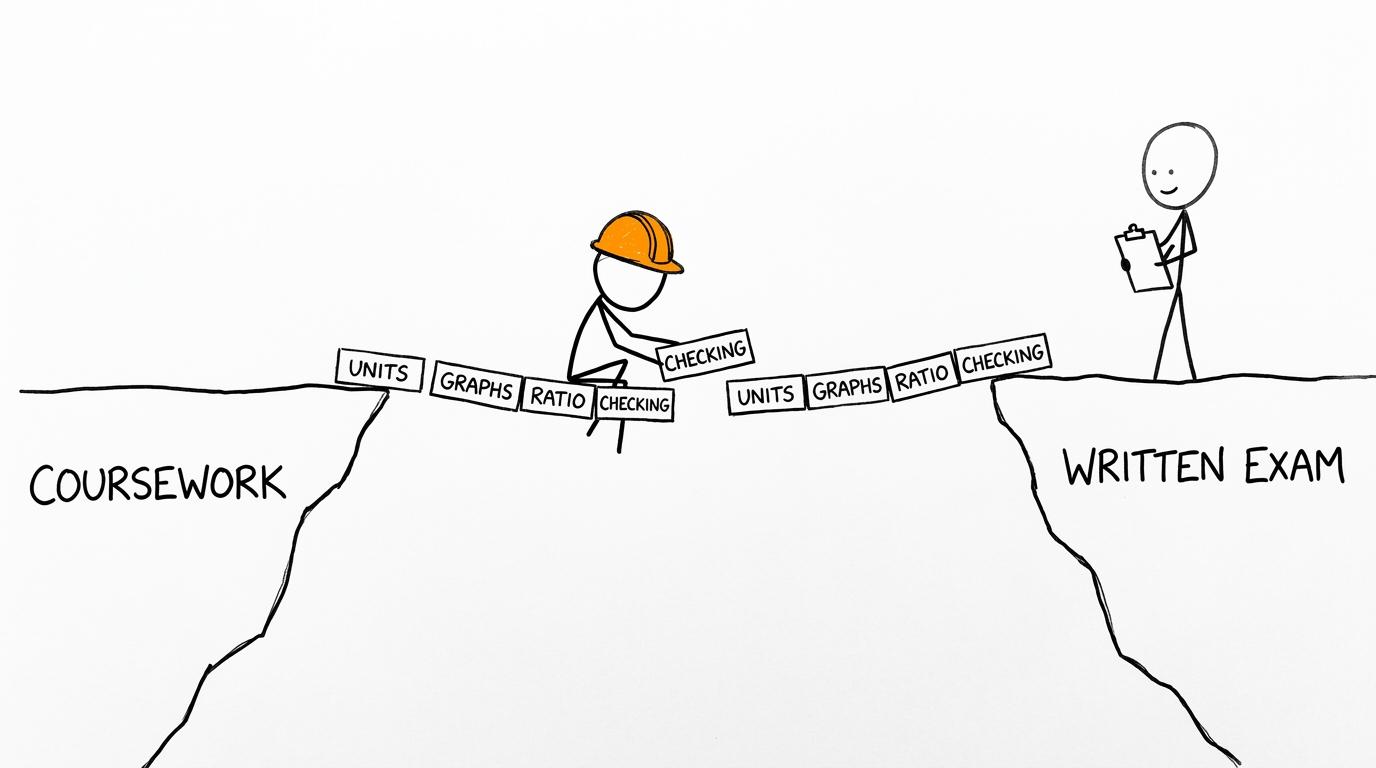 An engineering student builds a revision bridge between coursework and the written exam
Common mistakes when comparing exam seasons
Assuming every GCSE has a November series. GCSE English language and maths resit arrangements are not universal. Current AQA GCSE Engineering certification is available in May/June.
Comparing pass percentages without comparing cohorts. Different groups may vary in age, prior attainment, resit status and preparation. An outcome gap does not establish that the season caused it.
Treating grade boundaries as fixed targets. Boundaries may change when paper demand changes. Revise the specification rather than predicting a raw boundary.
Confusing GCSE Engineering with another engineering qualification. Technical Awards and Cambridge Nationals can have different assessment windows, resit rules and grading systems.
Ignoring non-exam assessment. For AQA GCSE Engineering, NEA contributes 40%40\%40%. A revision plan focused only on the written examination overlooks a substantial part of the qualification.
Waiting for the “better” season. Availability, entry rules and school decisions may remove that choice altogether. Even where both windows exist, an extra window is useful only when it supports better preparation.
The result is built before the season arrives
Summer versus winter makes an appealing explanation because it is visible. The calendar is easy to blame. Preparation quality, accurate course information and repeated correction are less dramatic, but they are much more useful.
For the current AQA GCSE Engineering course, the practical answer is straightforward: plan for the May/June series unless your school confirms that you are taking a different qualification. Where an engineering course genuinely offers both summer and winter assessment, neither season should carry an easier grading standard. Choose according to availability, readiness and your centre's guidance, not rumours about pass rates.
Use MathsGenie to strengthen the maths beneath your engineering work. Begin with free revision lessons and practice questions, check progress with mini tests, then build exam confidence through past papers, predicted papers, mark schemes and video solutions. The season sets the deadline. Your revision determines what you can do when it arrives.










