

GCSE Biblical Hebrew Grade 8 Meaning Explained
GCSE Biblical Hebrew grade 8 meaning explained: discover the ability it represents, how it compares with A and A*, and why boundaries change each year.
A result can look simple on paper while carrying years of work inside it. If you are searching for the GCSE Biblical Hebrew grade 8 meaning, the short answer is this: grade 888 is an excellent result, sitting one grade below the highest award of grade 999. It shows a very strong overall performance across Biblical Hebrew language and literature.
It is broadly within the part of the grading scale previously occupied by grades A and A*, but there is no exact one-to-one conversion between grade 888 and a single old letter grade. More importantly, it represents far more than recalling vocabulary. A grade 888 student has generally demonstrated secure translation, comprehension, grammatical understanding and literary analysis under examination conditions.
For a student mainly focused on GCSE maths, the lesson is useful beyond Hebrew: a grade is not a fixed percentage. It is the result of your raw marks being compared with boundaries set for that particular examination series.
Grade 8 at a glance
Here is the essential picture:
- Grade 888 is the second-highest grade on the GCSE 999-111 scale.
- The current Pearson Edexcel Biblical Hebrew qualification has two written papers.
- Language contributes 50%50\%50% of the qualification and literature contributes 50%50\%50%.
- Your final grade comes from the combined mark across both papers.
- Grade boundaries change between examination series.
- Grade 888 belongs to the upper region covered broadly by the old A and A* grades, but it is not officially identical to either one.
- It indicates consistently strong performance, not perfection.
You can inspect the latest published figures on the Edexcel GCSE Biblical Hebrew grade boundaries page.
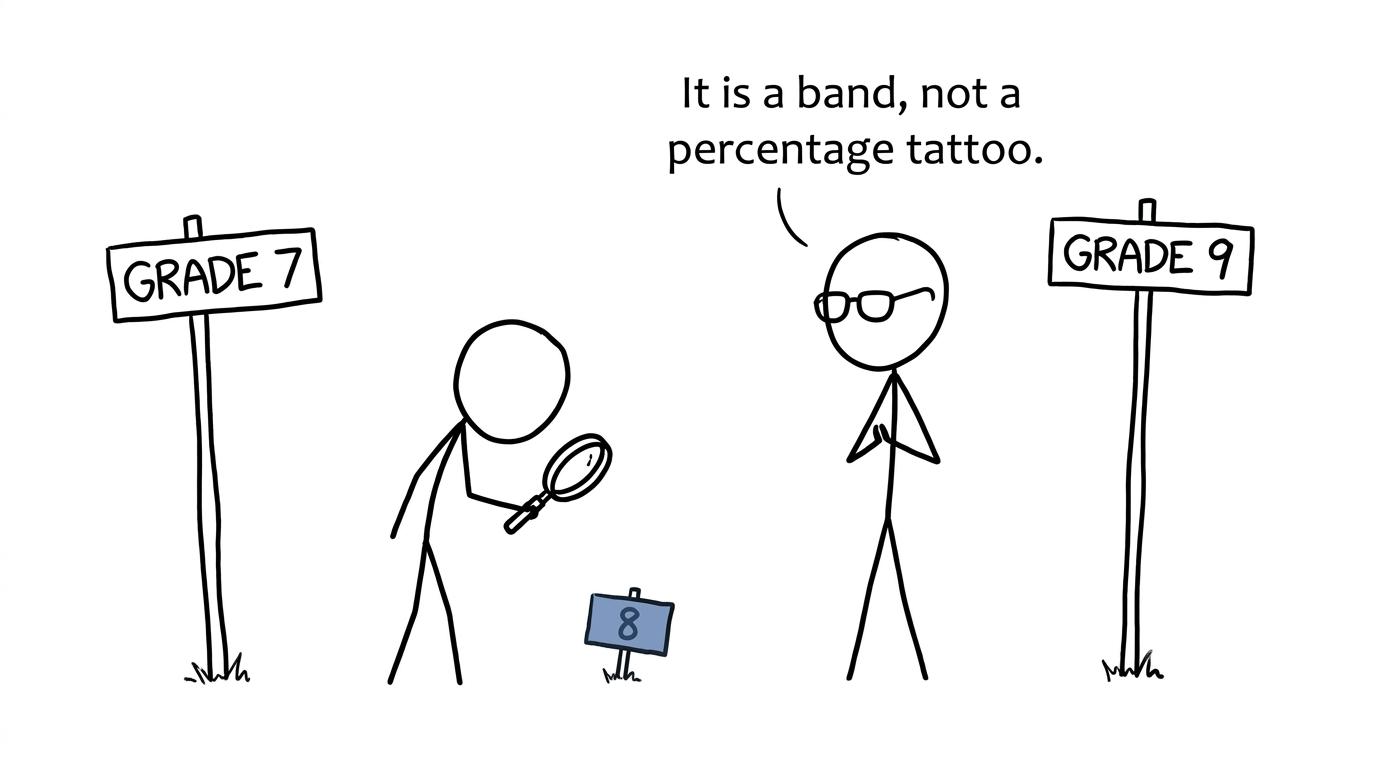 A student investigates where grade 8 sits between grades 7 and 9
What does a grade 8 represent in terms of ability?
A grade 888 is an overall qualification grade, so it does not certify one narrow skill. It indicates that the student collected a high proportion of the available marks across several demanding forms of assessment.
Pearson Edexcel GCSE Biblical Hebrew is a linear qualification. Students take the examinations at the end of the course, and the papers are not divided into foundation and higher tiers. That differs from GCSE maths, where your tier affects the grades available.
Strong command of Biblical Hebrew language
Paper 111, Language, lasts two hours and is worth 100100100 marks, or 50%50\%50% of the qualification. It assesses knowledge and understanding of the language through unseen material.
A student working at grade 888 standard would generally be expected to:
- understand demanding unseen passages with a high degree of accuracy;
- recognise vocabulary, morphology and grammatical structures in context;
- identify how clauses and sentences fit together;
- translate Biblical Hebrew into clear, accurate English;
- preserve the meaning of the original rather than producing an awkward word-for-word rendering;
- cope effectively with unfamiliar combinations of familiar language.
The paper also includes an option involving grammatical understanding or the translation of simple English sentences into pointed Biblical Hebrew. A high overall mark therefore reflects controlled application, not just memorisation.
That distinction matters. Knowing a vocabulary list is like recognising the ingredients in a kitchen. Translation asks whether you can produce the meal when the order, context and pressure change.
Detailed understanding of set literature
Paper 222, Literature, also lasts two hours and is worth 100100100 marks. Students study two prescribed texts and answer questions testing understanding, translation and literary response.
At a strong grade 888 level, a student will typically be able to:
- demonstrate detailed knowledge of the set texts;
- translate extracts accurately;
- explain important grammatical and literary features;
- use precise textual evidence;
- analyse how language contributes to meaning;
- evaluate ideas, values and social practices presented in the texts;
- compare material thoughtfully where the question requires it.
The current assessment objectives give 25%25\%25% of the whole GCSE to knowledge and understanding of literature and another 25%25\%25% to analysis, evaluation and response. That means literary argument is not an optional extra. It accounts for a substantial part of the final result.
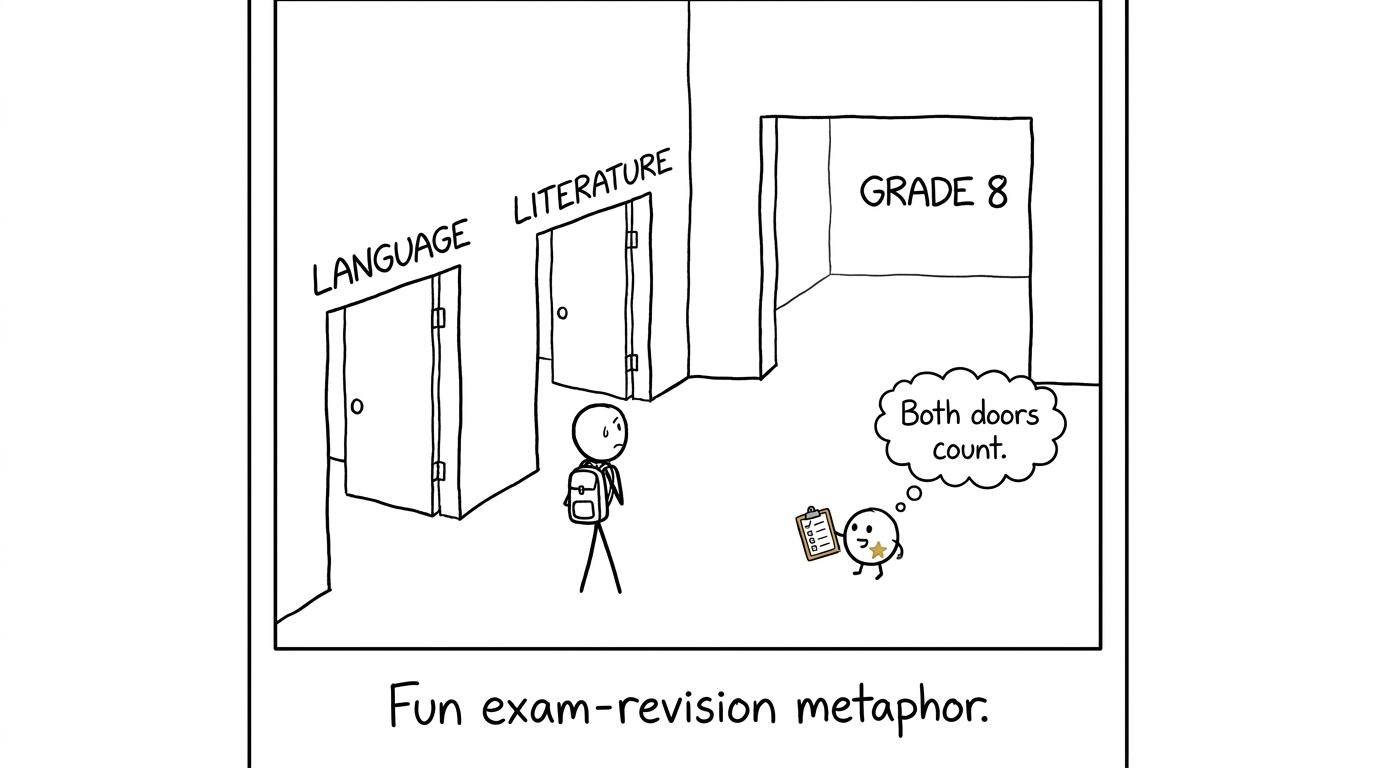 A student discovers that language and literature both lead towards the final grade
How grade 8 compares with the old letter grades
The most accurate comparison begins with what the official grading system does and does not say.
GCSEs in England now use grades 999 to 111, with 999 as the highest. The old system used A* to G. Ofqual established comparable points at the bottom of grades 777, 444 and 111:
- the bottom of grade 777 is comparable with the bottom of the old grade A;
- the bottom of grade 444 is comparable with the bottom of the old grade C;
- the bottom of grade 111 is comparable with the bottom of the old grade G.
There is no official rule stating that every grade 888 is exactly an A*. Instead, grades 777, 888 and 999 provide greater differentiation across the region previously occupied by A and A*.
So the sensible interpretation is:
- grade 777 begins at the old grade A comparison point;
- grade 888 represents achievement securely above that threshold and near the top of the GCSE scale;
- grade 999 identifies the very highest performance and is awarded more selectively than the old A*.
It is reasonable to describe grade 888 informally as being around the high-A/A* region, but it is better not to present that shorthand as an exact conversion. On an application or CV, use the grade actually awarded: GCSE Biblical Hebrew, grade 888.
Why grade 8 is not one fixed percentage
Students often want a permanent target such as 75%75\%75%. GCSE grading does not work that way.
Grade boundaries are set after scripts have been marked. They reflect the demand of the papers and help maintain the expected standard from one examination series to another. If one paper proves more demanding, the same quality of performance may require fewer raw marks.
Recent Pearson figures show the movement clearly. For the qualification total of 200200200 marks, the grade 888 boundary was:
- 141141141 marks in June 2023;
- 150150150 marks in June 2024;
- 137137137 marks in June 2025.
Those boundaries correspond to 70.5%70.5\%70.5%, 75%75\%75% and 68.5%68.5\%68.5% respectively. The variation does not mean that grade 888 suddenly became more or less valuable. It means that raw marks only gain meaning in the context of that year’s assessment.
This is the same reason maths students should treat previous boundaries as guidance rather than promises. MathsGenie’s GCSE maths grade-boundary history helps illustrate how thresholds can move between series.
What a grade 8 does not mean
A strong grade can be misunderstood in both directions.
First, grade 888 does not mean the student answered almost everything correctly. As recent boundaries demonstrate, an excellent grade can be achieved without approaching full marks.
Second, it does not mean every assessed skill was equally strong. Because the result is aggregated across two papers, a stronger language performance can offset some lost literature marks, or vice versa. The certificate records the combined outcome.
Third, it does not guarantee effortless future performance. A grade describes achievement in a particular qualification and examination series. It is strong evidence of developed knowledge and exam skill, but further study still requires practice.
Finally, it should not be confused with GCSE Modern Hebrew. Biblical Hebrew is treated as an ancient language and focuses on language, translation and prescribed literature. Modern Hebrew is a different qualification with listening, speaking, reading and writing assessments.
Turning the meaning of grade 8 into a revision strategy
The most useful grade target is not a number written at the top of a timetable. It is a set of repeatable behaviours.
For Biblical Hebrew, preparation should cover both halves of the qualification. Translation practice alone cannot fully prepare you for literary analysis, while detailed knowledge of set texts cannot replace unseen-language skill.
A sensible cycle is:
- practise one clearly defined skill;
- mark the response against the relevant mark scheme;
- identify whether marks were lost through knowledge, accuracy, interpretation or timing;
- correct the precise weakness;
- return to it later using a different question.
This is also the core of effective maths revision. Begin with the GCSE maths revision hub, choose your board and tier, and use a short assessment to expose the topics that need attention. The guide to finding your weakest GCSE topics explains how to turn lost marks into focused revision.
Once the underlying methods are secure, timed papers become more valuable. MathsGenie’s advice on when to start GCSE past papers helps you move from topic practice to full examination conditions without rushing the process.
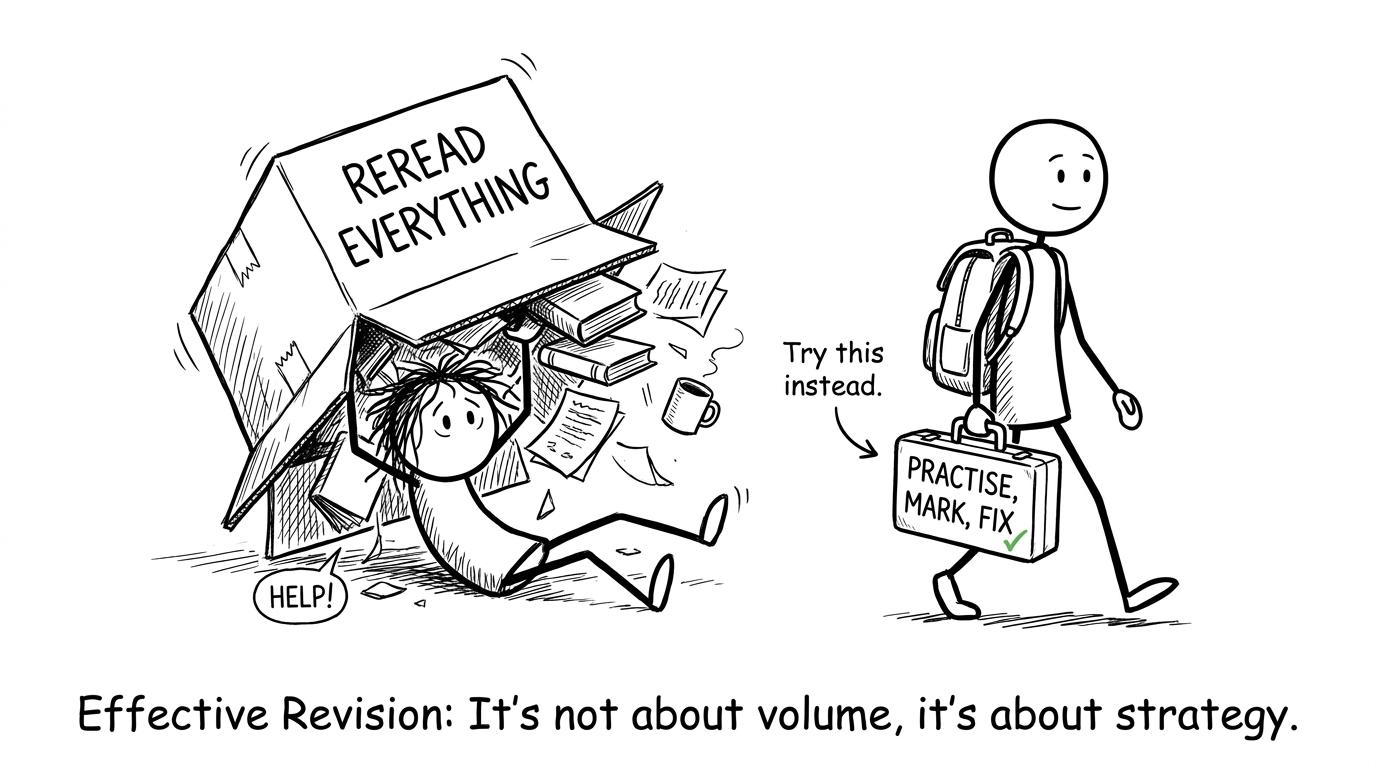 One student struggles with endless rereading while another uses a practise, mark and fix toolbox
Common mistakes when interpreting a grade 8
Treating grade 8 as a permanent percentage
A previous boundary is historical information, not a guaranteed future target. Aim comfortably above recent thresholds in practice, but judge progress by the quality and consistency of your answers.
Calling it an exact A*
Grade 888 is in the upper region broadly associated with the old A/A* range. However, the old and new scales do not match grade by grade. Describe it as an excellent result rather than forcing an exact conversion.
Looking at one paper in isolation
Biblical Hebrew is awarded from the combined total across Language and Literature. A paper-level estimate cannot confirm the final qualification grade unless the other component is included.
Revising only comfortable material
Rereading familiar set passages can feel productive because recognition arrives quickly. Unseen translation, precise grammar and analytical writing are often less comfortable, which is exactly why they require deliberate practice.
Using a grade boundary as the revision plan
A boundary tells you how many marks were required in a past series. It does not tell you where your next mark will come from. Mark schemes, error logs and targeted questions provide that information.
For maths, the one-month GCSE revision plan offers a practical structure, while Edexcel GCSE Maths predicted papers provide fresh timed practice once topic gaps have been repaired.
The real value of a grade 8
A grade 888 in GCSE Biblical Hebrew represents highly developed performance across language and literature. It suggests that a student can handle unseen material, translate with accuracy, understand prescribed texts and construct thoughtful literary responses. It sits just below the highest grade available and broadly within the top area formerly covered by A and A*.
But the deeper lesson is that grades are summaries, not identities. They compress hundreds of decisions made under pressure into one character on a results sheet. What improves that character is rarely dramatic: careful practice, honest marking and repeated correction.
Apply that same approach to maths. Use MathsGenie’s free revision lessons and practice questions to strengthen individual topics, mini tests to check recall, and past papers to build stamina. Then add predicted papers, mark schemes and video solutions to find and fix the final leaks. Open the GCSE maths revision timetable guide, choose your next action and make the grade target concrete.










