GCSE Maths Grade Boundaries History: 2017-2025
GCSE maths grade boundaries history from 2017 to 2025, with Edexcel year-by-year trends, pandemic context and practical revision advice.
The difference between a grade and the grade you wanted can feel painfully small. One mark, sometimes. That is why searches for GCSE maths grade boundaries history often begin with an anxious question: are boundaries rising?
The short answer is that boundaries move every year because papers vary in difficulty. A higher boundary does not automatically make a grade harder to achieve. It usually indicates that students found that assessment more accessible. Looking at the history is useful, but it cannot reveal the boundary for an exam that has not yet been marked.
This guide tracks Edexcel GCSE Maths from 201720172017 to 202520252025. Edexcel provides a clean comparison because the qualification has remained a total of 240240240 marks across three papers during this period. AQA, OCR and Eduqas use their own papers and mark totals, so their raw boundaries should not be compared directly with Edexcel's.
GCSE maths grade boundary trends at a glance
Before examining the figures, remember:
- A grade boundary is the minimum total mark needed for a grade.
- Qualification boundaries apply to the combined paper total.
- Foundation tier awards grades 111 to 555.
- Higher tier awards grades 444 to 999, with a restricted grade 333 available below grade 444.
- Boundaries are confirmed after marking is nearly complete.
- Past boundaries are reference points, not promises.
You can inspect figures beyond maths through MathsGenie's GCSE and A Level grade boundaries archive, or view the complete Edexcel GCSE Maths grade boundaries.
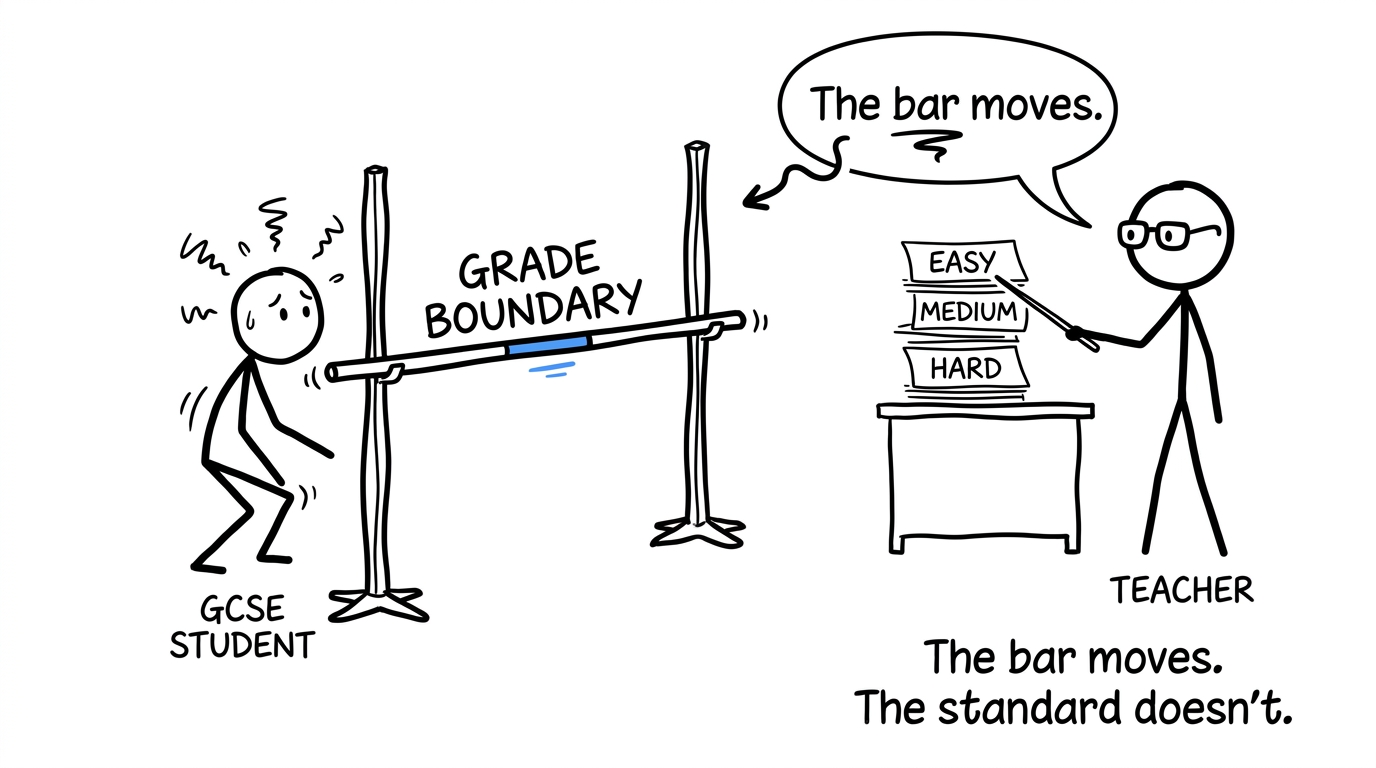 A moving grade boundary adjusts for papers of different difficulty
Past GCSE maths grade boundaries by year
The table shows official June-series Edexcel boundaries. Every numerical boundary is a raw mark out of 240240240. Selected grades are included to keep the trend readable.
| Year | Higher grade 999 | Higher grade 777 | Higher grade 444 | Foundation grade 555 | Foundation grade 444 | Commentary |
|---|---|---|---|---|---|---|
| 201720172017 | 190190190 | 124124124 | 414141 | 158158158 | 122122122 | First summer assessment of the reformed Edexcel qualification. |
| 201820182018 | 202202202 | 139139139 | 505050 | 169169169 | 136136136 | Boundaries rose across these selected grades. |
| 201920192019 | 198198198 | 137137137 | 525252 | 184184184 | 149149149 | The final summer series before pandemic disruption. |
| 202020202020 | N/A | N/A | N/A | N/A | N/A | Summer GCSE exams were cancelled. |
| 202120212021 | N/A | N/A | N/A | N/A | N/A | Summer GCSE exams were again cancelled. |
| 202220222022 | 194194194 | 137137137 | 383838 | 173173173 | 135135135 | Exams returned under transitional grading arrangements. |
| 202320232023 | 203203203 | 145145145 | 474747 | 182182182 | 147147147 | Grading returned towards pre-pandemic standards, with protection for disruption. |
| 202420242024 | 197197197 | 137137137 | 424242 | 175175175 | 142142142 | Normal grading arrangements continued. |
| 202520252025 | 217217217 | 156156156 | 535353 | 175175175 | 144144144 | Higher boundaries increased substantially; Foundation moved little. |
The early years: 201720172017 to 201920192019
These years show why one boundary should never become a permanent target. The Higher grade 999 threshold moved from 190190190 in 201720172017 to 202202202 in 201820182018, then down to 198198198 in 201920192019. Foundation grade 444, meanwhile, rose from 122122122 to 149149149 over the same period.
That movement does not prove that standards became harsher. Exam boards use evidence about paper difficulty, cohort performance and the quality of work near proposed boundaries. The aim is to maintain a comparable standard even when raw marks change.
The pandemic gap: 202020202020 and 202120212021
There are no June exam boundaries to compare for these years because summer exams did not take place. Grades were awarded through exceptional assessment arrangements rather than the normal summer examination process.
November papers and boundaries existed for some entrants, but November cohorts largely contain resitting students and differ from summer cohorts. Combining those figures with the June trend would create a misleading comparison.
The transition year: 202220222022
Summer exams returned in 202220222022, but grading was deliberately transitional. Ofqual described the approach as a midpoint between pre-pandemic outcomes and the more generous outcomes awarded in 202120212021.
For that reason, the 202220222022 boundaries require care when estimating current performance. They remain valid for students who took those exams, but they should not be treated as the strongest guide to today's grading standard.
Normal grading returns: 202320232023 to 202520252025
In 202320232023, grading returned to pre-pandemic standards, with protection against the remaining effects of disruption. Normal arrangements continued in 202420242024 and 202520252025.
The striking change is Higher grade 999, rising from 197197197 in 202420242024 to 217217217 in 202520252025. Yet Foundation grade 555 remained at 175175175. This contrast matters: there is no single percentage by which all GCSE maths boundaries rise or fall.
What these trends mean for your revision
Do not revise for the lowest historical boundary. Build a margin instead. If a past boundary was 145145145, aiming for exactly 145145145 makes every misread instruction or arithmetic slip expensive.
Use the Edexcel predicted grade calculator to interpret completed papers against several previous series. Then focus on the marks you lost, not merely the grade displayed.
The most reliable cycle is:
- complete the correct paper under timed conditions;
- mark it strictly with the mark scheme;
- identify the topics costing marks;
- use a revision lesson and targeted questions;
- retest with a short paper or mini test.
MathsGenie's GCSE Maths revision hub covers Edexcel, AQA, OCR and Eduqas. Edexcel students can move directly between the Edexcel revision lessons and questions, short GCSE Maths mini tests and predicted GCSE Maths papers.
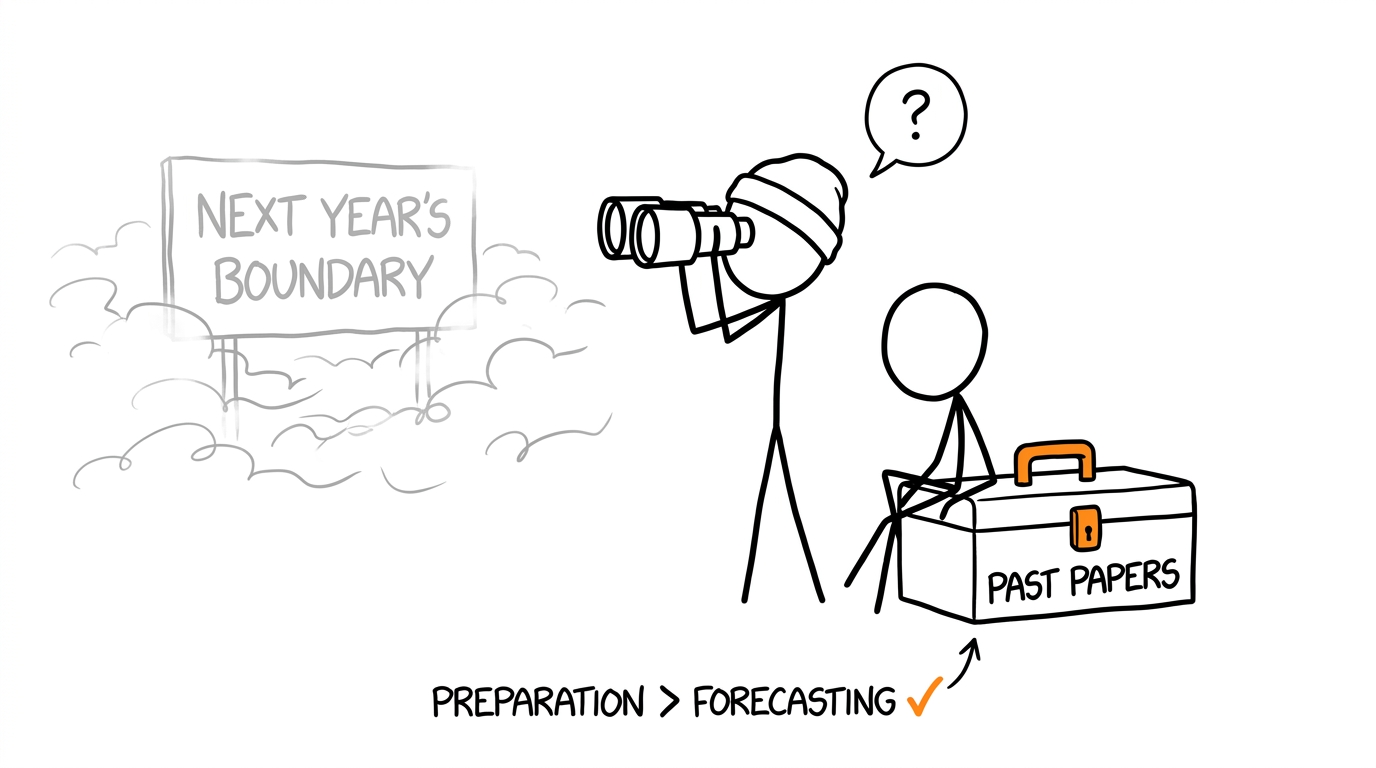 A student searches for an unknown future boundary while past papers wait nearby
Common mistakes when analysing grade boundaries
Comparing percentages across exam boards
OCR GCSE Maths has a different maximum mark from Edexcel. Convert boundaries to percentages only for rough context, and never assume equal percentages mean equally difficult papers.
Treating notional paper boundaries as final grades
Your qualification grade comes from the combined total. A weak Paper 111 can be balanced by stronger performances on Papers 222 and 333. Notional component boundaries do not award the final qualification grade.
Predicting the next boundary from one trend
Boundaries do not follow a dependable upward or downward sequence. They respond to the specific assessment and evidence available after marking.
Using pandemic years without context
The missing summer series in 202020202020 and 202120212021, followed by transitional grading in 202220222022, breaks any simple year-by-year pattern.
Use the history, then focus on the next mark
Grade-boundary history explains how the system preserves standards; it does not tell you what will appear in your exam. The practical lesson is quieter and more useful: prepare well enough that a modest movement in the boundary does not decide your result.
Start with MathsGenie's Edexcel GCSE Maths past papers. Complete one under exam conditions, use the mark scheme and video solutions, repair weak topics with revision lessons and practice questions, then return through mini tests or predicted papers. Boundaries move. Secure mathematical understanding travels with you.