GCSE Biblical Hebrew at a Different Exam Centre
GCSE Biblical Hebrew at a different exam centre: learn how private entries work, what to ask, when to apply and how to organise revision confidently.
There is a peculiar kind of exam stress that has nothing to do with remembering content. You know what you want to study. You may already have a teacher or a revision plan. But your school does not offer the qualification, and suddenly the hardest question is administrative: where can you sit it?
If you searched for “gcse biblical hebrew different exam centre”, the short answer is yes. You can normally take GCSE Biblical Hebrew at another approved centre as a private candidate, provided that the centre accepts external candidates and is willing to enter you for the correct Pearson Edexcel specification. You cannot enter yourself directly with the exam board.
The process is manageable, but it rewards early action and precise questions. Here is what you need to know.
Your essential checklist
Before arranging an external entry, confirm each of the following:
- The qualification is Pearson Edexcel GCSE Biblical Hebrew.
- The specification code is 1BH0.
- The centre is approved for Pearson Edexcel examinations.
- It accepts private candidates for this specific subject and exam series.
- It will enter you for both written components required for the full GCSE.
- You know its entry deadline and complete fee.
- Any access arrangements have been discussed before the relevant deadline.
- You receive and check a formal statement of entry.
- You can travel to the centre on every required examination date.
A centre accepting private candidates generally does not have to provide teaching. Its role is to make the entry, confirm your identity, administer the examinations and communicate important information from the awarding organisation.
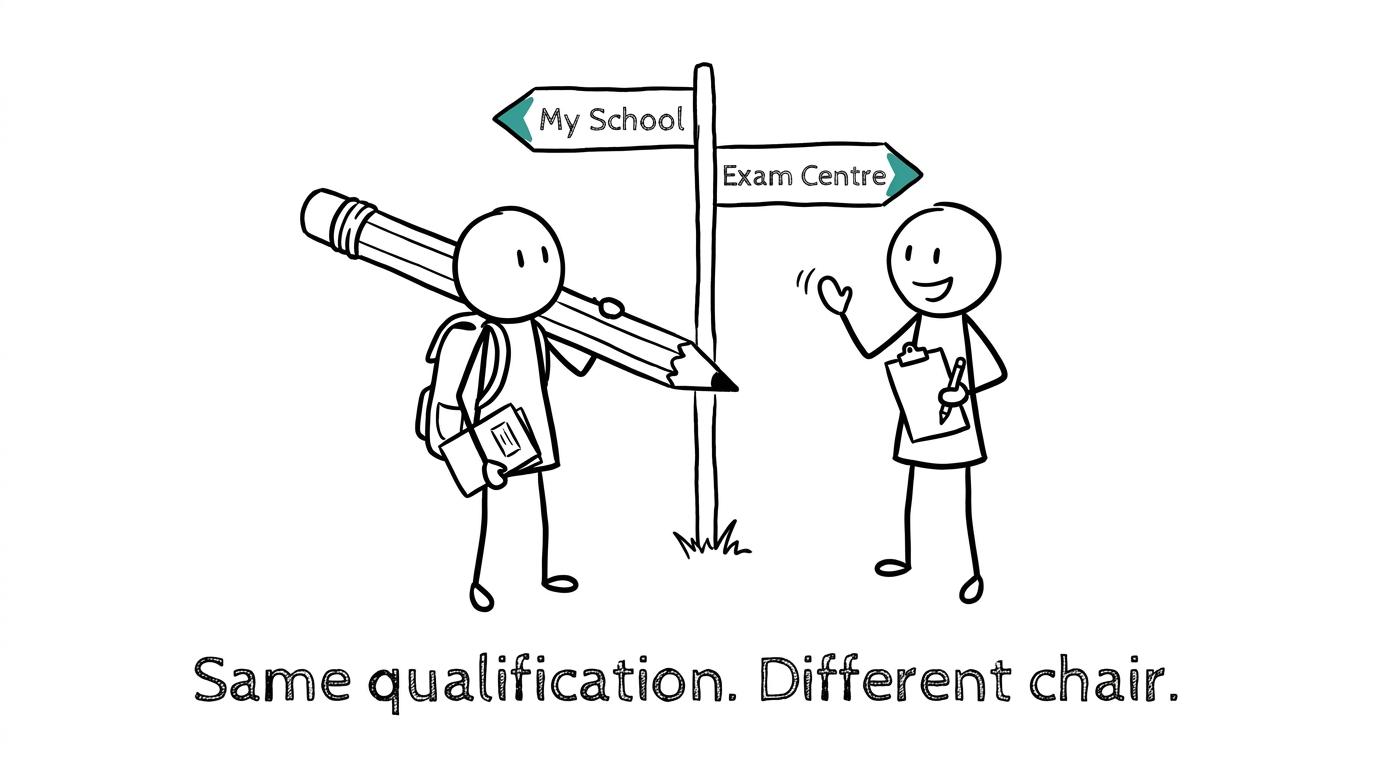 A student choosing between their school and another exam centre
Why your school may not offer GCSE Biblical Hebrew
Schools make subject decisions around staffing, demand, timetabling and their existing relationship with awarding organisations. A school can support your interest while still being unable to teach or administer a particular qualification.
GCSE Biblical Hebrew is currently offered by Pearson Edexcel under specification 1BH0. That detail matters. A centre may run Edexcel GCSE Maths or other Edexcel subjects without accepting Biblical Hebrew entries, so asking whether it “does Edexcel” is not specific enough.
The qualification contains two written components: Language and Literature. Under the current specification, each lasts two hours, carries 100 marks and contributes half of the qualification. There is no speaking test or coursework component in the specification. This removes some of the practical barriers found in subjects requiring centre-assessed work, but a centre must still agree to make and administer the entry.
Your school may be willing to help even if it does not offer the course. Ask the exams officer, head of year or relevant senior leader whether the school can:
- enter you without providing tuition;
- host the examinations as an approved Pearson centre;
- recommend another local centre;
- share your existing Unique Candidate Identifier, if you have one;
- provide evidence relevant to access arrangements.
The answer may still be no. That is not the end of the route; it simply means you will need an external centre.
How sitting GCSE Biblical Hebrew elsewhere works
When you take an examination at a centre where you are not enrolled as a student, you will usually be treated as a private or external candidate. JCQ guidance states that private candidates must arrange their entries through an approved school, college or other examination centre in the UK.
The external centre makes the official entry on your behalf. It may ask for:
- your full legal name and date of birth;
- your address and contact details;
- photographic identification;
- the qualification title and specification code;
- details of previous examination entries;
- your Unique Candidate Identifier, where applicable;
- information about access arrangements;
- payment of its examination and administration fees.
Each centre sets its own policy, capacity, internal deadline and charges. This is why a centre appearing in a private-candidate search does not guarantee that it will offer Biblical Hebrew. You must obtain confirmation directly.
Entering externally or transferring an existing entry
There are two arrangements that can sound similar but are not the same.
If the external centre enters you directly, it becomes your entering centre for the qualification. This is often the clearest route when your school does not offer the subject.
If your school has already entered you but you want to sit the papers somewhere else, that may require a formal transferred-candidate arrangement between centres. You cannot simply book a desk elsewhere after an entry has been made. Speak to both exams officers before taking any action, and avoid creating duplicate entries.
How to find a suitable examination centre
Start with the current JCQ private-candidate centre search, which can identify schools and colleges that have indicated a willingness to accept external candidates. Pearson also directs private candidates to the JCQ service.
Treat the results as a starting list rather than a booking system. JCQ advises candidates to confirm arrangements with each centre because availability and subject coverage can change.
Contact several centres rather than waiting for one reply at a time. GCSE Biblical Hebrew is a specialist subject, so the nearest general private-candidate centre may not offer it.
What to write in your first email
Make your request easy for an exams officer to understand. Include:
- that you wish to enter as a private candidate;
- Pearson Edexcel GCSE Biblical Hebrew;
- specification code 1BH0;
- the examination series you intend to take;
- confirmation that you require the complete qualification;
- whether you need access arrangements;
- your age and current school status, if requested;
- a request for the total fee and internal deadline.
Ask whether the quoted cost includes the awarding-body entry fee, centre administration, invigilation and any access-arrangement assessment. Fees vary by centre, so obtain the total in writing rather than assuming that one advertised figure covers everything.
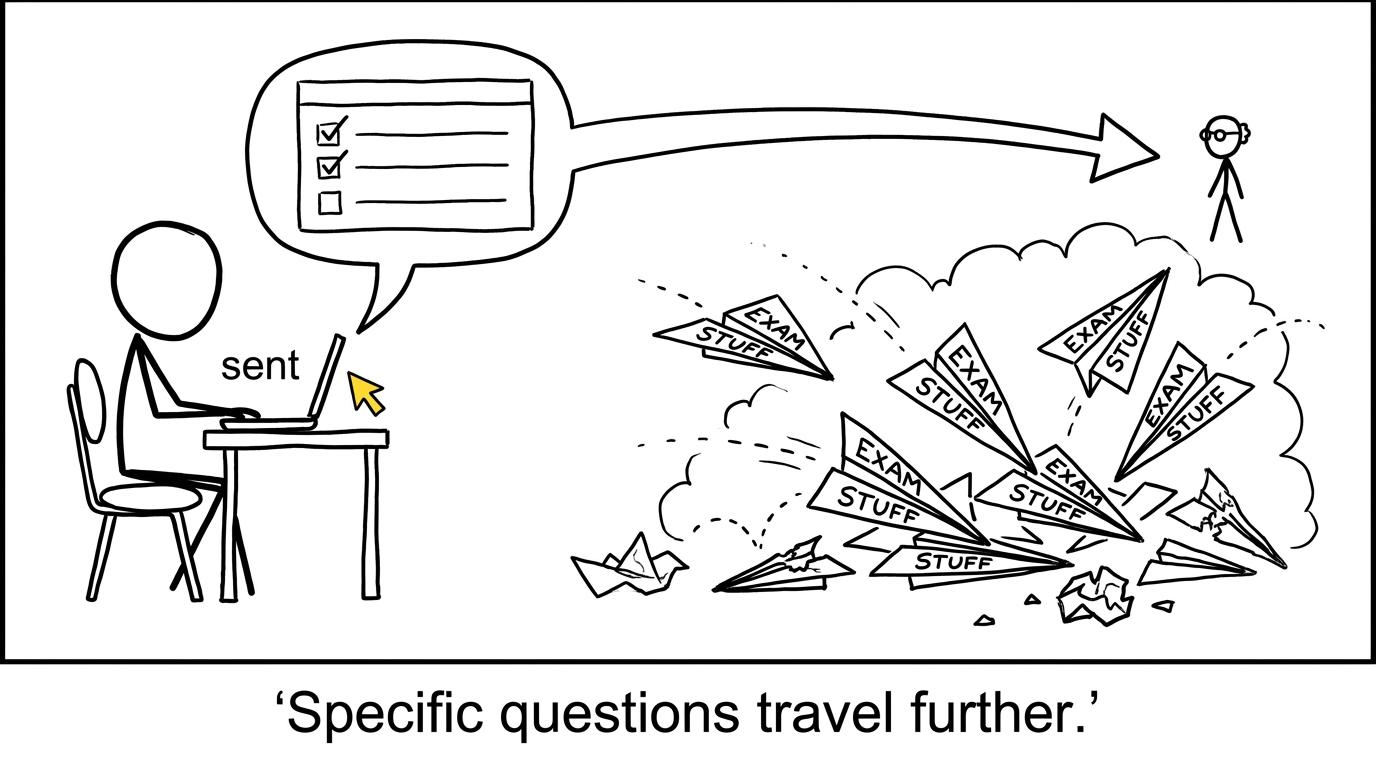 An organised email flying past a flock of vague requests
When should you arrange the entry?
Begin contacting centres as early as possible, ideally during the autumn before a summer examination series. Awarding organisations publish entry deadlines, but examination centres commonly impose earlier internal deadlines so that they can check identification, process payments and organise rooms and invigilators.
Late entries may attract additional fees, and a centre can stop accepting candidates when it reaches capacity. Starting early also gives you time to solve problems involving travel, timetable clashes or access arrangements.
Once entered, ask for your statement of entry. Check your name, date of birth, subject, specification code and components carefully. A friendly email is not proof that the official entry has been completed.
You should also check the final Pearson timetable for your examination series. Dates can change between series, so do not rely on a timetable from an old paper or revision website.
Access arrangements need early attention
If you normally receive extra time, supervised rest breaks, a reader, a scribe, modified papers or another reasonable adjustment, tell the prospective centre in your first contact.
Access arrangements do not automatically move from your school to an external centre. The centre administering the examination is responsible for following the current JCQ process, reviewing the evidence and making any necessary application. It may need information from your school, SENCo, tutor or other relevant professional.
Some arrangements and modified papers have deadlines well before the examinations. Do not wait until your entry is otherwise complete before raising the issue. Ask what evidence the centre requires, what its internal deadline is and whether there is an additional assessment or administration charge.
Protecting your maths revision while arranging another GCSE
Administration can quietly consume revision time because every unfinished task remains in your head. The solution is to separate arrangement work from subject work.
Give yourself one short weekly block for emails, documents and travel planning. Keep the rest of your revision schedule focused on learning. For maths, begin at the GCSE Maths revision hub, where you can choose resources for Edexcel, AQA, OCR, Eduqas and other UK exam boards.
A simple weekly structure is more sustainable than switching subjects whenever you feel anxious. The MathsGenie GCSE revision timetable guide can help you divide time between topic learning, short tests and complete papers. On crowded school days, use the 20-minute maths revision routine to maintain momentum without neglecting Biblical Hebrew.
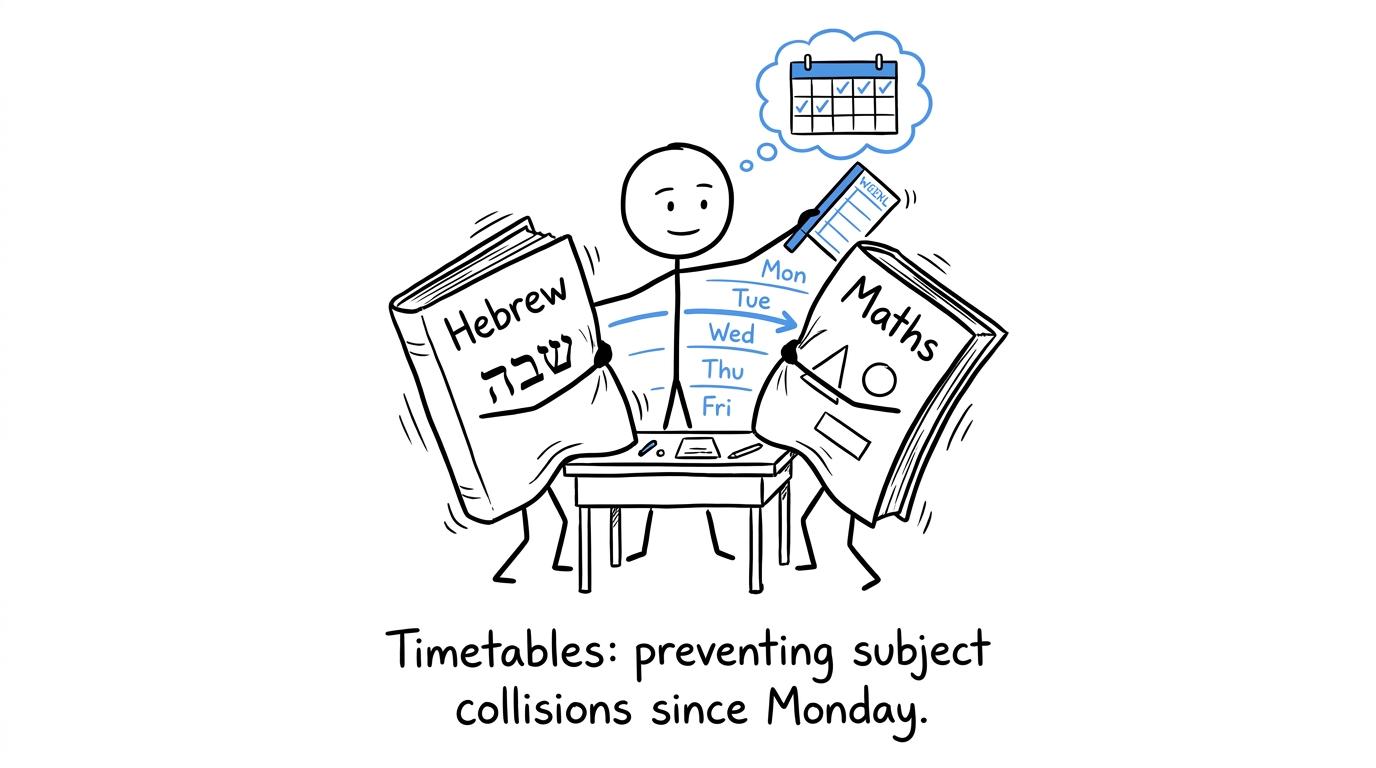 A weekly planner directing Hebrew and maths books around a tiny desk
As examinations approach, check all your dates together. If Biblical Hebrew clashes with another GCSE, notify the centre immediately. Examination clashes are managed under formal rules by the relevant centre; they should not be improvised by the candidate.
For maths preparation, introduce timed work gradually. The guide to when to start GCSE past papers explains how to move from topic practice to full papers. If you take Edexcel Maths, use the Edexcel GCSE Maths predicted papers alongside official past papers rather than instead of them.
Common mistakes to avoid
Asking only whether a centre accepts private candidates
A centre may accept private candidates for some subjects but not GCSE Biblical Hebrew. Give the full qualification title, Pearson Edexcel and specification code 1BH0.
Assuming your school will make the entry
A teacher's support is not the same as confirmation from the exams officer. Establish who is making the official entry and who will issue your statement of entry.
Contacting centres too late
Published exam-board deadlines are not necessarily the centre's deadlines. Earlier contact gives you more choice and may prevent late fees.
Forgetting access arrangements
Previous support does not simply follow you to another centre. Raise your needs immediately and provide evidence when requested.
Paying without checking what is included
Ask for the full cost, refund policy and payment deadline in writing. Confirm whether the fee covers both required components and all centre charges.
Ignoring travel and timetable details
Plan a trial journey and keep every examination date free. Check where to report, what identification to bring and how early the centre expects you to arrive.
Letting arrangements replace revision
Finding a centre is necessary, but it does not prepare you for the papers. Keep your academic routine moving. For maths, learn from revision lessons, complete practice questions and then use past papers properly by marking, diagnosing and repairing mistakes.
The next step is a specific question
Yes, you can sit GCSE Biblical Hebrew at a different examination centre when your school does not offer it. The practical route is to identify an approved centre, ask whether it accepts private entries for Pearson Edexcel 1BH0, arrange any access support, pay the required fee and verify your statement of entry.
Do not wait for the whole process to feel certain before beginning. One well-written email can turn a vague worry into a list of concrete actions.
Then return your attention to the work that earns marks. Use MathsGenie's free GCSE Maths revision resources, revision lessons, practice questions, mini tests, past papers, predicted papers, mark schemes and video solutions to keep your maths preparation calm and structured. Before each paper, the GCSE maths exam-week checklist will help you check the small details so that your energy stays where it belongs: on showing what you know.