

GCSE Bengali vs GCSE Panjabi: Which to Choose?
GCSE Bengali vs GCSE Panjabi compared: assess speaking, reading, writing, support and workload, then choose the language that best fits your strengths.
Choosing a heritage language GCSE can feel as though it ought to be simple. Perhaps you hear both languages around you. Perhaps relatives have strong opinions. Yet an exam does not measure which language feels most familiar at a family gathering. It measures what you can understand and produce under specific conditions.
For GCSE Bengali vs GCSE Panjabi, neither qualification is automatically easier. The better choice is usually the language in which you have the strongest combination of listening, speaking, reading and writing, plus reliable teaching and opportunities to practise. Your decision should come from evidence across all four skills, not conversation alone.
A quick decision checklist
Before choosing, answer these questions honestly:
- Which language can you read more accurately and quickly?
- In which language can you write independently, without transliteration?
- Which can you speak beyond familiar household conversations?
- Which spoken form do you understand across different speakers and topics?
- Does your school or examination centre offer teaching and a speaking assessment?
- Can you access suitable textbooks, past papers and knowledgeable feedback?
- How will the subject fit beside your GCSE maths and other revision?
If one language wins clearly across most of those questions, it is probably the safer option. If the result is close, complete a small diagnostic task in each language before deciding.
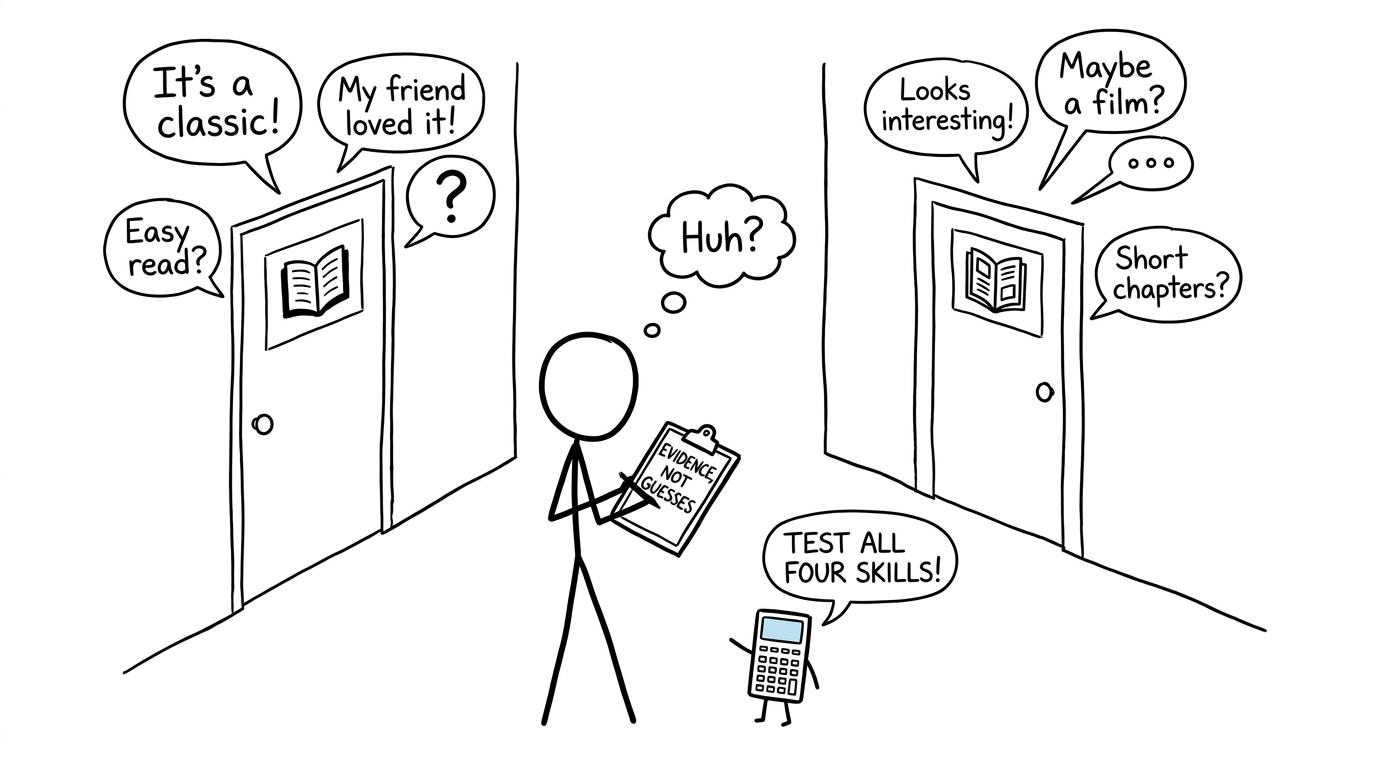 A student choosing between two language GCSE routes using evidence rather than guesses
How GCSE Bengali and GCSE Panjabi compare
As of the current AQA specifications checked for this article, AQA offers GCSE Bengali under specification code 863886388638 and GCSE Panjabi under specification code 868386838683. Both are linear qualifications, so the assessments are completed at the end of the course in the same examination series.
Their overall structures are remarkably similar:
| Feature | GCSE Bengali | GCSE Panjabi |
|---|---|---|
| Current AQA specification | 863886388638 | 868386838683 |
| Assessed skills | Listening, speaking, reading and writing | Listening, speaking, reading and writing |
| Weighting per skill | 25%25\%25% | 25%25\%25% |
| Foundation tier | Grades 111 to 555 | Grades 111 to 555 |
| Higher tier | Grades 444 to 999 | Grades 444 to 999 |
| Assessment model | Linear | Linear |
| Main themes | Identity and culture; wider areas of interest; study and employment | Identity and culture; wider areas of interest; study and employment |
In both qualifications, the four skills contribute equally:
4×25%=100%.4 \times 25\% = 100\%.4×25%=100%.Students must take all four assessments at the same tier. You cannot, for example, take Higher reading but Foundation writing. That matters because a student who speaks confidently but struggles with literacy cannot rely on speaking to carry the entire qualification.
The real difference, therefore, is not the assessment structure. It is your command of the language being assessed.
Speaking at home is not the same as exam readiness
A student may speak Bengali or Panjabi naturally with parents and grandparents yet find the GCSE demanding. Household language is often built around familiar people, routines and shared context. GCSE speaking requires you to communicate on wider themes, express and justify opinions, refer to different time frames and respond when a conversation moves in an unexpected direction.
Ask yourself whether you can discuss education, employment, technology, the environment and community issues. Can you explain why you hold an opinion rather than giving a short answer? Can you recover if you forget a word?
The same issue applies to listening. Understanding one familiar relative is not necessarily the same as following recorded speech delivered by different speakers at near-normal speed. Your stronger option is the language in which you can identify details, opinions and changes of time without depending heavily on context.
Reading and writing may decide the choice
Literacy is often the most revealing part of the comparison. Bengali and Panjabi use different writing systems in their AQA assessments: Bengali uses Bengali script, while AQA Panjabi uses Gurmukhi. Being able to understand spoken language does not automatically mean that you can read or write its script accurately.
For each language, test whether you can:
- read unfamiliar passages rather than memorised phrases;
- distinguish similar-looking letters and spelling patterns;
- understand vocabulary from all specification themes;
- write connected responses without copying;
- use grammar accurately across past, present and future contexts;
- translate meaning rather than replacing one word at a time.
Both GCSEs include translation within the reading and writing assessments. Translation exposes gaps quickly because you must understand meaning, select suitable language and preserve the message. If you routinely think in English and then build every sentence through slow translation, you will need substantial practice before the exam.
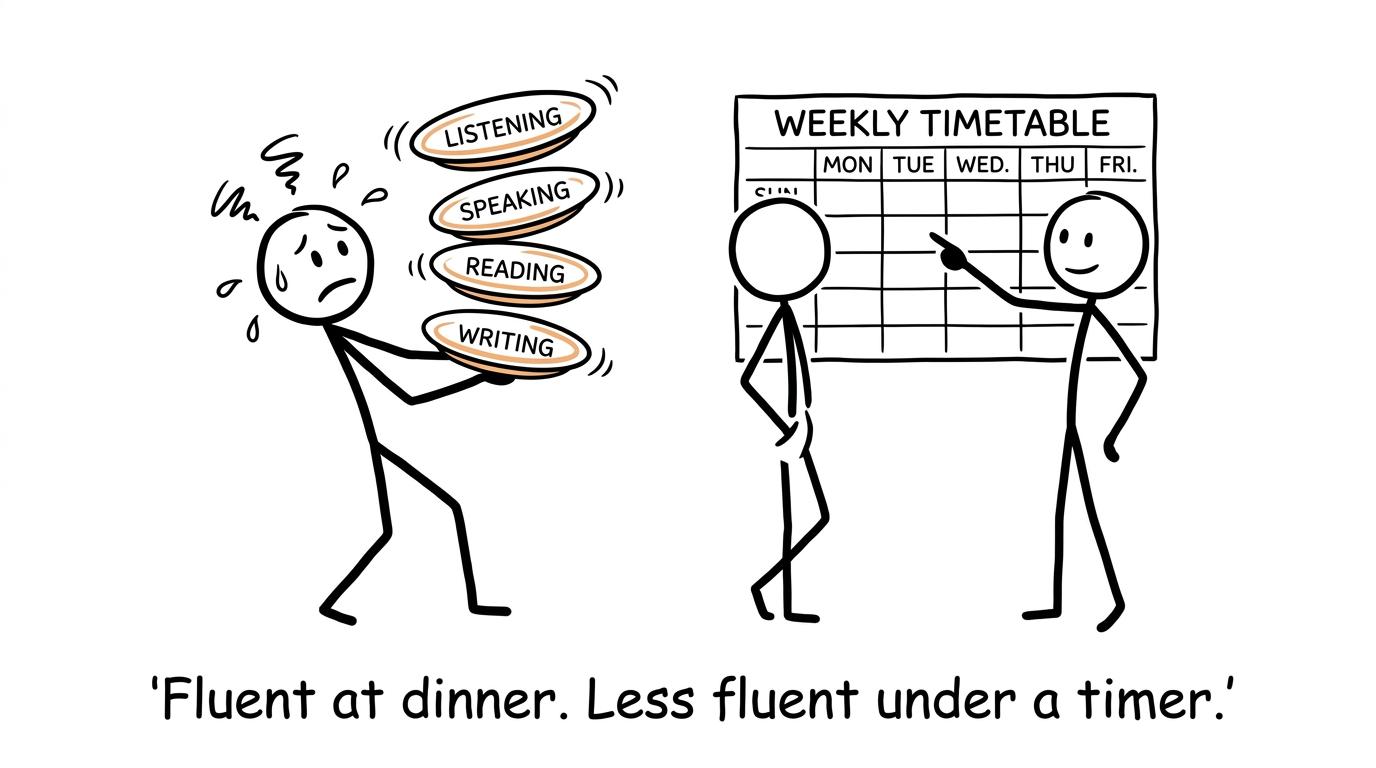 A GCSE student balancing listening, speaking, reading and writing
Which language fits your strengths?
Choose GCSE Bengali if
Bengali is likely to fit you better if you can already read Bengali script with reasonable fluency, write more than isolated sentences and speak about unfamiliar topics. It also helps if Bengali is the language you use most consistently beyond casual conversation, for example for example, when reading messages, watching longer-form content or discussing news and ideas.
Strong teaching should still influence the decision. A fluent speaker benefits from someone who understands the specification, can correct written work and can prepare them for the formal speaking assessment.
Choose GCSE Panjabi if
Panjabi may be the stronger choice if you are more secure in Gurmukhi, can understand a range of Panjabi speakers and have regular opportunities for extended conversation. Familiarity with everyday spoken Panjabi is useful, but your reading and writing must be strong enough to handle translation and structured responses.
The availability of an experienced teacher or community-language class can make a meaningful difference. Consistent correction is especially valuable when informal speech differs from the accurate written language expected in an examination.
Pause if both languages feel equally familiar
Do not settle a close decision by asking which subject has a reputation for being easier. Instead, compare like with like. In each language, try one listening task, one reading passage, one timed writing response and a short formal conversation based on a GCSE theme.
Record where you needed help. A useful evidence sheet could classify each skill as secure, developing or weak. Choose the language with the stronger overall profile and the clearest route to improvement.
Check the practical arrangements before committing
A language can suit your strengths but still be difficult to enter if the necessary arrangements are unavailable. Ask your school or examination centre:
- whether it currently offers the relevant AQA specification;
- whether you will receive regular teaching or study independently;
- who will conduct and record the speaking assessment;
- whether you can enter as a private candidate if necessary;
- which tier your current performance supports;
- when internal speaking preparation and entry decisions take place.
AQA lists both qualifications as available to private candidates, but the entering centre must be able to supervise and authenticate the speaking component. Availability at a particular centre is not guaranteed. Confirm arrangements early rather than assuming that a centre offering written papers can also provide the speaking assessment.
Balance the language GCSE with maths revision
A heritage language GCSE can be a valuable additional qualification, but it still consumes revision time. The hidden danger is assuming that familiarity removes the need for preparation. Writing accuracy, broader vocabulary and timed performance must be developed deliberately.
Protect your core subjects by giving each one a defined place in your week. The MathsGenie GCSE maths revision hub provides free lessons, exam questions, worksheets and board-specific resources for Edexcel, AQA, OCR and Eduqas. That structure makes it easier to keep maths moving while preparing for a language assessment.
A balanced week might include short language sessions across all four skills, alongside focused maths blocks. Use the principles in the GCSE maths revision timetable guide to build a plan you can repeat rather than an ambitious schedule you abandon.
For maths, use GCSE mini tests to diagnose gaps quickly. Then return to topic lessons and practice questions before progressing to full papers. The same underlying habit works in a language: test, identify the weakness, practise it and retest.
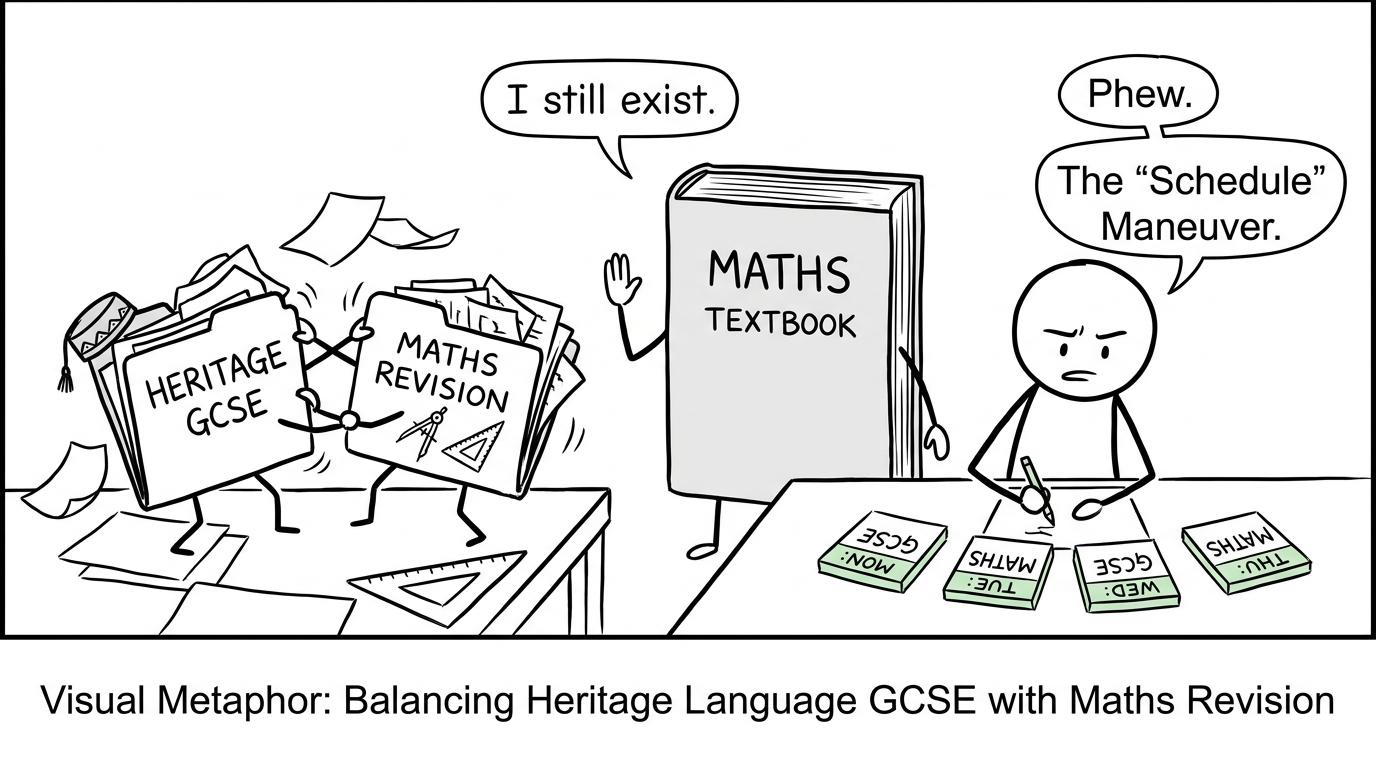 A student making room for language and maths revision in one calm timetable
A sensible revision approach after choosing
Once you have chosen Bengali or Panjabi, stop comparing and begin preparing for the specification in front of you.
Build your routine around four recurring activities:
- Listening: use unfamiliar recordings and note both main ideas and precise details.
- Speaking: practise extended answers, opinions and follow-up questions.
- Reading: move beyond familiar messages to longer passages across every theme.
- Writing: complete timed responses and obtain correction for grammar, spelling and task coverage.
Do not let language preparation displace maths paper practice. MathsGenie's guide to when you should start GCSE past papers explains how to progress from short diagnostic work to timed papers. If you are organising much of your revision independently, the GCSE maths self-study plan offers a practical learn, practise, mark and fix cycle.
Near the examinations, use a clear distinction between learning and testing. Revision lessons repair knowledge. Practice questions build a skill. Past papers test the whole course. Predicted papers provide additional unseen practice, but should support rather than replace official past papers and mark schemes.
Common mistakes when choosing between the subjects
Choosing only because you speak the language at home
Speaking is worth 25%25\%25%, not the entire GCSE. Check reading and writing before making your decision.
Ignoring the required script
Romanised messages are not a substitute for secure literacy in Bengali script or Gurmukhi. Start with an honest timed reading and writing check.
Following a friend or relative's preference
Another person's cultural connection does not reveal your examination strengths. Advice can help, but your own evidence should decide.
Assuming one language has easier grade boundaries
Grade boundaries can change between examination series and reflect the demand of that year's assessments. They are not a reliable shortcut for choosing a subject.
Forgetting about the speaking arrangements
The speaking component needs an appropriate entering centre and assessor. Confirm this before investing months in preparation.
Sacrificing core-subject revision
An additional GCSE should fit inside a sustainable plan. Use the best order for learning GCSE maths topics to keep weak foundations from becoming last-minute emergencies, then use the GCSE maths exam-week checklist when your final papers approach.
Make the choice from evidence, then move forward
The GCSE Bengali vs GCSE Panjabi decision is not really about finding the easier language. Because the assessment structures are closely matched, the better option is the one in which your four skills are strongest, your literacy is most secure and your access to teaching and examination arrangements is clearest.
Test both languages if necessary. Confirm the centre arrangements. Consider the effect on your wider timetable. Then commit.
For the maths part of that timetable, make MathsGenie your free revision base. Begin with revision lessons and topic practice, check your recall through mini tests, and build towards past papers and predicted papers. Mark every attempt carefully, use mark schemes and video solutions to repair mistakes, and let evidence guide your next session, just as it should guide your language choice.










