Best GCSE Arabic Revision Apps and Resources 2026
Best GCSE Arabic revision apps for 2026, compared by skill. Find useful flashcards, listening, YouTube and past-paper resources without wasting time.
Revision apps create a peculiar problem. Downloading one feels productive, organising it feels productive, and choosing a colour for every subject feels productive. Yet none of those actions proves that you can understand a recording or write accurately under exam conditions.
The best GCSE Arabic revision apps for 2026 are Anki or Quizlet for specification vocabulary, Memrise for additional listening exposure, and an ordinary voice recorder for speaking practice. But no app covers the complete exam. Pair these tools with Pearson Edexcel materials, reliable GCSE Arabic teaching channels and timed past papers.
For students balancing Arabic with maths and other GCSEs, the aim is not to collect more resources. It is to give each resource one clear job.
Your GCSE Arabic revision checklist
A useful revision system should cover:
- vocabulary from the correct specification themes;
- listening to Modern Standard Arabic at different speeds;
- speaking aloud, including role play and conversation practice;
- reading for meaning rather than translating every word;
- accurate writing across different time frames;
- official or specification-matched past-paper practice;
- feedback from a teacher, mark scheme or careful correction process.
Pearson Edexcel GCSE Arabic, specification code 1AA0, assesses listening, speaking, reading and writing. Each skill contributes one quarter of the qualification, and students enter either foundation or higher tier across all four papers. Dictionaries are not permitted in the assessments.
That structure matters. An app that teaches hundreds of isolated words may help, but it cannot replace speaking, extended writing or timed papers.
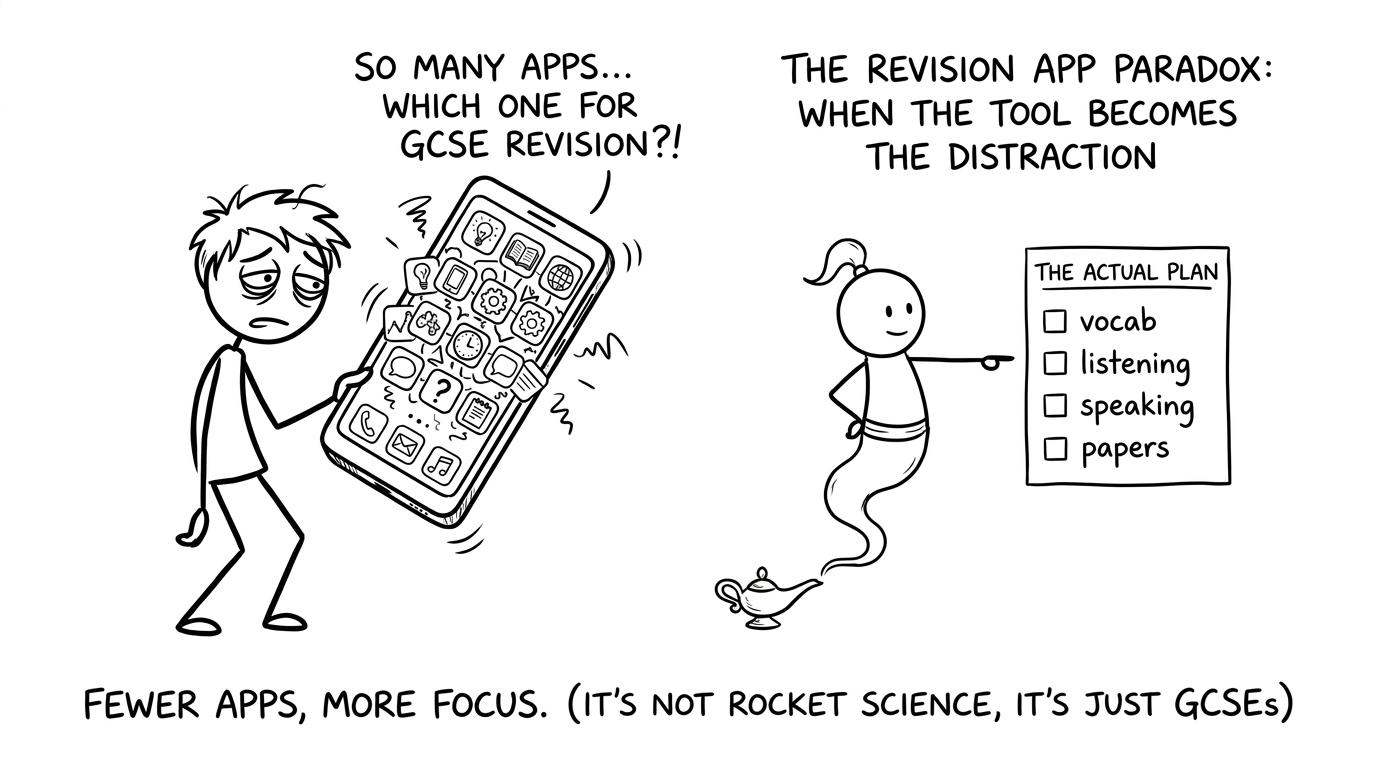 A student choosing a small GCSE revision toolkit instead of downloading every app
The best GCSE Arabic revision apps at a glance
| Resource | Best for | Main limitation |
|---|---|---|
| Anki | Long-term vocabulary retention | Requires careful setup and checking |
| Quizlet | Quick flashcards and shared class sets | Public sets can contain errors |
| Memrise | Extra listening and phrase exposure | Not designed around the GCSE specification |
| Phone voice recorder | Speaking, fluency and self-correction | Does not provide reliable marking |
| YouTube | Paper guidance and listening explanations | Quality and specification relevance vary |
| Pearson materials | Exam format, audio and past-paper practice | Less gamified than an app |
Features and free-access limits can change, so check the current app listing before subscribing. A paid plan is not automatically more relevant to GCSE Arabic.
Anki for serious vocabulary revision
Anki is the strongest choice if you want a controlled, long-term flashcard system. It schedules difficult cards more frequently and leaves longer gaps between words you recall securely. The desktop version, AnkiWeb and the community-developed AnkiDroid app are free; the official iOS app is paid.
Its real advantage is control. You can build separate decks for themes such as identity and culture, school, travel, future aspirations and global issues. Cards can include text, images and audio, although recordings should come from a trusted speaker or teacher.
Create small, useful cards rather than copying whole paragraphs. A strong Arabic vocabulary card might contain:
- the Arabic word or short phrase;
- its meaning in context;
- its plural or relevant verb form;
- a short specification-relevant sentence;
- audio you have checked for accuracy.
Anki does not supply an official GCSE Arabic course. Shared decks are made by users, so compare unfamiliar vocabulary with your school list or Pearson specification before learning it.
Quizlet for accessible classroom flashcards
Quizlet is easier to begin using than Anki. You can create sets, search public decks and review cards through several study modes. It works particularly well when your teacher has produced a checked set for your class.
Searches such as “Edexcel GCSE Arabic school vocabulary” may return many decks, but popularity is not proof of accuracy. Check that a set uses Modern Standard Arabic, matches the current 1AA0 themes and includes correct spelling. Avoid learning a deck merely because “GCSE” appears in its title.
Quizlet is most useful for short daily retrieval sessions. Hide the English and produce the Arabic from memory, then reverse the direction. Recognition feels easier, but writing and speaking require you to retrieve the language yourself.
Students who already use flashcards across subjects can apply the same active-recall approach to maths. MathsGenie’s guide to turning GCSE notes into active recall explains why looking away from the answer matters more than repeatedly rereading it.
Memrise for extra listening exposure
Memrise offers Arabic vocabulary, audio, video clips and personalised review. Its native-speaker content can provide useful exposure to pronunciation and natural rhythm. The free plan includes limited access, while broader features may require a subscription.
Use it as a listening supplement, not as your GCSE course. General Arabic programmes may include conversational language that does not follow your exam themes, and some resources elsewhere may focus on a regional dialect rather than the Modern Standard Arabic expected in the Edexcel assessment.
A productive routine is to listen without reading first, listen again with the phrase visible, and then repeat it aloud. That turns passive watching into listening and pronunciation practice.
Your phone recorder may be the most useful free app
Speaking improves when you actually speak. A phone voice recorder gives you a simple way to rehearse answers, notice hesitation and compare two attempts.
For Edexcel GCSE Arabic, speaking includes a role play, a picture-based task and a conversation. Record short responses that include an opinion, reason and more than one time frame where appropriate. Then listen for:
- unclear pronunciation;
- repeated basic vocabulary;
- long pauses;
- incorrect agreement or verb forms;
- answers that do not address the question.
Automatic speech recognition can be informative, but it is not an examiner. Ask a teacher or fluent, suitably knowledgeable speaker to check important pronunciation and grammatical points.
YouTube channels and free video resources worth using
YouTube is useful when the video explains a particular Edexcel paper rather than promising instant fluency. Recent GCSE-focused material is available from Arabic GCSE teacher Maya Tawfeek, including listening guidance, while Arabex videos cover the format and techniques used in Pearson Edexcel listening, reading and writing papers.
Before trusting any channel, check:
- whether it names Pearson Edexcel and specification 1AA0;
- whether the video covers foundation, higher or both;
- when it was published or updated;
- whether its advice agrees with official assessment materials;
- whether it teaches Modern Standard Arabic rather than only a dialect.
Videos are best used with a task. Pause before the teacher gives an answer, write your own response, then compare. Otherwise, a helpful explanation can become background noise.
Official resources and past papers come first
The Pearson specification and sample assessment materials establish the real paper structure. Pearson also provides listening audio, and official past papers allow you to practise the question styles, timings and language used in the qualification.
Start with your correct tier. Complete listening practice without pausing the audio beyond the conditions provided, and do reading and writing work without a dictionary. Afterwards, use the mark scheme and ask your teacher to review answers that require judgement, especially extended writing and speaking.
The same principle applies in maths: authentic exam practice reveals weaknesses that an app cannot see. MathsGenie’s GCSE maths revision hub brings together free topic lessons, exam questions and papers, while the guide to using GCSE past papers properly shows how to turn each mistake into a useful next step.
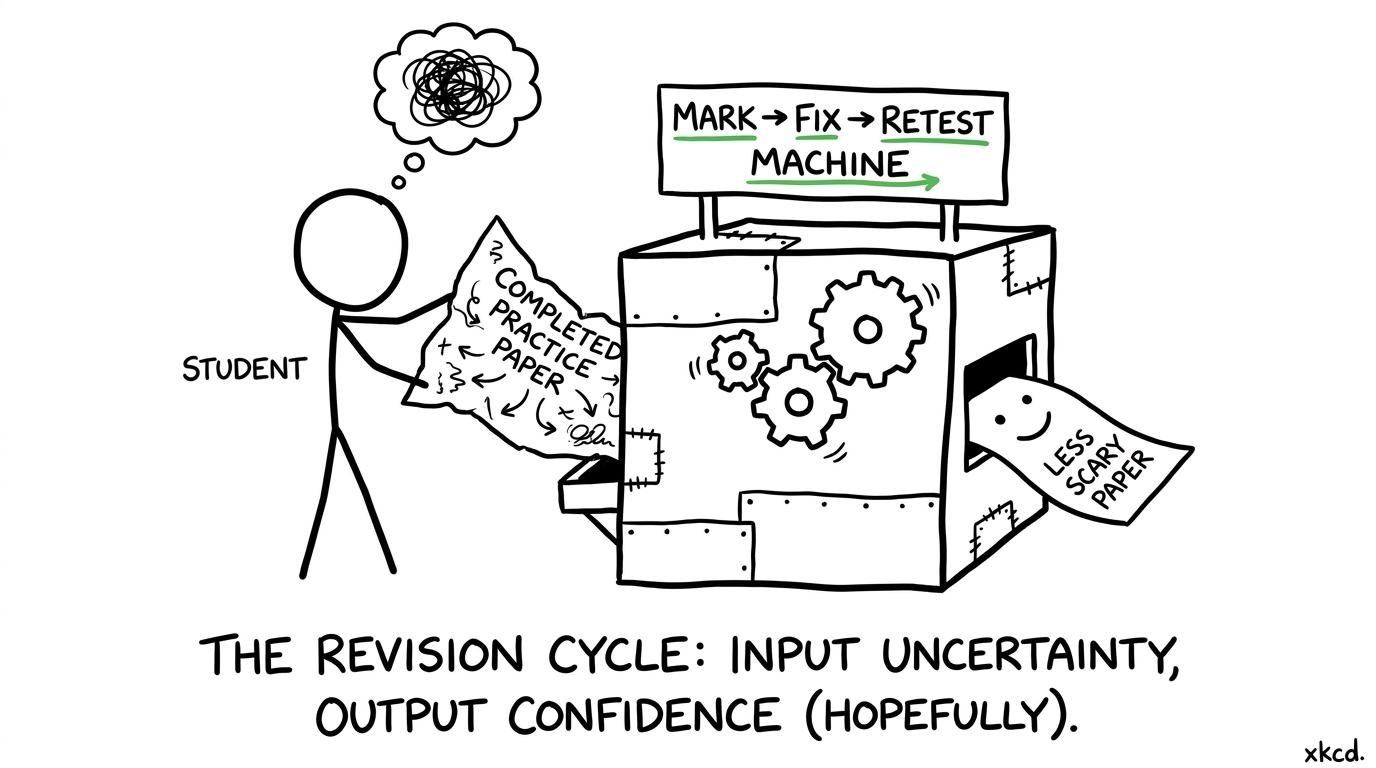 A practice paper travelling through a mark, fix and retest machine
Build a simple weekly Arabic revision system
A good system uses fewer tools more consistently:
Vocabulary sessions
Use Anki or Quizlet for brief daily retrieval. Add words from lessons and marked papers rather than downloading endless lists. Include verbs, connectives, opinion phrases and language for different time frames.
Listening sessions
Use official audio first, then appropriate teacher videos or Memrise for additional exposure. Record unfamiliar words only after checking their spelling and meaning.
Speaking sessions
Record role-play responses, picture descriptions and conversation answers. Repeat an answer after correction so that feedback changes your performance.
Reading and writing sessions
Complete specification-matched questions under a time limit. Keep an error log for spelling, agreement, verb formation, missing details and misunderstood vocabulary.
A similar structure prevents maths from disappearing while you revise languages. MathsGenie’s 20-minute maths revision routine is designed for crowded school weeks. You can also use Edexcel GCSE maths mini tests for focused practice without committing to a full paper.
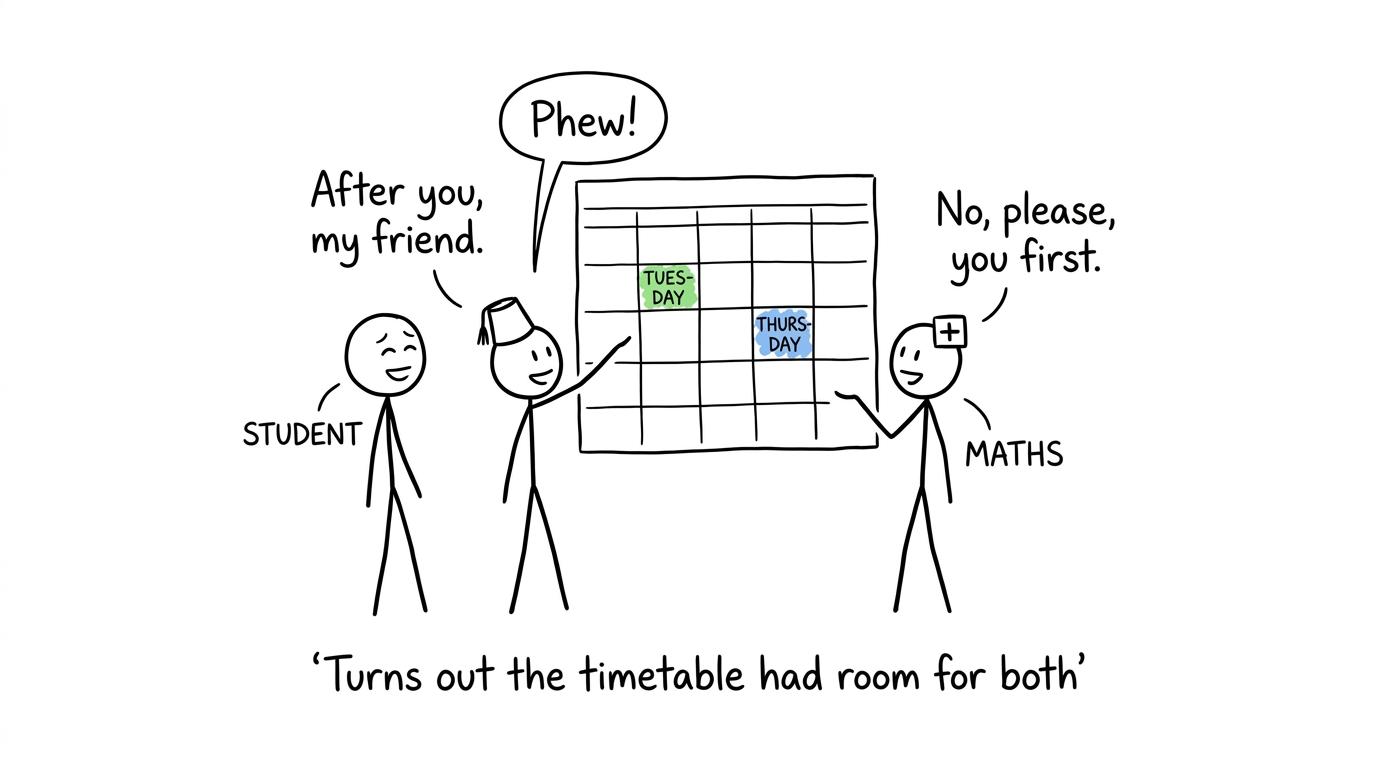 Arabic and maths calmly sharing a student's weekly revision timetable
Common mistakes when using GCSE Arabic resources
Choosing general Arabic instead of exam Arabic
A general language app can improve vocabulary, but it may not cover the specification or assessment format. Keep the Pearson themes and paper requirements beside you when choosing content.
Learning unchecked public decks
User-created flashcards may contain spelling errors, unsuitable dialect or incorrect translations. Check a sample before investing hours in the set.
Revising vocabulary in only one direction
Recognising Arabic is not the same as producing it. Practise Arabic to English for reading and listening, then English to Arabic for writing and speaking.
Watching without retrieving
Pause videos, predict answers and take notes from memory. Passive exposure alone gives a misleading sense of familiarity.
Avoiding timed papers
Apps make revision comfortable; exams are less accommodating. Use official papers to practise timing and stamina, then log why marks were lost. Maths students can use the same cycle with Edexcel GCSE predicted papers and the guidance on finding weak GCSE topics.
Using too many apps
One vocabulary app, one source of trusted teaching and official paper practice are enough. Extra tools should solve a specific problem, not create another dashboard to maintain.
Choose tools by the marks they help you earn
The best resource is not the one with the longest feature list. It is the one that changes what you can recall, understand or produce without help.
Choose Anki for disciplined long-term vocabulary, Quizlet for straightforward shared sets, Memrise for extra listening, and your recorder for speaking. Anchor everything to Pearson Edexcel’s specification, official audio and past papers. Where feedback requires human judgement, involve your teacher.
And keep the rest of your GCSE timetable moving. Use MathsGenie’s free revision lessons and practice questions to repair maths gaps, mini tests to check progress, and past papers, predicted papers, mark schemes and video solutions to prepare for the exam itself. Start with one Arabic vocabulary set and one GCSE maths revision session today. Fewer tools, used properly, usually beat a phone full of good intentions.