After GCSE Resit Exam Day: What to Do Next
After GCSE resit exam day, follow a calm plan for classes, light revision and results day, with key steps from 9 November 2026 to 14 January 2027.
Finishing a resit rarely feels as final as expected. You leave the exam hall relieved, then begin replaying individual questions before reaching home. The best plan after GCSE resit exam day is simpler: take a proper break, keep attending timetabled maths or English classes, and continue with light revision until your result is confirmed.
The final GCSE Maths paper in the November 2026 series is scheduled for Monday 9 November. Results are due to be released to candidates on Thursday 14 January 2027, although you should confirm arrangements with your school or college.
Your after-resit checklist
Once the final paper is over:
- attend classes unless your school or college says otherwise
- ask whether your timetable will change
- take a few days away from intensive revision
- maintain your skills through short weekly sessions
- save your candidate details and examination paperwork
- confirm how you will receive your result
- prepare a simple plan for both possible outcomes
The aim is not to remain in exam mode. It is to protect your progress while keeping your options open.
Key dates after the November resit
| Date | What it means |
|---|---|
| Monday 9 November 2026 | Final scheduled GCSE Maths paper in the November series |
| 10 November onwards | Continue attending classes and follow your centre's instructions |
| November and December | Use light revision to maintain your skills |
| Before Christmas | Confirm how your centre will issue results |
| Thursday 14 January 2027 | Scheduled date for candidates to receive November GCSE results |
Centre arrangements can vary, so messages from your exams officer take priority. The MathsGenie November resit guide explains the main features of the November series.
Should you keep attending classes?
Yes. Keep attending until your school or college formally changes your timetable.
Sitting the examination does not prove that you have achieved the required grade. If you are on a 16-19 study programme in England and did not hold grade 444 or above in GCSE Maths or English at the end of Year 11, your provider will normally still need to support continued study under the relevant requirements.
Attendance also protects you if the result is not what you hoped for. A student who continues attending reaches January with their skills intact. Someone who stops may need to rebuild those habits before preparing for the summer series.
Your teacher might change the focus to core skills, Functional Skills preparation or summer GCSE content. If you are uncertain, ask: “Should I continue attending until my January result?”
Should you keep revising while waiting?
Yes, but the intensity should change.
Before the exam, revision is about performing under time pressure. Afterwards, it is about maintenance. You do not need to complete full papers every evening. Two short maths sessions each week may be enough: one weaker topic and one set of mixed questions.
The free GCSE Maths revision hub covers Edexcel, AQA, OCR and Eduqas through revision lessons, practice questions, past papers and mark schemes. MathsGenie mini tests provide focused practice without full-paper intensity. For a broader check, try the GCSE Maths 45-minute tests.
For English Language, continue reading and practise the skills identified by your teacher, such as selecting evidence, comparing viewpoints and organising extended writing. Responding to feedback is more useful than repeatedly writing unchecked answers.
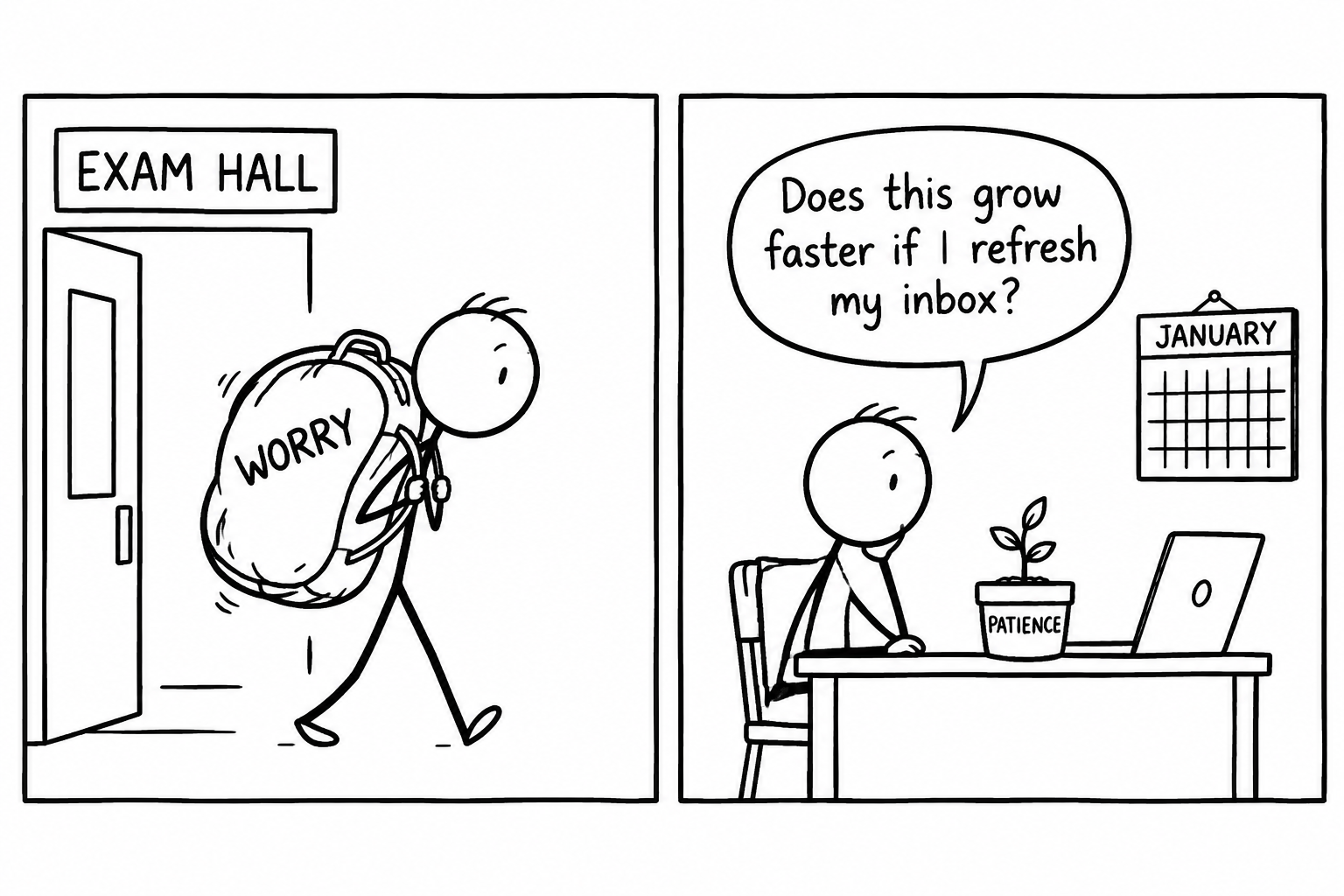 A student waiting for January results wonders whether refreshing an inbox will make patience grow faster
A calm weekly routine until January
A maintenance plan could include:
- one short maths topic session
- one mixed maths test
- one English reading task
- one English writing or planning task
- every timetabled lesson
Keep the plan realistic around college, work and applications. The MathsGenie revision planner can turn these tasks into a manageable schedule.
If a test reveals a weakness, return to the relevant lesson before attempting another full paper. The guide to when to start GCSE past papers explains how to use papers when you are ready to learn from them.
What to do while waiting for GCSE results
Record what you remember about your preparation rather than reconstructing individual answers. Which methods helped? Which topics remained slow? Did timing or nerves affect you? These notes will be useful if you need another attempt.
Check the grade required by your employer, apprenticeship, sixth form or university course. Grade 444 is commonly treated as a standard pass, but individual organisations may set different entry requirements.
Prepare for both outcomes:
- If you achieve the required grade: inform the relevant organisation and ask whether your timetable changes.
- If you do not: speak to your teacher about summer entry and the skills you need to improve.
- If the result seems unexpected: ask your exams officer about scripts, clerical checks and reviews of marking. Deadlines and possible fees apply.
Common mistakes after a GCSE resit
Stopping classes without permission
The examination date is not automatically the end of your course. Attend until your provider confirms otherwise.
Revising at full intensity
This can create exhaustion without changing the paper already submitted. Replace intensive preparation with short maintenance sessions.
Doing no practice
A complete break lasting several weeks can leave you rebuilding skills in January. Keep your routine small but consistent.
Predicting a grade from memory
You may forget method marks, misremember values or focus on difficult questions. Unofficial answer discussions cannot confirm your result.
Waiting to ask for help
Contact your teacher or exams office promptly after an unexpected result. Post-results services have deadlines, and future revision is easier with a clear diagnosis.
Your next step with MathsGenie
The useful work after a resit is quiet: attend, maintain your skills and prepare for either result. Start with the free MathsGenie GCSE Maths resources and complete one short task this week. If another sitting is needed, you can later build towards past papers, video solutions and predicted papers. For now, consistency matters more than intensity.