

A-Level Priority Re-mark and University Deadlines 2026
A-level priority remark university deadline: understand the 2026 fast review, costs, risks and steps to protect a university place after results day.
Results day can turn a small gap between two grades into a very large decision. If your university place depends on a result that looks wrong, the A-level priority remark university deadline matters immediately. For the June 2026 series, A-level results are released on Thursday 13 August 2026, and the exam board must receive a priority review request by Thursday 20 August 2026.
The official name is a priority review of marking, not a re-mark. It is a faster, normally paid service for students whose further or higher education place depends on the outcome. Speak to your exams officer and university on results day rather than waiting to see what happens.
Your results-day checklist
- Check your university decision as well as your grades.
- Find your mark, grade boundary, exam board and paper breakdown.
- Speak to a subject teacher and your exams officer immediately.
- Ask whether a priority review of marking is appropriate.
- Contact university admissions and ask how long they will hold your place.
- Keep a Clearing option available until the position is confirmed.
- Give written consent only after understanding that the mark can fall.
You can compare your result with the published A Level maths grade boundaries, but being close to a boundary does not itself prove that marking was wrong.
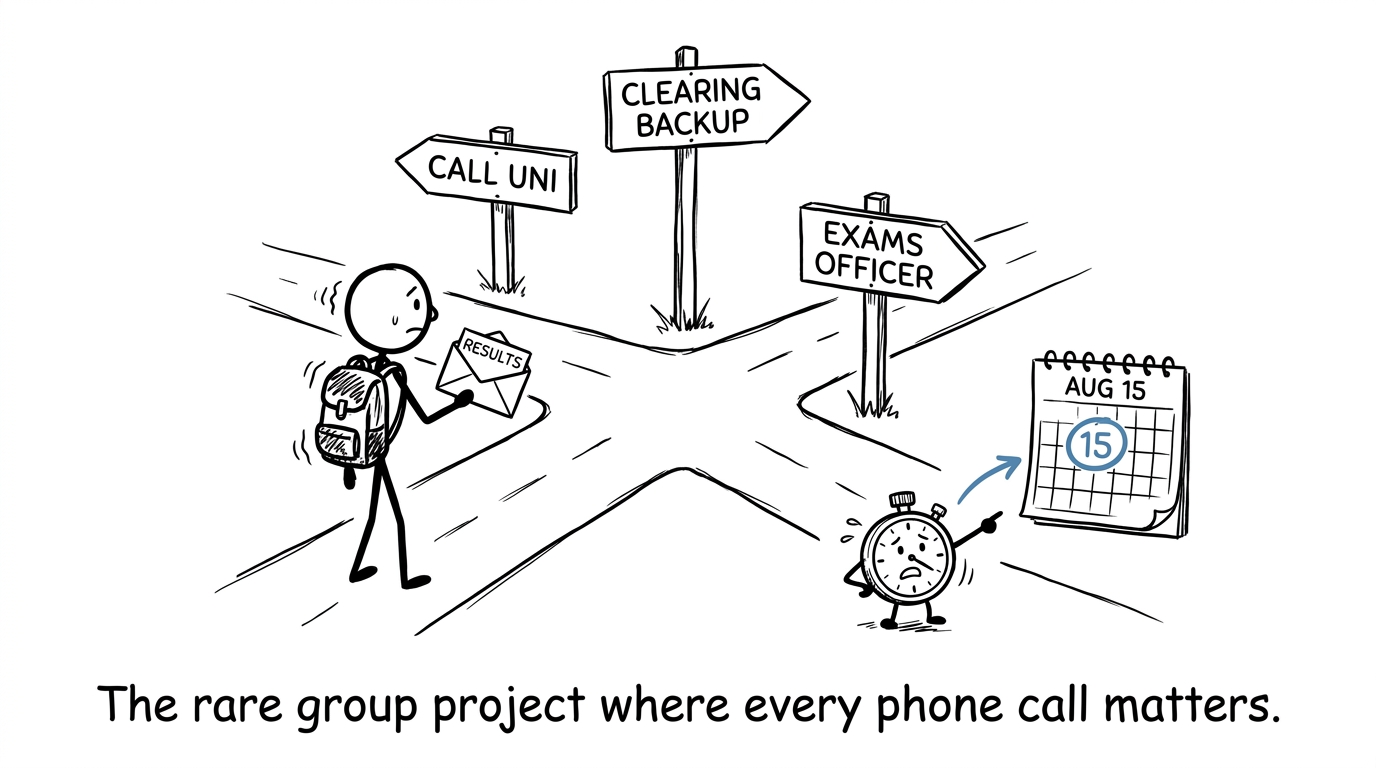 A student navigating calls to university admissions and the exams officer
The 2026 priority re-mark timeline
| Date or period | What needs to happen |
|---|---|
| Thursday 13 August 2026 | A-level results are released to candidates from 08:00. Check your result and speak to your centre. |
| Results day onwards | Ask your exams officer about the relevant paper, fee, consent form and the centre's internal deadline. Contact university admissions. |
| Before Thursday 20 August 2026 | Your centre should submit the priority review early enough to reach the exam board by the official deadline. |
| Within 15 calendar days | The awarding body should complete the priority review after receiving it. |
| By Thursday 3 September 2026 | Awarding bodies aim to complete priority reviews by this UCAS advisory date, but each university controls its own decision. |
| Thursday 24 September 2026 | Final deadline for standard reviews of results for the June 2026 series. |
Your school or college may set an earlier internal deadline because it needs time to collect consent, payment and paper details. Treat 20 August as the exam board's final deadline, not your personal target.
What does the priority re-mark service for A-levels check?
A priority review does not mean that a new examiner ignores the original marking and marks the entire script afresh. An independent reviewer checks whether the mark scheme was applied correctly and corrects identified marking errors. The service also includes the relevant clerical checks, such as whether marks were recorded and totalled correctly.
There are three possible outcomes:
- your mark and grade increase;
- your result stays the same;
- your mark, and potentially your grade, decreases.
Written consent is therefore required. Most candidates apply through their school, college or exam centre. Private candidates may be able to apply directly to the awarding body.
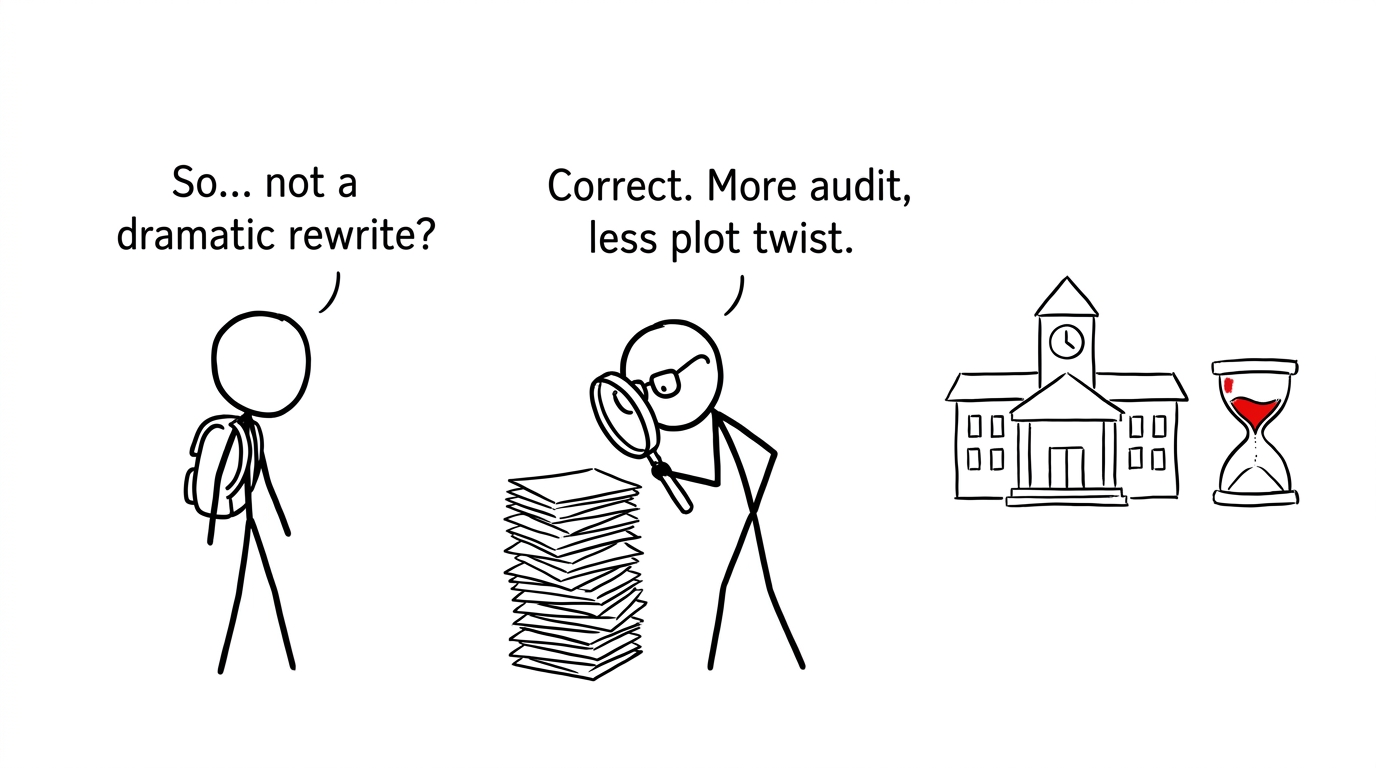 An examiner explains that a review is an audit rather than a dramatic rewrite
Should you request a priority review?
A review is worth discussing when a teacher has examined the available information and sees a credible marking issue, particularly when one grade would satisfy a university offer. It should not be treated as a speculative purchase simply because the result is disappointing.
Advantages
- The outcome is due within 15 calendar days, compared with 20 calendar days for a standard review.
- It is designed for cases where a further or higher education place is pending.
- A genuine marking or clerical error can be corrected.
- Exam-board fees are not charged when the overall qualification grade changes, although you should confirm your centre's arrangements.
Disadvantages
- The service is normally charged per paper or component if the qualification grade does not change.
- Fees vary by awarding body and your centre may have its own payment process.
- A review offers no guaranteed increase.
- The mark can go down as well as up.
- Your university is not automatically required to hold the place.
For example, AQA lists its June 2026 A-level priority review at £61.70 per component. Do not assume that this is the price for Edexcel, OCR or Eduqas. Ask your exams officer for the current fee, any administrative charge and the refund policy before approving the request.
Contact the university at the same time
Submitting the form is only half the job. Call the admissions office and explain that a priority review has been requested. Give the subject, original grade and expected completion window, then ask for the university's deadline in writing.
Some institutions may keep an application pending, but this is not automatic. Continue considering Clearing until admissions confirms what it will do. A review and a backup plan can run alongside each other.
Common mistakes to avoid
Waiting for a script before acting
A script can help a teacher assess the marking, but the priority window is short. If a place is pending, ask your exams officer whether waiting could jeopardise the deadline.
Assuming one extra mark guarantees a new grade
Check the overall qualification total and boundary. Use the correct board and exam series rather than an old boundary or an online estimate.
Contacting the exam board yourself
Most students must apply through their centre. Start with the exams officer; private candidates are the main exception.
Believing a review can only help
Marks and grades can rise, remain unchanged or fall. Read the consent statement carefully.
Forgetting the university
The exam board reviews the marking; it does not manage your offer. University admissions needs to know that the review is underway.
What GCSE students can learn now
This process may feel distant if you are preparing for GCSEs, but the habit behind it matters now: know where your marks come from. Use GCSE maths revision resources, mark papers carefully and distinguish a missing method from a marking concern.
MathsGenie's guide to using past papers properly explains how to turn every dropped mark into a revision decision. You can organise those decisions with the free revision planner.
Make the next decision calmly
A priority review is not a second chance at the examination. It is a fast check that the result is accurate. On results day, gather the evidence, speak to your centre, call the university and protect your alternatives.
Then return to what you can control. MathsGenie brings together A Level maths revision, Edexcel A Level lessons and past papers, OCR A Level maths resources and A Level predicted papers. Use the revision lessons, practice questions, mark schemes, video solutions and mini tests to make each future result less dependent on one uncertain mark.











