A-Level Politics Results Day Questions Answered
A-level politics results day questions answered for 2026: grades, UCAS, Clearing, marking reviews and calm next steps for students and parents.
Results day has a strange quality: months of work are compressed into a few letters on a screen or slip of paper. The most common A-level politics results day questions concern when results arrive, what UCAS will show, how grade boundaries work and what to do if a grade is unexpected.
The short answer is reassuring. Check your results and UCAS status, speak to your school before making irreversible decisions, and remember that a missed offer does not automatically end your university plans.
This guide reflects the official arrangements for summer 2026 in England, Wales and Northern Ireland. Your school or college may set its own collection process, so check its instructions as well.
Results day checklist
Before the morning, have these ready:
- Your school or college collection details
- Your UCAS Personal ID and login information
- Your firm and insurance offer conditions
- Your phone, charger and a notebook
- Contact details for university admissions teams
- A trusted teacher, adviser or parent who can help you think
Preparation cannot control the result. It can make the next decision much clearer.
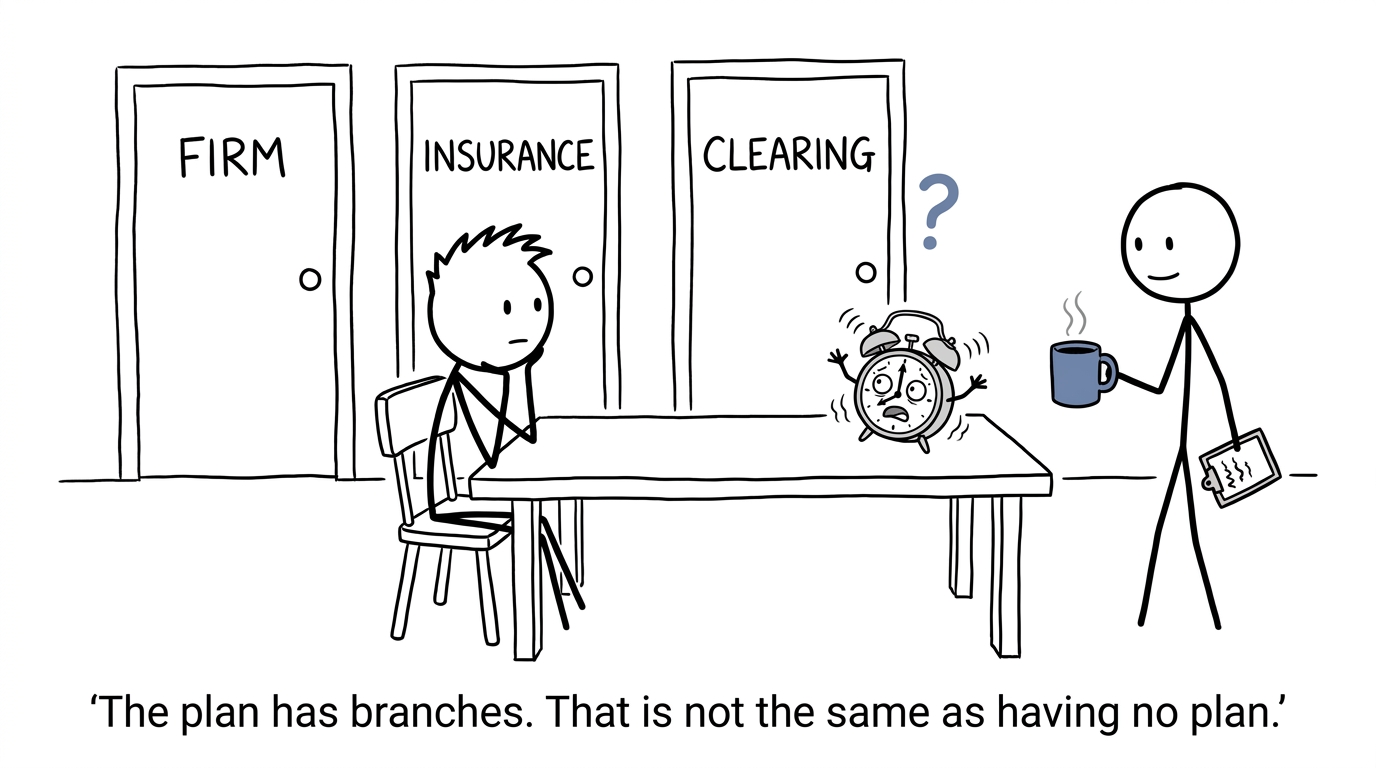 A student choosing between firm, insurance and Clearing doors while a parent holds a checklist
When is A-Level results day in 2026?
A-Level, AS and T Level results are released on Thursday 13 August 2026. Schools and colleges can issue results from 8.00 am, although your centre decides its exact opening time and whether results are collected in person or delivered online.
UCAS Hub also updates that morning. It normally shows whether your university place has been confirmed, but it does not display your individual Politics marks or grade. Those come from your school or college.
What should I check first?
Read your results slip carefully before reacting to one subject. Confirm your overall Politics grade, any component information provided and the status of your other qualifications.
Then check UCAS Hub if you applied to university. The order matters because your university may have accepted you even if you narrowly missed the published offer. Do not assume the outcome from your grades alone.
Students preparing for a future Politics sitting can use the Edexcel A-Level Politics revision hub to understand the specification, assessment structure and available revision tools.
How should I interpret my Politics grade?
A-Level Politics is graded from A* to E, with U indicating an unclassified result. Your final grade is based on your total performance across the assessed components, not on whether every paper reached the same standard.
For Edexcel Politics, the qualification has three written components. Each is worth the same proportion of the qualification, so a stronger performance on one paper can compensate for a weaker performance elsewhere.
Do not compare your final result with an unofficial boundary prediction shared before results day. Only the boundary published for your precise exam board, specification and route applies.
Why do Politics grade boundaries change?
Grade boundaries are set after papers have been marked. They may move between exam series because papers are not identical in difficulty. The purpose is to maintain a comparable standard rather than guarantee that the same mark always produces the same grade.
Check the official table for your exam board and specification. Politics structures differ across Edexcel, AQA and other awarding organisations, so a boundary from another board is not a useful comparison.
A boundary tells you how close your total mark is to another grade. It does not, by itself, prove that an error occurred.
What happens if I miss my university offer?
Check UCAS Hub before doing anything else. You may see that:
- Your firm place has been confirmed
- Your insurance place has been confirmed
- A decision is still pending
- You are eligible for Clearing
If the decision is pending, contact the university and ask what information it needs. If your firm choice is unsuccessful but your insurance choice is confirmed, the insurance place is yours.
Do not decline a confirmed place simply to explore alternatives. Declining it is normally irreversible, and there is no guarantee that it can be restored.
How does Clearing work?
Clearing connects applicants without a confirmed place to courses that still have vacancies. For 2026 entry, it runs from 2 July to 19 October, although availability changes throughout that period.
Search for suitable courses, speak directly to each university and obtain permission before adding a Clearing choice in UCAS Hub. Results-day applicants can add a choice from 1.00 pm on 13 August. Use the morning to compare course content, location, accommodation and entry requirements rather than accepting the first option through panic.
A parent can help record details, but the student should normally lead university conversations. Admissions staff may want to discuss motivation and results directly with the applicant.
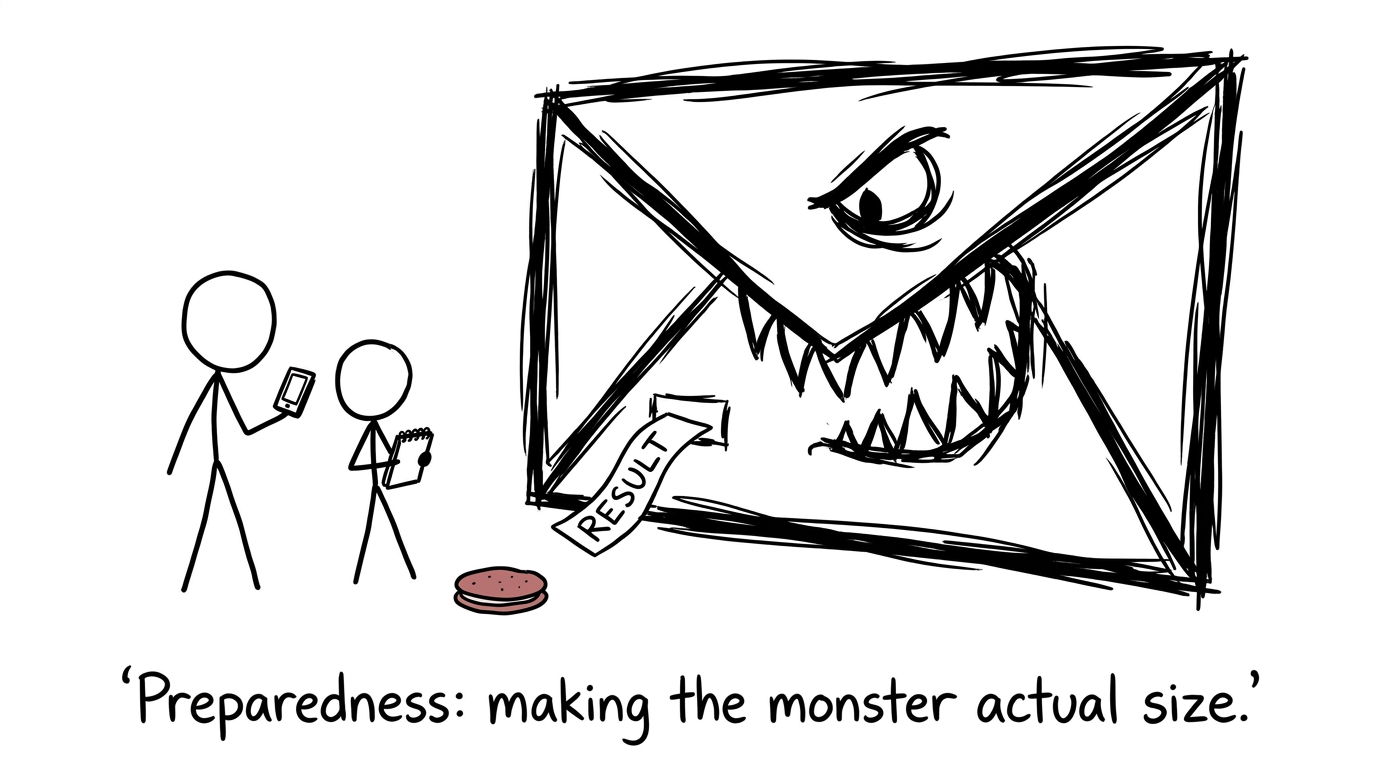 A dramatic results envelope turning out to contain an ordinary slip while a student waits with a phone and biscuit
Can I ask for my Politics paper to be remarked?
The formal process is called a review of marking, not a fresh remark. Speak to your school or college examinations officer. The centre can request a copy of your script where available and ask a teacher to consider whether the mark scheme appears to have been applied correctly.
A review can leave the mark unchanged or cause it to rise or fall. Your centre will need your consent, and a fee may apply if the grade does not change.
For the June 2026 series, the JCQ deadline for a priority A-Level review of marking is 20 August 2026. This service is intended for cases where a higher-education place depends on the outcome. The general deadline for reviews of results is 24 September 2026, but schools often impose earlier internal deadlines.
Practising with Edexcel A-Level Politics past papers and their mark schemes can also help students understand how analytical judgement and supporting evidence are rewarded.
Is resitting A-Level Politics possible?
Usually, yes. A-Level qualifications are linear, so a resit generally involves taking the required written papers again in a later exam series rather than repeating one isolated component. Confirm the exact arrangement with your school, college or prospective exam centre.
Before choosing this route, ask what the improved grade would change. Consider university requirements, exam-centre fees, preparation time and whether a foundation year, different course, apprenticeship or planned gap year better serves your goal.
Students resitting alongside another quantitative subject can organise their work through the A-Level Maths revision hub. Younger students planning their next stage can begin with GCSE Maths revision resources.
How can parents help on results day?
The best support is calm, practical and unhurried. Help the student gather information, write down names and deadlines, and compare options without treating the first disappointment as the final outcome.
Results day belongs to the student. Parents can steady the process, but decisions about reviews, Clearing and confirmed places should be made with the student's agreement and, where possible, advice from the school.
Common mistakes to avoid
- Checking UCAS but forgetting to obtain the actual grades from school
- Assuming a missed offer means automatic rejection
- Using unofficial or previous-year grade boundaries as if they were current
- Requesting a review only because the mark is close to a boundary
- Forgetting that reviewed marks can fall
- Missing the centre's internal post-results deadline
- Declining a confirmed place before securing a realistic alternative
- Choosing a Clearing course without checking its content and location
A good results-day decision resembles good revision: gather evidence, identify the real problem, then act. That same habit is developed through MathsGenie's guide to using past papers properly and its wider collection of free revision resources.
The next chapter starts with evidence
A Politics result is important, but it is not a complete verdict on a student's ability or future. Whether the next step is university, Clearing, a review or a resit, the useful question is not simply, “Was this the result I wanted?” It is, “What reliable information do I have, and what is my best next action?”
For future preparation, start with MathsGenie's A-Level Politics resources. Use the revision lessons to rebuild knowledge, practise with past and predicted papers, and review mark schemes carefully. MathsGenie brings revision tools, practice questions, mini tests and exam resources together so that the next decision rests on preparation rather than guesswork.