

A-Level Law Lower Grade Than Expected: Next Steps
A-Level Law lower grade than expected? Follow a calm 2026 plan for marking reviews, Clearing, university calls and deciding whether to resit.

Opening an A-Level Law result can feel strangely final. Two years of cases, principles and timed essays have been compressed into one letter. If you received an A-Level Law lower grade than expected, the immediate answer is: check your university status, speak to your school or college, inspect your marks and then compare three routes: a review of marking, Clearing or a resit.
Do not decide that your future has disappeared. A disappointing result may change the route, but it does not remove every destination.
For 2026, A-Level results are released on Thursday 13 August. Some post-results deadlines arrive only days later, so the best response is calm but prompt action.
Your A-Level Law results-day checklist
Before analysing every exam answer in your head, complete these steps:
- Check your UCAS application because your firm or insurance university may still have accepted you.
- Collect your component marks and the relevant grade boundaries.
- Speak to your Law teacher, exams officer or sixth-form adviser.
- Contact your preferred university if your application remains undecided.
- Ask whether obtaining your script or requesting a review of marking is sensible.
- Research Clearing courses without surrendering an existing place.
- Consider a resit only after comparing it with your available university options.
The order matters. Students sometimes begin searching Clearing before noticing that their firm choice has already confirmed their place.
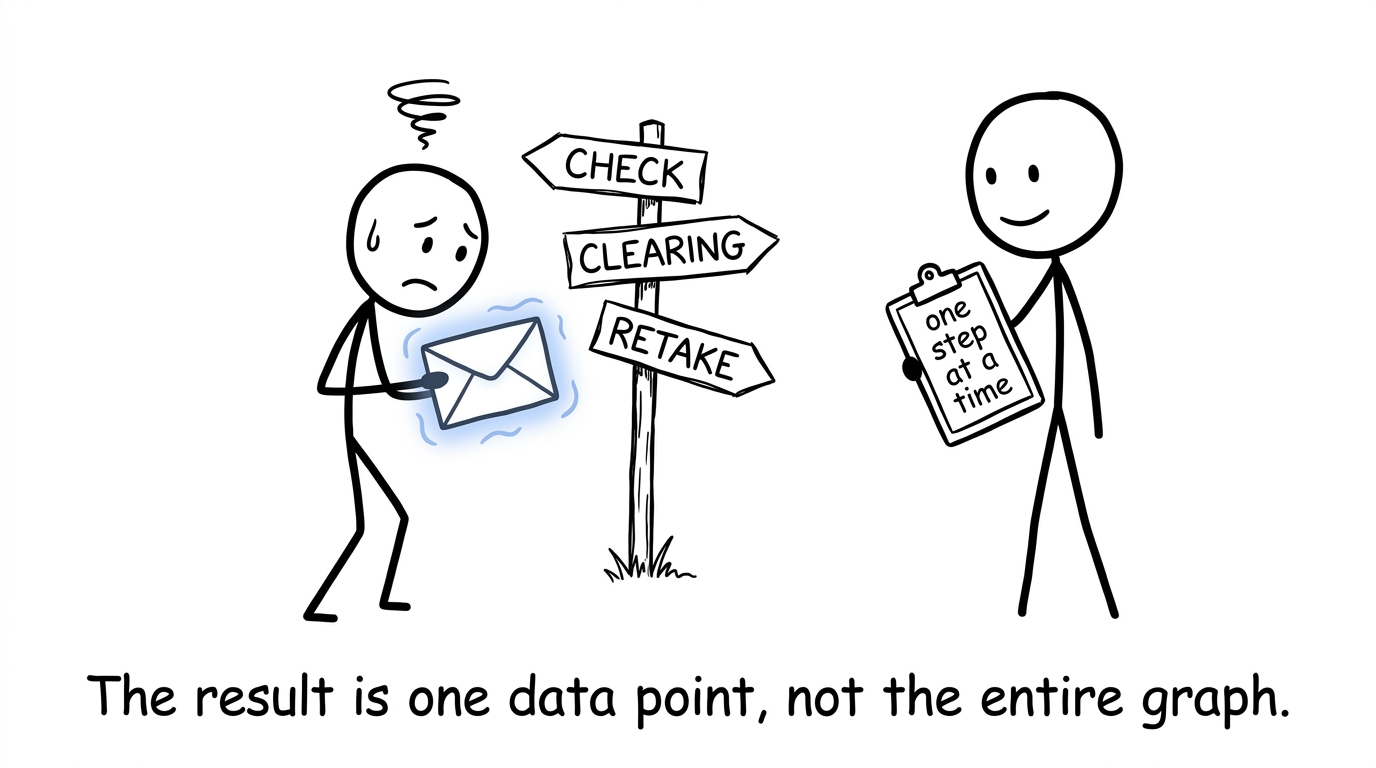 A student considers checking, Clearing and retaking after results day
Check what your result actually means
A lower grade is not automatically a marking error. Begin with evidence.
Ask your centre for your marks in each Law paper and compare the total with the published grade boundaries for your exam board. AQA, OCR and Eduqas specifications have different paper structures, so use information for the exact qualification you sat.
Look for two things:
- Distance from the next boundary: being close may make a review worth discussing, but closeness alone does not prove an error.
- An unusual component result: a paper that is substantially weaker than your normal performance may deserve closer inspection.
Your teacher can help assess whether the mark seems consistent with your previous work. Where available, the centre can request a copy of the marked script before deciding whether there are grounds for a review.
Ask for a review of marking when evidence supports it
The phrase “remark” is widely used, but the formal service is normally called a review of marking. The reviewer checks whether the original mark scheme was applied correctly. They do not simply mark the paper again because a student hoped for another grade.
Your mark can increase, remain unchanged or decrease. Your written consent is therefore required, and your school or college will usually submit the request. Private candidates may have a direct route through the awarding organisation or may work through their examination centre.
For the June 2026 series, the JCQ deadline for a priority A-Level review of marking is 20 August 2026. This service is intended for cases in which a higher education place depends on the outcome. The general deadline for reviews of results is 24 September 2026, although your centre may impose an earlier internal deadline so it has time to process requests.
A review is most reasonable when:
- your university place depends on the grade;
- you are close to a boundary;
- your teacher identifies a possible marking issue after examining the script; or
- the component mark appears inconsistent with the evidence in your paper.
If a review does not resolve a suspected marking or procedural error, an appeal may sometimes follow. An appeal is not simply a second attempt to obtain a preferred grade, so discuss the permitted grounds with your centre.
Contact your university before assuming the offer is lost
Universities sometimes accept applicants who narrowly miss their conditions. Check your UCAS application first, then read any email from the university.
If the decision is pending, telephone admissions. Have your UCAS ID, results and course details ready. Explain that you still want the place and ask whether the university is considering you, would accept a related course, or would hold the place while a priority review is completed.
Do not promise that your grade will rise. Give accurate information and ask for the university’s requirements in writing where possible.
Use Clearing as a deliberate alternative
Clearing is not a list of failed plans. It is the UCAS process connecting applicants with courses that still have vacancies.
In 2026, Clearing runs from 2 July to 19 October. Students whose conditional offers are unsuccessful can use it once their results and UCAS status allow them to do so.
Create a shortlist based on more than entry grades. Compare:
- course modules and optional areas of law;
- whether the degree is qualifying for your intended professional route;
- teaching and assessment methods;
- location, accommodation and travel costs;
- placement, clinic or study-abroad opportunities; and
- the university’s policy on resits or pending reviews.
Call the university before adding a Clearing choice. Ask direct questions and record the name of the person you spoke to, the course code and any deadline attached to an informal offer.
If you already hold a confirmed place, do not press “Decline my place” merely to browse. UCAS warns that declining cancels that place. Research and speak to universities first; release yourself only when you understand the consequences and are certain about the alternative.
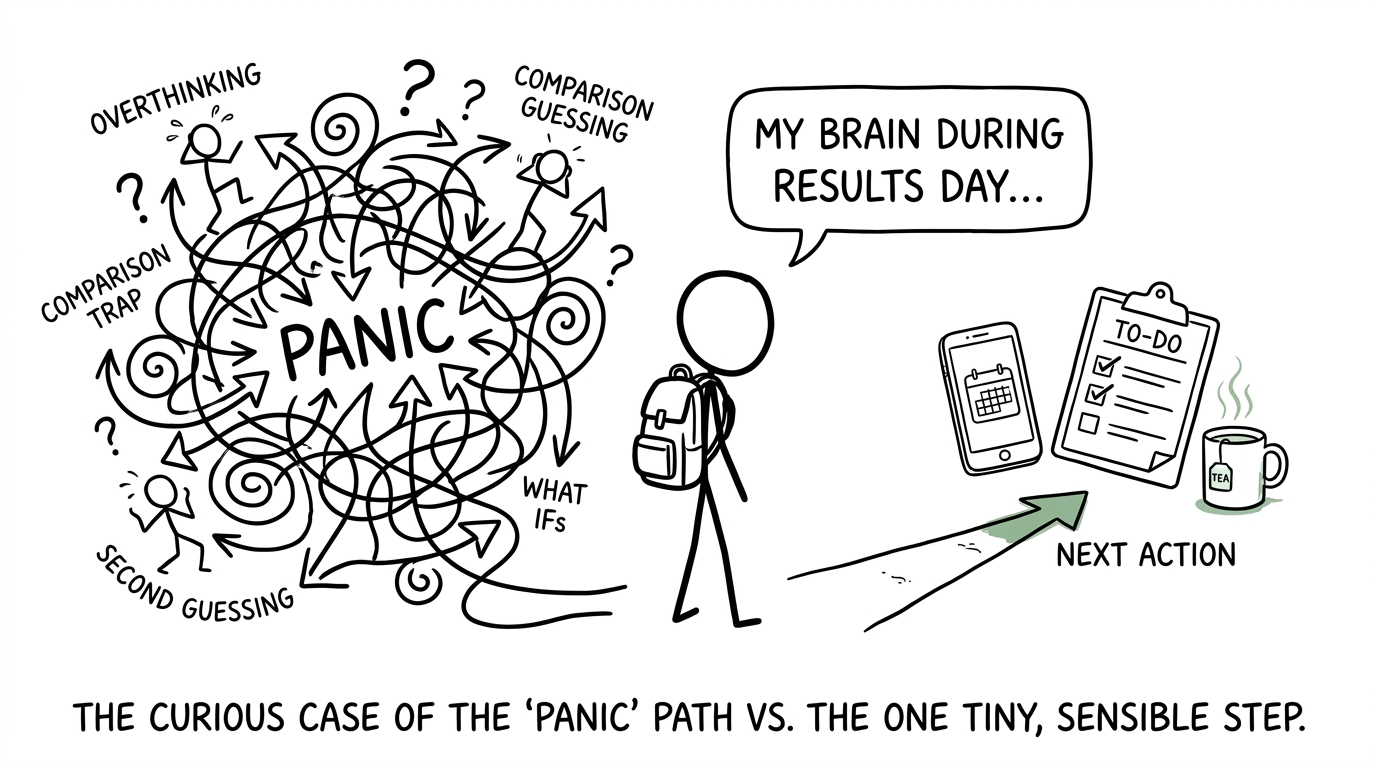 A student chooses the sensible next-action path at a complicated results-day crossroads
Decide whether an A-Level Law resit is worthwhile
A resit can make sense when the grade blocks a carefully considered goal and the available alternatives do not suit you. It should be a planned academic decision, not a punishment imposed during the first emotional hour of results day.
Most A-Level examinations are available in the summer series. For a linear A-Level qualification, resitting normally means taking all examined components again rather than repeating one weak paper. Confirm the current rules, entry deadlines and specification with your exam board and examination centre before committing.
Ask yourself:
- Does the intended university accept resit applicants for this course?
- What grade would I realistically need?
- Where will I sit the examinations?
- How will I receive feedback on legal knowledge and essay technique?
- What will I do alongside the resit year?
- Can I sustain a structured revision plan until the next examination series?
Use the official specification as a checklist and obtain past papers, mark schemes and examiner reports for your precise Law board. A useful resit routine is to diagnose gaps by topic, practise timed essays, compare responses with assessment objectives and act on teacher feedback. Simply rereading notes recreates the preparation that produced the first result.
MathsGenie does not currently publish a dedicated A-Level Law resit course, so obtain subject-specific Law materials from your school, examination centre and awarding body. If you are also resitting or maintaining maths, use the free Edexcel A-Level Maths revision hub and A-Level predicted papers alongside that Law plan.
Protect your wider revision plan
An A-Level Law disappointing result can also be useful context for younger students preparing for GCSEs. The lesson is not to fear results day. It is to build feedback into revision before the result arrives.
Maths students can apply that principle through the GCSE Maths revision hub, choosing the correct exam board and foundation or higher tier. The AQA GCSE Maths revision resources, for example, combine lessons, exam-style questions, papers and mark schemes.
Complete a paper, mark it honestly, repair the weak topic and test it again. The guide to using GCSE past papers properly explains this cycle, while GCSE mini tests provide shorter checks between full papers. MathsGenie’s predicted papers and revision resources can then sharpen preparation nearer the examination.
Common mistakes after a disappointing Law result
Reacting before checking UCAS
The grade sheet and the admissions decision are related, but they are not identical. Confirm whether your place has already been accepted.
Treating a review as a guaranteed increase
A review corrects identified marking errors. Marks can rise, stay the same or fall, so seek informed advice and understand the risk.
Missing a short priority deadline
If a university place depends on the outcome, contact your exams officer immediately. Do not assume the general September deadline applies to a priority request.
Entering Clearing without researching the course
A quick offer is only helpful if the course, location and costs are suitable. Ask the same questions you would have asked during the original application.
Choosing a resit without changing the method
More revision time does not automatically produce a different grade. A resit plan needs diagnosis, timed practice, feedback and measurable checkpoints.
Your result is information, not identity
A grade can close one immediate option. It cannot summarise your judgement, curiosity or potential contribution to law.
Today’s task is smaller: check your status, gather evidence and take the next appropriate action. Speak to your centre about Law scripts and resit resources, contact universities directly, and compare Clearing with a properly planned retake.
For every maths qualification still in your plan, make MathsGenie your free revision base. Use revision lessons, practice questions, past papers, predicted papers, mini tests, mark schemes and video solutions to turn each disappointing mark into a specific improvement before the next results day.











