

A-Level Computer Science Remark: Results Day Guide
A-level computer science remark explained: check scripts, NEA, deadlines, risks and appeals before requesting a review of marking through your centre in 2026.

Results Day can reduce two years of work to one uncomfortable question: was that grade accurate? If you are considering an A-level computer science remark, speak to your school or college immediately, check how far your total is from the next grade boundary and ask whether a teacher can inspect your marked scripts. The official service is called a review of marking, not simply a fresh re-mark. Your result can rise, remain unchanged or fall.
For the June 2026 series, A Level results are issued on 13 August. The JCQ deadline is 20 August 2026 for a priority review where a university place is pending, and 24 September 2026 for a standard review. Your centre will probably set an earlier internal deadline.
Your Results Day decision checklist
Before requesting a review, establish:
- your exam board and specification
- your total mark and component marks
- the boundary for the grade you wanted
- which written paper appears unexpectedly low
- whether your teacher can inspect the script
- whether a university offer depends on the outcome
- the fee, payment arrangements and centre deadline
- whether you accept that the mark can decrease
Use the AQA A Level Computer Science grade boundaries or the AQA Computer Science predicted grade calculator to put the result in context. Grade boundaries change between exam series, so compare your mark only with the correct year and specification.
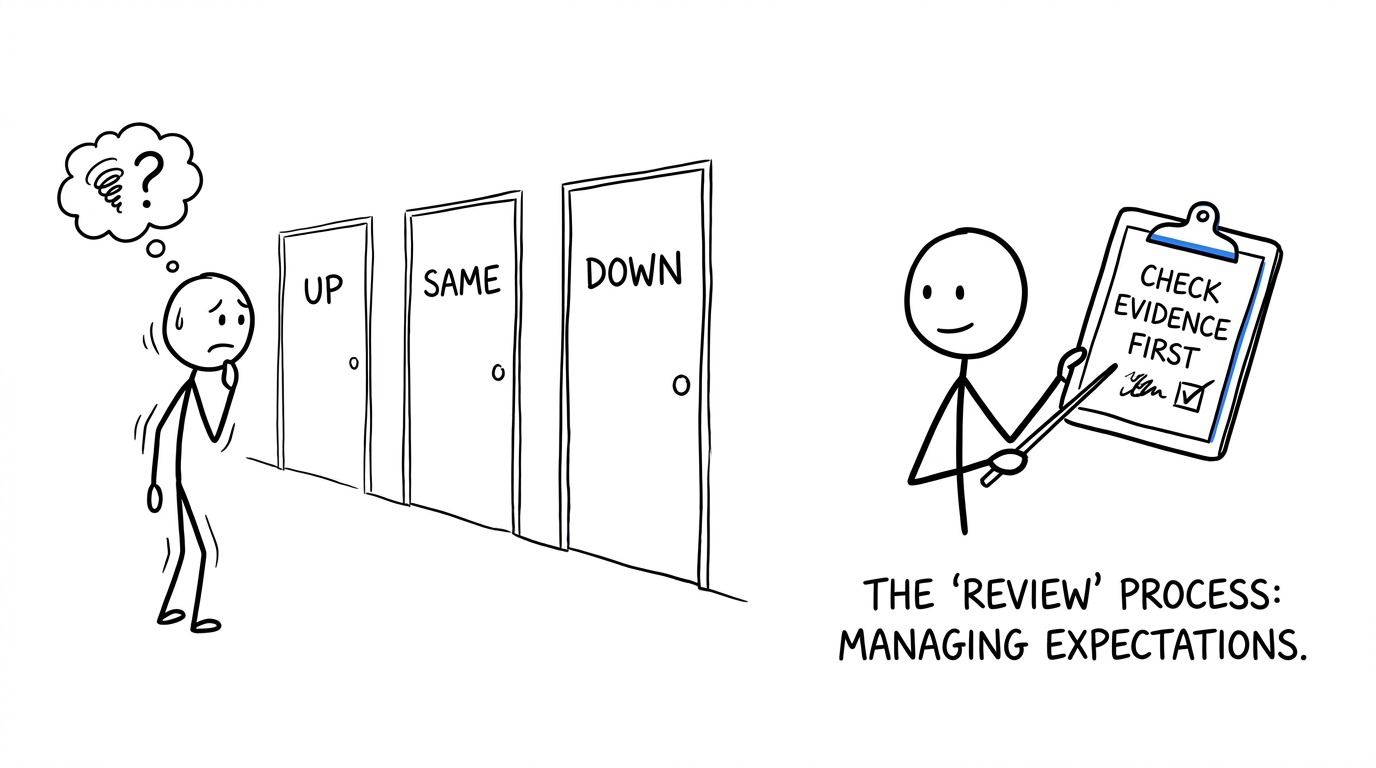 A student considers the possible outcomes of a review of marking
How the A-level computer science re-mark process works
Contact your exams officer
Students normally cannot submit a review themselves. Tell your exams officer and Computer Science teacher that you are concerned, particularly if a university place is at risk. Private candidates should contact the centre through which they entered, although awarding organisations may permit direct applications in certain circumstances.
Written consent is required after results have been published because there is no grade protection. Once an error is corrected, the resulting mark stands even if it is lower.
Calculate the gap to the boundary
If your total mark is MMM and the next boundary is BBB, the shortfall is:
d=B−M d = B - M d=B−MA small value of ddd makes a review more consequential, but it does not prove that marking was wrong. A student could gain marks without changing grade, while another could lose marks and cross the lower boundary. Look in both directions before deciding.
The same habit applies to GCSE Maths. The GCSE marks-per-grade guide explains why a boundary is a threshold, not a prediction of what a review will find.
Request the marked scripts
Ask whether your centre can obtain the scripts in time for a subject teacher to inspect them. The teacher should look for specific evidence: an unmarked response, an addition error, a correct algorithm that may not have received appropriate credit, or a longer explanation where the mark scheme appears to have been applied incorrectly.
This is more useful than requesting a review because the grade feels surprising. Computer Science papers contain both relatively objective answers and responses requiring academic judgement. A review checks whether the original mark scheme was applied correctly; it is not an instruction to award the most generous plausible mark.
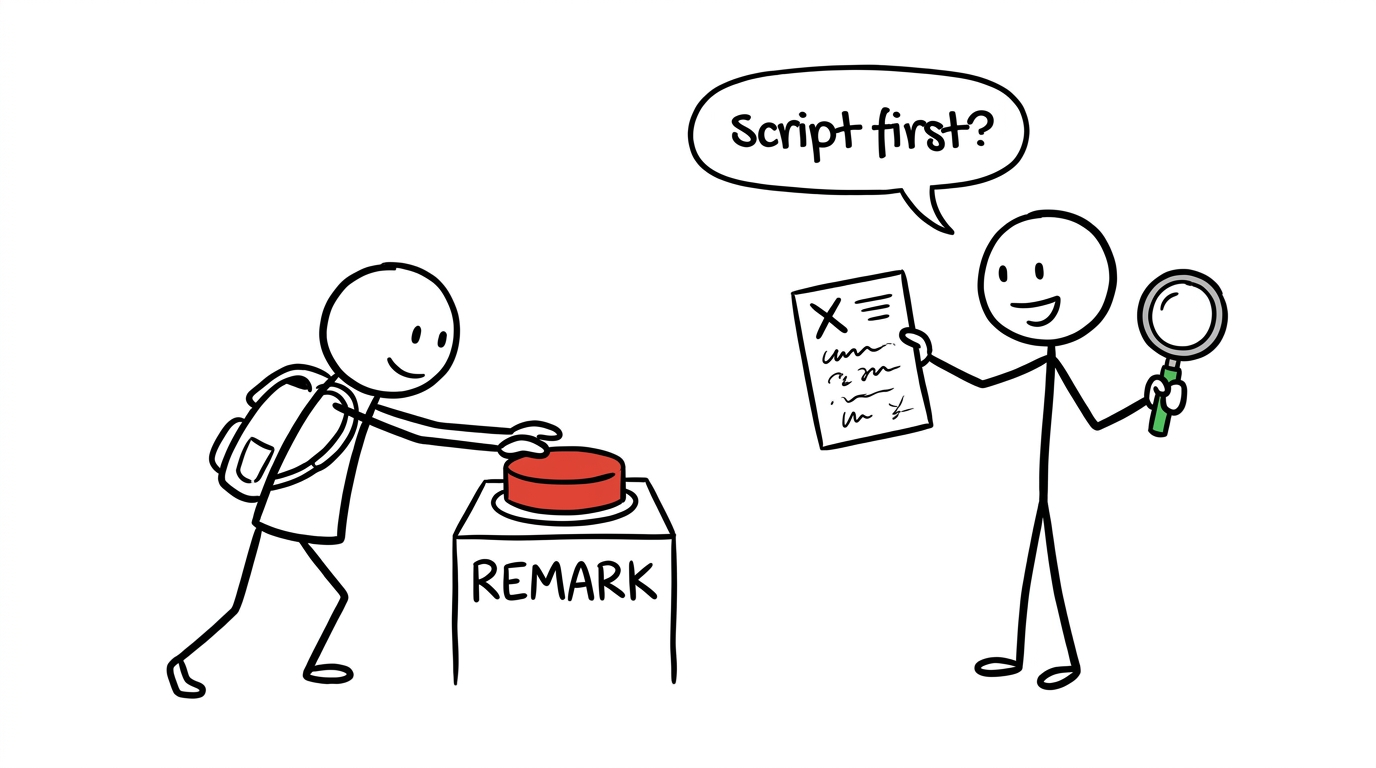 A teacher suggests checking the marked script before pressing the remark button
Choose the correct service
A clerical re-check verifies matters such as whether every response was marked and whether marks were totalled correctly. A review of marking includes clerical checks but also considers whether the mark scheme was applied properly.
For June 2026, a standard review should be completed within 20 calendar days of the awarding body receiving it. A priority review should be completed within 15 calendar days and is intended for AS or A Level students whose university place is pending. Fees vary by board, component and centre policy, so obtain the current amount from your exams officer rather than relying on an old online figure.
What about the Computer Science NEA?
The non-exam assessment requires different thinking. Your project is initially marked by your centre and then moderated by the awarding body. A post-results review of moderation concerns the centre's cohort, not one student's project in isolation. It checks whether the moderation criteria were applied fairly and consistently; it is not a complete re-moderation of every project.
A review of moderation may be unavailable where the centre's marks were accepted without adjustment. There is also no priority moderation service for an individual university applicant. Ask your teacher whether the concern relates to your centre's original marking, the board's moderation or an externally assessed paper.
When requesting a review makes sense
A review is worth serious consideration when:
- the grade is important for a confirmed university offer
- the total is close to the next boundary
- a script inspection identifies a credible marking issue
- one paper is unexpectedly weak compared with well-supported evidence
- your teacher understands the specification and supports the request
Distance from a boundary is evidence about possible impact, not evidence of an error. The strongest decision combines proximity with something identifiable on the script.
The analytical habits developed through Edexcel A Level Maths revision, A Level predicted papers and careful use of mark schemes are valuable here: inspect the evidence, identify the discrepancy and avoid guessing.
Appealing an A-level computer science grade
An appeal is not the first stage. Your centre must normally receive the outcome of the relevant review of marking or moderation before appealing. Under the JCQ appeals process effective for June 2026, an appeal must generally be made within 30 calendar days of that outcome.
Valid grounds can include a remaining marking or moderation error, or a concern that the awarding organisation did not apply its procedures consistently, properly or fairly. You cannot appeal simply because you dislike the grade boundary. Internal candidates usually need the head of centre to submit the appeal.
Common mistakes to avoid
- Waiting for the national deadline: your centre's deadline may be several days earlier.
- Assuming marks can only rise: a reviewed mark can fall and the original result is not restored.
- Reviewing every component automatically: focus first on the paper where evidence suggests an error.
- Confusing NEA marking with moderation: an individual cannot ordinarily request a cohort moderation review.
- Using an old boundary: check the correct board, specification and exam series.
- Treating disappointment as proof: predicted grades and mock results provide context, but they do not establish a marking error.
Make the next decision from evidence
Results Day is emotional; the review process is procedural. Slow the decision down just enough to collect the right facts, but not so much that you miss your centre's deadline. Check your component marks, obtain the scripts where possible and ask a knowledgeable teacher for a candid judgement.
Start with MathsGenie's A Level Computer Science grade boundaries. If you are earlier in your exam journey, build the same evidence-led habits through Edexcel GCSE Maths revision and the wider MathsGenie revision website, using free revision lessons, practice questions, mini tests, past papers, predicted papers, mark schemes and video solutions. The calmest decisions usually begin with knowing exactly where the marks came from.











