The excretion of a novel therapeutic compound, Compound X, is studied in healthy volunteers. The rates of excretion of Compound X in different body fluids and elimination pathways are shown in the graph below.
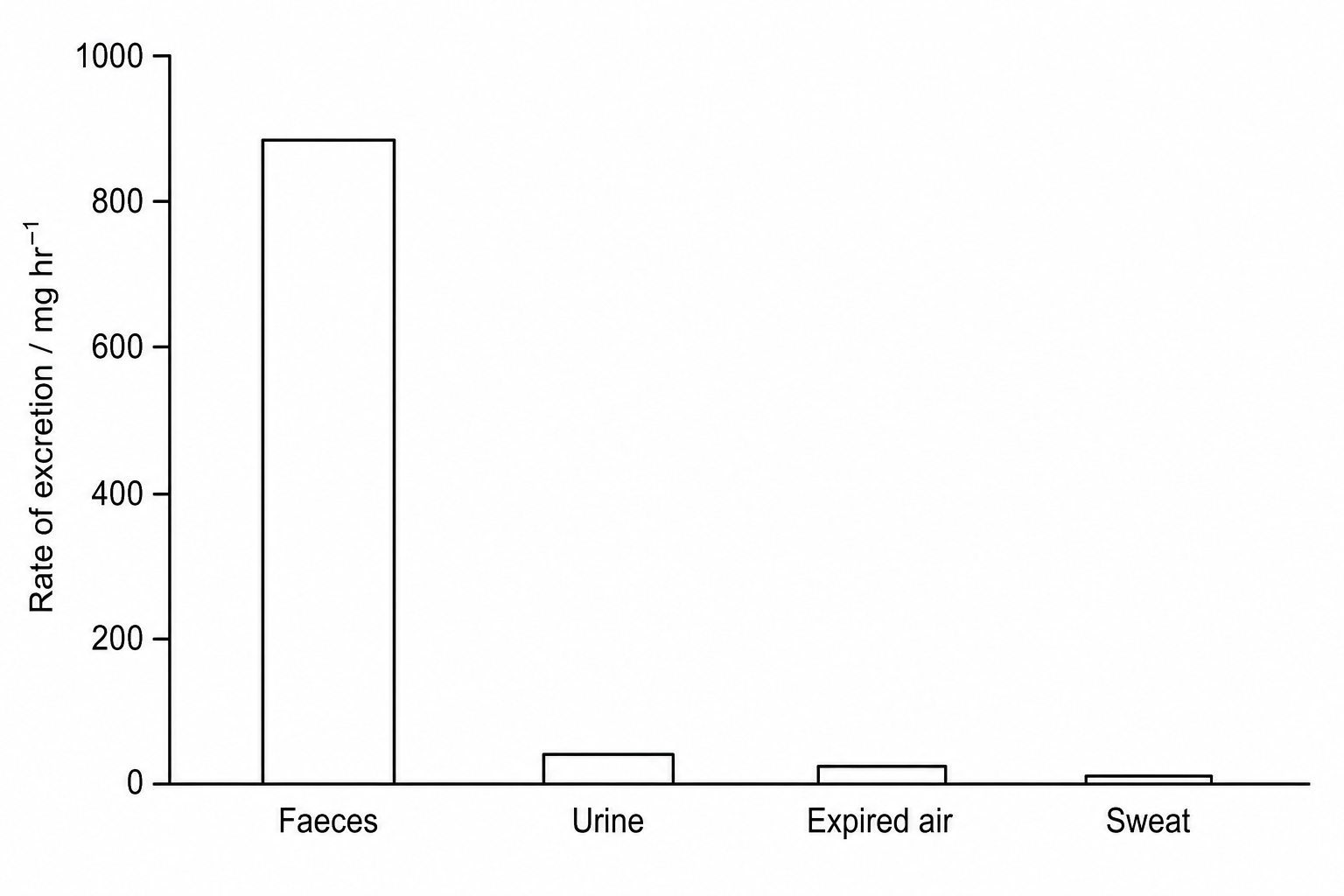
Which of the following, A to D, correctly explains the different rates of excretion of Compound X?
The basement membrane of the Bowman's capsule prevents the filtration of lipid-soluble compounds due to their non-polar nature.
Compound X is highly polar, meaning it cannot dissolve in aqueous body fluids such as urine and sweat.
Compound X is highly lipid-soluble, allowing it to be passively reabsorbed across the phospholipid bilayers of the renal tubule cells back into the blood.
Compound X has a low boiling point and high volatility, allowing it to be easily eliminated by active transport across the alveoli into expired air.